

Fine, dynamic smile lines respond well to retinoids and daily sunscreen over 8 to 12 weeks. Deep static folds that show even when your face is relaxed usually need a filler, an energy-based device, or in advanced cases, surgery. Neuromodulators like Botox help the muscle-driven component but fade in 3 to 6 months, while surgical lifts last years but require real recovery. Match the treatment to the fold, not the other way around.
TL;DR:
- Minor smile lines caused by skin deterioration may improve with retinoids, sun protection, and collagen-boosting serums over several months.
- Deep static folds generally require volume-restoring fillers, structural lifts, or surgery for lasting correction, especially when caused by sagging tissue.
- Combining filler with energy-based devices like laser or radiofrequency treatments enhances results for mixed conditions, but deep sagging still benefits from surgical intervention.
- Treatment choices depend on fold depth, skin laxity, and personal preferences regarding recovery, cost, and longevity.
- Facial exercises and massage offer only temporary effects and are not substitutes for evidence-based clinical treatments or procedures.
Table of Contents
- What Causes Nasolabial Folds and Why Depth Matters
- What Are the Best Non-Surgical Smile Line Treatments?
- When Is Surgery the Right Call for Smile Lines?
- Building an At-Home Routine That Actually Slows Progression
- How Do You Choose the Right Treatment and Provider?
- Where a Copper Peptide Serum Fits Into a Smile-Lines Regimen
- What Do Smile Line Treatments Cost?
- Which Smile Line Treatment Actually Works Best?
- Do Facial Exercises and Massage Help Smile Lines?
- A Practical Starting Plan by Severity
- Where the Copper Peptide Serum Fits Your Routine
- Sources
- FAQ
What Causes Nasolabial Folds and Why Depth Matters
Nasolabial folds run from the sides of your nose to the corners of your mouth, and they show up because of a mix of structural changes, not just “aging skin” in the abstract. Dermatologists split them into two categories: dynamic lines that appear only when you smile or talk, and static lines that stay visible even at rest. That distinction decides your treatment path.
Several factors drive fold formation:
- Collagen and elastin decline, which thins the dermis and lets skin fold more easily
- Volume loss in the midface fat pads, which removes the cushion that once kept skin taut
- Repetitive muscle movement from talking, smiling, and facial expression
- Sun damage, which breaks down collagen faster than intrinsic aging alone
- Smoking, which restricts blood flow to skin and accelerates elastin breakdown
- Genetics and natural weight fluctuation, which affect skin laxity and fat distribution
Mild lines caused mainly by skin-quality loss respond to topical regimens and light procedures. Deep folds caused by volume and structural sagging need something that physically replaces lost tissue or repositions it.
What Are the Best Non-Surgical Smile Line Treatments?
Office-based options split into three functional groups: muscle relaxers, volume replacers, and skin-quality builders. Knowing which group targets your specific problem prevents wasted money on the wrong category.
- Neuromodulators (Botox and similar injectables) relax the small muscles pulling on dynamic lines. Results show within days and typically last 3 to 6 months before you need a repeat session.
- Dermal fillers, mostly hyaluronic acid, restore lost volume and deliver visible improvement immediately. Standard HA fillers last six months to a year or longer and can be dissolved with hyaluronidase if you don’t love the result. Poly-L-lactic acid and calcium hydroxylapatite work differently: they stimulate your own collagen gradually rather than adding instant volume, so results build over months and tend to last longer.
- Energy devices (fractional lasers, radiofrequency, focused ultrasound) trigger collagen remodeling over a series of sessions, usually three to six treatments spaced weeks apart, with minimal downtime beyond redness for a day or two.
- Microneedling and chemical peels address surface texture and fine lines rather than deep folds, working best as maintenance between bigger procedures.
Pro Tip: If you have both a static fold and visible dynamic movement lines above your lip, ask about combining filler with a light neuromodulator dose. Treating volume alone while ignoring the muscle pull underneath often means the fold reappears faster.
When Is Surgery the Right Call for Smile Lines?
Surgery becomes the reasonable option when sagging tissue, not just volume loss, is doing most of the damage. A cheek lift or lower facelift physically repositions descended fat pads and tightens the underlying support structure, addressing the structural cause of a deep nasolabial fold rather than filling it from the outside.
That structural fix comes with real trade-offs:
- Recovery typically runs a few weeks before returning to normal activities, with residual swelling settling over time
- Results are considered long-lasting, often a decade or more, though they don’t stop the aging process entirely
- Scarring is usually hidden along the hairline or behind the ears, but it’s a permanent trade for permanent results
- General or local anesthesia with sedation is standard, adding its own risks that injectables don’t carry
- Recovery and cost are substantially higher than any non-surgical route, which is why most surgeons position it as a later-stage option
Good candidates tend to be people with significant skin laxity and jowling alongside their nasolabial folds, where fillers alone would look like a patch rather than a fix. If your main issue is volume loss without much sagging, staged filler treatments usually get you most of the visual benefit without an operating room.
Building an At-Home Routine That Actually Slows Progression
Your daily skincare habits do more heavy lifting for prevention than most people expect, and they extend the results of whatever in-office treatment you eventually choose.
- Introduce a retinoid two to three nights a week, building tolerance before going nightly; expect visible improvement in fine lines over several months of consistent use, not weeks
- Apply broad-spectrum SPF 30 or higher every morning, since unprotected sun exposure is one of the fastest ways to accelerate collagen breakdown
- Layer in hyaluronic acid serums for immediate, temporary plumping that makes fine lines look softer within hours
- Add a vitamin C serum in the morning for antioxidant protection against free-radical damage
- Exfoliate gently once or twice a week, and pause both exfoliation and retinoid use for several days before and after any injectable or energy-based procedure
- Quit smoking, keep your weight stable, and prioritize sleep and hydration, since all four affect how well your skin holds collagen
Pro Tip: Retinoids and copper peptides shouldn’t be layered in the same application. Use retinoids at night and save peptide serums for the morning, or alternate nights, so neither ingredient destabilizes the other.
How Do You Choose the Right Treatment and Provider?
Start with an honest self-assessment before you book anything. Rate your fold depth (visible only when smiling, or visible at rest), your skin laxity, your downtime tolerance, and your budget. That combination narrows your options fast.
- Ask about the provider’s specific experience with perioral anatomy, not just general injectables. Nasolabial fold work requires precision near major facial vessels.
- Request before-and-after photos of patients with a similar fold depth and skin type to yours, not just their best-case gallery.
- Confirm exactly which product and brand of filler or device they use, and ask how they’d manage a complication like a vascular occlusion or lumping.
- Ask what results you can realistically expect and how long they’ll last for your specific case, not a generic promise.
- Walk away from anyone offering guaranteed permanent results from a non-surgical treatment, pushing you to decide same-day, or lacking documented outcomes and proper medical credentials for injectables.
A rushed consultation is often the clearest red flag of all. A provider confident in their work will happily slow down and answer every question.
Where a Copper Peptide Serum Fits Into a Smile-Lines Regimen
Copper peptides work by supporting the skin’s natural repair processes in the extracellular matrix, the scaffolding that holds collagen and elastin in place. Paired with hyaluronic acid for hydration, a serum like this targets skin quality and fine lines rather than structural volume loss.
That’s an important distinction to sit with:
- A copper peptide and HA serum is a regimen anchor for smoothing texture and reinforcing collagen support over weeks to months, not a substitute for filler or surgery on a deep static fold
- It pairs naturally with the retinoid and SPF routine already covering your prevention bases
- It complements in-office treatments by keeping surrounding skin quality strong between filler or laser sessions
- Most users see meaningful improvement in skin firmness and fine lines within four to six weeks of consistent use
Think of it as the maintenance layer underneath whatever bigger intervention you choose, not a replacement for one.
What Do Smile Line Treatments Cost?
Cost varies enormously by treatment category, and geography swings the numbers further, so treat these as general ranges rather than fixed quotes.
Topical routines cost the least per session but require years of consistency to hold their gains. Surgery costs the most upfront but skips the recurring maintenance bill that injectables carry indefinitely.
Which Smile Line Treatment Actually Works Best?
There’s no single winner here, because “works best” depends entirely on what’s causing your fold. For pure skin-quality issues (fine lines, mild crepiness, no real volume loss), topical retinoids paired with SPF are genuinely effective and backed by dermatology literature on collagen stimulation, though results take months, not days.
For moderate folds with visible volume loss, hyaluronic acid filler delivers the most reliable, immediate, and reversible improvement of any single treatment. It’s why fillers remain the most commonly performed nasolabial fold treatment in dermatology offices. Neuromodulators help when a muscle-driven dynamic component is layered on top, but they don’t address volume loss on their own, which is a common point of confusion.
Energy devices and microneedling sit in an interesting middle zone. They won’t erase a deep static fold, but the underlying collagen-induction science holds up for gradual skin-quality gains, particularly when combined with filler rather than used alone. For genuinely deep, sagging-driven folds, surgery outperforms every non-surgical option on longevity, though at a much higher cost and recovery burden.
The strongest results tend to come from combining categories rather than betting on one. Filler to restore volume plus RF or laser to improve surrounding skin quality consistently outperforms either treatment alone for folds with mixed causes, which describes most people past their mid-30s.

Do Facial Exercises and Massage Help Smile Lines?

Facial exercises and massage can temporarily boost circulation and give skin a brief, flushed plumpness, but they don’t rebuild lost collagen or replace volume that’s already gone. Set your expectations accordingly before spending months on a routine that a dermatologist would call cosmetic maintenance at best.
That said, a few techniques are worth doing anyway, mostly for skin health rather than fold correction:
- Lymphatic massage: Light upward strokes from the corners of your mouth toward your ears for two to three minutes daily can reduce puffiness and improve product absorption when done after applying serum.
- Cheek-puff holds: Filling your cheeks with air and holding for 10 seconds, repeated 10 times, may temporarily tone the muscles beneath the fold, though the effect is short-lived.
- Gua sha or jade rolling: These tools mainly aid lymphatic drainage and serum penetration rather than triggering meaningful collagen production.
None of these techniques have strong clinical backing for reversing an established nasolabial fold, and dermatologists are clear that facial exercise is not a substitute for evidence-based topical or procedural treatment. Use them as a relaxing five-minute addition to your skincare routine, not your primary strategy.
A Practical Starting Plan by Severity
If your lines only show when you smile, start with a retinoid, daily SPF, and a copper-peptide serum for 8 to 12 weeks before judging results. Moderate static lines usually call for a consultation about filler or a combination approach, with topicals continued to stretch out the results. Deep, sagging-driven folds deserve a real conversation with a board-certified dermatologist or plastic surgeon about whether staged filler or surgery fits your timeline and goals better.
— British
Where the Copper Peptide Serum Fits Your Routine
If you’re dealing with fine lines and early skin-quality loss rather than a deep static fold, a topical is genuinely the right first move, not just the easiest one. The Copper Peptide Anti-Aging Serum pairs copper peptides with hyaluronic acid, built to support collagen repair and hydration rather than mask the surface.
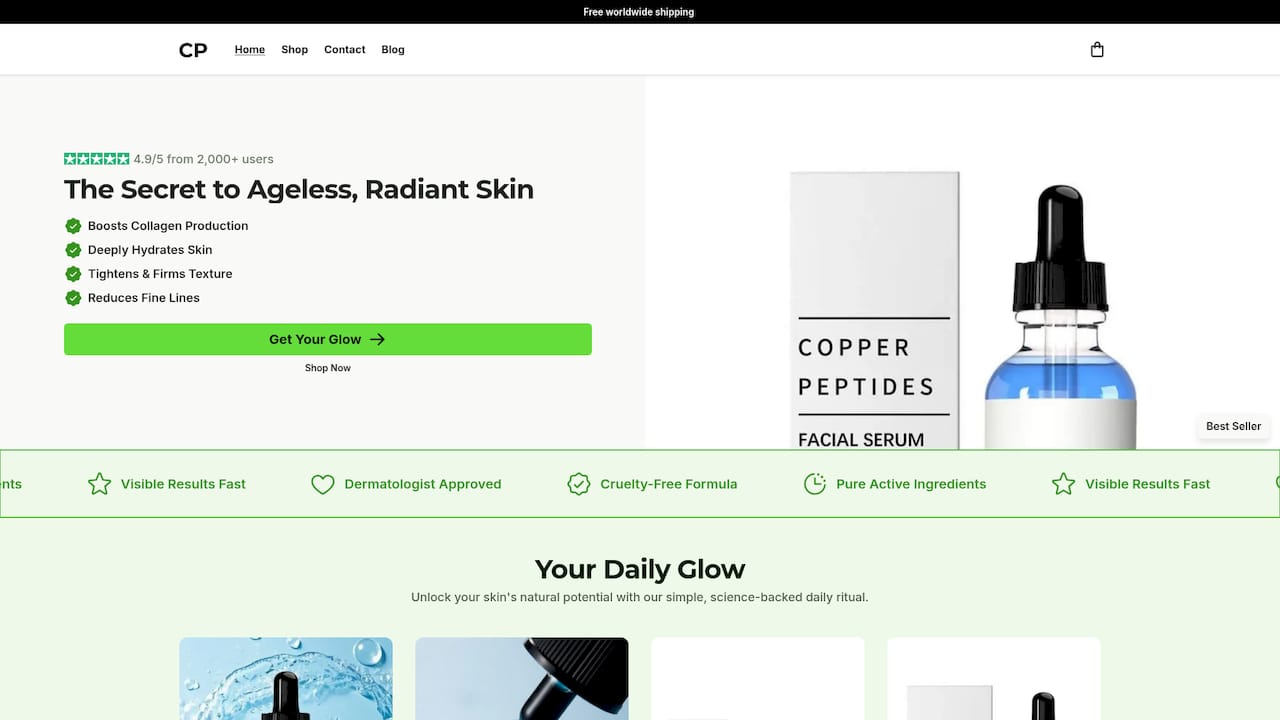
It won’t replace a filler appointment for a deep fold, and it’s not meant to. What it does is give your skin a stronger baseline, so whatever in-office work you eventually choose lasts longer and looks better in the surrounding skin. For a full walkthrough on integrating it correctly with retinoids and SPF, the clinician-aligned usage protocol covers timing and sequencing in detail. Start with the serum for 8 to 12 weeks, track your skin’s texture and firmness, and decide from there whether you need to add a procedural step.
Sources
- Nasolabial Folds (Smile Lines): Causes & Treatment — Cleveland Clinic
- How to smooth away laugh lines with or without surgery — Cleveland Clinic Health
- Botox for smile lines — Healthline
- PubMed entry — available clinical literature
- Erasing lines around your mouth — WebMD
FAQ
How Can I Remove Smile Lines Naturally?
Consistent use of a retinoid, daily SPF, hydrating serums like hyaluronic acid or copper peptides, and lifestyle habits like not smoking can visibly soften fine smile lines over several months, though deep static folds won’t fully resolve without a procedure.
What Do Koreans Do for Smile Lines?
Korean skincare routines emphasize layered hydration, gentle exfoliation, sheet masks, and consistent SPF use as prevention, alongside professional treatments like fillers or lasers for existing folds when topical care isn’t enough.
How Much Does Smile Line Surgery Cost?
A cheek lift or facelift addressing nasolabial folds typically runs from $7,000 to $15,000 or more, depending on the surgeon, technique, and geographic location.
Can Smile Line Wrinkles Go Away?
Fine, dynamic smile lines can improve significantly with retinoids, SPF, and topical serums over months, but deep static folds caused by volume loss generally need filler, energy-based treatment, or surgery to meaningfully reduce.