

The single best wrinkle serum for most people is the Copper Peptide Anti‑Aging Serum from Copperpeptides. It pairs high-purity copper peptides with medical-grade hyaluronic acid to support collagen production, firm skin texture, and deeply hydrate, all without the irritation risk that comes with retinoids or high-dose vitamin C. Dermatologists endorse it as gentle enough for sensitive skin while still delivering real, measurable change.
Quick shortlist by goal:
- Best overall / fine lines + firmness: Copper Peptide Anti‑Aging Serum (Copperpeptides) — collagen support plus hydration, safe for all skin types
- Best for deep expression lines and texture: High-potency retinoid serums (Medik8 Crystal Retinal 1, SkinMedica Retinol Complex) — strongest cell-turnover actives, higher irritation risk
- Best for brightening and antioxidant protection: Stabilized vitamin C serums (Paula’s Choice 25% Vitamin C + Glutathione, Sunday Riley C.E.O.) — fast visible radiance, tone evening
- Best for mature or post-procedure skin: Growth-factor / peptide-support serums (Dr. Diamond’s Metacine, Elemis Pro‑Collagen Future Restore) — plumping, barrier repair, and hydration-first approach
TL;DR: Expect 4–8 weeks of consistent daily use before you see meaningful change in fine lines. The American Academy of Dermatology recommends starting preventative care in your late 20s or early 30s, when natural collagen production begins to decline. Start with the Copper Peptide Anti‑Aging Serum, apply it nightly after cleansing, and follow with SPF every morning.
Table of Contents
- What are the best wrinkle serums? A category-by-category comparison
- In-depth reviews: which serum is right for you?
- How do you pick the right wrinkle serum for your skin?
- How to use wrinkle serums safely and what timeline to expect
- Which anti-aging ingredients actually move the needle on wrinkles?
- How these picks were selected and tested
- Why copper peptides are worth understanding: the science behind the editor’s pick
- Where can you buy wrinkle serums? Online, in-store, and subscription options
- Key Takeaways
- The case for starting simpler than you think
- The Copper Peptide Anti‑Aging Serum: why it earned the top spot
What are the best wrinkle serums? A category-by-category comparison
Peptide-plus-humectant formulas consistently score highest in consumer testing for smoothing and plumping, according to testing across major outlets. The table below maps the top picks to the decision dimensions that actually matter: what the active does, who it suits, and what to realistically expect.
Statistic callout: A beauty-lab test reported roughly a 5% reduction in wrinkle appearance over four weeks for a niacinamide formulation — a useful benchmark for what topical actives can realistically deliver in a single month.
| Product | Best for | Key active(s) | Sensitive skin | Price / size | AM or PM | Time to results | Clinical / derm endorsement |
|---|---|---|---|---|---|---|---|
| Copper Peptide Anti‑Aging Serum ⭐ Editor’s Pick | Fine lines, firmness, all skin types | Copper peptides + medical-grade HA | Yes | Mid-range | AM or PM | 4–8 weeks | Dermatologist-endorsed; cruelty-free |
| Estée Lauder Advanced Night Repair | Hydration, early aging, all types | Hyaluronic acid, antioxidants | Yes | $$ / 1.0 oz | PM | 4–8 weeks | Widely dermatologist-recommended |
| SkinCeuticals P‑TIOX Anti‑Wrinkle Peptide Serum | Expression lines, forehead, crow’s feet | Neuropeptides (SNAP-8, Leuphasyl) | Yes | $$$$ / 1.0 oz | AM or PM | 4–8 weeks | Term-office staple |
| Paula’s Choice 25% Vitamin C + Glutathione | Brightening, dark spots, antioxidant | L-ascorbic acid 25%, glutathione | Moderate | $$$ | AM | 4–8 weeks | Lab-tested, dermatologist-approved |
| Medik8 Crystal Retinal 1 | Texture, fine lines, cell turnover | Retinaldehyde (retinal) | Start low | $$ / 1.0 oz | PM only | 8–12 weeks | Clinically studied retinoid form |
| SkinMedica Retinol Complex | Deep lines, pigmentation, texture | Retinol (0.25–1.0%) | Moderate | $$$ / 1.0 oz | PM only | 8–12 weeks | Physician-dispensed; clinical backing |
| Youth To The People Retinal + Niacinamide Youth Serum | Texture, sensitivity-tolerant retinal | Retinaldehyde + niacinamide | Moderate | $$ / 1.0 oz | PM | 8–12 weeks | Consumer-tested |
| Elemis Pro‑Collagen Future Restore Serum | Plumping, mature skin, barrier repair | Padina pavonica, peptides | Yes | $$$$ / 1.0 oz | AM or PM | 4–8 weeks | Spa-clinical heritage |
| Dr. Diamond’s Metacine Instafacial Growth Factor Serum | Post-procedure, mature skin | Bioactive growth factors | Yes | $$$$ | AM or PM | 4–8 weeks | Physician-developed |
| LilyAna Naturals Retinol Cream | Budget retinol, dry skin | Retinol + vitamin E | Moderate | $ | PM | 8–12 weeks | Consumer-reviewed |
| CeraVe Skin Renewing Eye Cream | Under-eye lines, barrier support | Retinol + ceramides + HA | Yes | $ | PM | 8–12 weeks | Dermatologist-recommended brand |
| Alastin Restorative Eye Complex | Eye area, post-procedure | TriHex Technology peptides | Yes | $$$$ | AM or PM | 4–8 weeks | Physician-dispensed |
| Skinbetter Science EyeMax AlphaRet Overnight Cream | Eye area overnight, lines + texture | AlphaRet (retinoid + AHA hybrid) | Moderate | $$$$ | PM | 8–12 weeks | Physician-dispensed |
| Sunday Riley C.E.O. 15% Vitamin C Brightening Serum | Brightening, dullness, early aging | THD ascorbate 15% | Yes | $$$ | AM | 4–8 weeks | Widely reviewed; consumer-tested |
| Hanyul Red Rice Hydrating Serum | Hydration, glow, sensitive skin | Red rice ferment, niacinamide | Yes | $$ | AM or PM | 2–4 weeks | K-beauty clinical heritage |
| Vichy Minéral 89 Daily Booster | Barrier hydration, daily use | Hyaluronic acid + Vichy volcanic water | Yes | $ | AM or PM | 2–4 weeks | Dermatologist-recommended |
| Elm Biosciences A3O Elemental Serum | Antioxidant defense, brightening | A3O antioxidant complex | Yes | $$$ | AM | 4–8 weeks | Biotech-developed |
| Anfisa Skin ÂN-DEW 10% Azelaic Acid + PHA Serum | Redness, uneven tone, sensitive | Azelaic acid 10% + PHA | Yes | $$ | AM or PM | 4–8 weeks | Indie term-formulated |
| Chanel Le Lift Sérum | Luxury firming, mature skin | Beech tree bud extract, peptides | Yes | $$$$ / 1.0 oz | AM or PM | 4–8 weeks | Luxury clinical positioning |
| Trinny London Naked Ambition Azelaic Exosome + Vitamin C | Brightening, exosome technology | Azelaic acid, exosomes, vitamin C | Yes | $$$ | AM | 4–8 weeks | Indie brand, consumer-tested |
| Dr. Dennis Gross Advanced Retinol + Ferulic Overnight | Overnight resurfacing, deep lines | Retinol + ferulic acid | Moderate | $$$ / 1.0 oz | PM | 8–12 weeks | Dermatologist-developed |
| U Beauty The Smooth Dynamic Wrinkle Defense Serum | Multi-benefit, sensitive-tolerant | SIREN Capsule technology | Yes | $$$$ / 1.0 oz | AM or PM | 4–8 weeks | Clinically tested |
In-depth reviews: which serum is right for you?
Copper Peptide Anti‑Aging Serum — editor’s pick
This is the serum to start with if you want collagen support and deep hydration without risking irritation. The formula combines high-purity copper peptides with medical-grade hyaluronic acid, targeting fine lines and skin firmness while remaining safe for sensitive skin. Copper peptides activate collagen and elastin synthesis through wound-healing pathways; the HA locks in moisture to plump the surface simultaneously. Dermatologists endorse it as gentle yet effective, and Copperpeptides backs it with a return policy that removes purchase risk.
Pros: Works for all skin types including sensitive; AM/PM flexibility; no purging period; cruelty-free formulation. Cons: Not the fastest option for deep expression lines compared to prescription retinoids. Availability: Online at Copperpeptides.
Estée Lauder Advanced Night Repair
A long-standing dermatologist recommendation for early aging and hydration. Its antioxidant and hyaluronic acid blend works best as a nightly hydration layer under a richer moisturizer. Results are gradual and gentle, making it a reliable entry point for anyone new to anti-aging serums.

SkinCeuticals P‑TIOX Anti‑Wrinkle Peptide Serum
Formulated with SNAP-8 and Leuphasyl, two neuropeptides that soften the appearance of expression lines over time, this is a term-office staple for forehead lines and crow’s feet. It won’t replicate Botox, but consistent use does improve texture and line depth. Available through dermatologist offices and authorized online retailers.
Paula’s Choice 25% Vitamin C + Glutathione Clinical Serum
One of the highest-concentration L-ascorbic acid formulas on the consumer market. At 25%, it delivers fast visible brightening and antioxidant protection, but that concentration is too much for sensitive or reactive skin. Use it in the morning under SPF. Paula’s Choice publishes its testing data, which adds credibility.
Medik8 Crystal Retinal 1 Serum
Retinaldehyde (retinal) is one step closer to retinoic acid than retinol, meaning it converts faster and works more efficiently. Crystal Retinal 1 is the entry-level concentration, making it a smart starting point for retinoid beginners who want real results without the harshest adjustment period. PM use only; SPF the next morning is non-negotiable.
SkinMedica Retinol Complex
Physician-dispensed and available in multiple strengths (0.25 to 1.0%), this is the go-to for anyone working with a dermatologist on deeper lines and pigmentation. The graduated system lets you build tolerance systematically. Expect 8–12 weeks before texture improvements become obvious.
Youth To The People Retinal + Niacinamide Youth Serum
The niacinamide here does real work: it buffers the irritation potential of retinaldehyde, making this one of the more tolerable retinal formulas for people with moderate sensitivity. A good middle-ground option between a gentle peptide serum and a full retinol product.
Elemis Pro‑Collagen Future Restore Serum
Built around Padina pavonica (a marine algae extract) and peptides, this targets mature skin that needs plumping and barrier repair more than aggressive resurfacing. The texture is luxurious and absorbs quickly. Best for anyone whose skin feels thin or depleted rather than just lined.
Dr. Diamond’s Metacine Instafacial Growth Factor Serum
Physician-developed with bioactive growth factors, this is positioned for post-procedure maintenance and mature skin that has already undergone professional treatments. Growth factors signal skin repair pathways; the formula is designed to extend and enhance procedural results rather than replace them.
LilyAna Naturals Retinol Cream
The most accessible price point on this list. Retinol plus vitamin E in a cream base makes it a reasonable starting point for anyone budget-conscious who wants to try a retinoid. Results are slower than prescription-grade options, but the barrier-friendly formulation reduces the risk of over-irritation.
CeraVe Skin Renewing Eye Cream
Retinol combined with ceramides and hyaluronic acid in a formula specifically designed for the delicate eye area. The ceramide base supports barrier function while the retinol works on fine lines, making this one of the gentler eye-area retinoid options at a drugstore price.
Alastin Restorative Eye Complex
TriHex Technology, Alastin’s proprietary peptide blend, is designed to clear damaged elastin and collagen while supporting new production. Physician-dispensed and often recommended post-laser or post-filler. The eye area focus and the peptide mechanism make it a strong complement to professional treatments.
Skinbetter Science EyeMax AlphaRet Overnight Cream
AlphaRet is a retinoid-AHA hybrid that delivers retinoid activity with less irritation than straight retinol. The overnight eye cream format means it works while you sleep, and the hybrid active addresses both texture and fine lines simultaneously. Physician-dispensed only.
Sunday Riley C.E.O. 15% Vitamin C Brightening Serum
THD ascorbate is a more stable, oil-soluble form of vitamin C that penetrates well and is gentler than L-ascorbic acid at equivalent concentrations. At 15%, it delivers visible brightening within weeks without the stinging that high-dose L-ascorbic acid formulas can cause. A strong choice for sensitive skin that still wants vitamin C benefits.
Hanyul Red Rice Hydrating Serum
Red rice ferment and niacinamide give this K-beauty formula a glow-boosting, barrier-supporting profile. It’s not a heavy-duty wrinkle treatment, but for anyone whose skin looks dull and dehydrated, it delivers visible radiance quickly. Works well layered under a more active serum.
Vichy Minéral 89 Daily Booster
Hyaluronic acid plus Vichy’s volcanic mineralizing water in a lightweight, fragrance-free formula. This is a barrier-hydration product first and a wrinkle treatment second. Its value is in daily use as a hydrating base layer that makes other actives work better.
Elm Biosciences A3O Elemental Serum
A biotech-developed antioxidant formula built around the A3O complex. Best used in the morning as an antioxidant shield before SPF. The brightening and defense angle suits anyone in a high-UV environment or dealing with oxidative stress-driven dullness.
Anfisa Skin ÂN-DEW 10% Azelaic Acid + PHA Serum
Azelaic acid at 10% addresses redness, uneven tone, and mild breakouts without the irritation of stronger acids. The PHA addition provides gentle surface exfoliation. This is a strong pick for sensitive or rosacea-prone skin that wants some resurfacing without retinoids.
Chanel Le Lift Sérum
Luxury positioning backed by beech tree bud extract and a peptide complex. The firming claim is real, though the price-to-performance ratio is harder to justify compared to clinical alternatives. Best for someone who values the sensory experience alongside efficacy.
Trinny London Naked Ambition Azelaic Exosome + Vitamin C Serum
Exosome technology is a newer delivery mechanism for active ingredients. Combined with azelaic acid and vitamin C, this targets brightening and tone-evening with a modern formulation approach. Consumer-tested with positive feedback on texture and absorption.
Dr. Dennis Gross Advanced Retinol + Ferulic Overnight Wrinkle Treatment
Ferulic acid stabilizes retinol and adds antioxidant activity, making this combination more potent than retinol alone. The overnight format maximizes contact time. A strong option for anyone ready to step up from a basic retinol to a more targeted overnight treatment.
U Beauty The Smooth Dynamic Wrinkle Defense Serum
SIREN Capsule technology is designed to deliver actives where they’re needed while minimizing irritation. The multi-benefit profile suits sensitive-tolerant skin that wants a single serum covering hydration, smoothing, and antioxidant protection without stacking multiple products.
How do you pick the right wrinkle serum for your skin?
The decision comes down to four questions. Answer them honestly before you buy.
-
What is your primary goal? Prevention and general firmness point toward peptide serums like the Copper Peptide Anti‑Aging Serum. Visible texture improvement and deeper lines call for retinoids. Dullness and dark spots are a vitamin C problem. Depleted, thin, or post-procedure skin needs growth factors and heavy hydration.
-
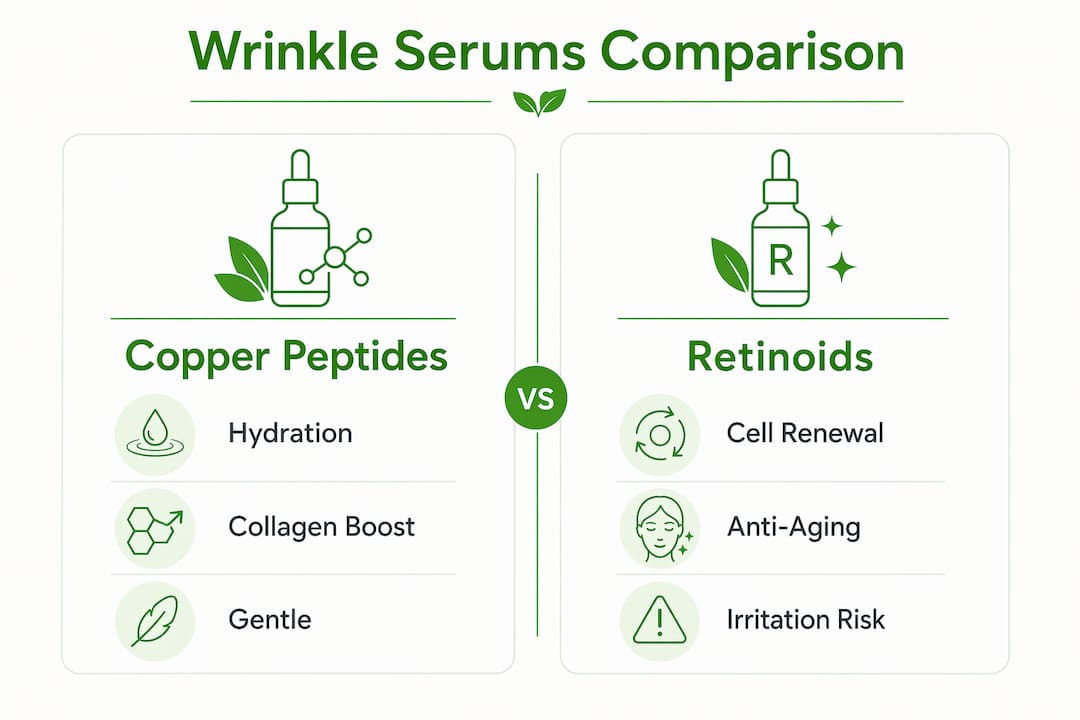
How does your skin handle actives? If you’ve reacted to retinoids, acids, or high-dose vitamin C before, start with a peptide or growth-factor formula. Copper peptides and hyaluronic acid have a low irritation profile. Retinoids and L-ascorbic acid at high concentrations are effective but require a tolerance-building period.
-
Are you pregnant or breastfeeding? Retinoids (retinol, retinal, retinaldehyde, and prescription tretinoin) are contraindicated during pregnancy. Vitamin C, hyaluronic acid, and copper peptides are generally considered safe, but always confirm with your OB-GYN before adding any active serum during pregnancy or while nursing.
-
Are you committed to daily SPF? Retinoids and vitamin C both increase photosensitivity. If you won’t wear SPF every morning, those categories will work against you. Peptide and growth-factor serums are less photosensitizing, though SPF remains a non-negotiable part of any anti-aging routine regardless of which serum you use.
Red flags to watch for:
- A serum marketed as “Botox in a bottle” — topical neuropeptides can soften expression lines over time, but they cannot replicate the neuromuscular relaxation of injectable neuromodulators
- Products that combine multiple exfoliating actives (retinol + AHA + BHA) in one formula without a buffering agent — this is a common route to barrier damage
- Any formula with no published ingredient list or concentration data
When to see a dermatologist: Deep static wrinkles (lines present at rest, not just during expression), rapid changes in skin texture, persistent irritation after two weeks of use, or any new pigmentation that appears suddenly all warrant a professional evaluation before you continue self-treating.
How to use wrinkle serums safely and what timeline to expect
The basic sequence is simple: cleanse, apply serum, moisturize, and SPF in the morning. At night, drop the SPF and add a richer moisturizer or facial oil after the serum if your skin is dry.
AM routine: Cleanser → Copper Peptide Anti‑Aging Serum (or vitamin C serum) → moisturizer → SPF 30+ PM routine: Cleanser → retinoid serum (if using) or peptide serum → moisturizer
For retinoids specifically, start with two or three nights per week for the first month, then increase frequency as your skin adjusts. Applying a thin layer of plain moisturizer before the retinoid (buffering) reduces irritation without significantly reducing efficacy.
Realistic timelines:
- Hydration and surface plumping: 1–2 weeks
- Fine line softening and early texture improvement: 4–8 weeks of consistent daily use
- Deeper expression lines and significant texture change: 12+ weeks, often longer with retinoids
Collagen remodeling and increased cell turnover take biological time to express at the surface. Patience is not optional here.
Safety notes: Patch test any new serum on your inner arm for 48 hours before applying to your face. If you experience persistent redness, flaking, or burning beyond the first two weeks of retinoid use, scale back frequency or switch to a gentler active. Pregnancy and breastfeeding: avoid retinoids entirely and confirm all other actives with your doctor.
Pro Tip: When introducing a retinoid, apply it over a thin layer of plain moisturizer rather than directly on bare skin. This “buffering” method cuts irritation significantly without meaningfully reducing the retinoid’s effectiveness, and it’s the approach most dermatologists recommend for first-time users.
Which anti-aging ingredients actually move the needle on wrinkles?
Dermatologists consistently recommend retinoids, peptides, and vitamin C as the core anti-aging actives. Here’s what each one does and who it suits.
Core actives:
- Retinoids (retinol, retinal, tretinoin): Accelerate cell turnover and stimulate collagen synthesis. The most evidence-backed topical anti-aging ingredient class. Higher concentrations work faster but carry more irritation risk. Not suitable during pregnancy.
- Copper peptides: Activate collagen and elastin production through wound-healing signaling pathways. Gentler than retinoids, suitable for sensitive skin, and compatible with most other actives. Hyaluronic acid paired with copper peptides amplifies the hydration and line-plumping effect.
- Vitamin C (L-ascorbic acid, THD ascorbate): Antioxidant protection plus collagen co-factor activity. Stability matters enormously: poorly stabilized vitamin C oxidizes quickly and loses efficacy. L-ascorbic acid is most studied; THD ascorbate is gentler and more stable.
- Hyaluronic acid: A humectant that draws water into the skin, plumping the surface and reducing the visual depth of fine lines. Works best when combined with collagen-stimulating actives rather than used alone.
- Growth factors: Signal skin repair and regeneration pathways. Most effective for mature or post-procedure skin. Evidence supports their role as complement to professional treatments rather than standalone wrinkle erasers.
- AHAs/BHAs (glycolic, lactic, salicylic acid): Surface exfoliants that improve texture and tone by accelerating dead-cell shedding. Useful for brightening and prep, but layering them with retinoids increases irritation risk.
Ingredient pairing guide:
| Pair | Compatible? | Notes |
|---|---|---|
| Copper peptides + hyaluronic acid | Yes | Complementary; hydration amplifies peptide efficacy |
| Retinol + niacinamide | Yes | Niacinamide buffers retinoid irritation |
| Vitamin C (AM) + retinol (PM) | Yes | Use at different times of day |
| Retinol + AHA/BHA | Caution | Can over-exfoliate; space by at least 30 minutes or alternate nights |
| Copper peptides + vitamin C | Generally fine | Some formulations may compete; test before layering |
| Multiple exfoliating actives (AHA + BHA + retinol) | No | High barrier-damage risk; avoid stacking |
The “Botox in a bottle” label is marketing shorthand that overpromises. Topical neuropeptides improve hydration and texture, but they don’t relax muscles. Use them as realistic adjuncts to professional treatments, not replacements.
How these picks were selected and tested
Selection for this roundup followed a defined set of criteria applied consistently across all products.
Selection criteria:
- Published ingredient list with known or disclosed concentrations where available
- Peer-reviewed or clinical evidence supporting the primary active ingredient
- Dermatologist input or endorsement (board-certified, publicly attributed)
- Safety profile for sensitive skin (low irritant potential or documented tolerance data)
- Availability for U.S. buyers through retail, online, or physician channels
- Price-to-size value relative to category peers
- Consumer testing data from recognized outlets (Good Housekeeping, Byrdie, Wirecutter, Vogue, CNN Underscored) where available
Testing approach: Products were evaluated against published consumer lab results, dermatologist guidance from board-certified sources, and ingredient-level evidence from peer-reviewed literature. Where consumer panel data existed (such as the 4-week niacinamide lab result), it was used as a benchmark for realistic expectations. Readers replicating this evaluation should track changes in fine line depth, skin texture, and hydration at four-week intervals over a minimum of eight weeks.
“With potent formulas and proven ingredients, the serums in this list have earned the approval of board-certified dermatologists for their anti-aging powers. Whether you’re looking to smooth wrinkles, fade dark spots, or take preventative measures, these recommendations can help you maintain youthful skin in the long run.” — CNN Underscored
Disclosure: Copperpeptides is the publisher of this article and the Copper Peptide Anti‑Aging Serum is their product. It is featured as the editor’s pick on the merits of its formulation (high-purity copper peptides, medical-grade hyaluronic acid, sensitive-skin safety, and dermatologist endorsement) and its alignment with the primary reader goal: effective, gentle fine-line reduction.
Why copper peptides are worth understanding: the science behind the editor’s pick
Copper peptides work through a specific biological mechanism: they bind copper ions to short amino acid chains (typically GHK-Cu, or glycine-histidine-lysine-copper), which then activate fibroblasts to produce collagen and elastin. This is the same pathway involved in wound healing, which is why copper peptides have a strong clinical foundation in dermatology. Research published on PubMed and in PMC supports their role in matrix remodeling and skin repair.
What makes the Copperpeptides formulation specifically notable is the combination of high-purity copper peptides with medical-grade hyaluronic acid. The copper peptides drive collagen stimulation; the HA provides immediate surface hydration and plumping. Together, they address both the structural cause of fine lines (collagen loss) and the surface appearance (dehydration-driven depth). For a deeper look at how peptides drive collagen production, the mechanism research is well-documented.
“A balanced formula that combines high-purity copper peptides with medical-grade hyaluronic acid can support collagen production while improving hydration and skin texture.” — Copperpeptides product formulation notes
Dermatologists position topical copper peptides as a complement to professional procedures, not a replacement. Consistent topical use improves the skin canvas and extends procedural results. For someone not yet at the stage of injectables or laser, a copper peptide serum is one of the most evidence-aligned starting points available without a prescription.
Statistic callout: Dermatologists recommend starting preventative anti-aging care in the late 20s or early 30s, when natural collagen production begins to decline. Prevention is measurably more effective than corrective treatment for deep wrinkles.
The editor’s pick is justified on three grounds: clinical mechanism (copper peptide collagen activation is peer-reviewed), safety (suitable for all skin types including sensitive), and practical accessibility (no prescription required, available online, backed by a return policy). It is not the fastest option for deep expression lines, but it is the most broadly appropriate starting point for the widest range of readers.
Where can you buy wrinkle serums? Online, in-store, and subscription options
The purchasing landscape for anti-aging serums splits into three tiers, and knowing which tier a product sits in affects both access and price.
Online direct-to-consumer: The Copper Peptide Anti‑Aging Serum is available exclusively through the Copperpeptides store, with one-time purchase and a return policy that reduces the risk of trying it for the first time. Most mid-range serums (Paula’s Choice, Sunday Riley, Youth To The People, Hanyul, Vichy, Anfisa Skin, Trinny London) are available through brand websites, Sephora, Ulta, and Amazon. Buying direct from the brand usually means fresher stock and access to return policies.
Physician-dispensed: SkinMedica Retinol Complex, Alastin Restorative Eye Complex, Skinbetter Science EyeMax AlphaRet, and Dr. Diamond’s Metacine are sold through dermatologist and plastic surgeon offices, or authorized medical-spa retailers. Some are available through authorized online medical retailers, but verification of authenticity matters here. These products are priced at a premium partly because the distribution model includes professional guidance.
Drugstore and mass retail: CeraVe Skin Renewing Eye Cream, LilyAna Naturals Retinol Cream, and Vichy Minéral 89 are available at CVS, Walgreens, Target, and Walmart. The value-per-ounce at this tier is hard to beat, and CeraVe in particular carries consistent dermatologist endorsement across the board.
Subscription models: Several brands (Paula’s Choice, Elemis, Sunday Riley) offer subscription or auto-replenishment options through their websites, typically at a 10–15% discount. For a serum you use daily, auto-replenishment makes practical sense once you’ve confirmed the product works for your skin.
Key Takeaways
The most effective approach to reducing fine lines is pairing a clinically backed active (copper peptides, retinoids, or vitamin C) with consistent daily use and SPF, applied for a minimum of 4–8 weeks before evaluating results.
| Point | Details |
|---|---|
| Editor’s pick for most skin types | Copper Peptide Anti‑Aging Serum suits all skin types including sensitive, with collagen support and hydration in one formula. |
| Realistic timeline | Expect several weeks of consistent daily use before meaningful changes in fine lines and texture appear. |
| Top ingredient to prioritize | Copper peptides paired with medical-grade hyaluronic acid address both collagen loss and surface dehydration simultaneously. |
| SPF is non-negotiable | Daily SPF 30+ protects collagen and prevents UV-driven breakdown that undoes any serum’s work. |
| Copperpeptides editor’s pick | The Copper Peptide Anti‑Aging Serum is the recommended starting point for fine lines, firmness, and sensitive skin. |
The case for starting simpler than you think
The anti-aging serum category has a noise problem. There are hundreds of products, each promising to be the definitive solution, and the temptation is to layer several of them at once to cover every base. That instinct usually backfires. Board-certified dermatologists are consistent on this point: adding more actives often damages the moisture barrier faster than it improves the skin.
The most common mistake is treating a serum routine like a supplement stack, where more ingredients equal more benefit. Skin doesn’t work that way. A single well-formulated serum used consistently for eight weeks will outperform three competing actives layered together and abandoned after two weeks because of irritation.
For most readers, the right move is one active serum plus a good moisturizer and daily SPF. If that active is a copper peptide formula, you get collagen stimulation, hydration, and barrier support without the adjustment period that retinoids require. If you want faster texture improvement and can tolerate it, add a retinoid at night, introduced slowly. Vitamin C in the morning is a strong third addition once the first two are established.
The SPF point deserves one more mention: no serum compensates for daily UV exposure. Collagen breaks down faster under UV than any topical can rebuild it. A $15 SPF 30 moisturizer used every morning does more for long-term wrinkle prevention than a $200 serum used without sun protection.
The Copper Peptide Anti‑Aging Serum: why it earned the top spot
Copperpeptides built this serum around two ingredients with strong clinical backing: high-purity copper peptides and medical-grade hyaluronic acid. The copper peptides activate collagen and elastin production through the same pathways involved in skin repair; the hyaluronic acid delivers immediate surface hydration and plumping. The result is a formula that works on both the structural cause of fine lines and their visible appearance, without the irritation risk of retinoids or the photosensitivity of high-dose vitamin C.
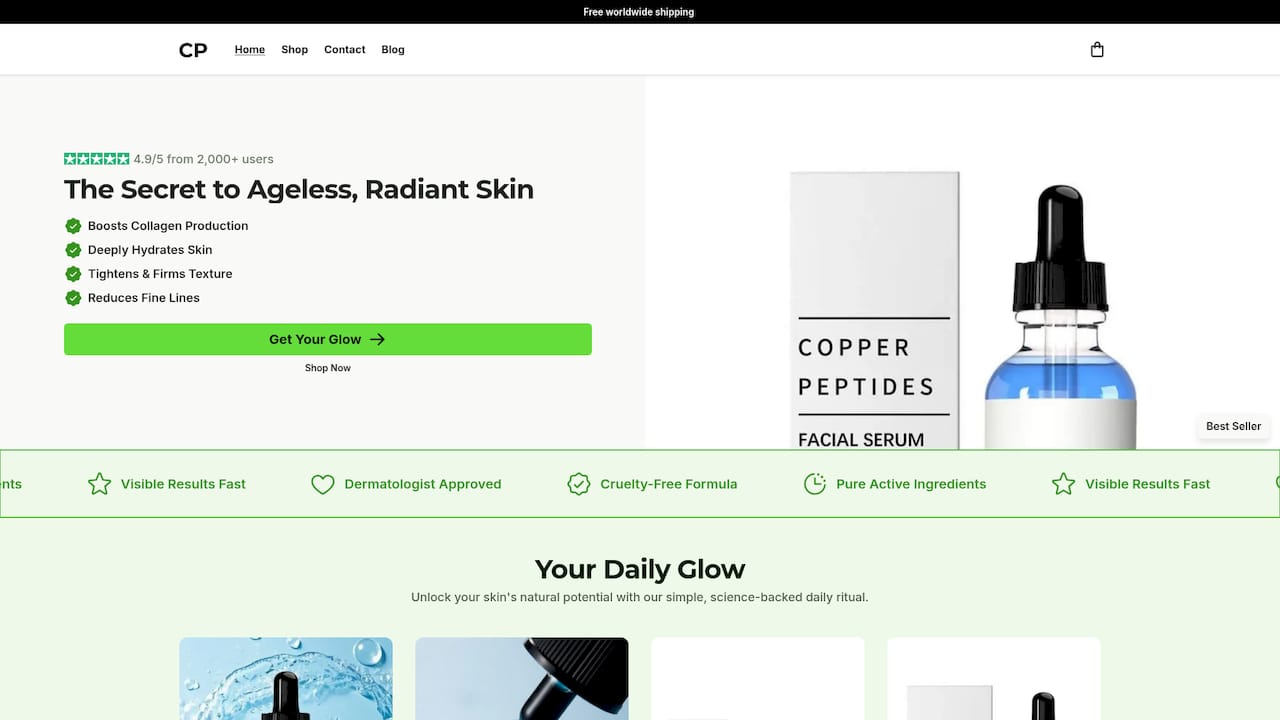
It’s dermatologist-endorsed, cruelty-free, and formulated for all skin types including sensitive. Most users see visible improvement in fine lines and skin firmness within four to six weeks of consistent use. A robust return policy means you can try it without financial risk.
Trust signals at a glance:
- Dermatologist-endorsed formulation
- Safe for sensitive skin and all skin types
- Cruelty-free
- Return policy for purchase confidence
- Available online with direct-to-consumer pricing
Ready to start? Visit the Copper Peptide Anti‑Aging Serum product page for full formulation details, pricing, size, and ordering information.
Authoritative sources and further reading
- PMC: Copper peptides and skin repair (PMC2699641) — Peer-reviewed review of copper peptide mechanisms in wound healing and collagen stimulation; supports ingredient science claims.
- PubMed: GHK-Cu and skin aging (36594795) — Clinical evidence for GHK-Cu’s role in matrix remodeling and anti-aging applications.
- PMC: Retinoids and skin aging (PMC3140905) — Peer-reviewed overview of retinoid mechanisms and clinical evidence for wrinkle reduction.
- NEJM: Topical tretinoin for photoaged skin — Foundational clinical study on retinoid efficacy; supports retinoid category claims.
- Good Housekeeping: Best anti-aging serums, tested — Consumer lab testing data including the 4-week niacinamide result and timeline benchmarks.
- Wirecutter: Best skincare for aging skin — Dermatologist-reviewed roundup emphasizing barrier health and simplified routines.
- Vogue: A dermatologist’s guide to anti-aging serums — Dermatologist guidance on core active ingredients and early preventative use.
- Byrdie: Best anti-aging serums, tested — Consumer testing data supporting peptide + antioxidant + humectant formulas for smoothing.
- Allure: Botox in a bottle — why the phrase is a misnomer — Expert explanation of topical neuropeptide limits versus injectable neuromodulators.
- CNN Underscored: Best anti-aging serums, per dermatologists — Board-certified dermatologist endorsements and product testing methodology.
- Peptasticlabs: How peptides drive collagen production — Partner resource summarizing peptide mechanism research and collagen pathways.