

Your most effective anti-aging routine in your 50s comes down to four simple steps in the morning (gentle cleanser, hydrating serum, ceramide moisturizer, and SPF 30+) and a streamlined evening of cleanser, targeted treatment (retinoid or peptide serum), richer moisturizer, and an optional facial oil. Simplicity ensures consistency and effectiveness. The American Academy of Dermatology backs daily broad-spectrum SPF and consistent moisturization as the non-negotiable foundation. Evidence-supported actives — retinoids, hyaluronic acid, and copper peptides — do the heavier lifting when introduced slowly, starting at 2–3 nights per week. Hyaluronic acid can show visible hydration changes within days; retinoids and vitamin C typically take 8–12 weeks to show measurable results. Consistency beats complexity every time.
Table of Contents
- What should your morning anti-aging routine look like in your 50s?
- How to build an evening routine that treats without irritating
- How do you introduce retinoids and actives safely after 50?
- Which ingredients actually work for mature skin after 50?
- What lifestyle habits actually support skin health in your 50s?
- When should you pause a product and see a dermatologist?
- Why copper peptide serum fits this routine so well
- Key Takeaways
- The case for keeping it simple
- The Copperpeptides Copper Peptide Anti-Aging Serum is built for this routine
What should your morning anti-aging routine look like in your 50s?
A simple four-step morning routine outperforms a complicated ten-step one for most people over 50, mainly because you’ll actually do it every day.
- Gentle cleanser: Oil production slows significantly after 50, so a foaming or gel cleanser designed for oily skin will strip your barrier. Reach for a cream or micellar cleanser that removes overnight buildup without leaving skin tight.
- Hydrating serum: Apply a hyaluronic acid or peptide serum to damp skin. HA draws moisture into the upper layers of skin and can plump fine lines noticeably fast. Layer thinner serums before thicker ones.
- Ceramide moisturizer: Lock that hydration in. Ceramides, glycerin, and squalane are the trio to look for on the label. Ceramides and hyaluronic acid together support barrier repair and improve hydration quickly — a combination that matters more as skin thins with age.
- Broad-spectrum SPF 30+: Apply an appropriate amount to your face, and extend it to your neck, décolleté, and the backs of your hands. These areas age visibly and are almost always skipped. Reapply every two hours if you’re outdoors. A tinted SPF layers better under makeup and removes the “white cast” problem entirely.
Pro Tip: Choose fragrance-free, low-irritant formulas across every morning step. Fragrance is the single most common trigger for sensitivity in mature skin, and the irritation it causes can undo the benefits of every other product in your routine.
How to build an evening routine that treats without irritating
Nighttime is when your skin repairs itself, which makes it the right window for targeted treatments. The sequence matters as much as the products.
Start with a thorough cleanse. If you wore SPF or makeup, a double cleanse (an oil-based cleanser followed by a gentle water-based one) removes residue that a single wash misses. Skip the double cleanse on bare-skin days.
Your targeted treatment step is where the real work happens. Rotate between retinoid nights and peptide/serum nights rather than stacking both every evening. Retinoids are the gold standard for collagen support, but drier, sensitive 50s skin often struggles with daily use. Peptide serums, including copper peptide formulas, fill the off-nights and support collagen without the irritation risk.
| Night | Treatment | Notes |
|---|---|---|
| Mon | Peptide serum | Nightly or alternate |
| Tue | Retinoid | Start 2–3x/week |
| Wed | Peptide serum | Hydration focus |
| Thu | Retinoid | Only if tolerating well |
| Fri | Peptide serum | Barrier support |
| Sat | Rest or gentle HA | Skip actives if irritated |
| Sun | Retinoid | Increase frequency slowly |
Finish with a richer moisturizer than you use in the morning. Niacinamide in your nighttime moisturizer helps repair the barrier and calm any redness from actives. On very dry nights, press a few drops of a facial oil (rosehip or squalane) over the top.
Pro Tip: Try the buffering technique: apply your ceramide moisturizer first, wait two minutes, then apply the retinoid on top. This slows absorption slightly and cuts irritation dramatically for sensitive, drier skin.
How do you introduce retinoids and actives safely after 50?
Start slow. Two to three nights per week is the right entry point for retinoids, and you should stay there for at least four weeks before considering an increase. The same patience applies to vitamin C and chemical exfoliants.
- Begin with a low-concentration retinol (0.025%–0.05%) or a retinaldehyde formula, which is gentler than prescription tretinoin.
- Add only one new active at a time. Introducing retinol and vitamin C in the same week makes it impossible to identify which one caused a reaction.
- Initial weeks: retinoid use on a few nights per week, peptide serum on other nights, HA nightly.
- After a month or so of tolerance, consider increasing retinoid frequency and introducing a low-concentration vitamin C in the morning.
- After some weeks of consistent use, reassess tolerance and consider strengthening the retinoid or adding gentle exfoliation if appropriate.
Stop a product immediately if you experience sustained redness or swelling beyond two weeks, stinging that doesn’t resolve after 30 minutes, or bleeding and infected skin. Prolonged flaking that doesn’t respond to moisturizer is also a signal to pull back.
When irritation hits, strip the routine back to basics: gentle cleanser, ceramide moisturizer, and SPF only. Give skin five to seven days to recover before reintroducing any active. Dermatology experts warn that layering multiple actives at once on older skin can worsen outcomes because inflammation heals more slowly after 50.
Which ingredients actually work for mature skin after 50?
By 50, collagen loss and slower cell turnover are the two main drivers of deeper lines, reduced elasticity, and increased dryness. The ingredients below address those mechanisms directly.
| Ingredient | What it does | Best time to use | Sensitivity notes |
|---|---|---|---|
| Retinoids | Speeds cell turnover, supports collagen | PM only | Start slow; buffer with moisturizer |
| Hyaluronic acid | Draws moisture into skin; plumps quickly | AM + PM | Well tolerated by almost all skin types |
| Copper peptides | Supports collagen and firming; generally well tolerated | AM or PM | Good alternative when retinoids irritate |
| Ceramides | Repairs and maintains skin barrier | AM + PM | No irritation risk; use freely |
| Vitamin C (stabilized) | Brightens, supports collagen, antioxidant | AM | Use L-ascorbic acid or ascorbyl glucoside |
| Broad-spectrum SPF | Prevents photoaging; protects collagen | AM (reapply) | Choose mineral for sensitive skin |
On labels, look for high-purity hyaluronic acid (both high and low molecular weight for surface and deeper hydration), ceramide types NP, AP, and EOP, and stabilized vitamin C forms. Avoid fragrance, high alcohol content, and physical scrubs with coarse particles. Aggressive scrubs create microtears in thinning skin and should be replaced with low-frequency gentle chemical exfoliation when needed.

Dermatologist Dr. Levin advises prioritizing barrier-repairing ingredients like ceramides and copper peptides rather than layering multiple actives, a point worth taking seriously when building any skincare routine for mature skin.
What lifestyle habits actually support skin health in your 50s?
Visible improvement comes from two places: what you put on your skin and how you treat your body. Neither works as well without the other.
- Sleep: Skin repairs itself during deep sleep. Seven to nine hours is the target; less than six accelerates visible aging.
- Hydration: Drinking enough water supports HA’s ability to hold moisture in the skin. Dehydration shows on the face faster after 50.
- Diet: Protein supports collagen synthesis. Antioxidant-rich foods (berries, leafy greens, fatty fish) reduce oxidative stress that ages skin from the inside. Midlife dietary choices have an outsized impact on long-term health outcomes.
- Smoking and alcohol: Both accelerate collagen breakdown and dehydrate skin. Cutting back produces visible skin improvements within weeks.
- Protective clothing and hats: SPF alone doesn’t cover everything. A wide-brim hat on sunny days reduces cumulative UV damage that no serum can reverse.
What to expect on a consistent routine:
At two weeks, skin feels softer and less tight. Moisturizers and HA work fast. At six weeks, texture begins to smooth and fine lines look less pronounced as actives start working. At 3–6 months, firming, reduced hyperpigmentation, and more even tone become noticeable with continued daily use.
When should you pause a product and see a dermatologist?
Most early irritation from actives is normal and temporary. Redness and mild flaking in the first two weeks of retinoid use is expected. What’s not normal is irritation that escalates or doesn’t resolve.
See a dermatologist for severe or persistent irritation lasting beyond two weeks, any suspicious lesion (bleeding, rapidly changing moles, new dark spots), or when you want prescription-strength treatments like tretinoin. Bring your full product list, a timeline of when symptoms started, and photos if possible. The AAD recommends consulting a board-certified dermatologist for personalized guidance on prescription actives and skin cancer screening.
At home, when a reaction occurs: stop the suspected product, use only a gentle cleanser, ceramide moisturizer, and SPF for five to seven days, and avoid all actives until skin is calm. Don’t try to push through persistent inflammation.
Why copper peptide serum fits this routine so well
Copper peptides support collagen production and firming with a lower irritation profile than high-strength retinoids, which makes them a practical fit for sensitive mature skin. They’re also useful as a retinoid alternative on off-nights, or as a daily option for anyone who can’t tolerate retinoids at all.
- Placement: Use the Copperpeptides Copper Peptide Anti-Aging Serum in the PM on peptide nights, or in the AM after cleansing and before moisturizer. It layers cleanly under SPF.
- Frequency: Daily use is well tolerated. Patch test on the inner arm for 24 hours before full-face application.
- Pairing: Follow with a ceramide moisturizer to lock in the serum’s hydration benefits. The formula combines high-purity copper peptides with medical-grade hyaluronic acid, so you get collagen support and immediate plumping in one step.
- Timeline: Hydration and plumping are often noticeable within the first week. Firming and visible line reduction build over 4–6 weeks of consistent use.
The serum is dermatologist-endorsed and formulated to be safe for all skin types, including sensitive skin. Learn more about copper peptide benefits and how the formula works before adding it to your routine.
Key Takeaways
A consistent, simple anti-aging routine built on daily SPF, barrier-supportive hydration, and slowly introduced actives delivers the most reliable results for skin in your 50s.
| Point | Details |
|---|---|
| Daily SPF is non-negotiable | Broad-spectrum SPF 30+ prevents photoaging and protects collagen every single day. |
| Introduce actives slowly | Start retinoids at 2–3 nights per week and add one new active at a time to avoid irritation. |
| Hydration shows fast | Hyaluronic acid and ceramide moisturizers can improve skin feel within days; actives take 8–12 weeks. |
| See a dermatologist when needed | Persistent irritation beyond two weeks, suspicious lesions, or interest in prescription treatments all warrant a professional visit. |
| Copperpeptides serum fits this routine | The Copper Peptide Anti-Aging Serum pairs high-purity copper peptides with medical-grade HA for firming and hydration with low irritation risk. |
The case for keeping it simple
The most common mistake in 50s skincare isn’t skipping actives. It’s overcomplicating the routine until it becomes unsustainable. A five-product shelf you use every day beats a fifteen-product shelf you rotate through inconsistently. Skin in your 50s responds better to steady, gentle input than to aggressive interventions, and that’s actually good news. It means you don’t need to spend more or do more. You need to do the right things reliably.
Skin responses vary. What works for one person may need adjustment for another, especially with actives like retinoids. Patch test new products, introduce changes one at a time, and don’t hesitate to consult a dermatologist when something doesn’t feel right.
The Copperpeptides Copper Peptide Anti-Aging Serum is built for this routine
Fewer products, better ingredients, real results. The Copperpeptides Copper Peptide Anti-Aging Serum delivers high-purity copper peptides and medical-grade hyaluronic acid in a single, dermatologist-endorsed formula designed specifically for sensitive, mature skin. No fragrance. No unnecessary additives. Just the two ingredients that support collagen, firm texture, and restore hydration where 50s skin needs it most.
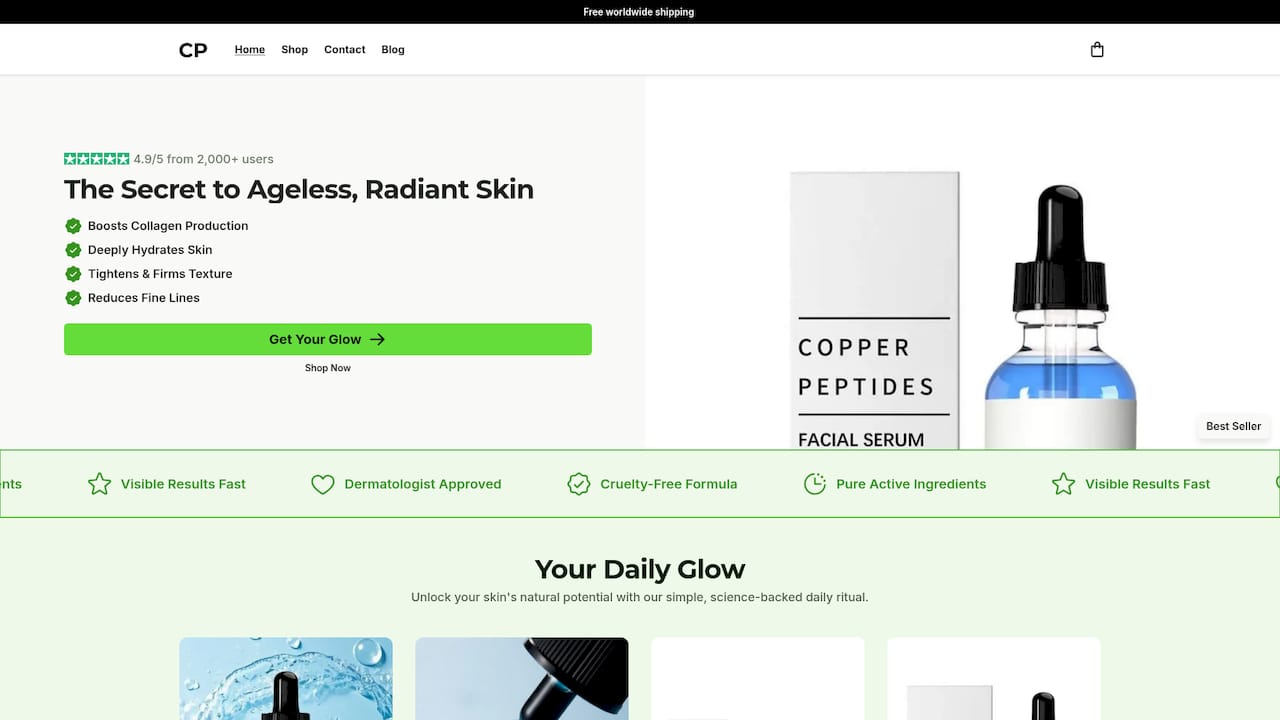
Apply it after cleansing on peptide nights, or in the morning before your moisturizer and SPF. Visible hydration often shows within the first week; firming builds over 4–6 weeks of daily use. It’s backed by a return policy that removes the risk from trying it. Visit the Copperpeptides store to review the full formulation details and place your order.