

What copper peptides actually do for your skin and hair
Copper peptides, specifically the compound GHK-Cu (glycyl-L-histidyl-L-lysine copper), are among the most clinically studied molecules in modern skincare. The short version: they tell your skin to make more collagen and elastin, repair damaged tissue, and defend against oxidative stress. For hair, they increase scalp blood flow, support melanin production, and may extend the active growth phase of hair follicles.
Here is what the research shows they do:
- Stimulate collagen and elastin synthesis, improving skin firmness and reducing the appearance of fine lines
- Accelerate wound healing and barrier repair, making them especially useful after procedures or for compromised skin
- Reduce inflammation and oxidative stress caused by UV exposure and environmental pollution
- Support hair follicle health by increasing scalp circulation and maintaining natural hair color through copper’s role in melanin production
- Signal fibroblasts (the cells responsible for producing structural proteins) to ramp up activity, a mechanism that declines naturally with age
Clinical highlight: A 1998 clinical study found that copper peptide application increased collagen production by 70% after one month, compared to a 40% increase with tretinoin over the same period.
GHK-Cu is the primary form studied for these effects. It occurs naturally in human plasma, saliva, and urine, but its concentration drops significantly with age, which is exactly why topical supplementation has attracted so much scientific interest.
Table of Contents
- How GHK-Cu works at the molecular level
- Scientifically supported skin benefits of copper peptides
- How copper peptides support hair health
- How copper peptides compare to retinoids, vitamin C, and other peptides
- Safety, side effects, and who should be cautious
- How to build copper peptides into your skincare routine
- Why dermatologists recommend copper peptides for long-term skin health
- Copperpeptides serum: high-purity GHK-Cu with medical-grade hyaluronic acid
- Key Takeaways
How GHK-Cu works at the molecular level
GHK-Cu is not a synthetic lab invention. It is a naturally occurring copper-binding peptide found in human plasma, saliva, and urine, where it functions as a cell-signaling molecule from early in life. The problem is that plasma levels of GHK-Cu fall sharply as we age, and that decline correlates with reduced skin repair capacity and slower collagen turnover.
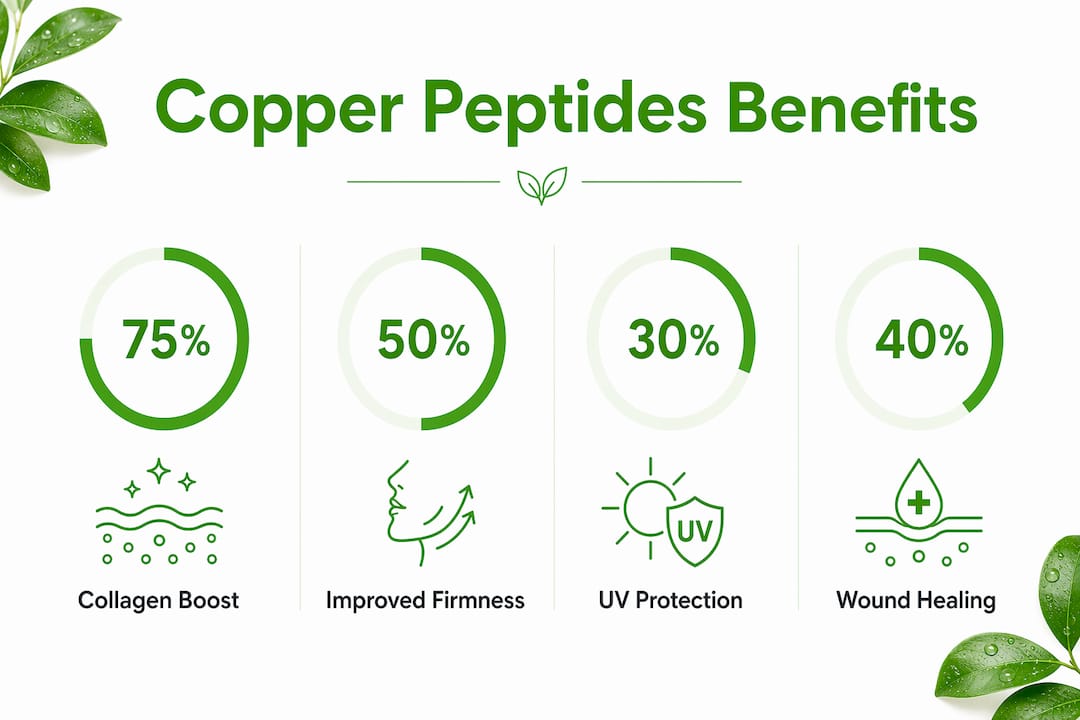
At the cellular level, GHK-Cu works primarily by activating fibroblasts, the connective tissue cells that produce collagen, elastin, and glycosaminoglycans like hyaluronic acid. When GHK-Cu binds to receptors on fibroblast surfaces, it triggers a cascade of gene expression changes that upregulate the production of these structural proteins. Research published in peer-reviewed journals has identified GHK-Cu as influencing over 4,000 human genes, many of them involved in tissue remodeling, inflammation control, and antioxidant defense.
Its antioxidant activity comes from copper’s role as a cofactor for superoxide dismutase, an enzyme that neutralizes free radicals. GHK-Cu also modulates the activity of matrix metalloproteinases (MMPs), enzymes that break down collagen. By keeping MMP activity in check, it slows the structural degradation that drives visible aging.
Key mechanisms in brief:
- Fibroblast activation: Directly stimulates cells that build skin’s structural matrix
- Gene expression modulation: Influences thousands of genes tied to repair and regeneration
- Antioxidant support: Activates superoxide dismutase to neutralize free radicals
- MMP regulation: Slows collagen breakdown by moderating destructive enzyme activity
- Anti-inflammatory signaling: Reduces pro-inflammatory cytokines that accelerate skin aging
Pro Tip: GHK-Cu is water-soluble and carries a faint blue tint in its active form. If your serum has a slight blue color, that is a reliable visual indicator that active copper complexes are present.
Scientifically supported skin benefits of copper peptides
The clinical evidence for copper peptides’ skin benefits is more substantial than for most trending skincare ingredients, and it spans multiple mechanisms rather than a single effect.
Collagen production and skin firmness
The most replicated finding is the collagen-stimulating effect. That 1998 study comparing copper peptides to tretinoin is frequently cited because the margin was significant: a notably higher increase in collagen production with copper peptides compared to tretinoin over one month. Tretinoin is considered the gold standard for topical anti-aging, so outperforming it on collagen synthesis is not a minor claim. Subsequent research has confirmed that GHK-Cu also increases elastin and glycosaminoglycan production, contributing to improved skin bounce and moisture retention.
Antioxidant and UV protection
Copper peptides provide antioxidant and anti-inflammatory protection that shields skin from UV radiation and pollution. This is not a replacement for SPF, but it meaningfully reduces the oxidative burden that accumulates from daily environmental exposure. For people living in cities or spending significant time outdoors, that secondary layer of protection matters.
Barrier repair and wound healing
GHK-Cu accelerates the skin’s natural healing response. Studies have shown it speeds up re-epithelialization (the process of rebuilding the outer skin layer after damage) and reduces scar formation. This makes it particularly valuable for post-procedure recovery, whether after chemical peels, microneedling, or laser treatments.
- Increased collagen and elastin synthesis for firmer, more elastic skin
- Reduced fine lines and wrinkles through structural protein rebuilding
- Improved skin hydration via glycosaminoglycan stimulation
- Faster wound and barrier recovery after damage or procedures
- Reduced inflammation that would otherwise accelerate skin aging
- Antioxidant defense against UV and pollution-induced free radicals
How copper peptides support hair health
Hair benefits are the less-discussed side of copper peptide research, but the evidence is genuinely promising, even if the human trial data is still catching up to the animal and in vitro studies.
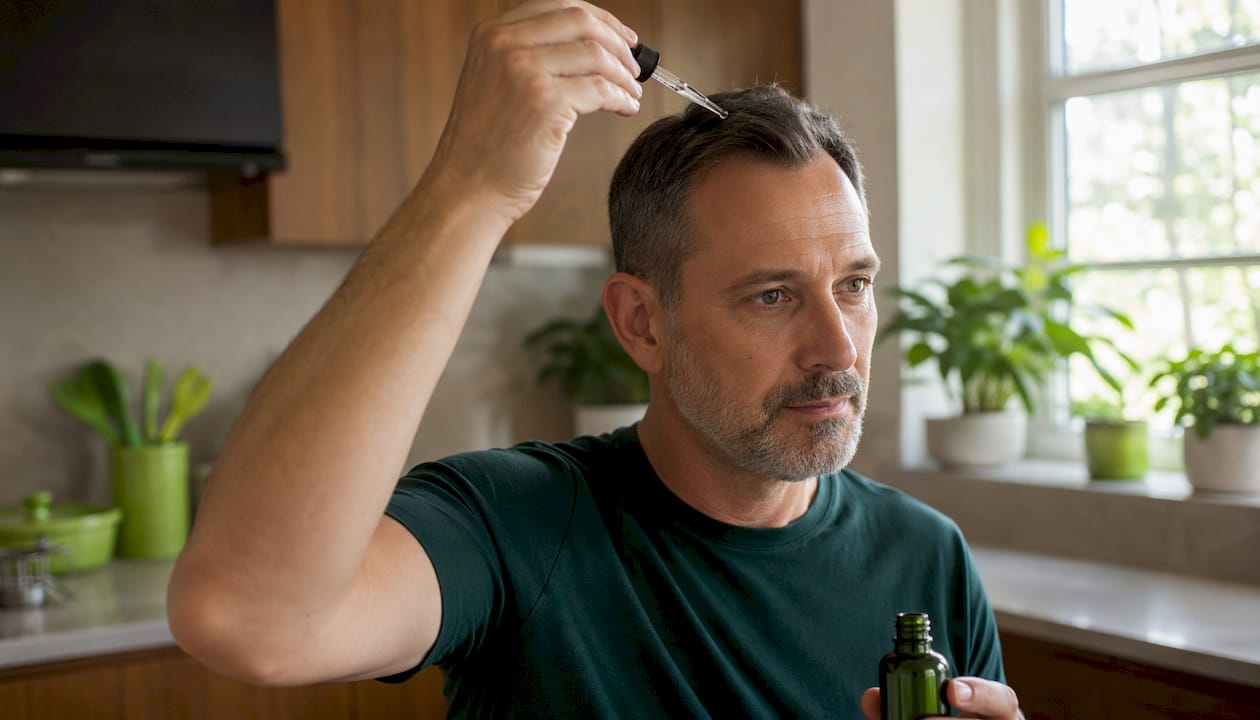
The primary mechanism for hair is circulatory. Copper peptides increase blood flow to the scalp, which delivers more oxygen and nutrients to hair follicles. Follicles that are better nourished stay in the anagen (active growth) phase longer, which translates to less shedding and potentially thicker strands over time.
- Scalp circulation: Improved blood flow nourishes follicles and may reduce hair thinning
- Melanin production: Copper is a required cofactor for tyrosinase, the enzyme that produces melanin; adequate copper levels help maintain natural hair color
- Extended growth cycle: Preliminary research suggests GHK-Cu may prolong the anagen phase, keeping follicles active longer before they enter the resting phase
- Strand thickness: Some studies indicate increased hair shaft diameter with consistent use, though larger human trials are still needed
- Follicle protection: Antioxidant properties may protect follicles from oxidative damage that contributes to premature thinning
The honest caveat: most of the strongest hair data comes from animal models or small human studies. The results are encouraging enough that copper peptides appear in a growing number of scalp serums and hair growth formulations, but they should be considered a supportive ingredient rather than a standalone treatment for significant hair loss.
Pro Tip: For hair applications, look for leave-on scalp serums rather than shampoos or conditioners. Rinse-off products do not give copper peptides enough contact time to signal follicle activity effectively.
How copper peptides compare to retinoids, vitamin C, and other peptides
Copper peptides occupy a specific niche in the anti-aging ingredient hierarchy. Understanding where they fit prevents both over-reliance and under-use.
| Ingredient | Primary Mechanism | Strength | Limitation | Best Use Case |
|---|---|---|---|---|
| GHK-Cu (copper peptides) | Fibroblast activation, collagen synthesis, barrier repair | Multi-mechanism; suits sensitive skin | Gradual results; not a wrinkle eraser | Long-term maintenance, post-procedure recovery |
| Retinoids (retinol, tretinoin) | Accelerates cell turnover, increases collagen | Strong clinical evidence for wrinkle reduction | Irritation, photosensitivity, not for sensitive skin | Active wrinkle treatment |
| Vitamin C (L-ascorbic acid) | Antioxidant, collagen co-factor, brightening | Excellent for hyperpigmentation and UV defense | Unstable, can irritate, conflicts with copper peptides | Brightening, morning antioxidant protection |
| Signaling peptides (e.g., Matrixyl) | Stimulate collagen via different receptor pathways | Gentler than retinoids | Less studied than GHK-Cu | Collagen support without irritation |
| Carrier peptides | Deliver trace minerals to skin | Targeted mineral delivery | Narrow function | Mineral supplementation for skin |
The key distinction is that copper peptides do not replace retinoids for active wrinkle reduction. Retinoids drive faster cell turnover and have decades of clinical data behind them for that specific outcome. What copper peptides do better is support the skin’s structural foundation and healing capacity, which retinoids can actually compromise with prolonged use by thinning the epidermis.
Vitamin C and copper peptides are often discussed together because both support collagen, but they work through different pathways and can interfere with each other when applied simultaneously. Vitamin C at low pH can destabilize copper peptide complexes, reducing the efficacy of both. The solution is simple: use them at different times of day rather than layering them.
Safety, side effects, and who should be cautious
Copper peptides have a strong safety profile for most people, but a few specific situations warrant attention.
Common side effects (generally mild):
- Mild redness or tingling on first use, especially on sensitive skin
- Temporary skin purging as cell turnover increases
- Rare cases of contact dermatitis in individuals with copper sensitivity
Situations requiring caution:
- Wilson’s disease: A genetic condition causing copper accumulation in the body. Topical copper peptides are contraindicated for anyone with this diagnosis.
- Excessive use: More is not better. Overloading skin with copper can paradoxically generate oxidative stress rather than preventing it. Standard serum concentrations (typically 1–3%) are formulated to stay within the therapeutic range.
- Combining with AHAs, BHAs, or vitamin C: High-strength exfoliating acids and vitamin C can alter the pH environment and destabilize copper peptide complexes, reducing their potency. This is not a safety risk so much as an efficacy one, but it is worth taking seriously.
- Post-procedure skin: While copper peptides generally support healing, always confirm with your dermatologist before applying any active ingredient to freshly treated skin.
Pro Tip: Start with copper peptides every other night rather than daily. This gives your skin time to adjust and lets you identify any sensitivity before committing to daily use.
The ingredient’s compatibility with sensitive skin is one of its genuine advantages over retinoids. Dermatologists frequently recommend it for people who cannot tolerate retinol or strong acids, precisely because it works through signaling rather than chemical exfoliation.
How to build copper peptides into your skincare routine
Getting the most from copper peptides comes down to formulation choice, timing, and what you pair them with.
-
Choose a leave-on serum. Cleansers and rinse-off products wash away the active copper complexes before they can penetrate. A leave-on serum is the only format that gives GHK-Cu enough contact time to signal fibroblast activity. The faint blue tint in quality serums confirms active copper is present.
-
Apply after cleansing and toning, before moisturizer. Serums go on clean skin while it is still slightly damp. Applying before heavier creams or oils allows the water-soluble peptides to absorb without a barrier blocking them.
-
Use at night for repair. Skin’s repair processes are most active during sleep, and copper peptides’ healing and collagen-stimulating effects align well with this window. Morning use is fine too, but if you are choosing one application, evening is the stronger call.
-
Separate from vitamin C and exfoliating acids. If you use vitamin C in the morning, use copper peptides at night. If you use AHAs or BHAs on certain nights, skip the copper peptide serum on those same nights. This is not about safety; it is about keeping both ingredients at their most effective.
-
Be consistent for at least four to six weeks. Copper peptides work through gradual structural changes, not surface-level effects. Collagen synthesis takes time to show up as visible improvement. Expecting results in a week will lead to disappointment; expecting them at the six-week mark is realistic.
-
Pair with niacinamide or hyaluronic acid for amplified hydration. Both are compatible with copper peptides and complement their effects. Niacinamide supports the skin barrier, and hyaluronic acid locks in moisture that copper peptides help the skin produce more of on its own.
Pro Tip: If you use retinol, do not layer it with copper peptides on the same night. Alternate them: copper peptides on Monday, Wednesday, and Friday; retinol on Tuesday and Thursday. This preserves the benefits of both without the risk of interaction or over-stimulation.
Why dermatologists recommend copper peptides for long-term skin health
The dermatology community’s growing endorsement of copper peptides is grounded in something specific: these molecules work with the skin’s biology rather than against it.
Dermatologist Dr. Alexis Granite has described copper peptides as ingredients focused on skin longevity and barrier resilience, supporting repair and structural integrity rather than delivering instant cosmetic fixes. That framing matters because it sets accurate expectations and explains why copper peptides belong in a long-term regimen rather than a quick-fix rotation.
Several properties make copper peptides particularly well-suited for sensitive and post-procedure skin. Unlike retinoids, they do not thin the epidermis or cause photosensitivity. Unlike strong acids, they do not disrupt the acid mantle. They work by reducing inflammation and supporting barrier recovery, which is exactly what compromised skin needs.
The ingredient’s place in comprehensive anti-aging regimens is as a foundation layer, not a hero ingredient competing with retinoids or vitamin C. Dermatologists who recommend copper peptides typically position them as the ingredient that keeps the skin’s structural machinery running while other actives address specific concerns like hyperpigmentation or accelerated cell turnover.
Research note: GHK-Cu has been shown to influence over 4,000 human genes involved in tissue remodeling and repair, a scope of biological activity that few topical ingredients can match.
For anyone building a serious anti-aging routine, copper peptides are not optional. They address the foundational processes, collagen synthesis, barrier integrity, and oxidative defense, that determine how well skin ages over years, not just how it looks after a single application.
Copperpeptides serum: high-purity GHK-Cu with medical-grade hyaluronic acid
If you have read this far, you already know that formulation quality determines whether copper peptides actually deliver their benefits.
If you have read this far, you already know that formulation quality determines whether copper peptides actually deliver their benefits. The concentration needs to be in the therapeutic range, the vehicle needs to be a leave-on serum, and the supporting ingredients need to amplify rather than interfere.
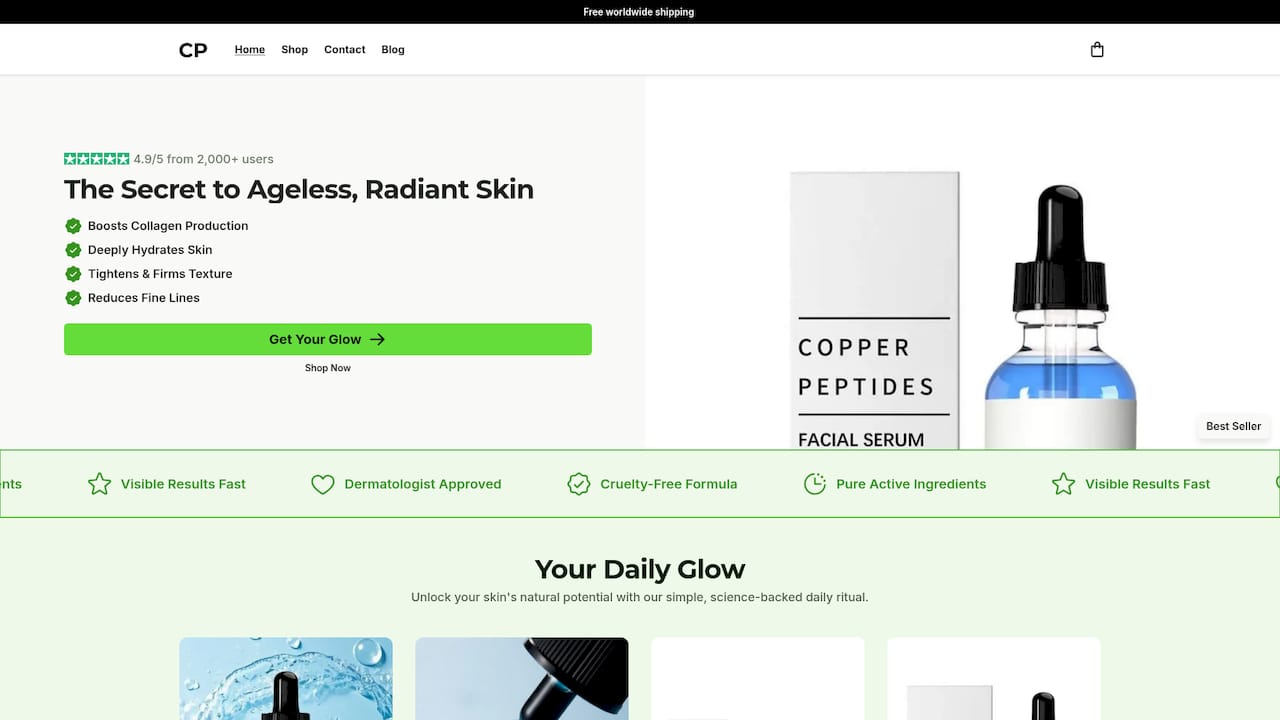
The Copperpeptides anti-aging serum is built around high-purity GHK-Cu paired with medical-grade hyaluronic acid, a combination that addresses both the structural and hydration sides of skin aging simultaneously. The hyaluronic acid is not a filler ingredient here; it works alongside the copper peptides to lock in the moisture that GHK-Cu stimulates the skin to produce more of naturally.
The formulation is dermatologist-endorsed and designed for all skin types, including sensitive skin. That is not a marketing claim; it reflects the ingredient’s mechanism. Because copper peptides signal repair rather than force exfoliation, they are tolerated by people who have struggled with retinoids or acids. Visible results typically appear within four to six weeks of consistent use, which aligns with the timeline for measurable collagen synthesis changes.
Copperpeptides backs the serum with a return policy built around confidence in the product’s efficacy. If you are ready to add a clinically grounded, dermatologist-endorsed copper peptide serum to your routine, the product page has full ingredient details and usage guidance.
Key Takeaways
GHK-Cu copper peptides stimulate collagen and elastin synthesis, provide antioxidant protection, and support long-term skin barrier integrity through mechanisms backed by peer-reviewed clinical research.
| Point | Details |
|---|---|
| Collagen boost is significant | A clinical study found copper peptides increased collagen production by 70% in one month, outperforming tretinoin’s 40% increase over the same period. |
| GHK-Cu influences thousands of genes | Research shows GHK-Cu affects over 4,000 human genes tied to tissue repair, inflammation, and antioxidant defense. |
| Hair benefits are real but emerging | Copper peptides increase scalp blood flow and support melanin production; larger human trials are still ongoing. |
| Avoid mixing with vitamin C or acids | Combining copper peptides with AHAs, BHAs, or vitamin C in the same routine reduces the efficacy of both. |
| Copperpeptides serum | High-purity GHK-Cu with medical-grade hyaluronic acid; dermatologist-endorsed and formulated for all skin types including sensitive skin. |