

Copper peptides, specifically GHK-Cu, do promote collagen-related processes in skin, backed by in vitro, animal, and small human clinical trials. Evidence quality ranges from strong at the cellular level to moderate in clinical settings, with visible changes typically appearing over 8 to 12 weeks. Expect subtle firmness and texture improvements rather than a dramatic wrinkle erasure.
TL;DR:
- Human studies indicate that topical GHK-Cu can improve collagen production and reduce wrinkle volume over 8 to 12 weeks, but results vary depending on the formulation and delivery system.
- Copper’s role involves stimulating fibroblasts to produce collagen and elastin, supporting enzyme activity for collagen cross-linking, and modulating enzymes that degrade collagen, with anti-inflammatory effects also aiding skin repair.
- Most visible improvements include subtle firmness, better texture, and hydration, while deep wrinkles are unlikely to respond without invasive procedures; consistent use over several weeks is essential.
- Use copper peptide products once daily in the evening, avoiding combination with retinoids or exfoliating acids in the same routine, and ensure proper packaging to prevent degradation.
- Larger-scale, independent clinical trials are still needed to fully verify efficacy, but current evidence supports copper peptides as a supportive anti-aging tool for maintenance and early intervention.
Table of Contents
- What Copper Peptides Collagen Research Is Actually About
- How Copper Peptides Support Collagen Synthesis and Skin Repair
- What the Studies Actually Found on Collagen and Skin Metrics
- Realistic Results: What to Expect and When
- Side Effects and What Not to Mix With Copper Peptides
- How to Use Copper Peptides for Collagen Support
- Where the Evidence Stands and What’s Still Unproven
- Where Copper Peptides Actually Fit in an Anti-Aging Routine
- The Copper Peptide Anti-Aging Serum From Copperpeptides
- Sources
- FAQ
What Copper Peptides Collagen Research Is Actually About
GHK-Cu is a naturally occurring peptide made of three amino acids (glycine, histidine, lysine) bound to a copper ion. Your body produces it on its own, and it shows up in blood plasma, saliva, and connective tissue, where it appears to play a role in tissue repair and wound signaling.
The catch is that levels drop as you age. Research shows that circulating GHK-Cu levels decline significantly with age, which may contribute to the visible signs of skin aging, according to background summaries on copper peptide GHK-Cu. That drop lines up with the timeline most people associate with visibly aging skin: thinning, slower healing, and reduced elasticity.
This decline is the entire rationale behind topical GHK-Cu formulations. If your skin is producing less of a peptide that once helped regulate repair and matrix maintenance, replacing some of it topically is a reasonable strategy, not a marketing gimmick. That is why you will see GHK-Cu turn up in:
- Post-procedure recovery serums used after microneedling or laser treatments
- Daily anti-aging formulas aimed at firmness and texture
- Specialist wound-care products, a use case that predates most cosmetic applications
- Products often paired with humectants like hyaluronic acid to support hydration alongside repair
The mechanism is not exotic. Copper peptides for collagen work because copper itself is essential to how your body builds and maintains connective tissue, a point that becomes clearer once you look at what happens inside the cell.
How Copper Peptides Support Collagen Synthesis and Skin Repair
Fibroblasts are the cells responsible for producing collagen and elastin, and GHK-Cu appears to switch them into a more active state. Multiple in vitro and animal studies report increased collagen and elastin protein synthesis after Cu-GHK exposure, along with faster wound healing in skin models, according to a review in the Journal of Cosmetic Dermatology summarized on PMC. That is the foundational finding almost everything else in this space builds on.
Copper’s second job is more technical but arguably more important. Copper is a required cofactor for lysyl oxidase (LOX), the enzyme that cross-links collagen fibers into a stable, load-bearing matrix. Without adequate LOX activity, collagen fibers stay loose and disorganized, which is part of why connective tissue weakens with age. The Linus Pauling Institute’s Micronutrient Information Center notes that copper also supports superoxide dismutase, an antioxidant enzyme that helps protect newly formed collagen from oxidative damage while it is still being assembled.
The third mechanism involves breakdown, not just synthesis. Skin aging is not only a matter of making less collagen. It is also a matter of destroying more of it through matrix metalloproteinases (MMPs), enzymes that chew through collagen and elastin, often at accelerated rates after UV exposure. GHK-Cu appears to shift the balance between MMPs and their natural inhibitors (TIMPs) toward preservation rather than degradation. One review describes GHK-Cu as functioning like a repair signal: it does not just tell fibroblasts to build more collagen, it simultaneously dials back the enzymes that would tear that collagen apart, favoring regeneration over breakdown, per the review on GHK-Cu’s repair and regenerative properties.
Put together, you get three complementary effects:
- Synthesis: fibroblasts upregulate collagen and elastin production
- Stabilization: copper-dependent LOX cross-links new collagen into a durable matrix
- Preservation: MMP activity is modulated, so less of the new collagen gets broken down before it can do its job
One detail from the research is easy to miss: GHK-Cu’s anti-inflammatory activity is not a side note. Chronic low-grade inflammation degrades collagen just as effectively as UV exposure does, and by calming that inflammatory signaling, copper peptides may be protecting collagen indirectly as much as they are stimulating it directly.
What the Studies Actually Found on Collagen and Skin Metrics
Laboratory work is the strongest layer of evidence here. Fibroblast cultures exposed to GHK-Cu at researched concentrations consistently show upregulated collagen and elastin gene expression, which is a well-replicated finding at the cellular level. Animal studies extend that into whole-tissue outcomes, with wound models showing accelerated collagen deposition and faster closure times when GHK-Cu is applied.
Human trials are where things get more interesting, and more limited. Some trials measuring topical GHK-Cu over 8 to 12 weeks reported improved collagen production alongside measurable reductions in wrinkle depth and volume compared with control formulations, according to the review of GHK-Cu’s regenerative properties. A handful of randomized, double-blind trials went further, comparing GHK-Cu directly against other topical peptides or plain control serums, and found larger reductions in wrinkle volume for the GHK-Cu arm in some of those small studies.
Statistic callout: Clinical trials tracking topical GHK-Cu over an 8 to 12 week window reported measurable improvements in both collagen production and wrinkle depth compared to control groups, though the size of that improvement varied depending on formulation and delivery system, per PMC’s review of GHK-Cu.
That last qualifier, formulation and delivery system, is the single biggest limitation in this entire body of research. A few points worth holding onto before you read too much into any one headline number:
- Human trials in this space tend to run small, often a few dozen participants, not the thousands you would see in a pharmaceutical trial
- Carrier systems vary widely between studies, and some researchers used encapsulated or nano-lipid delivery formats specifically to improve how much GHK-Cu actually penetrates skin
- Wrinkle volume and skin thickness are measured with different imaging tools across studies, which makes direct comparisons harder than headlines suggest
- Larger, standardized randomized controlled trials are still the missing piece for turning “promising” into “proven”
None of that erases the underlying signal. It does mean you should treat percentage improvements from any single small trial as directional evidence, not a guarantee of what will happen on your own skin.
Realistic Results: What to Expect and When
Firmer-feeling skin, subtle softening of fine lines, and improved texture and hydration are the outcomes most consistently reported. Dramatic changes to deep, established wrinkles are not what this ingredient class delivers, and any product claiming otherwise is overselling what peer-reviewed research supports.
Timelines line up fairly closely across the trials that exist. Most measurable improvements in collagen production and wrinkle metrics showed up around the 8 to 12 week mark, per the PMC review, which tracks with how long collagen remodeling actually takes at the cellular level. You will not see meaningful change in a week, no matter what a product label implies.
Where copper peptides genuinely shine:
- Maintenance: slowing the visible effects of ongoing collagen decline in skin that is not yet significantly wrinkled
- Post-procedure recovery: supporting the skin’s repair response after microneedling, laser resurfacing, or other treatments that create controlled damage
- Early intervention: addressing the first signs of thinning or dullness before deeper structural changes set in
Where they fall short is deep, static wrinkles that have already formed from decades of collagen loss. That is a job better suited to procedures like injectables or resurfacing, with copper peptides for wrinkles playing a supporting role in the surrounding skin rather than a corrective one.
Pro Tip: Take a baseline photo in consistent lighting before you start any new copper peptide product. Eight weeks is long enough for real change but short enough that memory alone will not catch it.

Side Effects and What Not to Mix With Copper Peptides
Mild irritation or sensitivity is the most common downside reported, and it usually shows up in people with already-reactive or compromised skin barriers. True allergic reactions to copper peptides are rare, but they are not impossible, and anyone with a known copper sensitivity should be cautious.
Compatibility with your existing routine matters more than most product labels let on. Here is how to think through the actives you are likely already using:
- Retinoids: stagger use rather than layering them in the same routine. Dermatology guidance generally recommends alternating nights or using retinoids in the evening and copper peptides at another time, since both actives push skin turnover and combining them can increase irritation, per Westlake Dermatology’s take on the GHK-Cu trend.
- Exfoliating acids (AHAs/BHAs): use with caution and probably not in the same session. Acids lower skin pH and increase permeability, which can amplify sensitivity when paired with a peptide serum.
- Vitamin C: compatibility depends heavily on the specific formulation and pH of each product. Some copper and vitamin C combinations can interact and reduce each other’s stability, so layering copper peptides with vitamin C safely usually means separating them by time of day rather than stacking them.
A patch test before full-face use is not optional caution, it is standard practice for any new peptide serum, and it is the fastest way to catch a reaction before it affects visible skin. If irritation persists beyond a few applications, or if you notice swelling, persistent redness, or blistering, stop use and talk to a dermatologist rather than pushing through it.
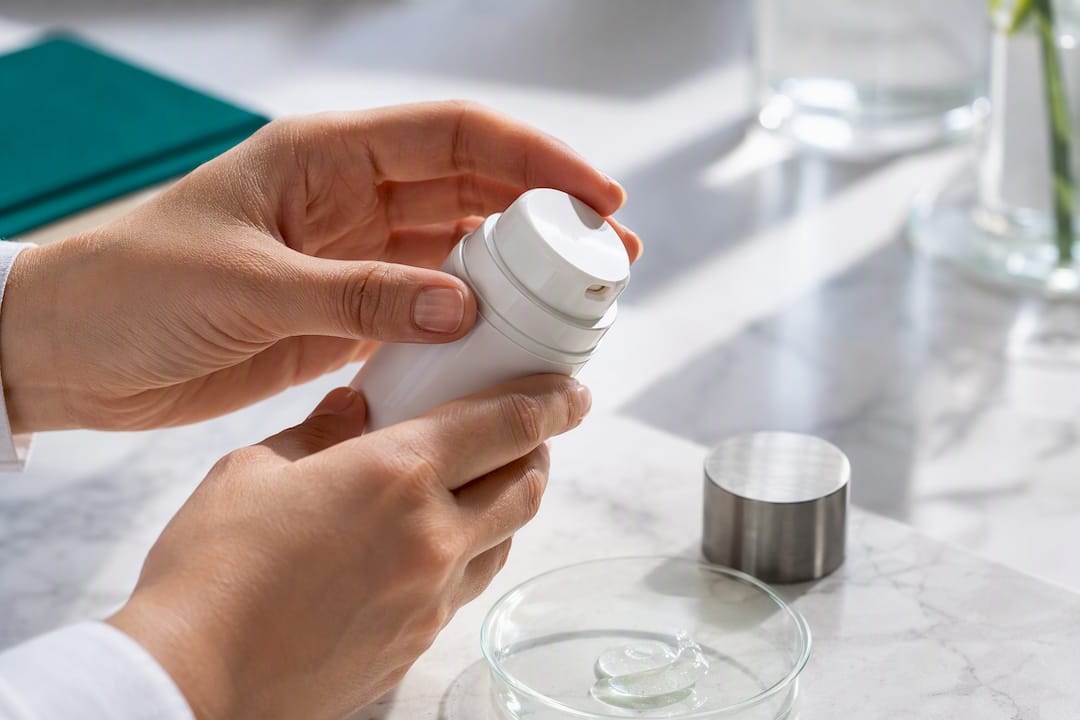
Pro Tip: Copper is a reactive mineral, and formulation stability directly affects both safety and results. Look for opaque or airless packaging, since light and air exposure can degrade GHK-Cu before it ever reaches your skin.
How to Use Copper Peptides for Collagen Support
Choosing a product starts with the label, not the marketing copy. Look for GHK-Cu specifically named in the ingredient list, not a vague reference to “copper” or “peptide complex.” A few other checkpoints matter just as much:
- Confirm the manufacturer discloses concentration or at least references supporting research, rather than relying on unquantified claims
- Check the packaging: opaque, airless, or pump-dispensed containers protect copper peptides from light and air degradation far better than open jars
- Verify the formulation pairs well with your skin type. Medical-grade hyaluronic acid is a common and well-tolerated partner ingredient for hydration alongside repair
- Prioritize brands that reference peer-reviewed formulation data over ones that just list ingredients and hope you assume efficacy
Application is straightforward once you have the right product. A typical routine looks like this:
- Cleanse with a gentle, non-stripping cleanser
- Apply the copper peptide serum to dry skin, once daily (evening is common, since it avoids potential interaction with daytime sun exposure and other actives)
- Follow with a moisturizer to lock in hydration
- Layer SPF every morning, regardless of what active ingredients you used the night before
Exact concentration guidance is genuinely hard to give in generic terms, because delivery system changes everything. Some trials used encapsulated or nano-lipid carriers specifically because raw GHK-Cu does not penetrate skin efficiently on its own, a formulation detail that can matter more than the raw percentage listed on a label.
Track your progress the same way researchers do: consistent photos, noted changes in skin feel or firmness, and a follow-up with a dermatologist if you are using copper peptides alongside a broader anti-aging plan. Give it a full 4 to 12 weeks before judging whether a specific product is working for your collagen production goals, since that is the window where the actual clinical data starts to show measurable change.
Where the Evidence Stands and What’s Still Unproven
The brand claims behind many copper peptide serums center on high-purity GHK-Cu combined with medical-grade hyaluronic acid, a pairing designed to support both collagen stimulation and hydration in one formulation. That combination reflects the two biggest levers dermatology research has identified for aging skin: structural repair and moisture retention.
Operationally, the strongest proof points tend to be:
- Dermatologist endorsements of gentle, well-formulated GHK-Cu products as reasonable additions to an anti-aging routine
- A commonly reported visible-results window of 4 to 6 weeks for well-formulated serums, consistent with the 8 to 12 week range seen in clinical trial data
- A return policy that reflects confidence in the product without needing to overstate what any single ingredient can do
None of that replaces the need for larger, independent trials. It does mean the underlying science is not speculative, even where individual brand claims still need their own verification.
Where Copper Peptides Actually Fit in an Anti-Aging Routine
Copper peptides earn a place in a maintenance-focused routine, not as a replacement for retinoids, vitamin C, or in-office procedures, but as a complement that supports repair while those other actives do the heavier lifting. If you are dealing with deep, established wrinkles, your money is better spent on a dermatologist consultation than a serum, no matter how well-formulated. The honest gap in this research is scale: the mechanisms are well understood, the small trials are encouraging, and the large, standardized studies that would settle the debate for good still do not exist.
— British
The Copper Peptide Anti-Aging Serum From Copperpeptides
If you have read this far, you already know what to look for: verifiable GHK-Cu content, a stable delivery system, and a formulation that does not ask you to guess at concentration. That is the exact gap the Copper Peptide Anti-Aging Serum from Copperpeptides is built to close.
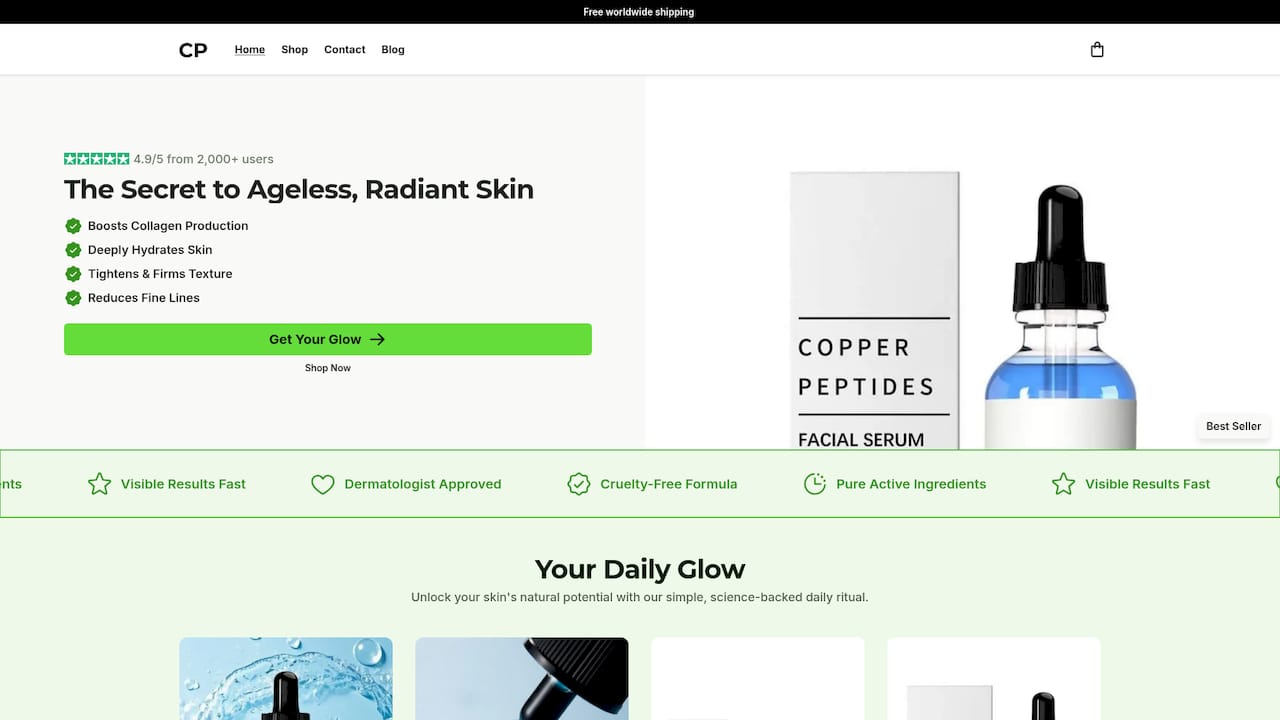
The formula pairs high-purity copper peptides with medical-grade hyaluronic acid, aimed at supporting collagen production while keeping skin hydrated through the repair process, and it is designed to work across skin types, including sensitive skin that reacts poorly to harsher actives. The serum is designed to be gentle, and users may observe visible improvements within four to six weeks, a timeline consistent with clinical research on GHK-Cu. Some orders may be backed by a return policy to support buyers who seek assurance before committing long term. If you are ready to move from research to routine, visit the Copper Peptide Anti-Aging Serum page and check current availability.
Sources
For deeper study, see the PMC review on Cu-GHK’s role in skin repair, the comprehensive review of GHK-Cu’s regenerative properties, and Copperpeptides’s own guide to copper peptide benefits.
- Using Copper to Improve the Well-Being of the Skin
- Copper peptide GHK-Cu: repair and regenerative properties (review)
- Copper | Micronutrient Information Center | Linus Pauling Institute
FAQ
What Are the Downsides of Copper Peptides?
The main downside is mild irritation or sensitivity in some users, along with the fact that results are gradual and modest rather than dramatic. Formulation quality also varies widely between brands, so a poorly stabilized product may underperform regardless of its listed ingredients.
What Should You Not Mix Copper Peptides With?
Avoid layering copper peptides directly with retinoids or strong exfoliating acids in the same routine, since combining active ingredients that both increase cell turnover raises irritation risk. Vitamin C compatibility depends on the specific formulation, so separating them by time of day is the safer approach.
Does Copper Help With Saggy Skin?
Copper peptides support the enzymes and cellular signals involved in collagen cross-linking and fibroblast activity, which can contribute to firmer-feeling skin over time. They are not a substitute for procedures that address significant, established skin laxity.
Should You Use Copper Peptides Daily?
Once-daily application, typically in the evening, is the most common recommendation and aligns with how most clinical trials tested GHK-Cu. Consistency over 8 to 12 weeks matters more than frequency, since collagen remodeling happens gradually at the cellular level.