

Apply copper peptide serum after cleansing and before moisturizer, either once daily or on alternate days at first, and finish AM routines with sunscreen. Start once daily or every other day, since most trials that showed real results used once or twice daily application. Keep copper peptides away from strong acids and high-strength vitamin C in the same session, and always patch test first.
TL;DR:
- Most trials show that consistent use of copper peptides at one or two times daily over four to twelve weeks yields noticeable improvements in skin firmness and hydration.
- Copper peptides should be applied early in skincare routines on slightly damp skin, with at least 20 to 30 minutes separation from acids and vitamin C.
- Applying copper peptides on the scalp requires gentle massage into thinning areas, with visible results typically appearing after several months.
- Combining copper peptides with low-pH acids or high-strength vitamin C can degrade the active ingredient, so alternate their use or schedule them at different times of day.
- High-quality formulas with transparent ingredient lists and dermatologist support tend to be more effective, and patience is key for seeing visible benefits.
Table of Contents
- What Copper Peptides Actually Do for Skin and Hair
- How Do You Apply Copper Peptide Serum to Your Face?
- Can You Use Copper Peptides on Your Scalp?
- What Should You Avoid Pairing With Copper Peptides?
- How Often Should You Use Copper Peptides?
- Is It Safe to Patch Test Copper Peptides First?
- Why Product Quality and Guidance Matter as Much as Technique
- The Real Problem With Most Copper Peptide Advice
- Ready to Start Using Copper Peptides the Right Way?
- Sources
What Copper Peptides Actually Do for Skin and Hair
The active ingredient behind nearly every copper peptide product is GHK-Cu, a copper-binding tripeptide your body already produces in smaller amounts as you age. It signals skin cells to ramp up collagen and elastin production, supports tissue repair, and acts as an antioxidant at the cellular level. That mechanism is why dermatologists and researchers keep circling back to it for wound healing and skin structure support.
What does that look like on your face or scalp? A few things show up consistently:
- Firmer skin texture and a reduction in fine lines
- Improved hydration and a more even surface tone
- Support for hair follicle health when applied to the scalp
- A gentler alternative for people who cannot tolerate retinoids
Most published cosmetic trials that documented collagen and elastin upregulation used once or twice daily application over four to twelve weeks. That is the honest timeline. If you are expecting overnight results, you will be disappointed. If you commit to a month or two, you have a real shot at seeing change.
How Do You Apply Copper Peptide Serum to Your Face?
The order matters almost as much as the ingredient itself. Copper peptide serums are typically water-based, so they belong early in your routine, right after cleansing and before anything with more texture or oil.
- Cleanse your face and pat it mostly dry, leaving skin slightly damp.
- Dispense two to three drops of copper peptide serum onto your fingertips.
- Press and pat the serum into your skin rather than rubbing it in aggressively.
- Wait one to five minutes to let it absorb before applying anything else.
- Follow with a moisturizer, then sunscreen if it’s your morning routine.
That absorption window matters because layering products thinnest to thickest keeps each active from blocking the one applied before it. If your routine includes acids or vitamin C, separate those sessions from copper peptides by at least 20 to 30 minutes, or better yet, use them at a different time of day entirely. Beginners and anyone with reactive skin should patch test on the inner forearm for a day or two before applying to the face, then start every other day for the first week rather than jumping straight to daily use. For a deeper look at where copper peptides fit alongside your other serums, see this guide to layering copper peptides.
Pro Tip: If your serum tingles slightly on first use, that’s often normal. A burning sensation that lingers past a few minutes is not, and means you should rinse and skip a day.
Can You Use Copper Peptides on Your Scalp?
Yes, and the application logic is nearly identical to facial use, just adapted for hair. Copper peptides get used on the scalp specifically because GHK-Cu’s role in tissue repair extends to supporting follicle health, not just surface skin.
- Part your hair in small sections and apply several drops directly to the scalp, focusing on thinning areas.
- Massage gently with your fingertips for 30 to 60 seconds to help distribute the product.
- Leave it in. Do not rinse it out; let it absorb on its own.
- Start with daily or alternate-day use, following the same tolerance-building approach as facial application.
- If you use other topical hair treatments (minoxidil, for example), apply them in a separate session rather than layering them back to back.
Hair support tends to move slower than skin changes. Give it a few months of consistent use before judging whether it’s working, and watch for less shedding and slightly thicker regrowth at the hairline as early signs rather than dramatic overnight density.
What Should You Avoid Pairing With Copper Peptides?
This is where most people get it wrong, and it’s not a minor detail. Copper peptides are sensitive to pH. Strong, low-pH direct acids like AHAs and BHAs, along with high-strength L-ascorbic acid (vitamin C), can potentially degrade the peptide structure before it has a chance to do anything useful.
The workaround is simple: alternate these ingredients on different days, or split them by time of day. Vitamin C in the morning, copper peptides at night, is a pairing that shows up again and again in expert guidance for exactly this reason.
Retinoids need similar spacing. Using both in the same session raises your irritation risk without adding benefit, so alternate nights or separate them by AM and PM instead.
What copper peptides pair well with:
- Hyaluronic acid, for added hydration without conflict
- Glycerin, another humectant that layers cleanly
- Niacinamide, which supports the skin barrier alongside peptide activity
One caveat worth repeating: compatibility advice is formula specific. Some brands buffer their copper peptide formulas differently, so always check your specific product’s label before assuming a universal rule applies.
How Often Should You Use Copper Peptides?
Frequency depends less on a fixed rule and more on your skin’s tolerance and the product’s concentration. A well-formulated serum at a moderate concentration can outperform a high-percentage product with poor stability, so concentration and formulation quality matter as much as how often you apply it.
A conservative four-week ramp works well for most people:
- Week 1: Apply every other day to gauge tolerance.
- Weeks 2 through 4: Move to once daily if you see no irritation.
- Ongoing: Stay at once daily, or twice daily if your product label supports it and skin tolerates it well.
- If redness, stinging, or peeling shows up at any point, drop back a step and hold there for a few more days.
Most people land at once daily as their long-term maintenance pace, which lines up with how the majority of clinical protocols were structured.
Is It Safe to Patch Test Copper Peptides First?
Yes, and you should. Apply a small amount to your inner forearm or behind your ear and leave it for 24 to 48 hours before using it on your face. If you see no redness, itching, or swelling, you’re generally clear to move forward slowly. This is especially worth doing for anyone with sensitive skin or a history of reacting to actives.
Mild tingling or brief, transient redness right after application is common and usually not a concern. Persistent burning, swelling, or a rash that doesn’t fade within a day is different, and warrants pulling back and checking with a dermatologist. Clinical use of twice-daily copper peptide creams over up to twelve weeks has generally reported no major safety issues, which is reassuring for standard use.
Store your serum in a cool, dark place away from direct sunlight. Watch for changes in color, smell, or texture, like separation or a sour odor, since those are signs the formula has degraded and should be replaced. If you’re using copper peptides after a cosmetic procedure or considering injectable peptide formulations, that’s a conversation for your clinician, not a solo decision.
Pro Tip: Keep your patch test spot marked (a small dot with a washable marker works) so you don’t lose track of which arm you tested and when.
Why Product Quality and Guidance Matter as Much as Technique
Application technique only gets you so far if the product itself is thin on evidence or transparency. This guide draws on contributions from British, who focuses on anti-aging ingredient education, and on the clinical framing that copper peptide products are increasingly built around.
A few things worth checking before you commit to any copper peptide product:
- Look for a stated percentage or clear placement of GHK-Cu in the ingredient list. Vague labeling is often a sign of a low, ineffective dose.
- Favor products paired with proven complementary ingredients, like medical-grade hyaluronic acid, which supports hydration without competing chemically.
- Dermatologist endorsement and a realistic four to six week results window are reasonable benchmarks for judging whether a brand’s claims hold up.
- Start conservatively regardless of what the label promises, and follow the specific product’s instructions over generic advice you find online.
If you want a broader primer before diving into product specifics, this beginner’s guide to copper peptide serums covers the basics in more depth.
The Real Problem With Most Copper Peptide Advice
Most guidance treats copper peptides like a single-instruction product: put it on, wait, see results. That’s incomplete. The actual variable that separates people who see visible change from people who give up after two weeks is consistency paired with restraint, not aggression.
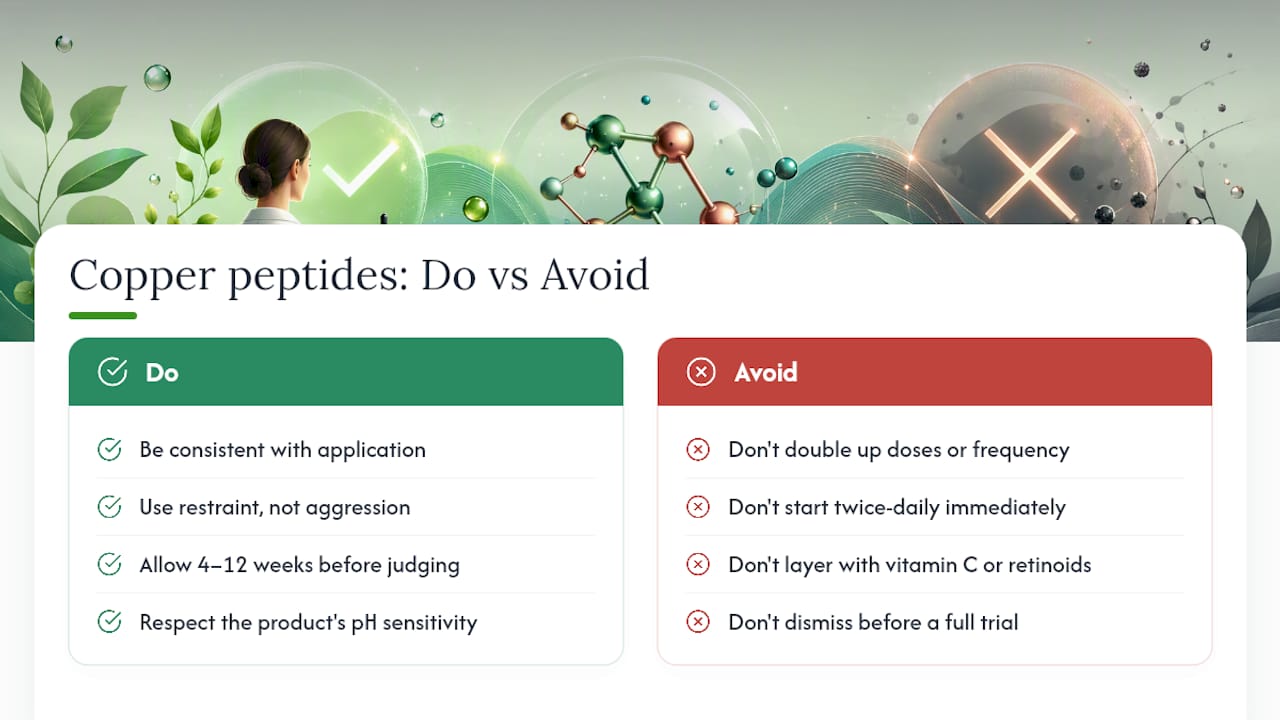
The instinct to double up, use it twice daily right away, or stack it with vitamin C and a retinoid in the same routine, comes from a reasonable but wrong assumption: that more active ingredients equal faster results. Copper peptides don’t work that way. Their chemistry is genuinely fragile around low pH, and the biggest failure mode isn’t underuse. It’s degrading the product before it ever reaches your skin cells intact.
What the evidence actually supports is patience paired with precision. Give it the full four to twelve weeks trials point to before judging results. Respect the pH sensitivity instead of treating it as an inconvenience. And prioritize formulation transparency over marketing claims.
— British
Ready to Start Using Copper Peptides the Right Way?
If everything above sounds like a lot to manage, the fix isn’t complicated routines. It’s starting with one high-purity formula and building from there. Copperpeptides makes a single-ingredient anti-aging serum that combines high-purity copper peptides with medical-grade hyaluronic acid, designed to support collagen production, deepen hydration, and firm skin texture without the guesswork of stacking multiple unproven actives.
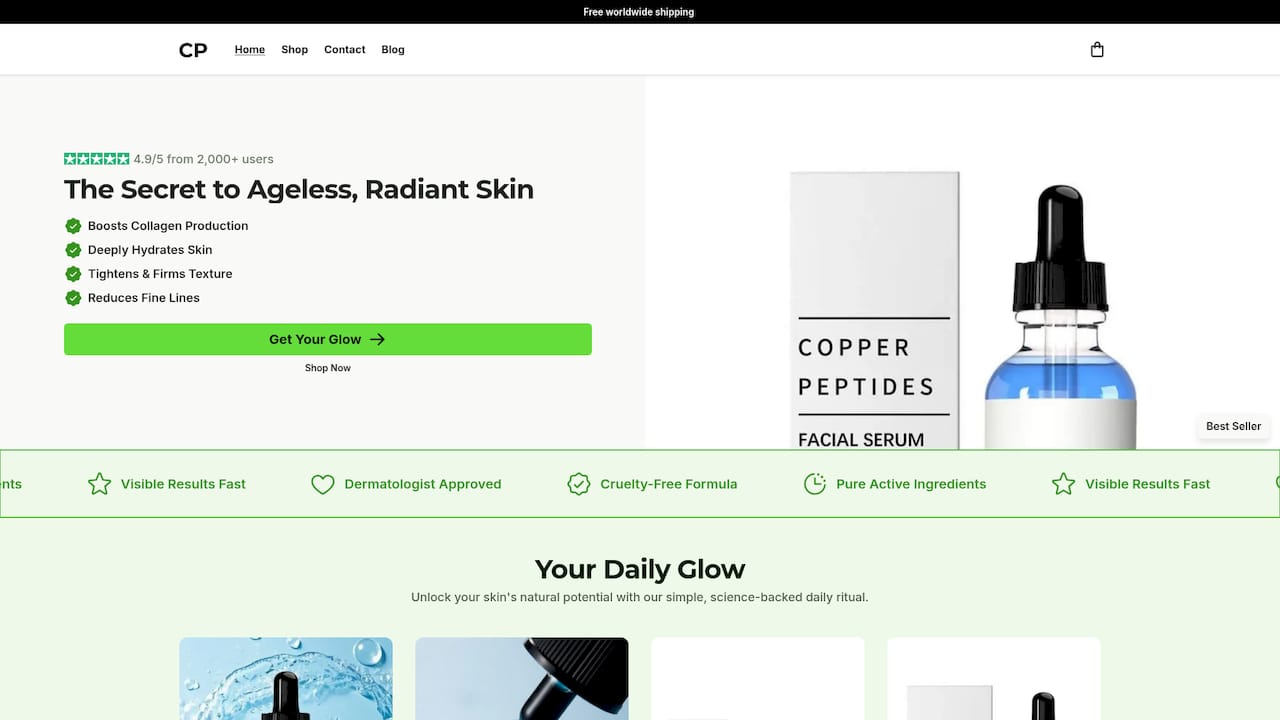
It is formulated to be gentle enough for sensitive skin while still delivering the collagen and elastin support GHK-Cu is known for, with many users reporting visible changes within four to six weeks. If you’ve been trying to piece together a routine from scattered advice, this gives you one clear starting point instead of five separate ingredients to coordinate. Check the copper peptide anti-aging serum page for full ingredient details, or visit Copperpeptides to see the full product line and get started with your first order today.
Sources
- How Copper Peptides Assist the Health of Your Skin and Hair
- How to Use GHK-Cu Copper Peptide: Complete Topical Guide
- Copper peptides skincare guide — Dr Rachel Ho