

Copper peptides can be layered safely and effectively in almost any routine — the one rule that governs everything is this: keep them away from pure L-ascorbic acid, vitamin C, and strong low-pH acids at the same time. Pair them freely with hyaluronic acid, niacinamide, and ceramides, and you have a routine that works.
Quick-start at a glance:
- AM: Vitamin C (if you use L-ascorbic acid), lightweight hydrator, moisturizer, SPF
- PM: Copper peptide serum, hyaluronic acid, moisturizer (or alternate with retinol/acids on different nights)
- Safe pairings: Hyaluronic acid, niacinamide, ceramides
- Separate or alternate: Pure L-ascorbic acid, strong AHAs/BHAs, retinoids
- First step tonight: Patch-test on your inner forearm, wait 48 hours, then try a single PM application
Key Takeaways
Layering copper peptides safely comes down to one core principle: separate them from low-pH vitamin C and strong acids by time of day, and pair them freely with hyaluronic acid, niacinamide, and ceramides for a routine that builds collagen without conflict.
| Point | Details |
|---|---|
| AM/PM split for vitamin C | Use L-ascorbic acid in the morning and copper peptides in the evening to avoid redox and pH conflicts. |
| Safe pairings | Hyaluronic acid, niacinamide, ceramides, and glycerin layer well with copper peptides without chemical conflict. |
| Wait times | Allow 30–60 seconds between most layers; wait 20–30 minutes after acids or retinol before applying peptide serum. |
| Patch-test first | Test on inner forearm for 48–72 hours before full-face use; stop if redness, blistering, or persistent itching occurs. |
| Copperpeptides serum | Combines high-purity GHK-Cu with medical-grade HA in a water-based formula; use PM for best results within 4–6 weeks. |
Table of Contents
- What are copper peptides and what do they actually do?
- Why does layering order matter for copper peptides?
- Which ingredients layer well with copper peptides?
- What should you separate or avoid when using copper peptides?
- How to build your AM routine with copper peptides
- How to build your PM routine with copper peptides
- How long should you wait between actives?
- Safety, patch-testing, storage, and what to expect
- Common layering mistakes and how to fix them
- Who benefits most from copper peptides, and who should be careful?
- A practical perspective on building a copper peptide routine
- The Copperpeptides Anti-Aging Serum fits this routine perfectly
- Sources
What are copper peptides and what do they actually do?
Copper peptides, most commonly GHK-Cu (copper tripeptide-1), are small protein fragments bound to a copper ion. Unlike signal peptides such as Matrixyl, which primarily stimulate collagen production, GHK-Cu also supports wound healing, barrier repair, and post-procedure skin recovery. That broader repair function is what makes it particularly useful for mature or stressed skin.
The primary benefits supported by topical use:
- Collagen and elastin stimulation: GHK-Cu signals fibroblasts to produce structural proteins, which firms skin over time
- Barrier repair: Supports ceramide synthesis and helps restore compromised skin
- Healing and recovery: Widely studied in post-procedure contexts (laser, chemical peel recovery)
- Anti-inflammatory support: May calm mild redness and irritation alongside repair
Format matters less than formulation. A serum with the right pH and water-based carrier will outperform a cream that uses an oil-only base, because GHK-Cu needs a water-based environment to remain stable. Studied topical concentrations cluster around 0.1–2% GHK-Cu; products outside that range are either underdosed or pushing into territory with limited additional evidence.
Why does layering order matter for copper peptides?
Order matters because of three specific factors: absorption sequencing, pH sensitivity, and a documented redox reaction with vitamin C. Get these wrong and you either waste your product or, in the case of vitamin C, create a theoretical pro-oxidant environment on your skin.
pH sensitivity is the most practical concern. GHK-Cu complexes remain stable in water-based carriers with a pH between 5.0 and 7.0. Drop below pH 5.0 and the copper-peptide bond can destabilize, reducing efficacy before the ingredient even reaches your skin. Strong AHAs, BHAs, and some vitamin C serums sit well below that threshold, which is why layering them directly over or under a copper peptide serum in the same step is a problem.
The vitamin C issue goes beyond pH. Ascorbic acid can reduce Cu²⁺ to Cu⁺ through a Fenton-type reaction, creating a theoretical pro-oxidant pathway that neither ingredient benefits from. This is the chemistry-based reason most formulation guides recommend separating them by time of day, not just by a few minutes.
The third factor is absorption sequencing. Lighter, water-based products penetrate faster and shouldn’t be blocked by heavier textures applied first. Applying a thick moisturizer before your peptide serum creates a physical barrier that slows absorption.
Common layering pitfalls:
- Applying vitamin C and copper peptides in the same step
- Using a low-pH acid immediately before a peptide serum
- Layering peptides under a heavy facial oil (oil blocks water-based penetration)
- Skipping wait times when switching between actives
Pro Tip: Apply copper peptide serum to skin that is slightly damp, not soaking wet. Damp skin absorbs water-based actives faster and reduces the chance of pilling when you layer a moisturizer on top.
Which ingredients layer well with copper peptides?
Hyaluronic acid, niacinamide, ceramides, glycerin, squalane, and broad-spectrum sunscreen are all safe to use alongside copper peptides. None of these create pH conflicts or redox interactions, and several actively complement what copper peptides do.
Sequencing by texture:
| Ingredient category | How to layer | Why it’s compatible |
|---|---|---|
| Hyaluronic acid | Apply to damp skin first, wait 30–60 seconds, then peptide serum | Neutral pH; boosts hydration without disrupting copper complex |
| Niacinamide | Apply before or after peptide serum depending on texture | Near-neutral pH; supports barrier alongside peptide repair |
| Ceramides | Use in moisturizer step after peptide serum | Occlusive-adjacent; seals in actives without blocking absorption |
| Glycerin / squalane | In moisturizer or as final layer | Humectant and emollient; no chemical conflict |
| Broad-spectrum SPF | Always last in AM routine | Physical or chemical filters don’t interact with peptides |
For a deeper look at copper peptides and niacinamide specifically, the combination is one of the most reliable in anti-aging routines.
Two sample sequences:
Copper peptide serum + HA (PM): Cleanse → apply HA to damp skin → wait 30 seconds → copper peptide serum → moisturizer
Copper peptide serum + niacinamide (AM): Cleanse → niacinamide serum → copper peptide serum → moisturizer → SPF
According to HA and peptide layering guidance, applying hyaluronic acid to damp skin before the peptide step reduces pilling and improves how evenly the peptide serum spreads. The best hyaluronic acid pairings for copper peptides tend to use lower-molecular-weight HA, which penetrates faster and doesn’t sit as a film that blocks the peptide.
What should you separate or avoid when using copper peptides?
Avoid applying pure L-ascorbic acid, strong AHAs or BHAs, and retinoids at the same time as copper peptides. These aren’t permanent bans; they’re timing conflicts that are easy to manage once you understand why they exist.
Problematic actives and the reason for each:
- Pure L-ascorbic acid (vitamin C): Redox reaction reduces Cu²⁺ to Cu⁺, creating a pro-oxidant risk; also typically formulated at pH 2.5–3.5, well below the peptide stability range
- Strong AHAs (glycolic, lactic at high concentrations) and BHAs (salicylic): Low pH destabilizes the copper-peptide complex; cumulative irritation is also a concern on the same night
- Retinoids (retinol, tretinoin): Not a chemical conflict, but combining them with copper peptides on the same application increases irritation risk, especially for new users; alternating nights is the standard recommendation
Practical separation strategies:
- AM/PM split: Vitamin C in the morning, copper peptides in the evening. This is the cleanest solution and the one most protocols default to.
- Alternate nights: Retinol or acids on Monday/Wednesday/Friday; copper peptides on Tuesday/Thursday/Saturday (or Sunday as a rest night)
- Same-night spacing: If you prefer both on the same evening, apply the acid or retinol first, wait 20–30 minutes for pH to normalize, then apply the peptide serum. This works for mild acids and low-strength retinol; it’s not recommended for prescription-strength retinoids or high-concentration peels.
How to build your AM routine with copper peptides
The cleanest AM strategy is to reserve copper peptides for the evening and use vitamin C in the morning. That said, if you prefer copper peptides in your AM routine or don’t use L-ascorbic acid, the sequence below works well.
AM routine (copper peptides in AM, no L-ascorbic acid):
- Cleanse with a gentle, pH-balanced cleanser
- Antioxidant (optional): A non-ascorbic antioxidant such as vitamin E or resveratrol if you want antioxidant coverage without the redox conflict
- Lightweight hydrator: Apply hyaluronic acid to damp skin; wait 30–60 seconds
- Copper peptide serum: Apply a thin, even layer; wait 30–60 seconds before the next step
- Moisturizer: Seal in the actives with a ceramide-based or peptide-compatible moisturizer
- Broad-spectrum SPF 30+: Non-negotiable final step; apply generously and don’t skip reapplication
Dosage and texture tips: Use 2–4 drops of serum per application. Thin layers absorb faster and pill less. If you feel any tackiness before SPF, wait an extra 30 seconds rather than rubbing the layers together.
Sunscreen placement matters here beyond habit. Copper peptides support barrier repair, but they offer zero UV protection. Skipping SPF while using a collagen-stimulating active is counterproductive; UV exposure degrades the collagen you’re working to build.
How to build your PM routine with copper peptides
PM is the preferred time for copper peptides. There’s no SPF step to complicate things, skin repair cycles are more active overnight, and you avoid the vitamin C conflict entirely. The main decision is whether you’re using retinoids or acids on the same night.
Standard PM routine (peptides only, no acids or retinoids this night):
- Double cleanse or gentle cleanse to remove SPF and makeup
- Toner (optional): Use a hydrating, pH-neutral toner; skip anything with AHAs or BHAs on peptide nights
- Hyaluronic acid: Apply to damp skin, wait 30 seconds
- Copper peptide serum: Apply thin layer, wait 30–60 seconds
- Moisturizer: Ceramide-rich or barrier-focused formula
- Facial oil or occlusive (optional): Apply last if you use one; squalane or rosehip work well over a water-based peptide serum
If you want to use retinol or acids on the same night, two approaches:
Approach A — Alternate nights (recommended for beginners): Retinol or acid nights: cleanse → acid or retinol → moisturizer Peptide nights: cleanse → HA → peptide serum → moisturizer
Approach B — Same-night spacing (for experienced users with tolerant skin): Cleanse → acid or low-strength retinol → wait 20–30 minutes → HA → copper peptide serum → moisturizer
Tolerance ramp-up schedule: Start retinol at 1–2 nights per week for the first two weeks. Add a third night in week three if no irritation. Copper peptides can run on the off-nights from the start. Once your skin tolerates both, you can experiment with same-night spacing using the 20–30 minute wait.
General layering principles consistently support starting with the lightest water-based products and separating pH-dependent actives into AM vs. PM or alternate nights when in doubt.
How long should you wait between actives?
Most wait times are short. The 30–60 second rule covers the majority of pairings. The exception is vitamin C and copper peptides, where time-of-day separation is more reliable than any specific wait.
| Active pairing | Recommended wait | Reason |
|---|---|---|
| HA → copper peptide serum | 30–60 seconds | Allows HA to absorb; reduces pilling |
| Copper peptide serum → moisturizer | 30–60 seconds | Lets peptide layer set before occlusion |
| Acid (AHA/BHA) → copper peptide serum | 20–30 minutes minimum (same night) | Allows skin pH to normalize toward 5.0–7.0 |
| Retinol → copper peptide serum | 20–30 minutes (same night) or alternate nights | Reduces cumulative irritation |
| Vitamin C → copper peptide serum | AM/PM split preferred; avoid same-step | Redox and pH conflict; time-of-day separation is the safest approach |
Vitamin C and copper peptide separation is the one case where a wait time alone isn’t enough. Even 30 minutes between applications on the same skin surface leaves residual ascorbic acid that can interact with the copper complex. AM/PM is the practical fix.
Pro Tip: Skin that is slightly damp absorbs water-based serums faster, which shortens effective wait times. If your skin feels dry and tight after cleansing, a quick spritz of toner or water mist before your serum steps can cut pilling risk and improve absorption.
Safety, patch-testing, storage, and what to expect
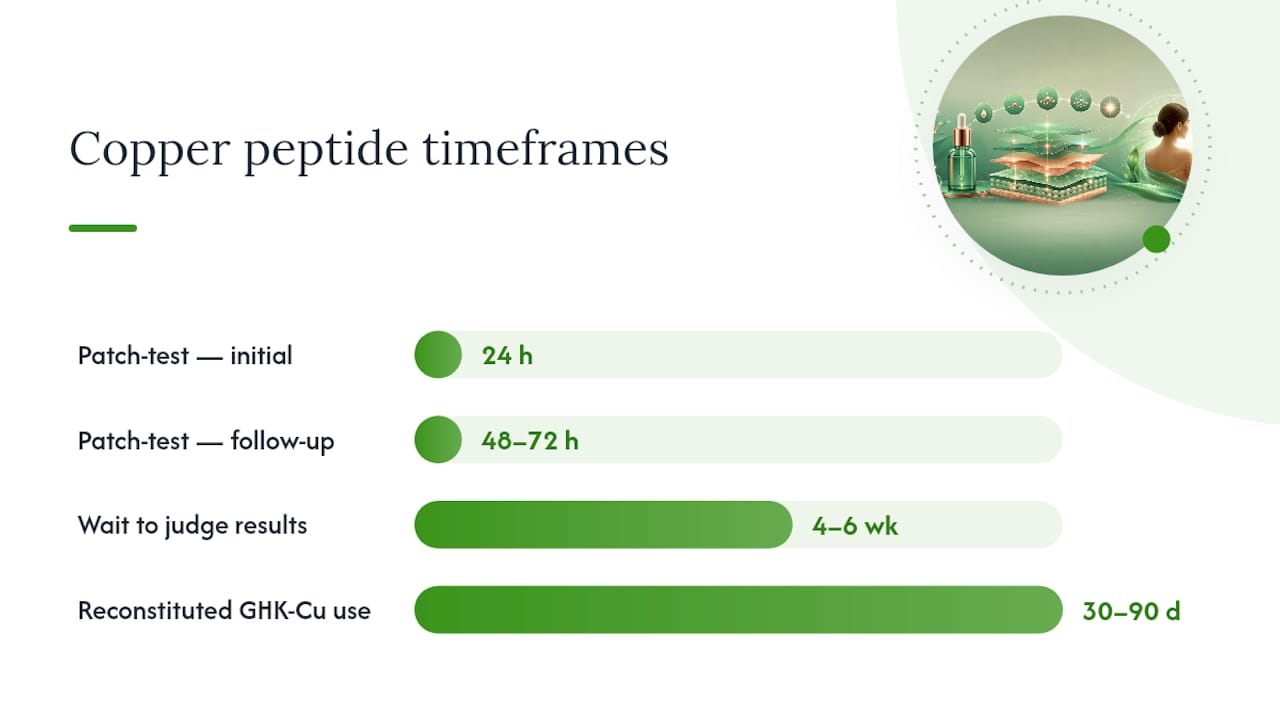
Follow a structured patch-test and give copper peptides 4–6 weeks before judging results. Visible changes in skin texture and firmness take time because collagen remodeling is a slow biological process.
Patch-test steps:
- Apply a small amount to your inner forearm or jawline
- Leave it on for 24 hours without washing
- Check at 24 and 48–72 hours for redness, swelling, blistering, or persistent itching
- If no reaction appears, proceed with normal use; if a reaction occurs, stop and consult a dermatologist
Storage and shelf life:
- Store copper peptide serums away from direct light and heat; a cabinet or drawer is better than a sunny bathroom shelf
- Air-protective packaging (pump dispensers, opaque bottles) preserves stability better than open jars
- Reconstituted GHK-Cu powders (DIY serums) are more sensitive than finished commercial serums; use within the timeframe specified by the supplier, typically 30–90 days after mixing
- Discoloration or an unusual smell in a finished serum is a sign of degradation; replace the product
Studied topical concentrations cluster around 0.1–2% GHK-Cu, and the brand-stated timeline of 4–6 weeks for visible results aligns with what formulation research supports for collagen-stimulating actives. Expect subtle changes first: skin feels more hydrated, texture smooths slightly, and fine lines appear less pronounced before any dramatic firming is visible.
For dermatologist-approved guidance on product selection, look for transparent labeling of GHK-Cu concentration and air/light-protective packaging as baseline quality signals.
Consult a clinician before starting if you have: active eczema or psoriasis, severe rosacea, a compromised skin barrier from recent procedures, or if you are pregnant or breastfeeding.
Common layering mistakes and how to fix them
Most problems with copper peptide routines come from one of three sources: too many actives at once, wrong application order, or heavy oils applied over water-based serums.
Mistakes and direct fixes:
- Pilling: Usually caused by applying too much product or not waiting between layers. Fix: use 2–4 drops, wait 30–60 seconds between each step, and apply in thin layers
- Redness or irritation: Often from combining acids or retinol with peptides on the same night too soon. Fix: alternate nights and reduce frequency to 2–3 times per week until skin adjusts
- No visible results after 2–3 weeks: Likely an expectation issue, not a product issue. Collagen remodeling takes 4–6 weeks minimum; don’t swap products prematurely
- Oxidized vitamin C (yellow or brown serum): A sign the vitamin C has degraded, possibly accelerated by copper contact. Fix: store vitamin C separately, use AM only, and replace oxidized product immediately
- Persistent dryness: Peptides support barrier repair but aren’t humectants. Fix: add hyaluronic acid before the peptide step and a ceramide moisturizer after
- Heavy facial oil blocking absorption: Oils applied before water-based serums create a barrier. Fix: always apply oils last, after the peptide serum and moisturizer
When in doubt, strip back to three steps: gentle cleanser, copper peptide serum, moisturizer. Rebuild from there, adding one active at a time with at least one week between introductions.
Who benefits most from copper peptides, and who should be careful?
Copper peptides are broadly suitable for most skin types, including sensitive skin, when used correctly. The science-backed benefits are most pronounced in specific contexts.
Who benefits most:
- Mature skin (40+) seeking collagen support and firming
- Skin recovering from procedures (laser, chemical peels, microneedling)
- People with a weakened or compromised barrier who need repair support
- Sensitive skin types who can’t tolerate stronger actives like high-strength retinoids
Who should approach with caution:
- Active eczema or psoriasis: inflamed, broken skin may react unpredictably; consult a dermatologist first
- Open wounds or active breakouts: copper peptides are not a spot treatment for active acne lesions
- Pregnancy and breastfeeding: topical copper peptides are not classified as harmful, but the evidence base for safety in these populations is limited; consult your clinician
- DIY mixers using oil-only carriers: GHK-Cu performs poorly in oil-only bases and can clump or lose efficacy; always use a water-based carrier
A practical perspective on building a copper peptide routine
The biggest mistake people make with copper peptides isn’t the wrong pairing. It’s overcomplicating the routine before their skin has had time to respond to anything.
Practical habits beat perfect protocols. Start with copper peptides several times per week in the PM, paired with hyaluronic acid and a basic moisturizer. Nothing else new for two weeks. That’s it. People who report the best results with copper peptides almost always describe a version of this: they simplified, they waited, and then they saw changes they could actually attribute to the peptide rather than to the chaos of six new actives introduced simultaneously.
The alternating-nights approach for retinol and copper peptides isn’t just a safety measure; it’s also a tracking tool. When you separate actives, you can actually tell which one is causing a reaction if something goes wrong. Same-night stacking makes troubleshooting nearly impossible.
A photo diary is underrated for this. Take a photo in the same light, same angle, once a week. Skin changes from collagen-stimulating actives are gradual enough that you won’t notice them day to day, but a four-week comparison is often striking.
For travel or busy mornings when a full routine isn’t realistic, a three-step version works: cleanser, copper peptide serum, SPF (AM) or moisturizer (PM). Consistency over six weeks beats a perfect routine used sporadically.
The Copperpeptides Anti-Aging Serum fits this routine perfectly
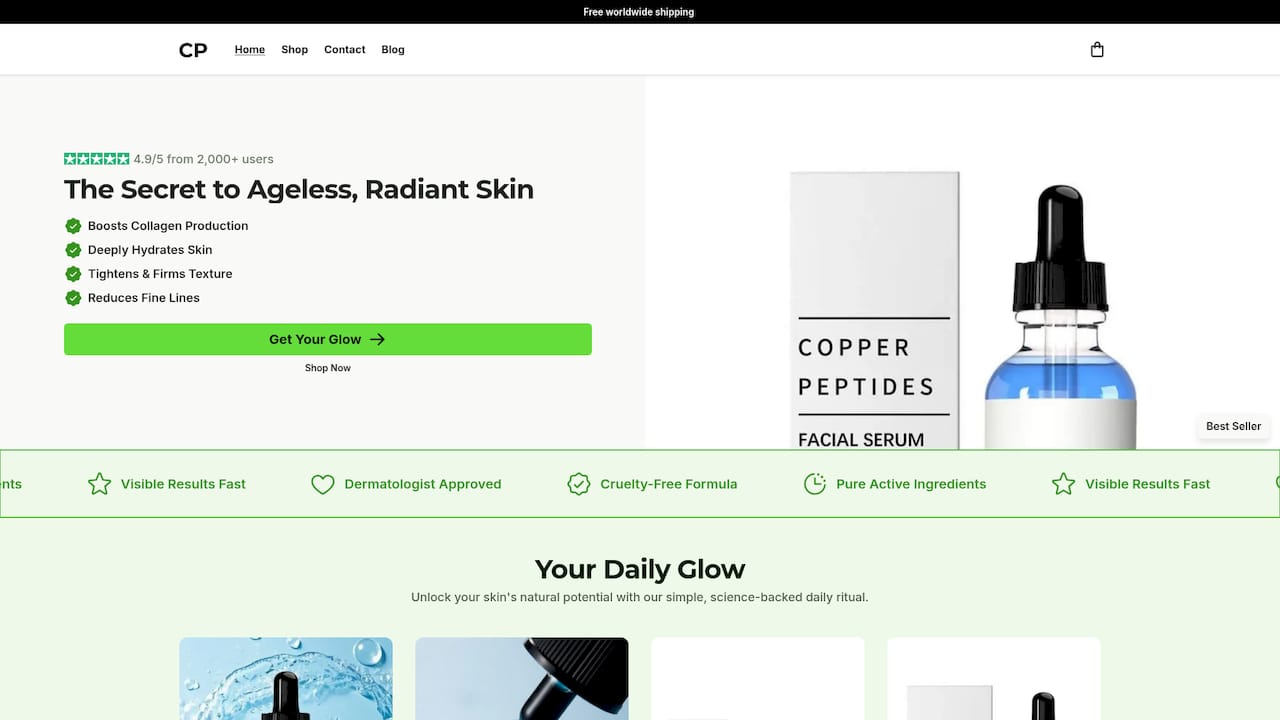
If you want a copper peptide serum that works within the layering rules in this guide without any formulation guesswork, the Copperpeptides Anti-Aging Serum is built for exactly this.
It combines high-purity GHK-Cu with medical-grade hyaluronic acid in a single water-based formula, which means you get the peptide and the hydration layer in one step rather than two separate products. Dermatologist-endorsed and formulated for all skin types, including sensitive skin.
Usage tip aligned with this guide: Apply it in your PM routine after cleansing and a light HA layer if you use a separate HA serum, or use it as your combined peptide-plus-hydration step. Keep vitamin C in your AM routine and you avoid the redox conflict entirely. Results are typically visible within 4–6 weeks with consistent use.
Start your PM routine with the Copperpeptides Anti-Aging Serum and give it six weeks before judging.
Sources
These sources were selected for their formulation-focused, clinician-oriented, or practitioner-level guidance on copper peptide chemistry and layering protocols.
- GHK-Cu Skin Protocol: Topical Copper Peptides + Routine Support (2026) | PepPal
- How to Make GHK-Cu Serum: DIY Copper Peptide Recipe (2026) | Regimen
- How to Layer Copper Peptides With Retinol, Vitamin C & Other Actives | GlimmerGoddess
- Vitamin C or Peptides First? The Right Order Explained | FormBlends