

A high-purity copper peptide topical serum (GHK-Cu) is one of the most beginner-friendly anti-aging options available today. No injections, no prescription, and no complicated stacking required. The FDA has flagged injectable peptide formats for safety concerns related to impurities, which makes topical serums the clear mainstream choice for anyone starting out.
Here is what matters most before you begin:
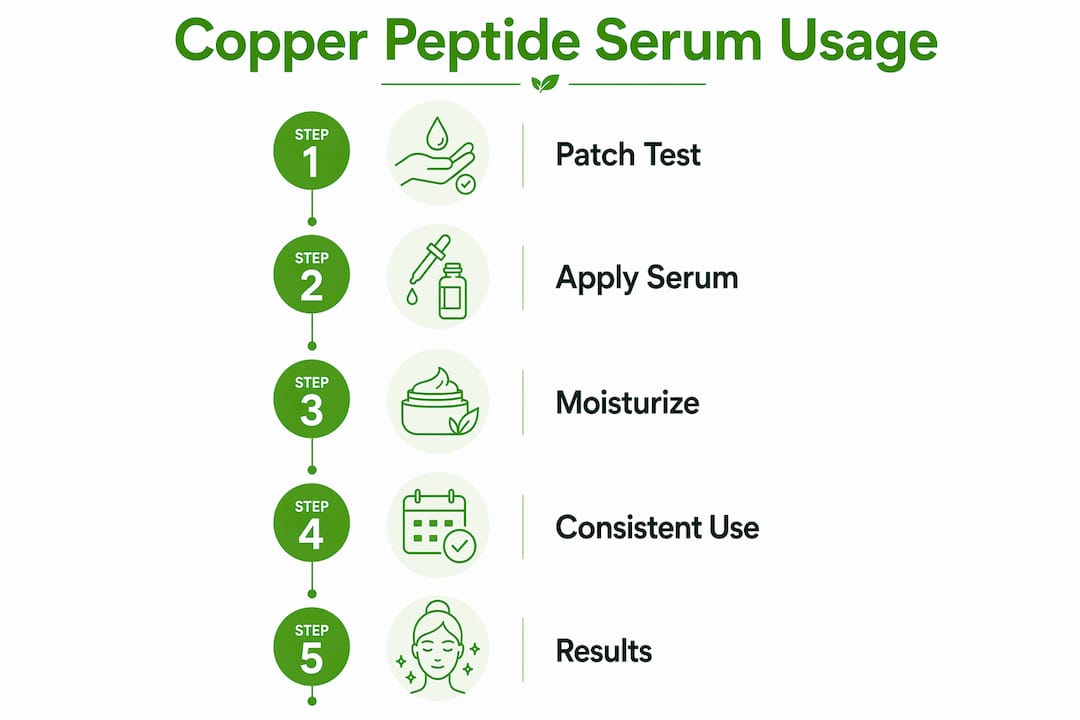
- Patch test first. Apply a small amount to your inner arm and wait 24–48 hours before using it on your face.
- Start every other night. Daily use can come later once your skin has adjusted.
- Expect visible results in 4–6 weeks with consistent daily application of a high-purity formula.
- Use one serum at a time. Stacking multiple actives immediately makes it impossible to know what is working.
Table of Contents
- What are copper peptides and how do they work on skin?
- What benefits can beginners realistically expect?
- How do you use a copper peptide serum correctly?
- Why beginners should focus on one ingredient at a time
- Safety, side effects, and when to stop
- What should you look for in a copper peptide serum?
- How do you track whether the serum is working?
- Key Takeaways
- The right serum makes the first step easier
- Useful sources
What are copper peptides and how do they work on skin?
Peptides are short chains of amino acids — the same building blocks that make up proteins — and your skin already relies on them to regulate repair and renewal. GHK-Cu is a naturally occurring tripeptide (three amino acids) that binds to copper, a mineral your skin uses to produce collagen and elastin.
When applied topically, GHK-Cu supports collagen synthesis, antioxidant defense, and tissue remodeling directly at the skin layer. That local action is the point. Oral peptide supplements are typically broken down by stomach acid before they reach the skin, so they rarely deliver the same targeted benefit. A topical serum places the active ingredient exactly where collagen synthesis occurs.
Copper peptides are not a new discovery. GHK-Cu has been studied for decades, and the evidence for its role in skin remodeling is among the strongest in the peptide skincare category.
What benefits can beginners realistically expect?
The primary benefits most people notice from consistent GHK-Cu use are firmer skin texture, reduced appearance of fine lines, improved elasticity, and better moisture retention. Some people also report improvements in skin tone and a subtle reduction in redness over time.
| Benefit | Typical onset | Evidence strength |
|---|---|---|
| Improved hydration | 2–4 weeks | Strong (topical studies) |
| Firmer texture | 4–6 weeks | Strong (clinical observations) |
| Reduced fine lines | 4–6 weeks | Moderate to strong |
| Improved elasticity | 4–6 weeks | Moderate |
This timeline applies to consistent, daily use of a high-purity formulation over several weeks. Skin type, age, and baseline collagen levels all affect how quickly you notice changes. Thinner or more dehydrated skin often responds faster to the hydration component, while deeper lines take longer.
One thing beginners consistently underestimate: the difference between a high-purity formula and a low-concentration one is significant. A serum with a trace amount of GHK-Cu in a filler base will not produce the same results, regardless of how long you use it.
How do you use a copper peptide serum correctly?
The routine is simple. After cleansing, apply a few drops of the serum to your face and neck, then follow with a moisturizer. In the morning, add sunscreen as the final step. That is the complete routine for a beginner.

Pro Tip: On your first few uses, apply your moisturizer first, then the serum on top. This “buffering” technique reduces the chance of irritation on sensitive skin while your skin adjusts.
A few rules that matter:
- Do not apply with direct vitamin C (ascorbic acid) or strong AHAs at the same time. These can oxidize the copper complex and reduce the serum’s effectiveness. Use vitamin C in the morning and copper peptides at night, or alternate nights.
- Nighttime is ideal for your first introduction, since skin repair cycles are most active during sleep.
- Amount: two to four drops covers the face and neck comfortably. More is not better here.
Patch test before your first full application. Apply a small amount to your inner forearm, leave it for one to two days, and check for redness or swelling. If nothing happens, you are clear to start.
Why beginners should focus on one ingredient at a time
Industry experts consistently recommend starting with a single, goal-oriented ingredient rather than layering multiple actives from day one. The reason is practical: if you introduce three new products simultaneously and your skin reacts, you have no idea which one caused it.
A focused first-month checklist:
- Days 1–2: Patch test on inner arm
- Days 3–7: Apply every other night, monitor for redness or irritation
- Week 2: If tolerated, move to nightly use
- Weeks 2–4: Log any changes in texture, hydration, or sensitivity
- Week 4–6: Assess results before adding any new active
Pro Tip: When you are ready to reintroduce other actives like retinol or vitamin C, space them by time of day (AM vs. PM) rather than alternating nights. This reduces the chance of accidental ingredient conflict on the skin surface.
Safety, side effects, and when to stop
Most people tolerate GHK-Cu topicals well. Mild, temporary redness or a slight tingling sensation in the first week is common and usually resolves as skin adjusts. Some people experience a brief purging phase, where existing congestion surfaces before clearing.
Stop use and consult a dermatologist if you notice:
- Persistent redness lasting more than 48 hours
- Swelling, hives, or a spreading rash
- Burning that does not subside after rinsing
| Ingredient | Interaction with copper peptides | Recommended approach |
|---|---|---|
| Direct vitamin C (ascorbic acid) | Oxidizes copper, reduces efficacy | Use AM only; copper peptides PM |
| Strong AHA/BHA exfoliants | Can destabilize copper complex | Alternate nights or space by 30 min |
| Sunscreen/moisturizer | No negative interaction | Apply after serum as normal |
Pregnancy, breastfeeding, or a history of significant skin sensitivity are all reasons to check with a dermatologist before starting any new active serum. This article is general information, not medical advice. Confirm the right approach for your situation with a qualified professional.
What should you look for in a copper peptide serum?
Not all copper peptide serums are equal. Here is what to check before buying:
- GHK-Cu listed in the ingredient name. Generic “copper” claims without this designation are vague.
- High-purity formulation. High-purity copper peptide formulas reduce sensitization risk and keep the copper complex stable and active.
- Certificate of Analysis (COA). A third-party COA confirms purity. Look for greater than 98% purity where claimed.
- Medical-grade hyaluronic acid as a supporting ingredient. It boosts hydration without interfering with the copper complex.
- Stable packaging. Airless pumps or dark glass droppers protect the formula from oxidation.
- Dermatologist endorsement and a clear return policy. Both signal that the brand stands behind its formulation.
Pro Tip: When reading a COA, focus on the “net purity” figure. A result above 98% is the threshold worth trusting for a topical copper peptide product.
How do you track whether the serum is working?
Take a photo on day one, same lighting, same angle. Repeat weekly. Early signs the serum is working include a plumper, more hydrated feel within a few weeks and a visible smoothing of fine lines and texture over time.
Keep a simple log: date, application notes, and any skin reactions. If you reach week six with no change and no irritation, the issue is likely formulation strength or consistency of use, not the ingredient itself.
Signs to stop: persistent redness, new breakouts that do not resolve, or any reaction that worsens over time.
Key Takeaways
Copper peptide topical serums (GHK-Cu) are a well-supported, beginner-safe anti-aging option when introduced gradually with a single-ingredient focus and a high-purity formulation.
| Point | Details |
|---|---|
| Patch test before starting | Apply to inner arm for 24–48 hours to confirm tolerance before full use. |
| Expect results in 4–6 weeks | Consistent daily use of a high-purity serum typically produces visible improvements in this window. |
| One ingredient at a time | Introducing a single serum lets you isolate effects and catch irritation early. |
| Avoid vitamin C at the same time | Direct ascorbic acid oxidizes copper; use vitamin C in the AM and copper peptides at night. |
| Copperpeptides serum | Formulated with high-purity GHK-Cu and medical-grade hyaluronic acid; dermatologist-endorsed and suitable for sensitive skin. |
Why the simple approach is the right one
The skincare world has a habit of overcomplicating beginner routines. The honest truth is that most people who see real results from copper peptides are not running elaborate multi-step protocols. They picked one well-formulated serum, introduced it slowly, and used it consistently for six weeks. That is the whole strategy. The evidence for GHK-Cu is solid enough that it does not need to be stacked with five other actives to work. Start simple, track your skin’s response, and let the ingredient do what it is designed to do.
The right serum makes the first step easier
Starting a copper peptide routine is straightforward when the product itself is built for beginners. The Copper Peptide Anti-Aging Serum from Copperpeptides is formulated with high-purity GHK-Cu and medical-grade hyaluronic acid, dermatologist-endorsed, and designed to be safe for all skin types including sensitive skin. It checks every item on the selection checklist: stable formulation, protective packaging, clear purity standards, and a return policy that removes the risk from trying it.
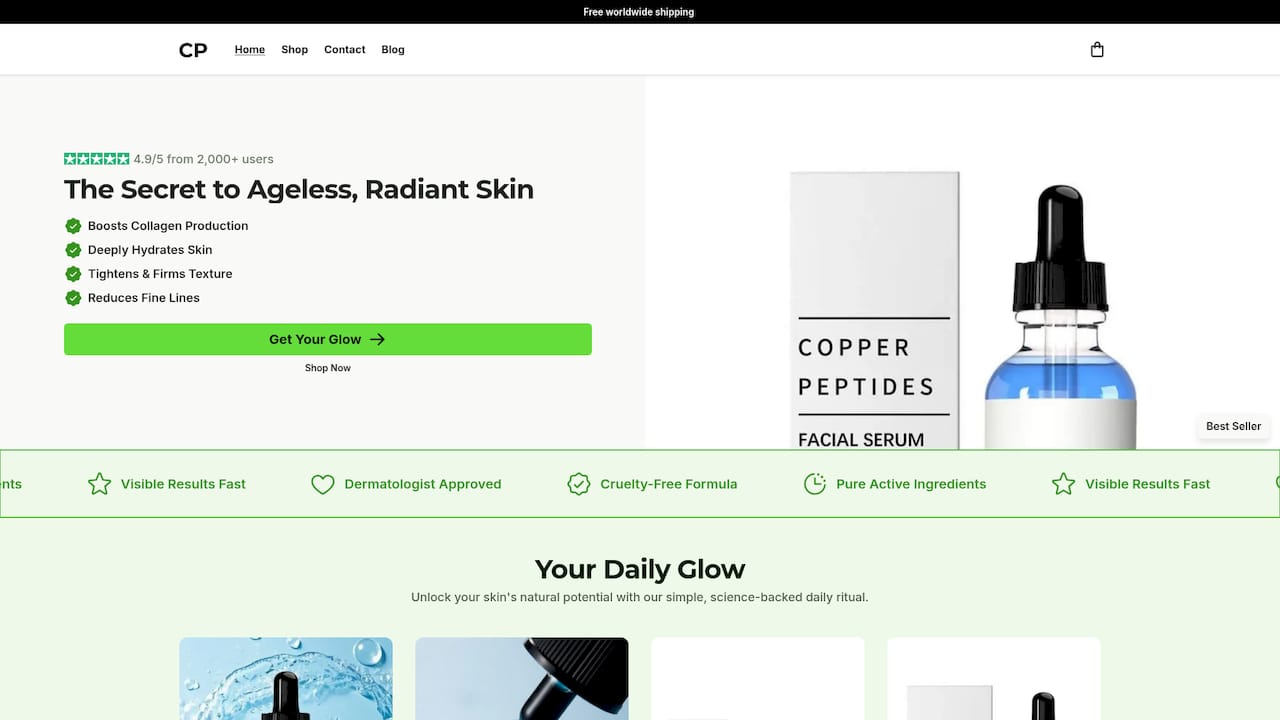
If you have been waiting for a straightforward entry point into copper peptide skincare, this is it. Visit Copperpeptides to review the full ingredient list and place your first order.
Useful sources
- Biochemistry, Peptide — StatPearls, NCBI Bookshelf: foundational reference on peptide structure and synthetic peptide chemistry.
- Peptides: Types, Applications, Benefits & Safety — WebMD: covers GHK-Cu mechanism, topical versus oral delivery, ingredient interactions, and purity guidance.
- First Time Using Peptides: Best Beginner Guide — PSPeptides: practical beginner protocol including the 4–6 week results timeline.
- Beginner’s Guide to Peptides — Peptides Insider: single-ingredient focus strategy and phased introduction guidance.
- Peptide — Britannica: authoritative scientific definition of peptides and peptide bonds.
Consult a board-certified dermatologist for personalized advice before starting any new active skincare ingredient, particularly if you are pregnant, breastfeeding, or managing a skin condition.