

For advanced anti-aging, the best hyaluronic acid serums are those that pair medical-grade HA with copper peptides, targeting both surface plumping and deeper collagen synthesis simultaneously. If you want to reduce fine lines and firm skin texture, not just temporarily hydrate, this combination is where dermatologists consistently point.
Who this is for:
- Mature skin that needs more than surface moisture
- Sensitive skin seeking firming without irritation
- Anyone already using retinoids who wants to amplify structural results
- People who want a clinical timeline: visible improvement typically within several weeks.
The Copper Peptide Anti-Aging Serum from Copperpeptides is a strong example of this approach, combining high-purity copper peptides with medical-grade hyaluronic acid in a dermatologist-endorsed formula safe for all skin types, including sensitive.
Pro Tip: Tonight, apply the serum to damp skin right after cleansing, then seal it immediately with your moisturizer. That single habit change makes a measurable difference in how much hydration your skin actually retains.
Table of Contents
- Why do hyaluronic acid and copper peptides work better together?
- How do you choose the right HA serum for anti-aging?
- How should you apply a hyaluronic acid serum for best results?
- What results can you realistically expect, and is it safe for sensitive skin?
- Copper Peptide Anti-Aging Serum: why it fits the recommendation
- Key Takeaways
- Why the HA + copper peptide pairing is underestimated
- Ready to try the serum built for firming skin?
Why do hyaluronic acid and copper peptides work better together?
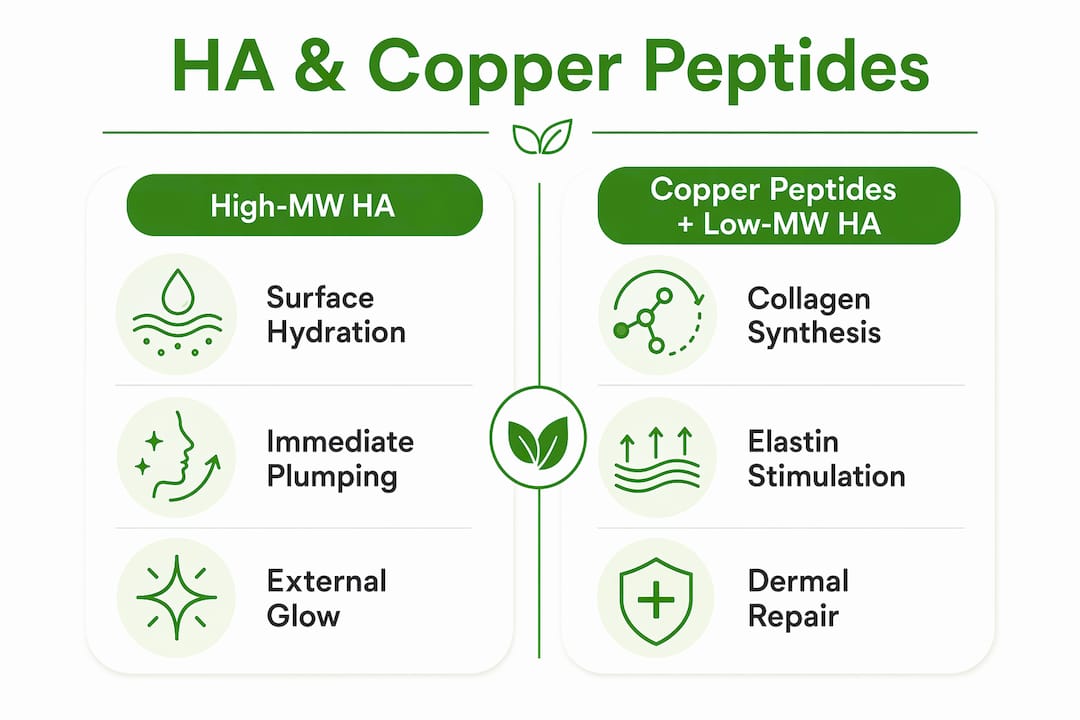
Hyaluronic acid is a humectant, not a moisturizer. The distinction matters. It draws water toward itself and holds it, but it does not create moisture from nothing. Hyaluronic acid is known to bind a significant amount of water, which explains the immediate plumping effect you feel within minutes of application. What it cannot do alone is rebuild the collagen and elastin fibers that give skin its structural firmness over time.
Stat: One gram of hyaluronic acid can bind approximately six liters of water, making it one of the most effective hydration molecules in skincare.
That is where copper peptides earn their place. They stimulate collagen and elastin synthesis at the dermal level, addressing the structural protein loss that drives fine lines and sagging. As dermatologists note, HA works best as a delivery matrix for actives that trigger structural protein synthesis, with copper peptides among the best-supported adjuncts for that purpose.
| Effect | High-MW HA | Copper Peptides + Low-MW HA |
|---|---|---|
| Immediate plumping | Yes, surface hydration | Moderate, penetrates deeper |
| Collagen stimulation | No | Yes, directly stimulates synthesis |
| Elastin support | No | Yes |
| Timeline | Minutes to hours | 4–6 weeks of consistent use |
| Best for | Instant softening | Long-term firmness and fine-line reduction |
Multi-MW HA blends outperform single-weight formulas because large molecules hydrate the surface while smaller fragments penetrate deeper, supporting collagen remodeling from within.
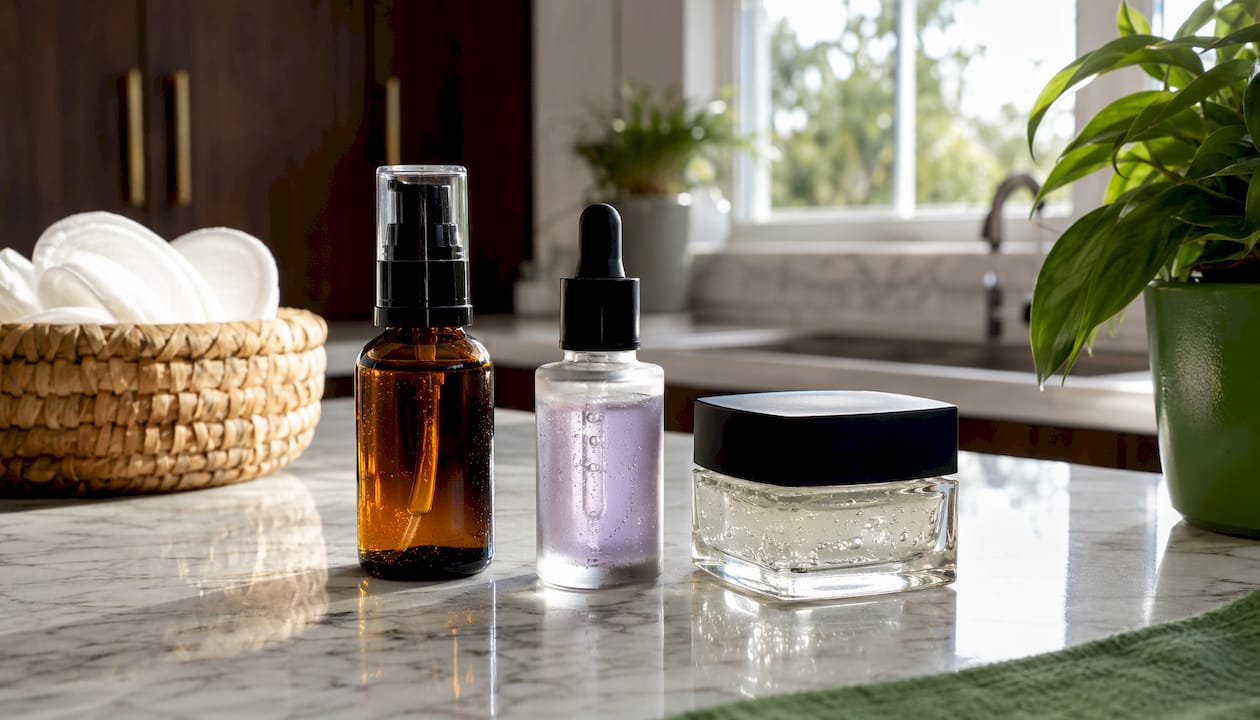
Pro Tip: Choose serums in airless pump or dark-glass packaging. Copper peptides oxidize when exposed to air and light, and packaging stability directly affects how much active ingredient reaches your skin.
How do you choose the right HA serum for anti-aging?
Not every serum labeled “hyaluronic acid” is built for firming. Here is what actually separates a clinical-grade formula from a marketing exercise.
Checklist for evaluating a formula:
- Medical-grade purity: The INCI list should show pharmaceutical-grade sodium hyaluronate or hydrolyzed hyaluronic acid, not a vague “hyaluronic acid complex” with no further detail
- Copper peptide inclusion: Look for copper tripeptide-1 (GHK-Cu) listed explicitly, ideally with a stated concentration
- Multi-MW HA blend: A single molecular weight is a compromise; blends deliver both surface and deeper hydration
- Concentration: HA blends in the 1–2% range are clinically reasonable; higher is not always better if the molecular weights are not varied
- Packaging: Airless pump or dark glass only for peptide-containing serums
- Transparent INCI list: Dermatologists stress that clear ingredient labeling is a baseline trust signal; avoid products that bury actives in proprietary blends with no percentages
HA molecule types: what each one does
| HA Type | Molecular Weight | Primary Action | Best For |
|---|---|---|---|
| Sodium hyaluronate | High / Medium | Surface hydration, longer-lasting film | Immediate plumping, dry skin |
| Hydrolyzed HA | Low | Deeper penetration, supports dermal hydration | Fine lines, collagen support zone |
| Sodium acetylated hyaluronate | Modified | Extended retention, resists washing off | Sustained hydration, active skin |
Board-certified dermatologists consistently recommend blends of all three for both immediate and lasting benefits. A formula with only one type is leaving results on the table.
Pricing reality: Entry-tier HA serums (under $20) often use a single HA weight with minimal actives. Mid-tier ($30–$60) is where multi-MW blends and co-actives like peptides typically appear. Premium formulas above $60 may add clinical-grade stabilizers and advanced delivery systems, though price alone is not a purity guarantee.
How should you apply a hyaluronic acid serum for best results?
The moisture sandwich technique is not optional for HA serums. Apply to damp skin, then immediately follow with an occlusive or emollient moisturizer. Experts consistently advise this sequence because HA can pull moisture outward from the dermis in dry environments if it is not sealed. Skipping the moisturizer step can leave skin drier than before.
Nightly routine with retinoids:
- Cleanse and leave skin slightly damp (pat, do not rub dry)
- Apply vitamin C serum if using one (lowest pH goes first)
- Wait 60–90 seconds, then apply your HA + copper peptide serum
- Wait another 60 seconds for absorption
- Apply retinoid (if using) on top of the HA layer, which buffers irritation
- Seal with an occlusive or emollient moisturizer immediately
- Sunscreen in the morning, every morning without exception
Morning routine: Skip the retinoid step. Vitamin C, then HA serum, then moisturizer, then SPF. The HA layer under SPF also improves how evenly sunscreen sits on skin.
When introducing the serum alongside strong actives like tretinoin, start with the HA serum on alternating nights for the first two weeks. This gives skin time to adjust without compounding irritation from multiple new actives at once. A lightweight oil-free hydrating gel works well as the sealing step for oily or combination skin types that find heavier creams too rich.
Pro Tip: If you are using a prescription retinoid, apply the HA serum first and let it absorb fully before the retinoid. The hydration layer reduces transepidermal water loss and meaningfully cuts down on the peeling and redness that derails most retinoid routines.
What results can you realistically expect, and is it safe for sensitive skin?
Hydration and plumping are visible quickly, often within the first few applications. Structural firmness and measurable fine-line reduction take longer. The clinical timeline for collagen-driven improvements is typically 4–6 weeks of consistent daily use, with continued improvement beyond that point.
Timeline: Expect visible hydration and plumping within days; collagen-driven firmness typically requires 4–6 weeks of consistent use.
Safety and side effects:
- HA is universally well-tolerated, including for sensitive skin, when formulations avoid unnecessary irritants like fragrance and alcohol
- Mild transient redness or tingling on first use is common, especially when paired with actives
- Stop use if you experience persistent burning, swelling, or breakouts and consult a dermatologist
- Copper peptides are generally well-tolerated but can occasionally cause a brief warming sensation on first application
Patch test instructions: Apply a small amount to the inner forearm. Wait 48 hours. If no redness, itching, or swelling appears, the formula is safe to use on your face.
One cautionary note: if you have recently had laser resurfacing, chemical peels, or injectable treatments, wait until your skin barrier has fully healed before introducing new actives. Check with your provider on timing.
Copper Peptide Anti-Aging Serum: why it fits the recommendation
The Copper Peptide Anti-Aging Serum from Copperpeptides is built around the exact pairing this article recommends: high-purity copper peptides alongside medical-grade hyaluronic acid, with a formulation designed for both immediate hydration and longer-term collagen support.
| Feature | Detail |
|---|---|
| Key actives | High-purity copper tripeptide-1 (GHK-Cu) + medical-grade HA |
| HA type | Multi-molecular weight blend |
| Skin type suitability | All skin types, including sensitive |
| Dermatologist endorsement | Yes |
| Cruelty-free | Yes |
| Clinical timeline | Visible results in 4–6 weeks |
| Return policy | Robust satisfaction guarantee |
What makes it stand out:
- Medical-grade purity with a transparent ingredient approach
- Packaging designed to protect peptide stability
- Dermatologist-endorsed and cruelty-free
- Formulated specifically for firming and fine-line reduction, not just surface hydration
- Suitable for sensitive skin without fragrance or known irritants
The typical clinical timeline for collagen synthesis aligns with several weeks of consistent use. Brands that promise dramatic structural results in days are overstating what any topical can do.
Key Takeaways
The most effective approach to advanced anti-aging is a serum that pairs medical-grade hyaluronic acid with copper peptides, applied on damp skin and sealed with a moisturizer, used consistently for at least 4–6 weeks.
| Point | Details |
|---|---|
| Choose multi-MW HA blends | Blends of hydrolyzed HA, sodium hyaluronate, and acetylated HA outperform single-weight formulas. |
| Copper peptides are the structural partner | HA plumps the surface; copper peptides stimulate collagen and elastin for lasting firmness. |
| Apply on damp skin, seal immediately | The moisture sandwich technique prevents HA from drawing moisture outward in dry conditions. |
| Expect 4–6 weeks for firmness | Hydration is visible quickly; collagen-driven fine-line reduction takes consistent daily use. |
| Copperpeptides fits the criteria | The Copper Peptide Anti-Aging Serum combines medical-grade HA with high-purity GHK-Cu in a dermatologist-endorsed, sensitive-skin-safe formula. |
Why the HA + copper peptide pairing is underestimated
Most HA serum coverage focuses on hydration rankings, comparing textures and immediate feel. That misses the point for anyone whose real concern is structural aging. Hydration is a short-term win. The reason to care about what sits alongside the HA in a formula is that plumping without collagen support is a temporary fix applied to a continuing problem.
Copper peptides change that equation. They are not a trendy add-in; GHK-Cu has a meaningful body of research behind it for collagen and elastin stimulation. The pairing with HA makes practical sense because HA creates the hydrated environment in which skin repair and remodeling happen more efficiently.
The conventional wisdom that “any good HA serum will do” is fine if your goal is comfort and glow. For firming and fine-line reduction in mature skin, the formula composition matters more than the texture or the price point. Packaging matters too, more than most buyers realize. A peptide serum in a jar or clear bottle is degrading every time you open it.
Ready to try the serum built for firming skin?
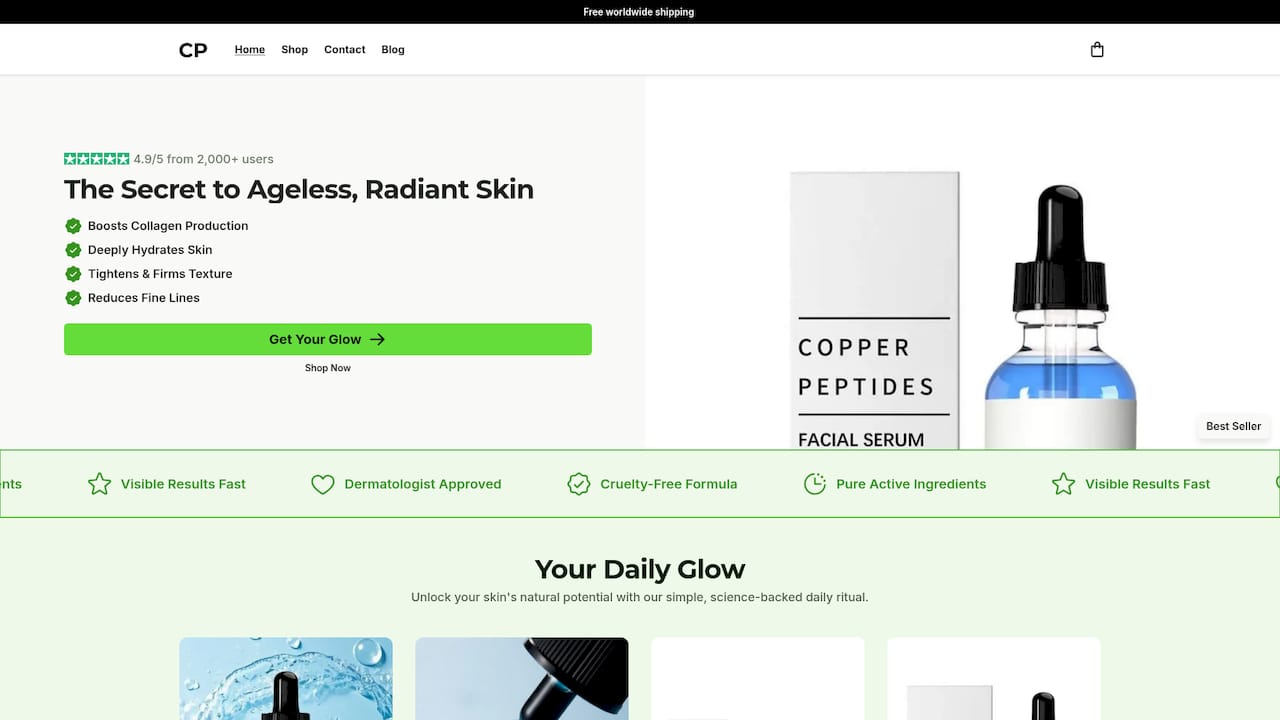
Copperpeptides offers a direct path to the HA + copper peptide pairing this article covers, without the guesswork of assembling a multi-product stack. The Copper Peptide Anti-Aging Serum delivers medical-grade hyaluronic acid and high-purity GHK-Cu in a single formula, dermatologist-endorsed and formulated for all skin types including sensitive.
The return policy is built around confidence in the product. If you do not see results within the stated window, the satisfaction guarantee has you covered. For anyone pairing this with a copper peptide formulation already in their routine, the Copperpeptides serum layers cleanly without ingredient conflicts.
Patch-test before your first full application, especially if your skin is reactive. Visit Copperpeptides to review the full ingredient list, read the clinical timeline details, and place your order.
This article is general information, not medical or dermatological advice. Confirm any new skincare routine with a qualified dermatologist, particularly if you have a complex skin history or are using prescription actives.