

Yes, you can use copper peptides and niacinamide together. Ingredient conflict checkers rate this pairing as low risk, and formulation experts confirm there is no known chemical antagonism between them under typical cosmetic conditions. The two actives work through completely different biological pathways, which means they complement rather than cancel each other.
- Compatibility verdict: Safe to combine in finished cosmetic formulas
- Layering tip: Apply the thinner, more water-like serum first, wait about 60 seconds, then follow with the more viscous product
- First step: Do a 48-hour patch test on your inner forearm before applying either ingredient to your face
Table of Contents
- What niacinamide actually does for your skin
- How GHK-Cu (copper peptides) works and what to expect
- The pH antagonism myth, explained and debunked
- What the formulation evidence actually shows
- How to layer niacinamide and copper peptides in your routine
- Safety, irritation risk, and how to patch test properly
- What not to mix with copper peptides
- How to choose a copper peptide product worth buying
- Key Takeaways
- Why this combination deserves more credit than it gets
- The Copperpeptides serum fits exactly this routine
- Sources and further reading
What niacinamide actually does for your skin
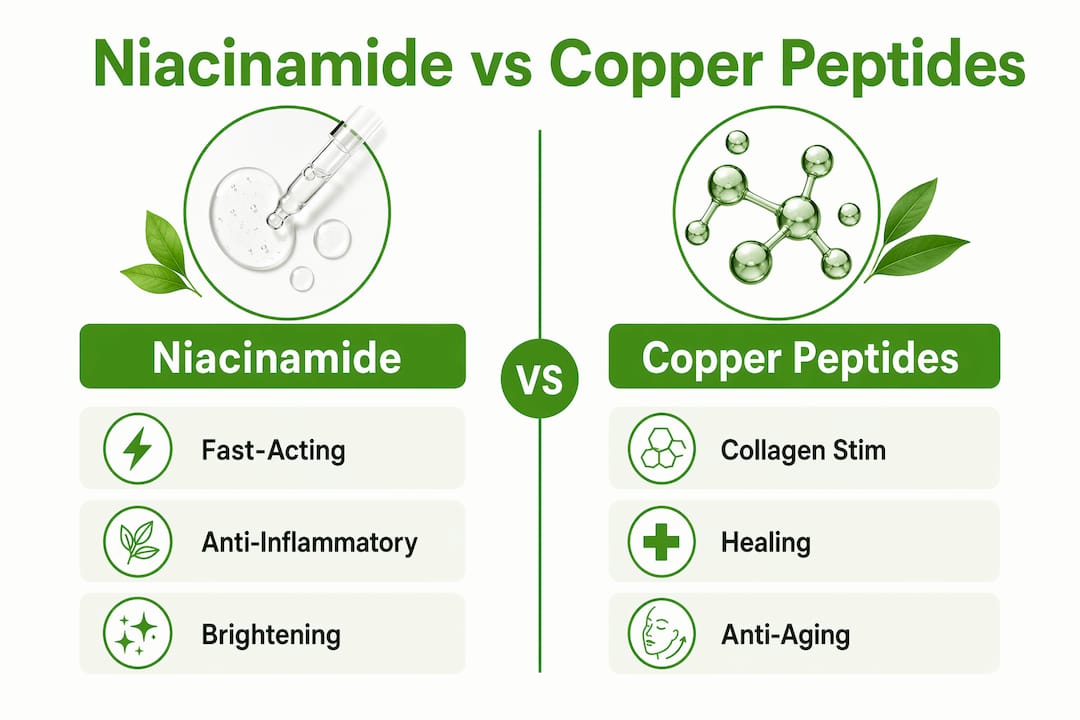
Niacinamide is a form of vitamin B3, and it earns its place in anti-aging routines through three well-documented effects: it reinforces the skin barrier by supporting ceramide and fatty acid production, reduces transepidermal water loss, and interferes with melanosome transfer, which is how pigment moves from melanocytes into skin cells. That last mechanism is why it works on uneven tone and dark spots.
The evidence base for niacinamide is stronger than for most cosmetic actives. Multiple human RCTs support its benefits for barrier function and hyperpigmentation at concentrations that are commonly used in well-formulated serums and moisturizers. For an anti-aging routine, that translates to smoother texture, more even tone, and skin that tolerates other actives better.
- Supports barrier lipids (ceramides, fatty acids) and reduces water loss
- Reduces the appearance of dark spots by limiting melanosome transfer
- Regulates sebum production, useful for oily or acne-prone skin
- Improves skin tolerability, making it easier to layer with stronger actives like retinoids or peptides
- Effective at 4–5% in most cosmetic formulations
Pro Tip: If your skin is sensitive, start with a product at the lower end of the effective 4–5% range before moving to higher concentrations. Most people tolerate it well, but the occasional flushing reaction is real and concentration-dependent.
How GHK-Cu (copper peptides) works and what to expect
GHK-Cu is a copper-bound tripeptide, specifically glycyl-L-histidyl-L-lysine, that occurs naturally in human plasma and skin. Its concentration declines with age, which is part of why it became a target for cosmetic formulation. At the cellular level, GHK-Cu signals collagen, elastin, and glycosaminoglycan synthesis and acts as a chaperone for copper-dependent enzymes including lysyl oxidase (which crosslinks collagen fibers) and superoxide dismutase (an antioxidant enzyme). That chaperone activity is what makes it more than a simple signaling molecule.
The evidence picture is nuanced. In vitro and animal studies are strong. Human RCT data is more limited, so setting realistic expectations matters. Most people using a well-formulated copper peptide serum notice improved firmness and texture over a period of weeks, rather than days.
| Parameter | Guidance |
|---|---|
| Typical cosmetic concentration | low concentrations used in consumer OTC serums |
| Optimal formulation pH | 5.0–7.0 |
| Processing temperature | Add below 40°C (cold-process phase) |
| Evidence level | Strong in vitro/animal; limited human RCTs |
| Expected visible results | several weeks for texture and tone improvements; longer for firmness |
- GHK-Cu acts as a copper chaperone for enzymes that build and crosslink collagen
- Stability depends on pH control and avoiding chelating agents in the formula
- Consumer serums typically use concentrations between 0.001% and 0.1%
- Realistic timeline: texture improvements occur over several weeks, with firming effects developing after continued use
The pH antagonism myth, explained and debunked
The worry about mixing copper peptides and niacinamide usually traces back to lab observations made under conditions that have nothing to do with your bathroom shelf. In raw-powder or high-heat formulation scenarios, copper ions can interact with certain molecules. But finished cosmetic products are a different situation entirely.
Niacinamide and peptide molecules operate through distinct biological pathways. Niacinamide works at the surface barrier and pigmentation level; GHK-Cu works at the fibroblast level to signal collagen synthesis. Because these mechanisms don’t intersect, their combination is additive rather than antagonistic in well-formulated products.
The three most common misunderstandings:
- Raw powder reactions: Observations from mixing dry actives or concentrated solutions at non-cosmetic temperatures don’t apply to pH-buffered, finished serums
- Chelator confusion: The real stability risk is EDTA and dipeptides like carnosine, which can bind copper ions. Niacinamide is not a chelator and does not do this
- Non-standard pH: GHK-Cu is stable between pH 5.0 and 7.0. Most cosmetic formulas sit in this range. The antagonism concern applies to extreme pH conditions that finished products don’t reach
Pro Tip: If you’re still uncertain, choose a stabilized, finished serum rather than layering raw actives. A product formulated with GHK-Cu at the correct pH has already solved the stability question for you.
What the formulation evidence actually shows
Formulation experts and manufacturer technical data sheets align on one point: there is no known chemical antagonism between niacinamide and copper peptides under cosmetic conditions. The AvenaLab TDS for GHK-Cu specifies a pH window of 5.0–7.0 and cold-process addition below 40°C to preserve activity. Niacinamide is compatible with both of those parameters.
Topical GHK-Cu relies on purity and formulation stability to deliver benefits. Well-formulated consumer serums preserve activity by controlling pH and avoiding chelators — the two variables that actually determine whether copper peptides remain active in a bottle.
The practical timeline for introducing this combination:
- Day 1: Patch test on inner forearm. Apply a small amount of each product separately and leave for 48 hours. Watch for redness, itching, or swelling.
- Weeks 1–2: If no reaction, introduce one product at a time into your routine. Start with niacinamide, which has a broader tolerance profile.
- Weeks 2–4: Add the copper peptide serum. Monitor for any cumulative irritation, especially if you’re also using retinoids or exfoliants.
- Weeks 4–6: Expect early texture and tone improvements from niacinamide. Copper peptide effects on firmness are still building.
- Weeks 6–12: The firming and collagen-support effects of GHK-Cu become more visible with consistent use.
| Timeline | What to Expect |
|---|---|
| Day 1 | Patch test; assess tolerance |
| Weeks 1–2 | Introduce niacinamide; baseline hydration improves |
| Weeks 2–4 | Add copper peptide serum; monitor for irritation |
| Weeks 4–6 | Texture and tone start to even out |
| Weeks 6–12 | Firmer-looking skin; full collagen-support benefit building |
For peptide therapy at higher clinical concentrations, a practitioner can guide the timeline and concentration more precisely than any OTC protocol.
How to layer niacinamide and copper peptides in your routine
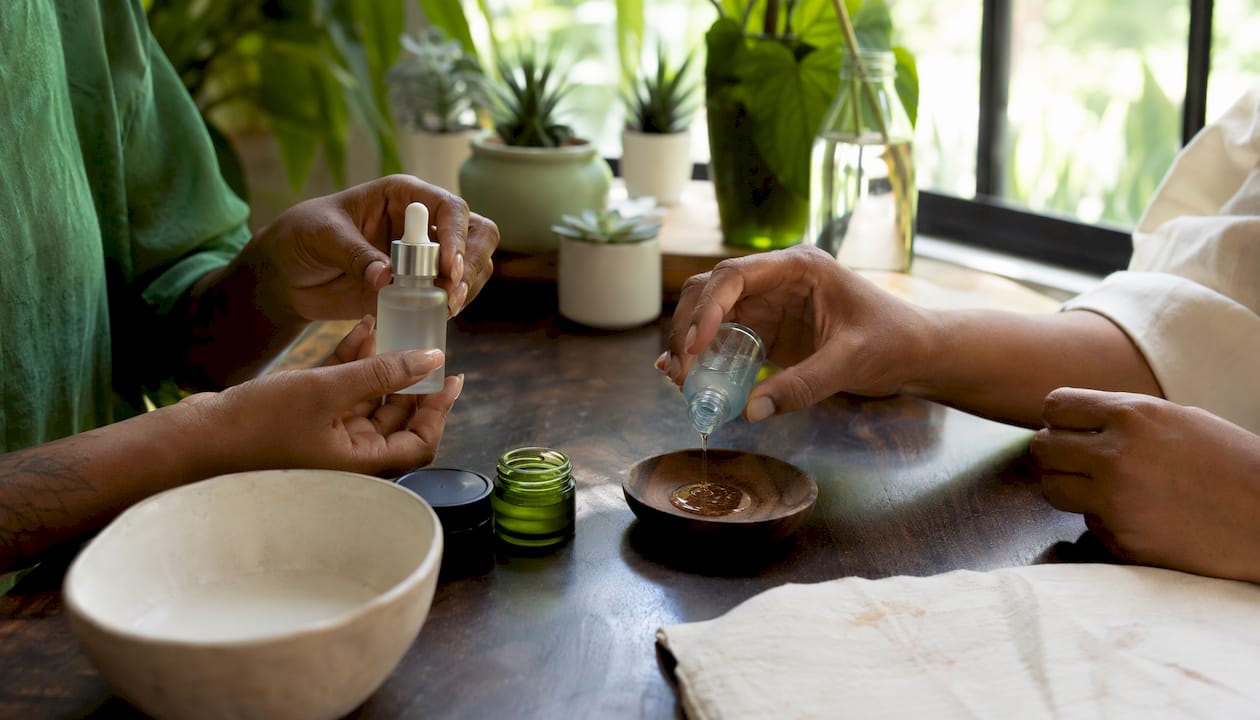
The core rule is texture sequencing: thinner, more water-like products go first. Apply the lighter serum first and wait approximately 60 seconds before the next product. This reduces pilling and gives each active a clear absorption window.
Sample AM routine:
- Cleanser
- Niacinamide serum (thinner texture, apply first)
- Wait 60 seconds
- Copper peptide serum (if using both morning and evening)
- Moisturizer
- SPF 30+ (non-negotiable when using actives that affect skin repair)
Sample PM routine:
- Cleanser (double cleanse if wearing SPF/makeup)
- Copper peptide serum
- Wait 60 seconds
- Niacinamide serum or a moisturizer containing niacinamide
- Heavier moisturizer or facial oil to seal
Most people get better results using copper peptides in the evening, when skin repair processes are most active. Niacinamide works well in both AM and PM, so it can anchor either routine.
- Sensitive skin: introduce one product per week, not both simultaneously
- Oily skin: a niacinamide serum in the AM helps regulate sebum; copper peptide in the PM
- Mature skin: both AM and PM use is reasonable once tolerance is confirmed
Pro Tip: Peptides before or after moisturizer? Apply your peptide serum before moisturizer, always. Moisturizer creates a partial occlusive layer that can limit how much of the active reaches the skin if applied first.
Safety, irritation risk, and how to patch test properly
Neither ingredient is considered high-risk, but introducing any new active without a patch test is a shortcut that can cost you weeks of recovery if your skin reacts.
48-hour patch test protocol:
- Apply a small amount of the product to your inner forearm
- Leave it uncovered and unwashed for 48 hours
- Check at 24 hours and again at 48 hours for redness, itching, swelling, or blistering
- If no reaction, the product is likely safe to use on your face
- Repeat for each new product before combining them
Signs to stop using a product immediately:
- Burning or stinging that doesn’t resolve within a few minutes of application
- Visible redness, hives, or swelling
- Persistent itching or a rash that spreads
Sensitive skin guidance: start with lower concentrations of both actives and introduce them one at a time, at least one week apart. If you have a history of eczema, rosacea, or recently had a chemical peel or laser treatment, consult a dermatologist before adding either ingredient to your routine. Post-procedure skin has a compromised barrier and is more reactive than baseline.
This article is general skincare information, not medical advice. Confirm any ingredient choices with a dermatologist for your specific skin condition.
What not to mix with copper peptides
Copper peptides are stable and compatible with most cosmetic actives, but a few combinations create real problems.
- High-concentration pure ascorbic acid (vitamin C): At low pH (below 3.5), ascorbic acid can destabilize copper complexes. Finished products formulated together are usually fine, but layering a pure vitamin C serum at pH 2.5–3.0 directly with a copper peptide serum is worth separating by AM/PM
- Strong AHAs and BHAs at aggressive concentrations: Glycolic acid at 10%+ or salicylic acid used frequently can disrupt the skin barrier enough to increase irritation risk when combined with copper peptides. Use on alternate nights or separate by at least 30 minutes
- Chelating agents (EDTA, carnosine): EDTA and carnosine can bind copper ions, causing color changes and reducing the peptide’s efficacy. This matters most in DIY formulation; in consumer products it’s usually controlled
- Professional treatments: Pause copper peptide use 24–48 hours before and after chemical peels, laser resurfacing, or microneedling unless your provider says otherwise. Compromised skin absorbs actives differently
Niacinamide, by contrast, plays well with nearly everything. It’s one of the most compatible actives in skincare and rarely needs to be separated from other ingredients.
How to choose a copper peptide product worth buying
Most copper peptide products on the market contain concentrations too low to do much, or they’re formulated in ways that compromise stability before the product reaches your skin.
- Check the INCI list: Look for “Copper Tripeptide-1” (the INCI name for GHK-Cu). If it appears near the bottom of a long ingredient list, the concentration is likely negligible
- Look for a stated concentration or pH range: Brands confident in their formulation usually disclose this. A pH of 5.0–7.0 is the stability window you want
- Supporting excipients matter: Hyaluronic acid, ceramides, and soothing agents like panthenol or aloe improve tolerability and help the peptide work. Avoid formulas with EDTA high in the ingredient list
- Packaging: Opaque, airless packaging protects GHK-Cu from light and oxidation. A clear bottle with a pump open to air is a red flag for a peptide product
- Return policy: A brand confident in its results offers a real return window. This is a proxy for quality confidence
Pro Tip: Look for a dermatologist endorsement that names the specific formulation, not just a general statement about peptides. Vague endorsements are marketing; specific ones signal that a clinician actually reviewed the formula.
| Feature | What to Look For |
|---|---|
| Active ingredient name | “Copper Tripeptide-1” in INCI list |
| Concentration/pH disclosure | Stated range; pH 5.0–7.0 preferred |
| Supporting excipients | Hyaluronic acid, ceramides, panthenol |
| Packaging | Opaque, airless pump or dropper |
| Chelators to avoid | EDTA high in ingredient list is a warning sign |
| Return policy | Meaningful window (30+ days) signals quality confidence |
For a broader look at anti-wrinkle formulation principles, including excipient choices that support peptide stability, formulation-focused resources go deeper than most product pages.
Key Takeaways
Copper peptides and niacinamide are genuinely compatible, work through distinct pathways, and deliver better combined results than either ingredient alone when layered correctly.
| Point | Details |
|---|---|
| Compatibility is confirmed | No known chemical antagonism exists between niacinamide and copper peptides under cosmetic conditions. |
| Layer thinner textures first | Apply the lighter serum first, wait 60 seconds, then follow with the more viscous product to reduce pilling. |
| Results take time | Expect texture and tone improvements at weeks 4–6; firming effects from GHK-Cu build over weeks 6–12. |
| Avoid EDTA and strong acids simultaneously | Chelators and very low-pH vitamin C serums can destabilize copper complexes; separate by AM/PM. |
| Copperpeptides fits the checklist | The Copperpeptides serum combines high-purity GHK-Cu with medical-grade hyaluronic acid in a dermatologist-endorsed, stable formulation. |
Why this combination deserves more credit than it gets
The skincare world has a habit of treating ingredient compatibility as binary: either two actives are enemies or they’re fine. The copper peptides and niacinamide conversation is a good example of how that framing misleads people. The concern about antagonism came from lab conditions that no finished product replicates. Yet the worry persisted online for years, causing people to keep two genuinely complementary actives apart.
What’s actually interesting about this pairing is the division of labor. Niacinamide works fast and visibly, supporting the barrier and evening tone within weeks. GHK-Cu is the slower, deeper signal, working at the fibroblast level to build the structural proteins that make skin look firm over months. Together they cover both the immediate and the long-term picture. That’s not a marketing claim; it’s just how the mechanisms stack up.
The practical lesson is to stop treating every ingredient interaction warning as equivalent. Some combinations genuinely conflict. This one doesn’t, and the formulation evidence is clear on that. What matters is choosing a product where the GHK-Cu is actually present at a meaningful concentration and formulated at the right pH. Most of the skepticism about copper peptides comes from products that don’t meet that bar, not from the ingredient itself.
The Copperpeptides serum fits exactly this routine
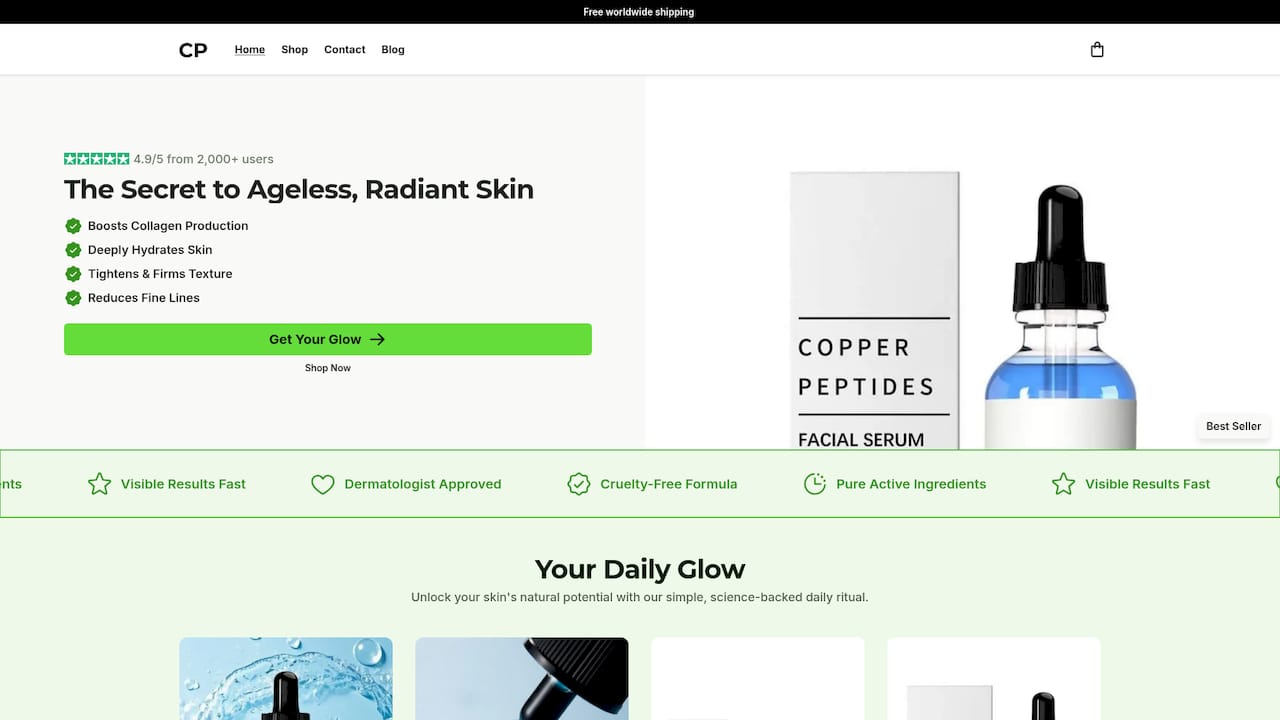
If you’ve read through the layering guidance and the buying checklist, the Copper Peptide Anti-Aging Serum from Copperpeptides checks every box. It’s built around high-purity GHK-Cu paired with medical-grade hyaluronic acid, formulated at a stable pH, and packaged to protect the peptide from oxidation. Dermatologist-endorsed and cruelty-free, it’s designed for all skin types including sensitive skin.
In your PM routine, it slots in right after cleansing, before your moisturizer. In the AM, pair it with a niacinamide product and finish with SPF. Most people see texture and hydration improvements within 4–6 weeks; the firming effect builds from there. Copperpeptides backs the product with a return policy that reflects genuine confidence in the results. Visit Copperpeptides to review the full formulation details and get started.
Sources and further reading
- Copper Peptides (GHK-Cu) and Niacinamide: Safe to Mix — SkinCareConflict: Ingredient conflict checker verdict, patch-test protocol, and layering guidance
- Peptide vs Niacinamide: Which Is Better for Your Skin? — FormBlends: Formulation expert summary on compatibility and niacinamide RCT evidence
- Copper Tripeptide-1 (GHK-Cu) 1000 ppm TDS — AvenaLab: Manufacturer technical data sheet covering pH range, concentration, processing temperature, and chelator warnings
- Using Aldara, copper peptide, and niacinamide for skin care — PubMed: Published clinical commentary on copper peptide and niacinamide in skin care and rejuvenation
- For ingredient conflict checking, tools that cross-reference INCI lists against known interaction data can help verify any combination before you buy
- For personalized guidance, particularly if you have eczema, rosacea, or post-procedure skin, consult a board-certified dermatologist before introducing new actives