

Yes, you can use copper peptides and vitamin C in the same skincare routine, but not in the same application. Vitamin C belongs in your morning routine, and copper peptides belong at night. That split isn’t a preference. It comes from real chemistry: mixing the two in one product or one application can trigger a reaction that generates free radicals instead of fighting them.
The simplest version of the rule:
- AM: vitamin C serum, then moisturizer, then sunscreen
- PM: copper peptide serum, applied after cleansing, before moisturizer
- If you’re stuck using both in one sitting: apply vitamin C first, wait 15 to 30 minutes, then apply copper peptides. It works, but it’s the fallback, not the plan
Key Takeaways
Vitamin C and copper peptides work through separate biological pathways, and separating them by time of day avoids a real chemical conflict while letting both ingredients do their job.
| Point | Details |
|---|---|
| Never mix in one application | Combining vitamin C and copper peptides in the palm or same layer risks a redox reaction that generates free radicals. |
| Follow the AM/PM split | Apply vitamin C in the morning under sunscreen; use copper peptides at night after cleansing. |
| If forced into one session | Apply vitamin C first, then wait 15 to 30 minutes before copper peptides. |
| Check the label | L-ascorbic acid needs a low pH; derivatives like sodium ascorbyl phosphate are gentler but less potent. |
| Consider Copperpeptides for PM care | The Copper Peptide Anti-Aging Serum is formulated as a nighttime complement to a morning vitamin C step. |
Table of Contents
- Can You Use Copper Peptides With Vitamin C? The AM/PM Protocol
- How Vitamin C and Copper Peptides Actually Work on Skin
- Why You Shouldn’t Mix Them in the Same Application
- Reading Labels: What Makes a Vitamin C Product Copper Peptide Compatible
- Who Needs to Be Extra Careful, and How to Troubleshoot Irritation
- What the Research Actually Shows About Combining These Ingredients
- Does Combining Vitamin C and Copper Peptides Actually Improve Results?
- Beyond Collagen: Other Benefits of Using Both Ingredients
- If Vitamin C Irritates You, What Else Pairs Well With Copper Peptides?
- How to Store Vitamin C and Copper Peptide Products for Maximum Stability
- What Most Advice Gets Wrong About Layering These Two Ingredients
- Where a Copper Peptide Serum Fits Into Your Morning Vitamin C Routine
- Sources
Can You Use Copper Peptides With Vitamin C? The AM/PM Protocol
Here’s the routine to actually copy, not just read about.
- Morning: cleanse, apply vitamin C serum to dry skin, let it absorb for a minute, then layer moisturizer and a broad-spectrum SPF 30 or higher.
- Evening: cleanse, apply your copper peptide serum, then follow with moisturizer. Skip other active ingredients that night if your skin is reactive.
- If you also use a retinoid: rotate nights. Copper peptides on Monday, Wednesday, Friday; retinoid on the alternating nights. Give your skin at least one rest night per week.
- New to either ingredient? Phase them in one at a time over two to three weeks so you can tell what’s causing any reaction, rather than introducing both simultaneously.
This AM vitamin C, PM copper peptide split lines up with what most formulators recommend for layering order, and it sidesteps the same-application problem entirely by putting eight or more hours between the two actives.
Pro Tip: If you’re traveling or your routine gets compressed into one sitting, apply vitamin C first and set a timer for 20 minutes before your copper peptide serum. The wait matters more than people assume.
How Vitamin C and Copper Peptides Actually Work on Skin
These two ingredients don’t compete. They do different jobs.
L-ascorbic acid, the active form of vitamin C, is a cofactor your body needs to hydroxylate collagen, a chemical step required to stabilize the collagen molecule as it forms. It also neutralizes free radicals generated by UV exposure during the day, which is why it’s a morning ingredient. But it only penetrates skin efficiently under specific conditions.
- Peak absorption happens at a low pH, around 3.5, and at concentrations near 20%, according to Pinnell et al.'s penetration research.
- Below that pH threshold, tissue saturation drops off sharply, which is why formulation matters as much as the ingredient itself.
Copper peptides, most commonly the tripeptide GHK-Cu, work on a different pathway entirely. Rather than acting as a cofactor, GHK-Cu signals fibroblasts directly, upregulating genes for collagen types I and III and elastin in laboratory studies, while the copper itself supports enzymes involved in cross-linking the extracellular matrix.
One builds the raw material. The other tells your cells to build more of it. Used together on a schedule, they cover more ground than either one alone.
Why You Shouldn’t Mix Them in the Same Application
The reason for separating vitamin C and copper peptides isn’t caution for caution’s sake. It’s redox chemistry.
Ascorbic acid is a reducing agent. When it comes into direct contact with copper ions, it reduces Cu2+ to Cu+, a more reactive form of copper. In the presence of oxygen or peroxides, that Cu+ can drive Fenton-type reactions that generate hydroxyl radicals, the same kind of reactive oxygen species vitamin C is supposed to neutralize.
In a bottle or on the back of your hand, ascorbate and copper ions sit in close, unbuffered contact, which is exactly the condition that favors this reaction. On intact skin, with a stratum corneum barrier and far more dilute exposure, the risk profile changes, though it isn’t eliminated. Formulators treat the solution-phase risk as the reason to keep the two apart, even where human skin-level data is thinner.
That distinction, solution versus skin, is why the advice splits into two tiers:
- Never mix the two serums in your palm or apply them from the same layer. This is the clearest, most avoidable version of the risk.
- Sequential same-session use (vitamin C, then a wait, then copper peptides) is a lower-certainty gray zone, treated as precautionary rather than proven dangerous.
It’s also why you should treat any product claiming to deliver both L-ascorbic acid and copper peptides at effective concentrations in a single bottle with skepticism. Getting vitamin C to the low pH it needs for penetration while keeping copper peptides stable in that same environment is a genuinely difficult formulation problem, and most brands solve it by underdosing one ingredient rather than actually solving the chemistry.
Reading Labels: What Makes a Vitamin C Product Copper Peptide Compatible
Not all vitamin C is created equal, and that difference determines how careful you need to be.
L-ascorbic acid is the gold standard for efficacy but the pickiest to formulate. It needs a low pH, generally below 3.5, to convert into a form your skin can absorb, and it’s also the most chemically reactive form when it meets copper directly.
Derivatives like ascorbyl glucoside and sodium ascorbyl phosphate behave differently. They’re more stable, they don’t require an acidic pH, and your skin has to convert them into active ascorbic acid after application. That conversion step is slower and less efficient, but it also makes these derivatives gentler and arguably lower-risk if a product ever brings vitamin C and copper into closer contact.
On copper peptide labels, look for these names:
- GHK-Cu (the copper tripeptide most studied for collagen signaling)
- Copper tripeptide-1
- Copper lysinate/prolinate, a related complex sometimes used in place of GHK-Cu
Pro Tip: If a product lists a vitamin C derivative rather than L-ascorbic acid, same-session use with copper peptides carries somewhat less theoretical risk since the derivative isn’t yet in its reactive ascorbate form. That said, the clinical evidence for derivatives’ collagen benefits is thinner than for L-ascorbic acid itself, so you’re trading a small safety margin for a less-proven ingredient.
Do the AM/PM split regardless of which form you use. It removes the guesswork.
Who Needs to Be Extra Careful, and How to Troubleshoot Irritation
Sensitive skin, a compromised moisture barrier, or an existing routine built around retinoids or exfoliating acids all raise your odds of irritation when you add another active ingredient.
- Patch test first. Apply the new product to a small area, like your inner forearm or behind your ear, and wait 24 to 48 hours before using it on your face.
- Introduce one new active at a time. If you add vitamin C and copper peptides in the same week, and something reacts, you won’t know which one caused it.
- Build in rest nights. If you’re using copper peptides alongside a retinoid or AHA, alternate nights rather than stacking both, and give your skin at least one night with no actives at all.
- Watch for red flags: persistent stinging, visible redness that doesn’t fade within an hour, or peeling beyond what you’d expect. Stop use and consult a dermatologist if any of these show up.
What the Research Actually Shows About Combining These Ingredients
The clinical picture here is honest but uneven. Topical vitamin C has a genuine track record: multiple small randomized controlled trials support its role in photoprotection and reducing pigmentation, giving it a firmer evidence base than most anti-aging actives on the market.
GHK-Cu’s evidence base looks different. The strongest support comes from mechanistic and in vitro work showing it stimulates fibroblast activity and collagen gene expression, backed by smaller human trials reporting improved skin density. What’s missing is the large-scale RCT data that vitamin C has accumulated over decades. That’s not a knock against copper peptides. It reflects how much longer vitamin C has been a research priority, and how much newer peptide science still is by comparison.
No study has directly tested combined AM vitamin C, PM copper peptide protocols against either ingredient alone in a large human trial. The layering advice here is built from formulation chemistry and practitioner consensus, not head-to-head outcome data. That’s a real gap, and it’s worth knowing about rather than glossing over.
What that gap does confirm is this: the harm from imperfect sequencing is unproven, but the fix, just spacing the two ingredients apart in your routine, costs nothing and takes no extra time. When the downside of caution is basically zero, caution wins by default.
Does Combining Vitamin C and Copper Peptides Actually Improve Results?
There’s no published trial that directly measures a combined AM vitamin C, PM copper peptide protocol against either ingredient used alone. That’s the honest starting point. What exists instead is a body of evidence for each ingredient independently, plus a mechanistic argument for why using both, on separate schedules, should outperform using just one.
Vitamin C’s clinical support centers on antioxidant protection against UV damage and measurable improvements in photoaging and pigmentation over weeks of consistent use. Copper peptide research centers on collagen gene expression and extracellular matrix remodeling, with smaller human trials reporting increases in skin density.
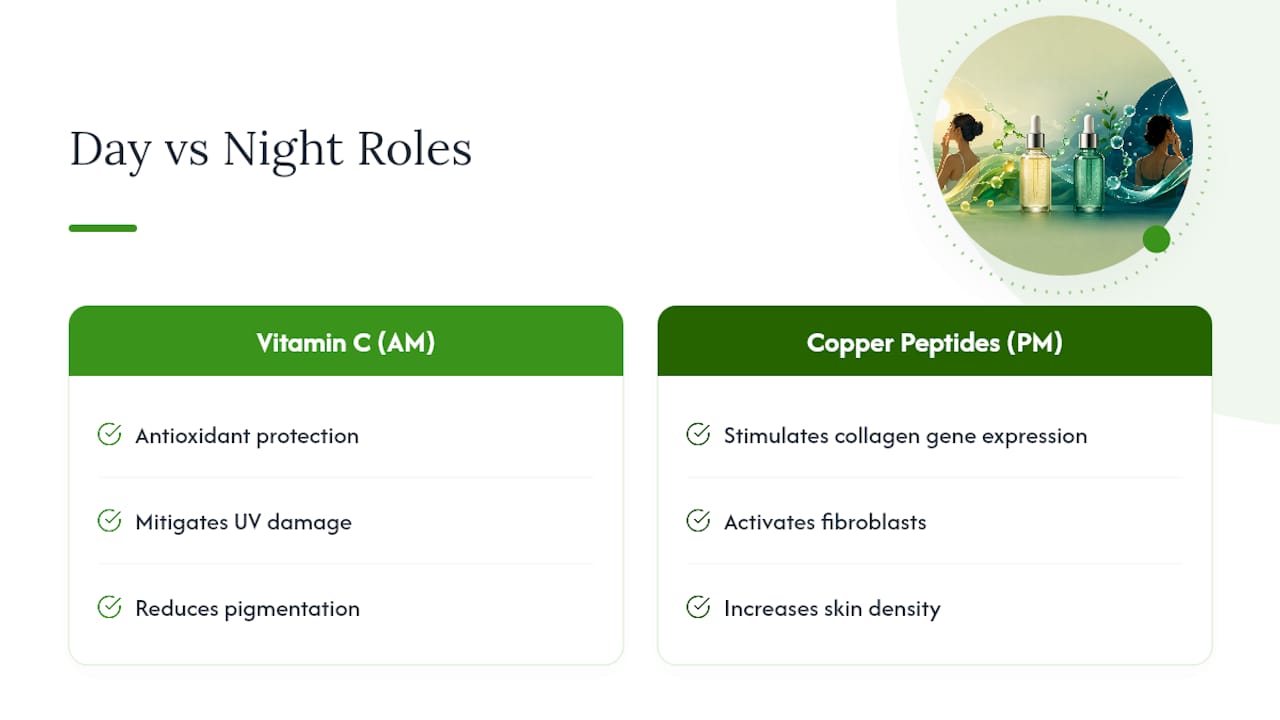
Because these pathways don’t overlap, layering them across a day should theoretically compound their separate effects rather than duplicate them. Vitamin C protects and supports the biochemical conditions collagen production needs during the day; copper peptides push cellular signaling for new collagen and elastin at night, when skin’s repair processes are naturally more active. That’s a reasonable extrapolation from mechanism, not a confirmed outcome from a trial that tested the pairing directly. Readers should treat claims of dramatic synergy with the same skepticism they’d apply to any single-ingredient claim that outpaces its evidence.
Beyond Collagen: Other Benefits of Using Both Ingredients
Collagen production gets most of the attention, but it’s not the only reason to run vitamin C and copper peptides on parallel tracks.
Vitamin C’s antioxidant function does double duty. It’s not just about long-term collagen support. It actively helps neutralize free radical damage from UV and pollution exposure in real time, which is the core reason it’s positioned as a morning, under-sunscreen step rather than a nighttime one.

Copper peptides bring benefits that extend past collagen synthesis. GHK-Cu has documented roles in wound healing and tissue remodeling, and copper itself is a cofactor for enzymes involved in antioxidant defense at the cellular level. Some users also report improvements in skin firmness and texture that show up faster than pure collagen-building timelines would predict, likely tied to copper peptides’ broader effects on tissue repair signaling rather than collagen synthesis alone.
Run together on an AM/PM schedule, the combination effectively covers two different shifts: daytime protection and nighttime repair signaling. Neither ingredient substitutes for the other’s specific function, which is the real argument for using both rather than picking a favorite.
If Vitamin C Irritates You, What Else Pairs Well With Copper Peptides?
Not everyone tolerates vitamin C, especially at the low pH that L-ascorbic acid needs to penetrate effectively. If it’s causing stinging, redness, or breakouts, you’re not stuck choosing between irritation and skipping antioxidant protection entirely.
Niacinamide is one of the more compatible options. It’s stable across a wide pH range, doesn’t carry the same reactive chemistry with copper that ascorbate does, and can be layered with far more flexibility than vitamin C. It also addresses some overlapping concerns, like uneven tone and barrier support, without the acidic formulation vitamin C requires. If you want a deeper look at how the two pair, Copperpeptides has a dedicated guide on running niacinamide alongside copper peptides.
Vitamin E and ferulic acid are other antioxidant options that don’t carry vitamin C’s reduction chemistry with copper, though they’re typically formulated as antioxidant boosters rather than standalone replacements.
Green tea extract (EGCG) offers milder antioxidant activity with a much lower irritation profile, making it a reasonable substitute for people with reactive or compromised skin barriers who still want daytime free radical protection.
None of these matches vitamin C’s specific, well-documented role in collagen hydroxylation. But if irritation is derailing your routine entirely, a gentler antioxidant that you’ll actually use consistently beats a stronger one sitting unused in your cabinet.
How to Store Vitamin C and Copper Peptide Products for Maximum Stability
Both ingredients degrade, but they degrade for different reasons, and storing them wrong wastes your money faster than using them wrong.
L-ascorbic acid oxidizes on contact with air and light. A vitamin C serum that’s turned yellow or brown has already started breaking down, and it’s losing potency even if it hasn’t fully discolored yet. Keep it in an opaque or dark glass bottle, store it somewhere cool and away from direct sunlight, and expect a shorter usable shelf life once opened, often just a few months, compared to more stable formulas.
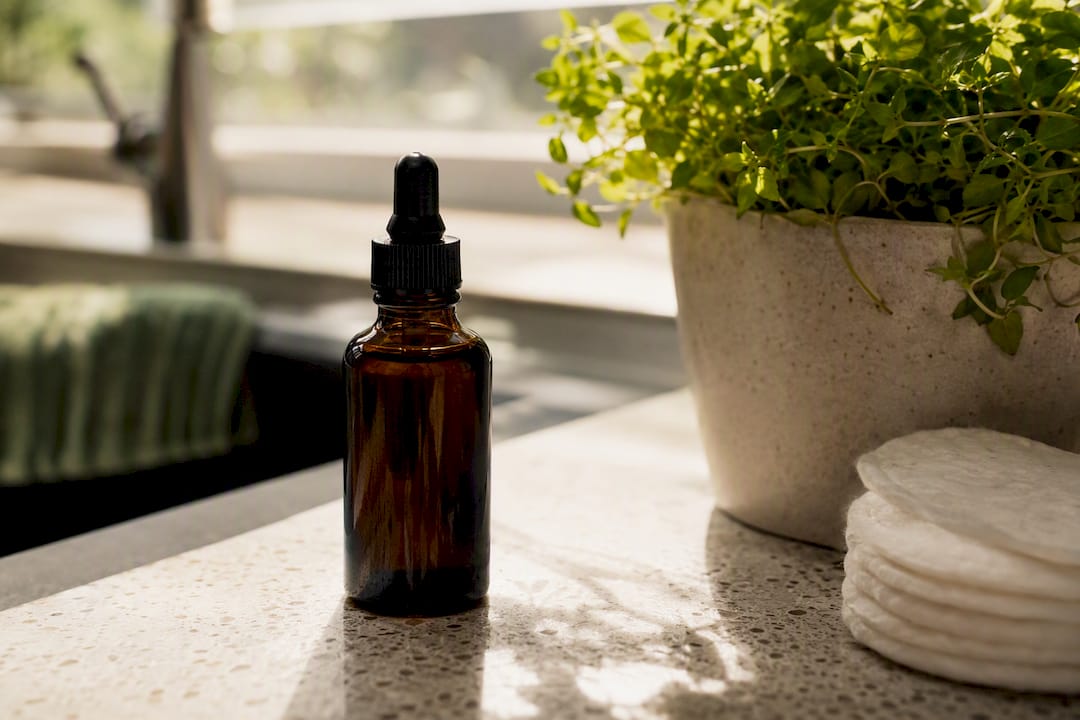
Copper peptide serums are generally more stable than L-ascorbic acid, but they still benefit from being kept away from heat and direct light, and from being sealed tightly between uses. Copper is a metal ion, not an organic compound prone to oxidation the way ascorbic acid is, which is part of why copper peptide formulas tend to hold up longer on the shelf.
Because you’re using these two products at different times of day, storing them separately in your medicine cabinet isn’t just tidy. It reinforces the routine and reduces the temptation to grab both in one sitting out of convenience. If either product changes color, develops an odd smell, or separates, replace it. Degraded actives don’t just stop working. In vitamin C’s case, oxidized ascorbic acid can actually be mildly irritating rather than simply inert.
What Most Advice Gets Wrong About Layering These Two Ingredients
Most articles on this topic treat “don’t mix vitamin C and copper peptides” as an absolute rule, full stop, no nuance. That’s an overcorrection. The actual chemistry problem is specific: ascorbate reducing copper in solution, in direct, unbuffered contact. That’s a real concern in a bottle or on your palm. It’s a less certain concern once both ingredients are diluted across intact skin, separated by minutes rather than mixed instantly.
What the conventional advice gets right is the conclusion, even if the reasoning gets flattened along the way. Separating these ingredients by time of day costs you nothing and removes the risk almost entirely, so there’s no good argument for taking a chance on same-application mixing just to save a step.
Where I’d push back on typical guidance is the fixation on copper peptides needing to “prove themselves” against vitamin C’s larger trial record before they’re worth using. That’s comparing a newer, actively evolving area of peptide science to an ingredient with decades of research funding behind it. The mechanistic case for GHK-Cu is strong enough that dismissing it while waiting for large RCTs means missing a genuinely useful ingredient in the meantime.
Prioritize the schedule, not the ingredient debate. Get your AM/PM split right first. Everything else is secondary.
Where a Copper Peptide Serum Fits Into Your Morning Vitamin C Routine
If your mornings are already built around a vitamin C serum, your evenings are the natural place to add copper peptides, and that’s exactly the gap the Copper Peptide Anti-Aging Serum is formulated for. It pairs high-purity copper peptides with medical-grade hyaluronic acid, so you’re getting collagen signaling and deep hydration in one PM step, without worrying about the redox conflict that comes from reaching for a vitamin C product at night out of habit.
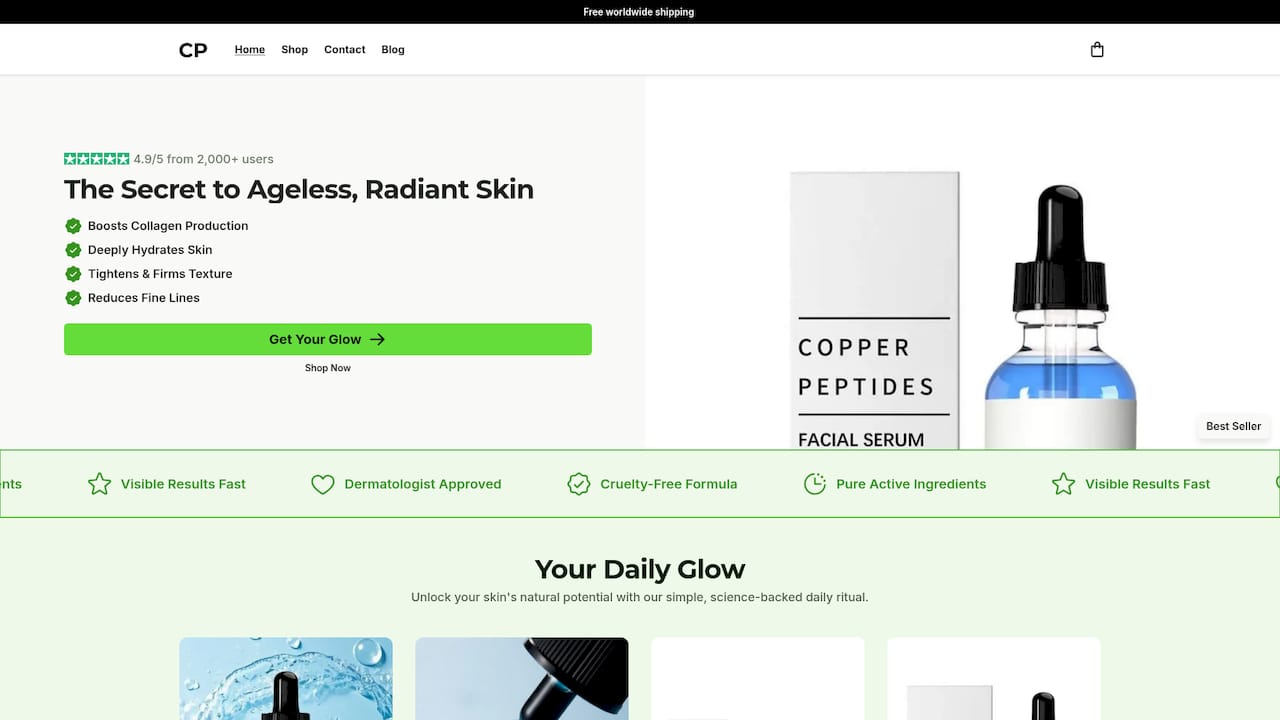
The formula is dermatologist-endorsed, gentle enough for sensitive skin, and most users report visible improvements in firmness and texture within four to six weeks of nightly use. Every order is backed by a return policy, so trying it alongside your existing morning routine carries little downside. If you’re ready to close the gap in your PM routine, start with the Copper Peptide Anti-Aging Serum product page and check current availability.
Sources
- Can You Use Copper Peptides With Vitamin C? | Evenskyn
- Copper Peptides vs. L-Ascorbic Acid: Collagen Science – Phyto-C Skin Care
Recommended
- How to Layer Copper Peptides for Maximum Skin Benefits – Copper Peptides Store
- Copper Peptides and Niacinamide: How to Use Them Together – Copper Peptides Store
- Copper Peptides and Tretinoin: Can You Safely Use Both? – Copper Peptides Store
- Are Copper Peptides Safe? A Dermatologist-Backed Answer – Copper Peptides Store