

Copper peptides and tretinoin can be used together, but same-night co-application is not recommended for most people. The safer approach is temporal separation: use tretinoin one night, copper peptides the next, or split them across AM and PM. There are no robust randomized controlled trials testing simultaneous application in humans, and the main practical risks are cumulative irritation and potential formulation instability, not a proven biochemical antagonism. Before adding both to your routine, patch test each product separately and give your skin at least two weeks to adapt to tretinoin alone.
Key Takeaways
Copper peptides and tretinoin are compatible when used with temporal separation; same-night co-application carries meaningful irritation risk and lacks robust human trial support.
| Point | Details |
|---|---|
| Separate or alternate use | Use tretinoin one night and copper peptides the next, or split AM/PM, to minimize irritation. |
| Patch test first | Test each active separately on the inner forearm before applying to the face. |
| Sunscreen is mandatory | Tretinoin increases photosensitivity; apply broad-spectrum SPF every morning without exception. |
| Consult your prescriber | Severe or worsening irritation with prescription tretinoin warrants a clinician review before continuing. |
| Copperpeptides serum | The Copperpeptides Copper Peptide Anti-Aging Serum pairs GHK-Cu with hyaluronic acid for barrier support on non-tretinoin nights. |
Table of Contents
- How to use copper peptides with tretinoin: two starter routines
- What the research actually says about this combination
- How each ingredient works and why they might interact
- Step-by-step guidance for introducing both safely
- What to avoid combining with these actives
- Side effects, red flags, and when to see a clinician
- How the Copperpeptides serum fits into a tretinoin routine
- An honest perspective on combining actives
- The Copperpeptides serum: collagen support that works alongside tretinoin
- Sources
How to use copper peptides with tretinoin: two starter routines
The simplest way to think about this pairing is that tretinoin resurfaces and copper peptides repair. Keeping them on separate schedules lets each do its job without stacking irritation.
Beginner routine (sensitive or new-to-tretinoin skin)
- Monday, Wednesday, Friday: Apply tretinoin at night after cleansing. Follow with a plain, fragrance-free moisturizer.
- Tuesday, Thursday, Saturday: Apply copper peptide serum at night. Layer a hydrating moisturizer on top.
- Sunday: Rest night. Moisturizer only, no actives.
- Every morning: Broad-spectrum SPF 30 or higher, no exceptions.
- Start tretinoin every other night for the first four weeks, then increase frequency only when peeling and redness have settled.
Advanced routine (tolerant skin, six-plus months on tretinoin)
- Morning: Copper peptide serum after cleansing, then moisturizer, then SPF. This positions GHK-Cu as a daytime repair and collagen-support active.
- Evening: Tretinoin after cleansing, followed by a barrier-supportive moisturizer.
- This AM/PM split works for skin that has fully adapted to retinoid dermatitis and no longer experiences significant peeling or stinging.
Sensitive skin types should stay with the alternate-night beginner routine indefinitely if the AM/PM split triggers any redness. For a beginner’s guide to peptide serums and layering basics, Copperpeptides has a dedicated primer worth reading before you start.
What the research actually says about this combination
The honest answer is that the clinical evidence base for combining these two actives is thin, and anyone claiming otherwise is overstating it.
Study snapshot: The two most relevant human and in vitro studies used 20 subjects or fewer and tested each agent separately, not in combination. No published randomized controlled trial has tested same-night co-application of tretinoin and a copper peptide serum in humans.
The most cited in vitro work, a fibroblast model study, found that tretinoin-treated normal fibroblasts secreted significantly more basic fibroblast growth factor (bFGF) at 24 hours, while copper tripeptide-treated fibroblasts secreted less TGF-β1. Cell viability across conditions averaged 92%. Critically, the agents were tested in separate cell cultures, not together, so this tells us about individual mechanisms, not interaction effects.
On the human side, a 20-subject topical study applied a copper-binding peptide cream and tretinoin cream to different sites on volunteers over one month. Immunohistologic assessment showed procollagen synthesis increases in some volunteers using the copper-binding peptide cream, while tretinoin increased epidermal proliferation in a subset of participants. Again, the agents were applied to separate skin sites, not layered together.
A recent practitioner analysis concluded that no high-quality human trials exist on the specific combination and recommended temporal separation as the conservative default.
The takeaway from this table is not that the combination is dangerous. It is that the evidence for safety and synergy at the same-night level simply has not been generated yet.
How each ingredient works and why they might interact
Tretinoin binds retinoic acid receptors (RARs) in keratinocytes and fibroblasts, triggering a cascade that increases cell turnover, thickens the epidermis over time, and stimulates dermal collagen synthesis. Clinical literature consistently identifies it as the reference topical retinoid for photoaging, with controlled trial evidence spanning decades. The catch is the adaptation phase: retinoid dermatitis, characterized by redness, peeling, and dryness, is common in the first two to eight weeks and is the primary reason most people abandon tretinoin before it works.
Copper peptides, specifically GHK-Cu (copper tripeptide-1), work through a different pathway. GHK-Cu delivers bioavailable copper ions to fibroblasts, modulating gene expression linked to collagen, elastin, antioxidant defenses, and tissue repair. In cell and fibroblast studies, GHK-Cu stimulates collagen synthesis and supports wound-healing signaling. The clinical trial base is smaller than tretinoin’s and often industry-funded, but the mechanistic data is coherent.
Why interaction might occur:
- Cumulative irritation: Both actives can individually cause surface sensitivity. Layering them on the same night stacks that risk, particularly during the retinization window.
- Formulation instability: Copper ions are redox-active. Combining GHK-Cu with low-pH formulations or oxidation-sensitive actives in the same application can theoretically destabilize ingredients, though this is more relevant when mixing products in your palm than when using them at separate times.
- Remodeling pathway overlap: Both agents influence collagen and growth factor signaling. Whether they compete or complement in human skin at the same time is genuinely unknown.
Pro Tip: The main practical risk here is irritation and formulation instability, not a proven biochemical antagonism. Most people who have trouble with this combination are experiencing stacked skin-barrier disruption, which is entirely manageable with timing adjustments.
Step-by-step guidance for introducing both safely
Getting this right is mostly about patience and sequence. Rush the introduction and you will attribute normal retinization to the copper peptide, or vice versa, and abandon a routine that would have worked.
- Start tretinoin alone. Use it every other night for the first two to four weeks at the lowest effective concentration. Do not introduce copper peptides yet. This gives you a clean baseline for how your skin responds to the retinoid.
- Patch test the copper peptide serum. Apply a small amount to the inner forearm or behind the ear for three to five consecutive days before putting it on your face. Watch for redness, itching, or swelling.
- Introduce copper peptides on non-tretinoin nights. Once tretinoin is tolerated without significant peeling, add the copper peptide serum on alternate nights. This is the beginner alternate-night schedule described earlier.
- Wait at least 20 minutes between actives if using the same night. If you choose to use both on the same evening, apply tretinoin first, wait 20 minutes, then apply the copper peptide serum. The tretinoin prescribing information explicitly advises caution when combining tretinoin with other potentially irritating topicals, so this approach carries more risk and is not recommended for beginners.
- Buffer with moisturizer. Applying a plain moisturizer before tretinoin (the “sandwich” method) reduces irritation without meaningfully reducing efficacy. This is especially useful in the first month.
- Ramp up frequency gradually. Move from every-other-night to nightly tretinoin only after four to six weeks of comfortable tolerance. Copper peptide frequency can match or exceed tretinoin frequency once your barrier is stable.
- Troubleshoot irritation systematically. If redness or peeling worsens after adding copper peptides, pause the peptide serum for one week and assess. If irritation persists, reduce tretinoin frequency. If it resolves, reintroduce the peptide serum on non-tretinoin nights only. If severe irritation continues, consult your prescriber before continuing either product.
- Apply sunscreen every morning. Tretinoin increases photosensitivity. Clinical practice guidance consistently emphasizes daily SPF and barrier support during retinoid use. This is non-optional.
For hydrating serums that support barrier recovery during tretinoin use, Copperpeptides has a curated guide that pairs well with this protocol.
What to avoid combining with these actives
Some ingredients genuinely increase the risk of irritation or formulation breakdown when used alongside tretinoin or copper peptides. The list is shorter than most skincare forums suggest, but the items on it matter.
- Strong AHAs and BHAs (glycolic acid, salicylic acid) on the same night as tretinoin: Additive exfoliation on already-sensitized skin accelerates barrier disruption. Schedule these on non-tretinoin nights or in the morning at low concentrations.
- Pure L-ascorbic acid (vitamin C) at low pH with copper peptides: Ascorbic acid at pH 2.5–3.5 can oxidize copper ions and potentially degrade GHK-Cu. Use vitamin C in the morning and copper peptides in the evening, or choose a stabilized vitamin C derivative if you want both in the same routine.
- Benzoyl peroxide on the same night as tretinoin: Benzoyl peroxide can oxidize tretinoin and reduce its efficacy, in addition to stacking irritation. Use benzoyl peroxide in the morning if acne management requires it.
- High-concentration exfoliating toners or peels: Any product with a significant exfoliating action compounds the surface turnover tretinoin already drives. Reserve these for separate nights entirely, or drop them while your skin adapts.
- Alcohol-heavy toners or astringents: These strip the barrier that tretinoin is already compromising. Swap to a hydrating, low-irritant toner or skip toner entirely during the adaptation phase.
The scheduling principle behind all of these is the same: tretinoin is already doing significant work on your skin’s surface. Every additional active you layer on the same night is competing for tolerance, not synergy.
Side effects, red flags, and when to see a clinician
Normal retinization looks like mild redness, flaking, and occasional stinging, particularly around the mouth, nose, and eyes. This typically peaks in weeks two through four and resolves as the skin adapts. It is uncomfortable but expected, and it does not mean the product is harming you.
Signs that warrant pausing and reassessing:
- Persistent burning that does not subside within 30 minutes of application
- Swelling, especially around the eyes or lips
- Blistering or open skin
- Signs of infection: warmth, pus, spreading redness
- Severe dermatitis that covers a large area of the face and does not improve after reducing frequency
If any of these occur, stop both actives and let the barrier recover before reintroducing anything. A plain moisturizer and gentle cleanser are your only products until the skin is calm.
When to contact your prescriber specifically:
- You are using prescription-strength tretinoin and experiencing severe or worsening irritation after adding copper peptides
- You are pregnant, planning pregnancy, or breastfeeding. Tretinoin is contraindicated in pregnancy, and any combination routine should be reviewed by a clinician
- You are on other prescription topicals (antibiotics, azelaic acid at high concentrations) and want to add copper peptides to the mix
The FDA prescribing label for tretinoin is explicit: combining it with other potentially irritating topicals requires prescriber guidance. That is not boilerplate. It reflects real clinical risk for a subset of users.
How the Copperpeptides serum fits into a tretinoin routine
The Copperpeptides Copper Peptide Anti-Aging Serum is formulated with high-purity GHK-Cu and medical-grade hyaluronic acid, which makes it a practical fit for the repair-and-hydrate role in a tretinoin routine. The hyaluronic acid component addresses the dryness tretinoin causes, while the copper peptide fraction supports collagen signaling on the nights when retinoid activity is lower. It is dermatologist-endorsed and designed for all skin types, including sensitive skin, which matters when you are working alongside a prescription-strength retinoid.

| Use scenario | Recommended timing | What to avoid |
|---|---|---|
| Alternate-night routine | Apply serum on non-tretinoin nights, after cleansing | Do not mix in the same layer as low-pH vitamin C |
| AM/PM split (tolerant skin) | Apply serum in the morning under SPF | Do not apply immediately after tretinoin on the same night |
| Barrier recovery phase | Use nightly as the primary active while pausing tretinoin | Avoid combining with strong exfoliants |
Visible improvement in hydration and skin texture typically appears within four to six weeks of consistent use. Collagen remodeling takes longer, often three to six months, which aligns with the timeline for tretinoin’s deeper structural effects. For a fuller look at how copper peptides support collagen production, the Copperpeptides blog covers the mechanism in detail.
An honest perspective on combining actives
The skincare conversation around combining actives has gotten more sophisticated, but it has also gotten more anxious. People read that copper peptides and tretinoin “might interact” and conclude they cannot use both. That is overcorrecting.
The real picture is more nuanced. These two ingredients have genuinely complementary roles: tretinoin drives turnover and collagen synthesis through retinoid receptor activation; GHK-Cu supports repair, antioxidant defense, and collagen signaling through a different pathway. The concern is not that they cancel each other out biochemically. The concern is that using both on the same night, especially during the retinization window, stacks irritation on a barrier that is already under stress.

Temporal separation solves that problem almost entirely. Alternate nights or an AM/PM split gives each active the conditions it needs without asking your skin to handle both simultaneously. That is not a compromise. It is just good formulation thinking applied to a routine.
What I would push back on is the idea that you need to wait until your skin is “fully adapted” to tretinoin before introducing copper peptides at all. Using GHK-Cu on non-tretinoin nights from week three or four onward can actually support barrier recovery during the adaptation phase, which makes the overall transition smoother. The evidence for this is not from a large RCT, but the mechanistic rationale is sound and the risk of doing it this way is low.
Follow the product instructions, patch test before committing to a full routine, and if you are on prescription tretinoin, loop in your prescriber before making significant changes.
The Copperpeptides serum: collagen support that works alongside tretinoin
Tretinoin does the heavy resurfacing. What your skin needs alongside it is a repair-focused active that does not add to the irritation load. The Copperpeptides Copper Peptide Anti-Aging Serum is built for exactly that role: high-purity GHK-Cu paired with medical-grade hyaluronic acid to support collagen synthesis and deep hydration on the nights your skin is recovering from retinoid activity.
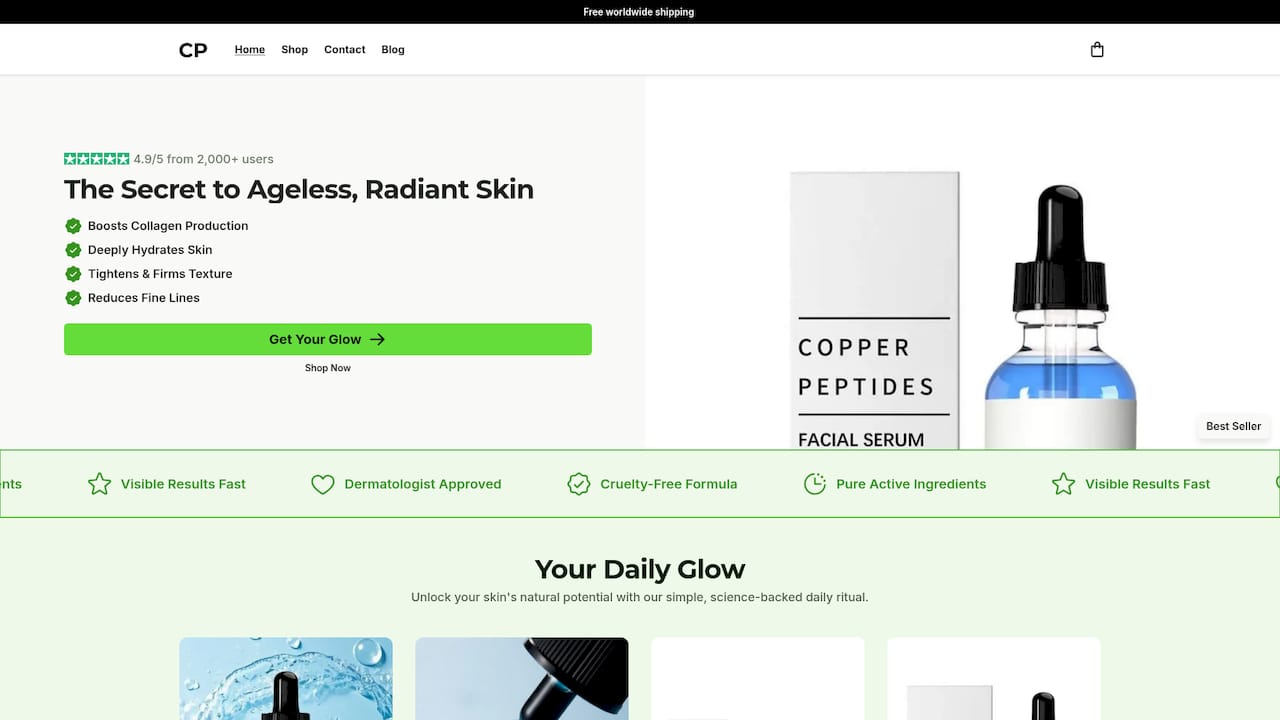
Apply it in the morning under SPF, or on alternate nights when tretinoin is not in use. Either way, it supports barrier recovery rather than competing with it. The formulation is dermatologist-endorsed, suitable for sensitive skin, and backed by a return policy that removes the risk from trying it. If you are already using tretinoin and want a copper peptide serum that integrates cleanly, this is where to start.
Sources
- The effect of copper tripeptide and tretinoin on growth factor production in a serum-free fibroblast model
- Effects of topical creams containing vitamin C, a copper-binding peptide cream and melatonin compared with tretinoin on the ultrastructure of normal skin
- Ncbi
- Dailymed
This article is general information, not a substitute for advice from a qualified doctor. Consult a qualified healthcare professional about your own circumstances before acting on anything here.
Recommended
- Copper Peptides and Niacinamide: How to Use Them Together – Copper Peptides Store
- Copper Peptides vs Matrixyl: Which One Actually Works? – Copper Peptides Store
- Copper Peptide Benefits: A Science-Backed Skin Guide – Copper Peptides Store
- Dermatologist Approved Skincare: Best Copper Peptide Serum – Copper Peptides Store