

GHK-Cu (copper peptides) outperforms Matrixyl in head-to-head remodeling trials, and yes, you can use both in the same routine without conflict. The key is timing: Matrixyl in the morning, GHK-Cu in the evening. That single scheduling rule eliminates the formulation conflicts that trip most people up.
Here’s the short version of what the evidence shows:
- GHK-Cu wins on remodeling depth. A clinical trial reported GHK-Cu reduced wrinkle volume 31.6% more than Matrixyl 3000 under the study’s conditions.
- Matrixyl wins on formulation flexibility. It’s stable across a wide pH range and pairs cleanly with vitamin C, niacinamide, and retinol without interaction issues.
- Together, they’re complementary, not redundant. Matrixyl signals fibroblasts to produce collagen; GHK-Cu modulates the enzymes and genes that actually build and cross-link the extracellular matrix.
- The one rule that matters: never apply copper peptides and low-pH vitamin C in the same step. The copper ions accelerate ascorbate oxidation, degrading both actives.
If your goal is targeted nighttime repair, GHK-Cu is the stronger choice. If you want a daytime peptide that plays well with everything else in your routine, Matrixyl is the easier call.
Table of Contents
- What are Matrixyl and copper peptides, exactly?
- How each peptide works at the cellular level
- Copper peptides vs Matrixyl: a direct comparison
- Can you use Matrixyl and copper peptides together?
- Safety, side effects, and who should patch test
- What the clinical evidence actually shows
- Sample AM and PM routines using both peptides
- When to choose GHK-Cu, when to choose Matrixyl, and when to use both
- Key Takeaways
- The case for getting the sequencing right before anything else
- The Copperpeptides serum fits exactly the PM slot this protocol calls for
- Useful sources
What are Matrixyl and copper peptides, exactly?
These two ingredients get lumped together as “anti-aging peptides,” but they work through entirely different mechanisms and belong to different peptide classes.

Matrixyl is the trade name for palmitoyl pentapeptide-4 (INCI: palmitoyl pentapeptide-4), a matrikine-derived signal peptide developed by Sederma. On ingredient labels, look for palmitoyl pentapeptide-4. The palmitoyl group (a fatty acid chain) is attached to the peptide KTTKS, a fragment that mimics collagen breakdown products. That fragment tells fibroblasts that collagen has been damaged and needs replacing.
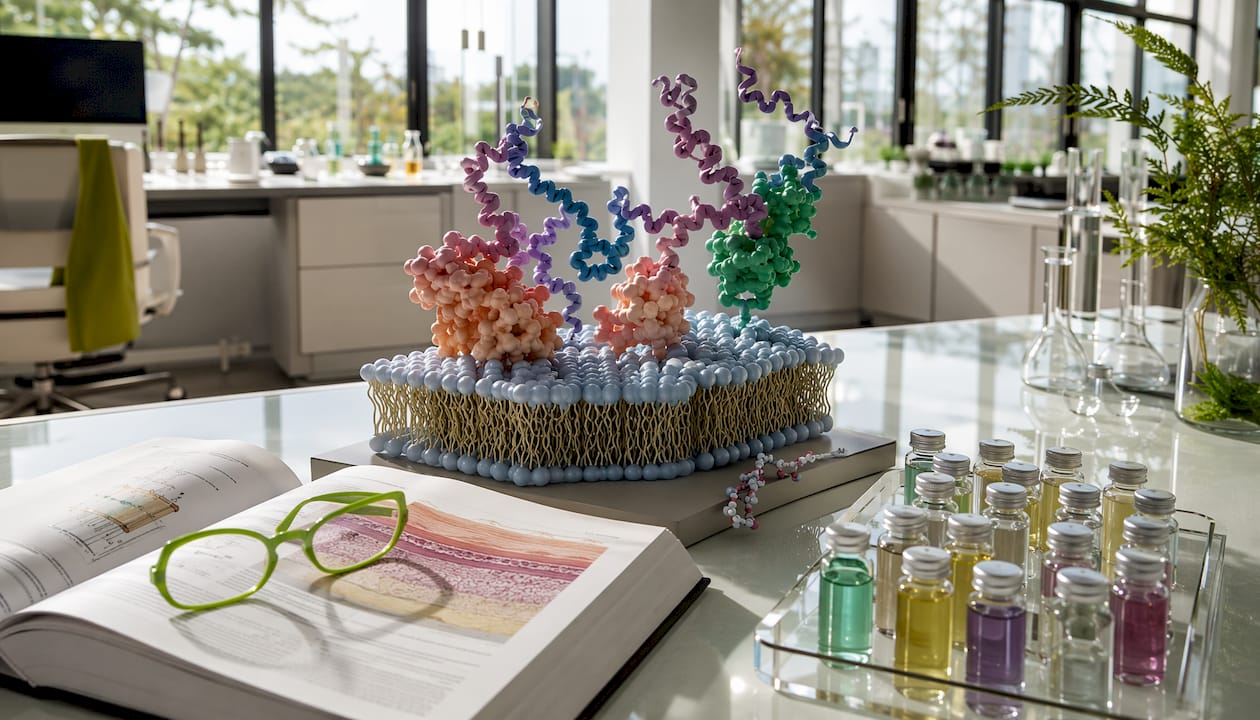
Matrixyl 3000 is a separate, more studied formulation: a blend of palmitoyl tripeptide-1 and palmitoyl tetrapeptide-7, also from Sederma. It’s not just a stronger version of the original Matrixyl. It’s a different peptide combination targeting both collagen synthesis and inflammation. On labels, you’ll see both palmitoyl tripeptide-1 and palmitoyl tetrapeptide-7 listed together.
Copper peptides (GHK-Cu) are a carrier peptide: glycyl-histidyl-lysine complexed with copper(II) ions. INCI name: copper tripeptide-1. Unlike signal peptides, GHK-Cu doesn’t just send a message. It delivers copper directly to enzymatic sites in the dermis, where it activates enzymes involved in collagen cross-linking and tissue repair.
Matrixyl is broadly stable across pH 4–8 in typical cosmetic formulations, which is why it shows up in everything from lightweight serums to rich moisturizers. GHK-Cu has a narrower stability window and is more sensitive to formulation conditions, which matters when you’re layering actives.
How each peptide works at the cellular level
Understanding the mechanisms here isn’t just academic. It explains why these two ingredients produce different results and why combining them makes biological sense.
GHK-Cu: broad gene modulation via copper delivery
- GHK-Cu penetrates the stratum corneum and releases copper ions into the dermis.
- Copper activates lysyl oxidase, the enzyme that cross-links lysine residues in collagen and elastin fibrils, giving them tensile strength.
- Copper also supports superoxide dismutase (SOD), an antioxidant enzyme that neutralizes reactive oxygen species in skin tissue.
- Beyond enzyme activation, GHK-Cu modulates gene expression across pathways involved in ECM remodeling, wound healing, and inflammation control.
The scope of GHK-Cu’s effects is genuinely unusual for a topical ingredient. The gene-modulation data come largely from in-vitro work, and translating those effects through an intact stratum corneum at cosmetic concentrations remains a real bioavailability challenge. That caveat matters when interpreting trial results.
Matrixyl: targeted collagen signaling via matrikine mimicry
- The KTTKS peptide fragment mimics a collagen breakdown product, activating fibroblasts through ECM receptor and integrin pathways.
- Fibroblasts respond by upregulating collagen I and III synthesis, as well as fibronectin.
- The palmitoyl group improves skin penetration by making the peptide more lipophilic, helping it cross the stratum corneum more efficiently than unmodified peptides.
- Matrixyl 3000’s palmitoyl tetrapeptide-7 component adds an anti-inflammatory signal, reducing IL-6 levels in treated tissue.
The practical difference: Matrixyl sends a precise, targeted signal to one pathway. GHK-Cu operates more like a systemic repair activator, touching wound healing, antioxidant defense, and matrix remodeling simultaneously. That breadth is what makes GHK-Cu more potent for deep remodeling, and also what makes formulation precision more important.
Copper peptides vs Matrixyl: a direct comparison
| Dimension | GHK-Cu (Copper Peptides) | Matrixyl (Palmitoyl Pentapeptide-4 / Matrixyl 3000) |
|---|---|---|
| Primary mechanism | Copper delivery → enzyme activation, gene modulation, ECM remodeling | Matrikine mimicry → fibroblast collagen I/III signaling via integrin pathways |
| Best for | Deep wrinkle reduction, firmness, wound healing, barrier repair | Wrinkle depth reduction, tone, collagen signaling, daytime use |
| Onset of visible results | 4–6 weeks early signs; fuller effects at 8–12 weeks | 4–12 weeks in published split-face trials |
| Clinical evidence strength | Strong in-vitro; fewer independent human RCTs; one head-to-head trial shows 31.6% greater wrinkle-volume reduction vs Matrixyl 3000 | Moderate: multiple small industry-funded split-face RCTs (Sederma data); consistent direction across studies |
| Formulation stability | Narrow pH window; sensitive to low-pH actives; can oxidize if improperly formulated | Stable pH 4–8; compatible with retinol, niacinamide, vitamin C, hyaluronic acid |
| Suggested timing | Evening, leave-on serum; avoid same-step acids | Morning or evening; pairs with most actives |
| Side effects / contraindications | Generally well tolerated; irritation possible at high concentrations; avoid with low-pH vitamin C in same step | Non-irritating and non-sensitizing at typical cosmetic concentrations |
A few things worth flagging from this comparison:
- The 31.6% head-to-head advantage for GHK-Cu is from a single trial under specific formulation conditions. Formulation technology and delivery vehicle matter enormously for both peptides.
- Matrixyl’s evidence base, while industry-funded and small in sample size, is more consistent across multiple human trials than GHK-Cu’s human data.
- For repair-focused goals (thinning skin, post-procedure recovery, deep wrinkles), GHK-Cu’s broader mechanism gives it an edge. For someone who wants a reliable daily collagen signal with minimal routine disruption, Matrixyl is the lower-friction option.
Can you use Matrixyl and copper peptides together?
Yes, and the combination is arguably better than either alone. The recommended approach is to separate them by time of day rather than try to find a single product that does both well.
Why separation matters: GHK-Cu is sensitive to low pH and to strong oxidizing environments. Applying it in the same step as vitamin C (especially L-ascorbic acid below pH 3.5) causes the copper ions to catalyze ascorbate oxidation, generating reactive oxygen species and degrading both actives. Matrixyl doesn’t have this problem, but it’s still cleaner to give each peptide its own slot.
Practical sequencing:
- Morning: Vitamin C (if used) → wait 20–30 minutes for skin pH to normalize → Matrixyl serum or moisturizer → SPF.
- Evening: Cleanser → GHK-Cu serum (leave-on) → Matrixyl night cream or plain moisturizer if desired.
- If using both in the same slot: Apply GHK-Cu first on clean, dry skin, let it absorb fully, then layer Matrixyl on top. Avoid this combination if you’re also using a low-pH acid in that step.
Formulation rules to keep in mind:
- GHK-Cu needs a leave-on format to deliver remodeling benefits. Rinse-off products reduce contact time with fibroblasts and undercut efficacy.
- Matrixyl is stable in both rinse-off and leave-on formats, but leave-on serums and moisturizers give it better contact time too.
- GHK-Cu formulations require careful pH control to keep the copper complex intact. A product that has turned greenish or smells off has likely oxidized.
Pro Tip: If you’re using a retinoid on alternating nights, slot your GHK-Cu serum on the non-retinoid nights to start. Once your skin is acclimated to both, you can layer GHK-Cu under retinol if the formulations are compatible, but introduce them separately first.
Safety, side effects, and who should patch test
Both peptides have strong safety records at cosmetic concentrations, but they’re not identical in risk profile.
Matrixyl is non-irritating and non-sensitizing across multiple clinical tolerability studies. It’s one of the more forgiving actives in skincare, which is part of why it shows up in products marketed to sensitive skin. At typical cosmetic concentrations, adverse reactions are rare.
GHK-Cu is generally well tolerated, but a few caveats apply:
- High concentrations can cause irritation or, in rare cases, temporary skin discoloration.
- Applying it immediately after a low-pH acid step increases irritation risk.
- Products that have oxidized (color change, unusual odor) should not be used, as degraded copper complexes can be pro-inflammatory.
How to introduce GHK-Cu without issues:
- Start with twice-weekly application in the evening.
- After two weeks with no reaction, increase to every other night.
- After another two weeks, move to nightly use if tolerated.
- Always apply to clean, dry skin before heavier moisturizers.
Special populations: If you’re pregnant or breastfeeding, the topical safety data for GHK-Cu at cosmetic concentrations are limited. Systemic copper toxicity from topical cosmetic products has not been documented in peer-reviewed literature at standard use concentrations, but the conservative approach is to consult a dermatologist before adding copper peptides during pregnancy. Matrixyl’s safety profile in pregnancy is similarly understudied; when in doubt, check with your provider.
This article is general information, not medical advice. Confirm any skincare changes with a qualified dermatologist, particularly for sensitive skin conditions or during pregnancy.
What the clinical evidence actually shows
The evidence base for these two peptides is real but imperfect, and being honest about that helps you set realistic expectations.
GHK-Cu clinical highlights:
- The head-to-head trial showing a notably greater wrinkle-volume reduction versus Matrixyl 3000 is the most-cited comparison, but it’s a single trial. Formulation differences between the two test products could account for some of the gap.
- GHK-Cu has a large body of in-vitro evidence for procollagen and elastin upregulation, reviewed comprehensively by Pickart and Margolina (2018) in Biomolecules. Independent human RCTs are sparse.
- Animal wound-healing studies are robust. Translating those results to topical anti-aging in intact human skin requires more independent trial data than currently exists.
Matrixyl clinical highlights:
- Matrixyl 3000 (palmitoyl tripeptide-1 + palmitoyl tetrapeptide-7) has the most published split-face human data of any matrikine peptide combination, though most trials are industry-funded by Sederma and run under 40 subjects.
- A split-face trial by Chaudhuri and Marchio (2012) in the Journal of Cosmetic Dermatology showed measurable wrinkle depth reduction for palmitoyl pentapeptide-4 (original Matrixyl).
- Effect sizes across Matrixyl studies are modest but consistent in direction, which raises confidence in the ingredient even if the magnitude is not dramatic.
Realistic timelines:
| Peptide | Early signs | Measurable improvement | Study duration |
|---|---|---|---|
| GHK-Cu | 4–6 weeks | 8–12 weeks | Varies; most trials 8–12 weeks |
| Matrixyl / Matrixyl 3000 | 4–8 weeks | 8–12 weeks | Typically 2–3 months in published trials |
The honest takeaway: both peptides work within a 4–12 week window for visible changes, and neither produces dramatic overnight results. Progress tracking with consistent lighting and photography every four weeks is the most reliable way to assess whether a peptide is working for your skin.
Sample AM and PM routines using both peptides
These routines are built around the sequencing rules above. Adjust based on your current actives and skin tolerance.
Anti-wrinkle routine (standard skin)
- AM: Gentle cleanser → vitamin C serum (wait 20–30 minutes) → Matrixyl serum → moisturizer with SPF 30+.
- PM: Gentle cleanser → GHK-Cu leave-on serum → Matrixyl night cream or plain moisturizer.
Barrier repair routine (dry or compromised skin)
- AM: Mild cleanser → Matrixyl serum → ceramide moisturizer → SPF.
- PM: Oil cleanser + gentle second cleanse → GHK-Cu serum → rich barrier moisturizer (no acids).
Sensitive skin or retinoid users
- Use GHK-Cu on non-retinoid nights only, at least initially.
- Skip vitamin C until skin is fully acclimated to both peptides.
- Apply GHK-Cu serum, wait 10 minutes, then layer a fragrance-free moisturizer.
- Introduce retinol on alternating nights; never combine retinol, acids, and GHK-Cu in the same step.
Notes on professional procedures:
- After microneedling or laser resurfacing, wait until the skin barrier is intact before reintroducing GHK-Cu. Applying copper peptides to actively compromised skin post-procedure can cause irritation, despite the ingredient’s wound-healing reputation. Follow your provider’s guidance on timing.
- Matrixyl is generally reintroduced sooner post-procedure due to its gentler profile, but again, defer to your clinician.
When to choose GHK-Cu, when to choose Matrixyl, and when to use both
The decision comes down to your primary goal and how much formulation management you’re willing to do.
- Choose GHK-Cu if your priority is maximum remodeling depth, you have signs of significant collagen loss or thinning skin, and you’re comfortable with an evening-only, leave-on protocol that avoids acid co-application.
- Choose Matrixyl if you want a reliable daily collagen signal, prefer a low-maintenance routine, or need a peptide that layers cleanly with vitamin C and other daytime actives.
- Use both if you want the full spectrum of collagen signaling and remodeling. The AM Matrixyl / PM GHK-Cu split is the most practical protocol: no chelation risk, no pH conflicts, and you’re covering both the signaling and the structural repair sides of collagen biology.
The evidence supports GHK-Cu as the stronger remodeling ingredient when formulated and applied correctly. Matrixyl’s advantage is consistency and ease. Neither is a substitute for sunscreen, and neither works well if the rest of your routine is stripping your barrier.
Key Takeaways
GHK-Cu is the stronger remodeling peptide in head-to-head data, but Matrixyl’s formulation flexibility and consistent human trial evidence make it the smarter daytime choice for most routines.
| Point | Details |
|---|---|
| GHK-Cu leads on remodeling | Clinical data show 31.6% greater wrinkle-volume reduction vs Matrixyl 3000 in the cited head-to-head trial. |
| Matrixyl wins on compatibility | Stable pH 4–8, pairs with vitamin C, retinol, and niacinamide without interaction issues. |
| Use them together by timing | AM Matrixyl, PM GHK-Cu; never combine copper peptides with low-pH vitamin C in the same step. |
| Expect results in 4–12 weeks | Both peptides show measurable improvements within this window; patch test before full-face use. |
| Copper peptides for evening repair | The Copperpeptides high-purity GHK-Cu serum with medical-grade hyaluronic acid is built for the PM remodeling slot described throughout this article. |
The case for getting the sequencing right before anything else
Most people who try copper peptides and don’t see results aren’t using a bad product. They’re using a good product at the wrong time, in the wrong order, next to an incompatible active. The formulation sensitivity of GHK-Cu is real, and it’s the part of this ingredient that gets glossed over in most skincare content.
What I find more interesting than the head-to-head trial data is the mechanism gap between these two peptides. Matrixyl is elegant: one signal, one pathway, predictable output. GHK-Cu is messier in the best possible way. It touches wound repair, antioxidant defense, and matrix remodeling simultaneously. That breadth is why it outperforms in remodeling trials, and it’s also why the formulation has to be right for any of that to reach the dermis.
The practical tip that makes the biggest difference: start GHK-Cu twice a week, not nightly. Skin that’s been exposed to acids or retinoids needs time to normalize before it handles copper peptides well. Two weeks at twice weekly, then every other night, then nightly. That ramp-up is what separates people who see results from people who give up after three weeks.
One more thing: the ingredient name on the label matters less than the formulation around it. A high-purity GHK-Cu in a pH-appropriate, humectant-supported base will outperform a poorly stabilized version at twice the concentration. Look for products that list copper tripeptide-1 with supporting ingredients like hyaluronic acid, not alongside a list of acids that will destabilize the complex before it reaches your skin.
The Copperpeptides serum fits exactly the PM slot this protocol calls for
If you’ve read this far, you know the evening GHK-Cu position is where the real remodeling work happens. The Copperpeptides Copper Peptide Anti-Aging Serum is built specifically for that role: high-purity GHK-Cu paired with medical-grade hyaluronic acid, formulated as a leave-on serum with no acids or destabilizing actives in the base.
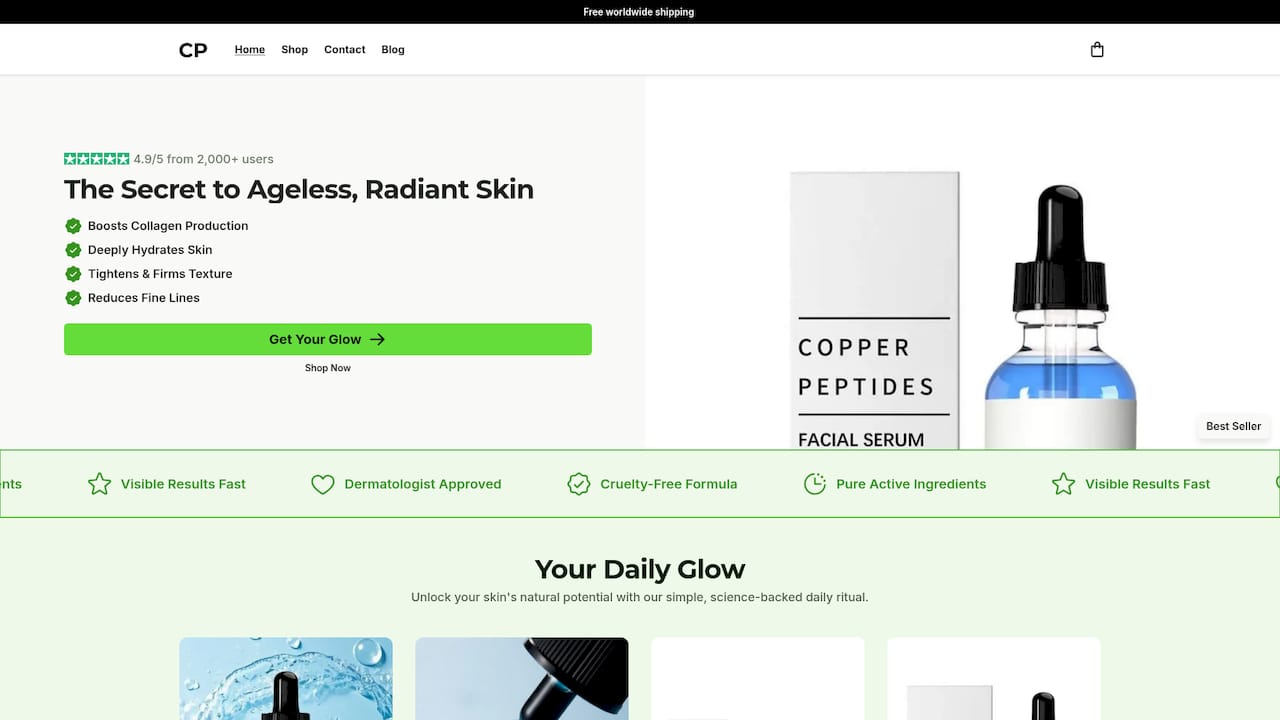
That combination matters. The hyaluronic acid keeps the delivery environment hydrated without disrupting the copper complex, and the leave-on format gives GHK-Cu the contact time it needs to reach fibroblasts. Dermatologist-endorsed and safe for all skin types, including sensitive skin. Pair it in the morning with a Matrixyl-containing moisturizer and SPF, and you have the full AM/PM peptide protocol covered.
Start with twice-weekly evening application, patch test on your inner arm first, and give it a full 4–6 weeks before evaluating. Visit Copperpeptides to learn more about the formulation and the return policy, or go straight to the product page to add it to your routine.
Useful sources
- GHK-Cu vs Matrixyl: Anti-Aging Skin Peptides Compared — Peptide Protocol Wiki. Head-to-head clinical data, mechanism comparison, and layering guidance.
- Copper Peptides GHK-Cu: Benefits for Skin, Studies & Use — Klow Peptide. Leave-on contact time requirements, 4–6 week observation window, and formulation guidance.
- GHK-Cu vs Matrixyl: Skincare Peptides Compared — PeptaHub. Formulation stability data, pH windows, and compatibility notes.
- GHK-Cu vs. Matrixyl: Comparison of the Two Best-Studied Skincare Peptides — UsefulVitamins. Tolerability profiles, practical sequencing recommendations, and AM/PM routine guidance.
- The Benefits of Copper Peptides For Anti-Aging, Explained — Vogue. Editorial and dermatologist commentary on formulation, concentration, and tolerability.
For original clinical trial reports, consult the Sederma manufacturer datasheets for Matrixyl 3000 and the Pickart and Margolina (2018) review in Biomolecules for GHK-Cu’s gene-modulation evidence base. Both provide the study design and concentration details that consumer-facing summaries often omit.