

Your most effective anti-aging routine in your 40s comes down to two sessions: mornings with a gentle cleanse, vitamin C serum, moisturizer, and broad-spectrum SPF 30+; evenings with a thorough cleanse, a retinoid or copper peptide treatment, and a ceramide-rich moisturizer. That’s it. Everything else is optional.
The non-negotiables at a glance:
- Gentle, non-stripping cleanser morning and night (skip the morning cleanse if your skin is very dry)
- Vitamin C antioxidant serum every morning before sunscreen
- Broad-spectrum SPF 30+ every single morning, rain or shine
- Retinoid or copper peptide serum at night, alternating if needed
- Ceramide-rich moisturizer to seal and support the barrier, AM and PM
Most people see texture and hydration improvements within 1–2 weeks; fine lines and pigmentation take around 8–12 weeks of consistent use. For a science-backed peptide option that works on both collagen support and deep hydration, Copperpeptides offers a high-purity copper peptide serum formulated with medical-grade hyaluronic acid.
Table of Contents
- Why does your skin change so much in your 40s?
- What does an effective morning routine look like in your 40s?
- Which ingredients should you prioritize in your 40s?
- How do you introduce actives without damaging your skin barrier?
- How do you choose the right products for each step?
- Why do copper peptides deserve a place in your 40s routine?
- Key Takeaways
- The case for keeping it simple
- Copperpeptides: collagen support without the irritation
- Useful sources
Why does your skin change so much in your 40s?
Your 40s are when several biological shifts converge at once, and your routine needs to account for all of them. Collagen production slows noticeably, elastin fibers lose their spring, and the skin’s natural hyaluronic acid stores drop. The epidermis itself gets thinner, and cell turnover slows from roughly 28 days to closer to 45–60 days. The result: dullness, dryness, and fine lines that weren’t there five years ago.
For women approaching perimenopause, the hormonal picture adds another layer. Declining estrogen accelerates collagen loss, thins the skin further, and often triggers new pigmentation patterns. Skin that was oily in your 30s can shift to combination or even dry. Breakouts can return alongside dryness, which is genuinely confusing.
The practical implications for your routine:
- Harsh foaming cleansers strip the already-compromised barrier. Switch to non-foaming, fragrance-free formulas.
- Physical scrubs create micro-tears in thinner skin. Aging skin needs gentle cleansing, ceramide-rich moisturizers, and gentle chemical exfoliation rather than abrasive scrubs.
- Ceramides and humectants become load-bearing ingredients, not luxuries.
- Sun protection is the single highest-leverage habit you can build. Photoaging accounts for the majority of visible skin aging, and daily sunscreen and consistent retinoid use are repeatedly highlighted by dermatologists as the most impactful habits for preserving skin quality.
Statistic callout: Photoaging from UV exposure is responsible for most visible changes people attribute to “getting older” — wrinkles, spots, and texture changes included. SPF is not a cosmetic step; it’s a clinical one.
Lifestyle factors compound everything. Poor sleep, smoking, and a diet low in antioxidants all accelerate the same collagen-degradation pathways your routine is trying to slow. No serum fully compensates for chronic sleep deprivation.
What does an effective morning routine look like in your 40s?
The AM routine has one job: protect. You’re defending against UV damage, oxidative stress, and moisture loss before they happen.
Step-by-step morning routine:
- Cleanse (optional for dry skin) — If your skin feels clean from the night before, a splash of lukewarm water is enough. If you’re oily or used a heavy overnight cream, use a gentle hydrating cleanser. CeraVe’s Hydrating Cleanser is a widely recommended option: non-foaming, fragrance-free, and formulated with ceramides.
- Vitamin C antioxidant serum — Apply to dry skin before moisturizer. Morning vitamin C protects skin from free radicals, brightens tone, and supports sunscreen effectiveness when layered properly. SkinCeuticals C E Ferulic is the clinical reference standard here, combining 15% L-ascorbic acid with vitamin E and ferulic acid for stability. Let it absorb for 60–90 seconds.
- Eye cream or serum — Pat gently around the orbital bone. Look for caffeine for puffiness, peptides for fine lines, or niacinamide for dark circles.
- Moisturizer — Choose a formula with ceramides, hyaluronic acid, or both. CeraVe’s Moisturizing Cream covers both. In your 40s, even combination skin usually benefits from a moisturizer before SPF.
- Broad-spectrum sunscreen SPF 30+ — Apply last, generously. EltaMD UV Clear and Supergoop Unseen Sunscreen are two well-regarded U.S. options with clean textures that layer well under makeup. Use about a nickel-sized amount for your face alone.
Pro Tip: Pair sunscreen application with a fixed morning habit — right after brushing your teeth, before your coffee. Habit stacking is the single most reliable way to make SPF non-negotiable.
A few cleanser notes for different skin types: dry skin does best with cream or lotion cleansers that don’t lather at all. Combination skin can handle a gentle gel. Oily skin in the 40s is less common than it was in your 20s, but if you’re still producing excess sebum, a mild foaming cleanser with niacinamide works without over-stripping.
Which ingredients should you prioritize in your 40s?
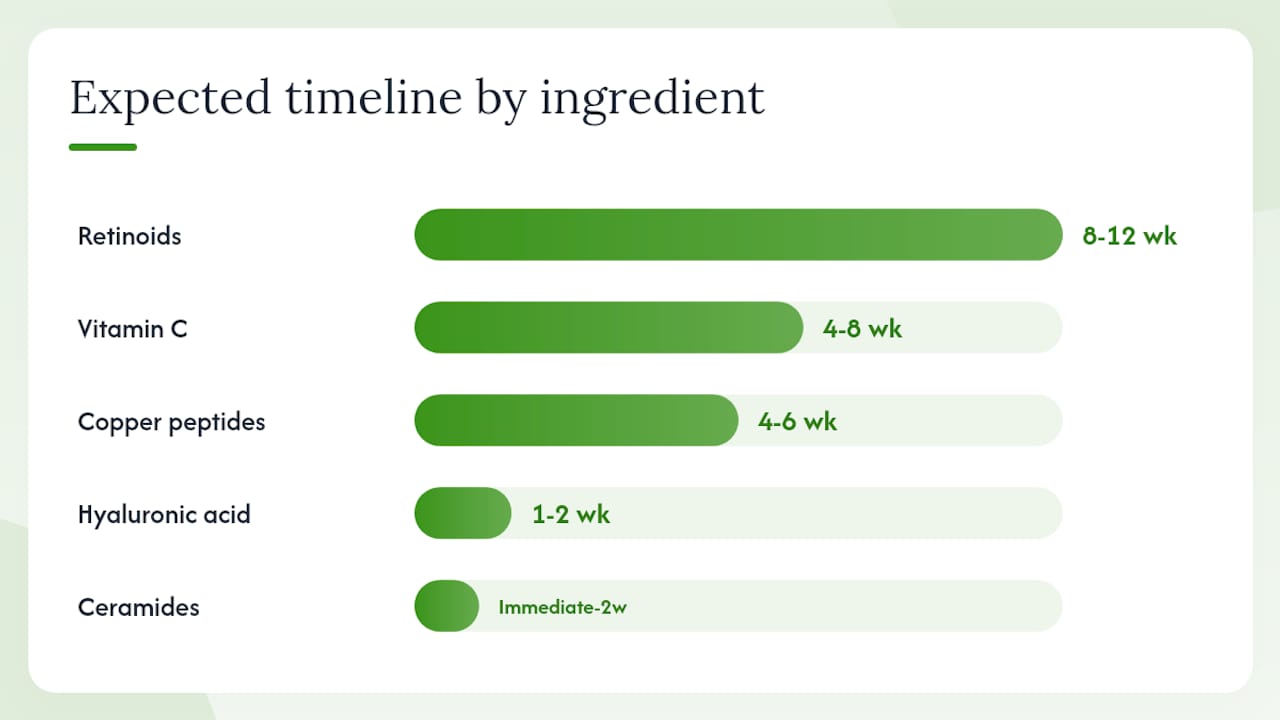
The ingredient list for 40s skin isn’t long. A few well-chosen actives outperform a shelf full of overlapping products.
Highest-impact ingredients for mature skin:
- Retinoids (retinol, retinaldehyde, tretinoin): the most evidence-backed topical anti-aging actives
- Copper peptides: collagen-signaling, barrier-supporting, gentle enough for sensitive skin
- Vitamin C (L-ascorbic acid or derivatives): antioxidant protection, brightening, collagen synthesis support
- Hyaluronic acid: draws water into the skin; works best in layers under a moisturizer
- Ceramides: restore and maintain the lipid barrier, especially important as skin thins
- Niacinamide: reduces pigmentation, supports barrier, pairs well with most other actives
- AHAs/BHAs (glycolic, lactic, salicylic acids): chemical exfoliation to improve texture and turnover
| Ingredient | Purpose | AM or PM | Skin type suitability | Layering notes | Expected timeline |
|---|---|---|---|---|---|
| Retinoids | Collagen boost, cell turnover, fine lines | PM only | All; start slow for dry/sensitive | Apply before moisturizer; avoid mixing with AHAs same night | 8–12 weeks for visible change |
| Copper peptides | Collagen signaling, barrier repair, hydration | AM or PM | All, including sensitive | Compatible with niacinamide; use on non-retinoid nights or alternate | 4–6 weeks for visible change |
| Vitamin C | Antioxidant protection, brightening | AM | All; use stable formulas for sensitive | Apply before moisturizer and SPF | 4–8 weeks for tone improvement |
| Hyaluronic acid | Deep hydration, plumping | AM and PM | All | Apply to damp skin; layer under moisturizer | 1–2 weeks for hydration |
| Ceramides | Barrier repair, moisture retention | AM and PM | All, especially dry/sensitive | Use in moisturizer; compatible with everything | Immediate to 2 weeks |
| Niacinamide | Pigmentation, pore appearance, barrier | AM or PM | All | Pairs well with peptides; use before heavier actives | 4–8 weeks |
| AHAs/BHAs | Exfoliation, texture, tone | PM (2–3x/week) | Dry (lactic), oily/combo (salicylic) | Do not layer with retinoids same night | 4–6 weeks |
Safety notes worth knowing:
- Never layer a strong AHA (like glycolic acid) and a retinoid on the same night until your skin has built tolerance to both separately.
- Vitamin C is unstable in high heat and light; store it in a cool, dark place and replace it when it turns orange.
- Experts urge simplifying routines and prioritizing proven actives and barrier-supportive bases over excessive multi-step regimens that can weaken the barrier.
- Niacinamide and copper peptides layer well together. For a practical guide on combining them, copper peptides and niacinamide work synergistically without the compatibility concerns that come with mixing acids and retinoids.
Statistic callout: Hyaluronic acid can hold up to 1,000 times its weight in water, but it needs to be applied to damp skin and sealed with a moisturizer to actually retain that moisture. Applied to dry skin in a dry environment, it can pull moisture from the dermis instead.
How do you introduce actives without damaging your skin barrier?
Start slow. That’s the whole answer. The most common mistake people make when building an anti-aging routine in their 40s is introducing too many actives too fast, triggering irritation, and then abandoning everything.
A realistic retinoid introduction schedule:
- Weeks 1–2: Apply retinoid twice per week, on non-consecutive nights. Use a pea-sized amount, apply after moisturizer (“buffering”) to reduce irritation.
- Weeks 3–4: Move to every other night if your skin has tolerated the first two weeks without significant redness or peeling.
- Weeks 5–6: If still tolerating well, try four nights per week.
- Week 8+: Nightly use as tolerated. Most people with 40s skin land at 4–5 nights per week as their sustainable frequency.
Warning signs that mean you should pause:
- Persistent redness that doesn’t resolve within 24 hours
- Stinging or burning that lasts more than a few minutes after application
- Visible peeling or flaking beyond mild surface shedding
- Tight, uncomfortable skin that doesn’t respond to moisturizer
If any of these appear, stop the retinoid for 5–7 days, focus on barrier repair (ceramides, hyaluronic acid, gentle cleansing), and reintroduce at a lower frequency. Retinoids require step-up schedules to reduce irritation risk, and rushing the process sets you back further than going slowly.
Pro Tip: During your retinoid ramp-up, use a copper peptide serum on your off nights. It actively supports barrier repair while you’re building tolerance, so you’re never leaving skin without an active treatment.
Patch testing matters more in your 40s than it did in your 20s. Apply any new active to a small area behind your ear or on your inner arm for 48 hours before full-face use. Skin reactivity tends to increase with age, and a patch test takes two minutes.
For acids, the same principle applies: introduce one at a time, no more than twice a week initially. Alternate acid nights with retinoid nights rather than stacking them. A practical guide to strengthening your skin moisture barrier covers the barrier-repair side of this process in detail.
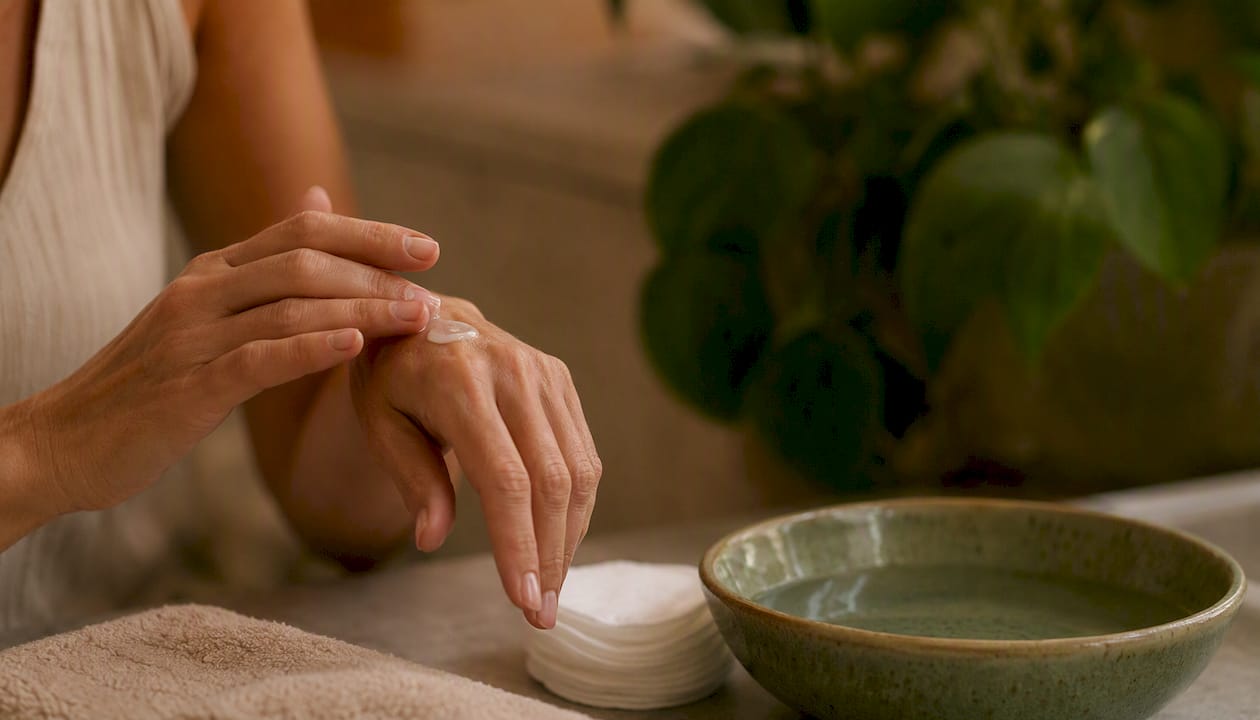
When to see a dermatologist: if irritation persists despite slow introduction, if you’re dealing with significant pigmentation or texture changes, or if you want prescription-strength tretinoin, a board-certified dermatologist is the right next step.
How do you choose the right products for each step?
The U.S. market is saturated with anti-aging products, and most of the premium pricing reflects marketing, not performance. Product testing finds that barrier-supporting formulations often outperform expensive moisturizer branding alone, and a $20 ceramide moisturizer from a pharmacy can outperform a $200 luxury cream.
What to look for on labels:
Minimalist product picks by step:
- Cleanser: — Hydrating, non-foaming, fragrance-free (CeraVe Hydrating Cleanser is the pharmacy benchmark)
Pro Tip: Buy from pharmacy chains, DTC brand websites, or your dermatologist’s office. Avoid third-party marketplace sellers for actives like vitamin C and retinoids — storage conditions affect stability, and counterfeit products are a real problem on some platforms.
Shopping red flags: alcohol (denatured) as a top-five ingredient, no listed concentration for the active ingredient, strong synthetic fragrance, and “proprietary blend” language that hides what’s actually in the formula.
For guidance on best hydrating serums for firming and anti-aging skin, pairing a hydrating serum with your active treatment is one of the simplest ways to improve tolerance and results simultaneously.
Why do copper peptides deserve a place in your 40s routine?
Copper peptides are small protein fragments bound to copper ions. They work by signaling the skin’s fibroblasts to produce more collagen and elastin, while also supporting the extracellular matrix that gives skin its structure. Unlike retinoids, which work partly by creating controlled irritation to trigger repair, copper peptides support repair directly without the inflammatory pathway.
That distinction matters for 40s skin. As the barrier thins and hormonal shifts make skin more reactive, an active that builds collagen without triggering redness and peeling is genuinely useful, not just a gentler consolation prize.
Practical usage guidance:
- Use copper peptides in the PM on non-retinoid nights, or as your primary active if retinoids cause persistent irritation
- They layer well with niacinamide and hyaluronic acid
- Avoid layering copper peptides directly with strong vitamin C (L-ascorbic acid) in the same step; the copper ion can destabilize ascorbic acid. Use vitamin C in the AM and copper peptides in the PM
- For sensitive skin, copper peptides can be used AM and PM without the frequency restrictions that apply to retinoids
Pro Tip: If you’re in the first 4–6 weeks of introducing a retinoid, use a copper peptide serum on your off nights. You get active collagen support every night without overloading a skin barrier that’s still adjusting.
Copperpeptides’ serum combines high-purity copper peptides with medical-grade hyaluronic acid, making it effective for both collagen signaling and deep hydration in a single step. Dermatologists endorse it for sensitive skin, and the brand notes users may begin to see visible improvement after weeks of consistent use. For a deeper look at the science, copper peptide benefits covers the mechanism and clinical evidence in detail.
| Point | Details |
|---|---|
| Mechanism | Copper peptides signal fibroblasts to produce collagen and elastin without inflammatory irritation |
| Best candidates | Sensitive skin, barrier-compromised skin, or anyone who can’t tolerate retinoids |
| Timing | PM on non-retinoid nights; AM use also safe |
| Layering | Pairs well with niacinamide and hyaluronic acid; keep separate from vitamin C |
| Timeline | Visible improvement typically within 4–6 weeks |
Key Takeaways
A consistent anti-aging routine in your 40s built on daily SPF, a targeted active (retinoid or copper peptide), and a ceramide-rich moisturizer delivers measurable improvement in texture and hydration within 1–2 weeks, and in fine lines and pigmentation within 8–12 weeks.
| Point | Details |
|---|---|
| SPF is the foundation | Broad-spectrum SPF 30+ every morning prevents the photoaging that drives most visible skin changes. |
| One active beats many | A single well-chosen retinoid or copper peptide serum consistently outperforms a shelf of overlapping products. |
| Introduce actives slowly | Start retinoids twice weekly and build over 8–12 weeks to avoid barrier damage and irritation. |
| Results take time | Hydration improves in 1–2 weeks; fine lines and pigmentation need 8–12 weeks of consistent use. |
| Copperpeptides serum | High-purity copper peptides plus medical-grade hyaluronic acid offer collagen support and hydration with a 4–6 week visible results timeline. |
Pro Tip: Commit to your routine for at least 8–12 weeks before swapping products. Most people quit right before results become visible.
The case for keeping it simple
The skincare industry has a financial interest in convincing you that more products equal better results. The dermatology literature says the opposite. A four-step routine done consistently every day will outperform a ten-step routine done sporadically, every time.
What I find genuinely underappreciated about 40s skincare is how much the barrier-first approach changes outcomes. Most people who struggle with retinoid irritation, persistent dryness, or reactive skin aren’t failing because they chose the wrong active. They’re failing because they never built a strong enough foundation. Ceramides, a gentle cleanser, and consistent SPF aren’t the boring part of the routine you do before the “real” actives. They’re what makes the actives work.
The other thing worth saying plainly: the 40s are not a crisis. They’re a window. The habits you build now, particularly daily sunscreen and a consistent collagen-supporting active, compound over the next two decades. Starting a retinoid or a copper peptide serum at 42 is not too late. It’s actually the right time, because your skin is signaling clearly what it needs.
Copperpeptides’ approach, a high-purity active paired with medical-grade hydration and a clean formulation, reflects exactly this philosophy. No unnecessary complexity, no barrier-stripping ingredients, just targeted support for what 40s skin actually needs.
Copperpeptides: collagen support without the irritation
If you’ve been putting off adding a collagen-supporting serum because retinoids have caused redness or peeling, the Copper Peptide Anti-Aging Serum from Copperpeptides is worth a serious look. It delivers high-purity copper peptides alongside medical-grade hyaluronic acid in a single, clean formula that works for all skin types, including sensitive and barrier-compromised skin.
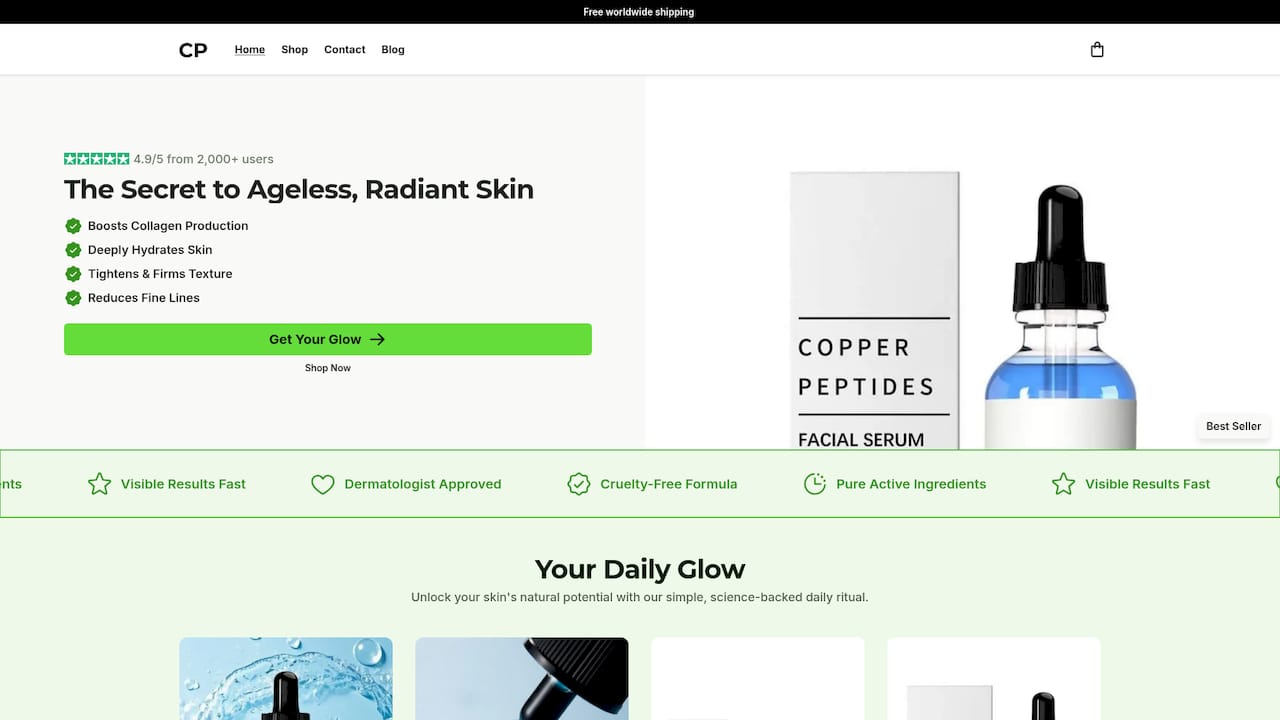
Use it in your PM routine on non-retinoid nights, or as your primary active if you’re not using retinoids at all. The hyaluronic acid component means you can skip a separate hydrating serum on those nights. Dermatologist-endorsed and cruelty-free, it’s designed to fit into the kind of minimal, consistent routine this article is built around. Most people report visible improvement in firmness and fine lines within 4–6 weeks when using Copperpeptides serum, with hydration improvements often seen sooner. Visit Copperpeptides to learn more, or go directly to the product page to add it to your routine today.
This article provides general skincare information, not medical advice. Consult a board-certified dermatologist for personalized guidance, especially before starting prescription retinoids or if you have a diagnosed skin condition.
Useful sources
The claims in this article draw on the following authoritative sources. Each is worth bookmarking if you want to go deeper on the science or get personalized clinical guidance.
- Skin care for aging skin: Minimizing age spots, wrinkles, and undereye bags — Harvard Health
- Skin care in your 40s and 50s — American Academy of Dermatology (AAD)
- NCBI review on retinoids and skin (PMC5579659)
- The Guide to Skincare in Your 40s, From Dermatologists — Byrdie
- 25 best anti-aging products, according to dermatologists | CNN Underscored
- Skincare over 40 — Good Housekeeping
- 20 Best Skin-Care Products for Aging Skin in 2026 | Reviews by Wirecutter (NYTimes)