

Peptides signal your skin to build more collagen and elastin. Ceramides physically rebuild and seal the moisture barrier. They do completely different jobs, which is exactly why dermatologists recommend using both: apply your peptide serum first on clean skin, follow with a ceramide moisturizer to lock everything in, and finish with SPF in the morning. Neither ingredient competes with the other. Together, they cover the two biggest drivers of aging skin: structural decline and barrier breakdown.
Key Takeaways
Peptides and ceramides are complementary ingredients that address different aspects of skin aging: ceramides repair the barrier immediately, while peptides support collagen production gradually over weeks to months.
| Point | Details |
|---|---|
| Different mechanisms, same goal | Ceramides seal the barrier; peptides signal structural repair — they work at different skin layers. |
| Layer peptides before ceramides | Apply peptide serum first on clean skin, then ceramide moisturizer to lock in hydration and actives. |
| Ceramides have stronger evidence | RCTs support ceramide moisturizers for TEWL reduction; peptide evidence is promising but smaller in scale. |
| Expect a slow timeline for peptides | Small trials show improvements in wrinkle measures over 8–12 weeks; ceramide barrier comfort is faster. |
| Copperpeptides combines both actives | The Copper Peptide Anti-Aging Serum pairs GHK-Cu with medical-grade HA for collagen support and hydration in one step. |
Table of Contents
- What ceramides actually do for your skin
- What peptides are and what to realistically expect
- Peptides vs ceramides: a side-by-side comparison
- How to layer peptides and ceramides in your routine
- How to pick a peptide serum and a ceramide moisturizer
- Safety, common incompatibilities, and myths worth correcting
- What the clinical evidence actually shows
- The Copper Peptide Anti-Aging Serum from Copperpeptides fits this routine precisely
- Sources
What ceramides actually do for your skin
Ceramides are lipids, not actives in the signaling sense. They make up roughly half the stratum corneum’s lipid matrix, sitting between skin cells like mortar between bricks. Their job is physical: intercalate with cholesterol and fatty acids in lamellar structures to block transepidermal water loss (TEWL) and keep irritants out.
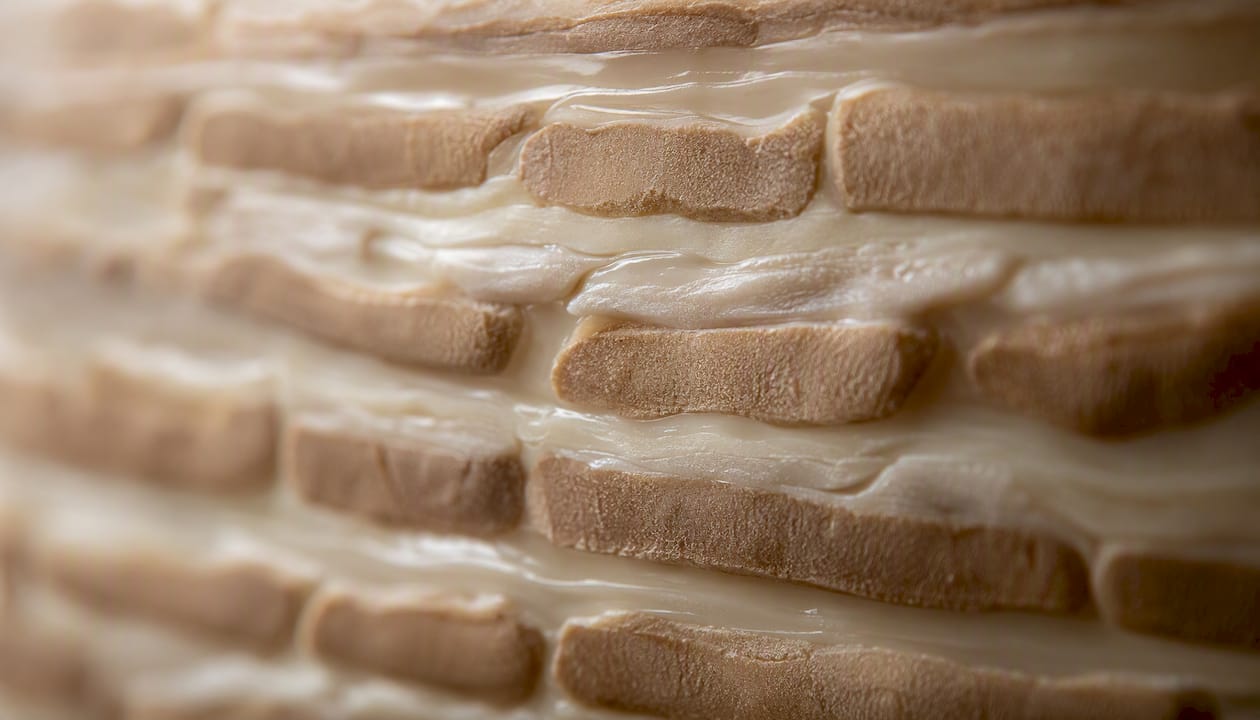
The problem is that ceramide levels drop with age, and they drop faster when you use harsh cleansers, retinoids, or exfoliating acids. The result is dryness, tightness, and a barrier that lets in more of what it should keep out. People with atopic dermatitis or eczema-prone skin often show measurably depleted ceramide levels compared to unaffected skin.
What you’ll see on labels:
- Ceramide NP (also called Ceramide 3): the most studied type, found in most barrier-repair formulas
- Ceramide AP (Ceramide 6-II): supports lamellar structure alongside NP
- Ceramide EOP (Ceramide 1): a long-chain ceramide critical for outer-layer integrity
The best ceramide products pair these with cholesterol and free fatty acids at roughly a 1:1:1 molar ratio, which is how the stratum corneum actually uses them. A ceramide-only formula without those co-lipids is less effective at rebuilding the barrier. Randomized controlled trials support ceramide-containing moisturizers for reducing TEWL in dry and atopic skin populations, making this one of the better-evidenced topical categories in skincare.
Both ceramides and peptides decline with age, which is why mature and dry skin types tend to see the most noticeable benefit from replenishing both.
What peptides are and what to realistically expect
Peptides are short chains of amino acids, typically 2–50 residues, that act as chemical messengers. In skin, they signal fibroblasts and other cells to produce collagen, elastin, or other structural proteins. They don’t hydrate the way hyaluronic acid does, and they don’t repair the barrier the way ceramides do. Their job is longer-term and structural.
There are four main functional classes, and treating them as one category is a mistake for anyone trying to shop intelligently:
Signal peptides (e.g., palmitoyl pentapeptide-4, also marketed as Matrixyl) mimic collagen breakdown fragments, prompting fibroblasts to ramp up collagen synthesis. These are the most common class in anti-aging serums.
Carrier peptides deliver trace minerals to skin. Copper peptides (GHK-Cu) are the most studied example, with evidence suggesting they support wound healing, collagen remodeling, and antioxidant activity. The copper peptide benefits guide covers the clinical rationale in more depth.
Neurotransmitter-inhibiting peptides (e.g., acetyl hexapeptide-3, marketed as Argireline) aim to reduce muscle micro-contractions that deepen expression lines. Evidence is modest and largely in vitro.
Enzyme-inhibiting peptides work by blocking enzymes that break down collagen, such as matrix metalloproteinases. The logic is sound; large-scale in-vivo proof is limited.
The catch with all of them is delivery. Most peptides exceed the 500-dalton passive diffusion cutoff that limits what can cross the stratum corneum without help. Palmitoyl pentapeptide-4, for example, sits near 802 Da. Formulators use palmitoylation (attaching a fatty acid to improve lipid partitioning) and encapsulation to push more peptide toward the dermis, but independent quantification of actual dermal delivery in living human skin is rare.
Pro Tip: If you’re evaluating a peptide serum, look for a named peptide (palmitoyl tripeptide-1, GHK-Cu, acetyl hexapeptide-3) listed in the top half of the ingredient deck, not buried after fragrance. Position in the INCI list is a rough proxy for concentration.
Expect weeks to months for modest, cumulative changes in texture and firmness. Peptides are not a quick fix. Pairing them with ceramides and hyaluronic acid gives you immediate comfort while the peptides do their slower work.
Peptides vs ceramides: a side-by-side comparison
The difference between peptides and ceramides comes down to where they act and what they change. Ceramides work in the stratum corneum, no dermal penetration required. Peptides need to reach fibroblasts in the dermis to do their main job, which is why formulation matters so much more for them.
| Feature | Peptides | Ceramides |
|---|---|---|
| Primary function | Signaling: stimulate collagen/elastin production | Structural: repair and seal the moisture barrier |
| Best for | Firmness, fine lines, gradual texture improvement | Dryness, sensitivity, barrier damage, immediate comfort |
| Common formulations | Serums, concentrates, ampoules | Moisturizers, creams, cleansers, ointments |
| Speed of visible benefit | Weeks to months; cumulative | Immediate to days for barrier comfort |
| Layering order | Apply first on clean skin | Apply second, over peptide serum |
| Irritation risk | Low; generally well tolerated | Very low; suitable for reactive and sensitive skin |
| Clinical evidence strength | Mechanistic and small-trial; limited large RCTs | Stronger RCT evidence for TEWL/barrier repair |
Peptides: quick pros and cons
- ✓ Target collagen and elastin production at the source
- ✓ Multiple functional classes address different aging concerns
- ✓ Generally non-irritating, compatible with most routines
- ✗ Slow-acting; results take weeks to months
- ✗ Delivery to the dermis is formulation-dependent and often unproven
- ✗ Evidence quality varies widely by peptide class and product
Ceramides: quick pros and cons
- ✓ Immediate barrier comfort and TEWL reduction
- ✓ Strong RCT support for dry and atopic skin
- ✓ Works in the stratum corneum, no penetration uncertainty
- ✗ Does not directly stimulate collagen or address firmness
- ✗ Needs co-lipids (cholesterol, fatty acids) to work optimally
The verdict: these ingredients are complementary, not competing. One seals the barrier; the other signals structural repair.
How to layer peptides and ceramides in your routine
The layering logic is simple: thinnest to thickest, actives before occlusives. Here’s a practical routine that works for most skin types:
- Cleanse with a gentle, low-pH cleanser that doesn’t strip lipids.
- Apply hyaluronic acid serum (optional but useful): HA pulls moisture into the skin surface and creates a hydrated base for what follows. For pairing ideas, the best hyaluronic acid serums guide covers HA and peptide combinations specifically.
- Apply peptide serum on slightly damp skin so it contacts the skin directly before any occlusive layer goes on.
- Apply ceramide moisturizer to seal in the serum and restore barrier lipids.
- AM only: apply SPF 30 or higher as the final step. Sunscreen protects the collagen peptides are working to build.
AM vs PM notes: The full routine works morning and night. At night, you can skip SPF and optionally add a richer ceramide cream or ointment if your skin is very dry. If you’re using retinoids, apply them after your peptide serum and before the ceramide moisturizer, and consider alternating nights until your skin adjusts.
For reactive or sensitive skin: If your skin is flaring, skip the peptide serum temporarily and use only the ceramide moisturizer until the barrier stabilizes. A repaired barrier also reduces the low-grade inflammation that can accelerate photoaging, so barrier-first is never a wasted step. Once skin is calm, reintroduce the peptide serum on alternate days before going daily.
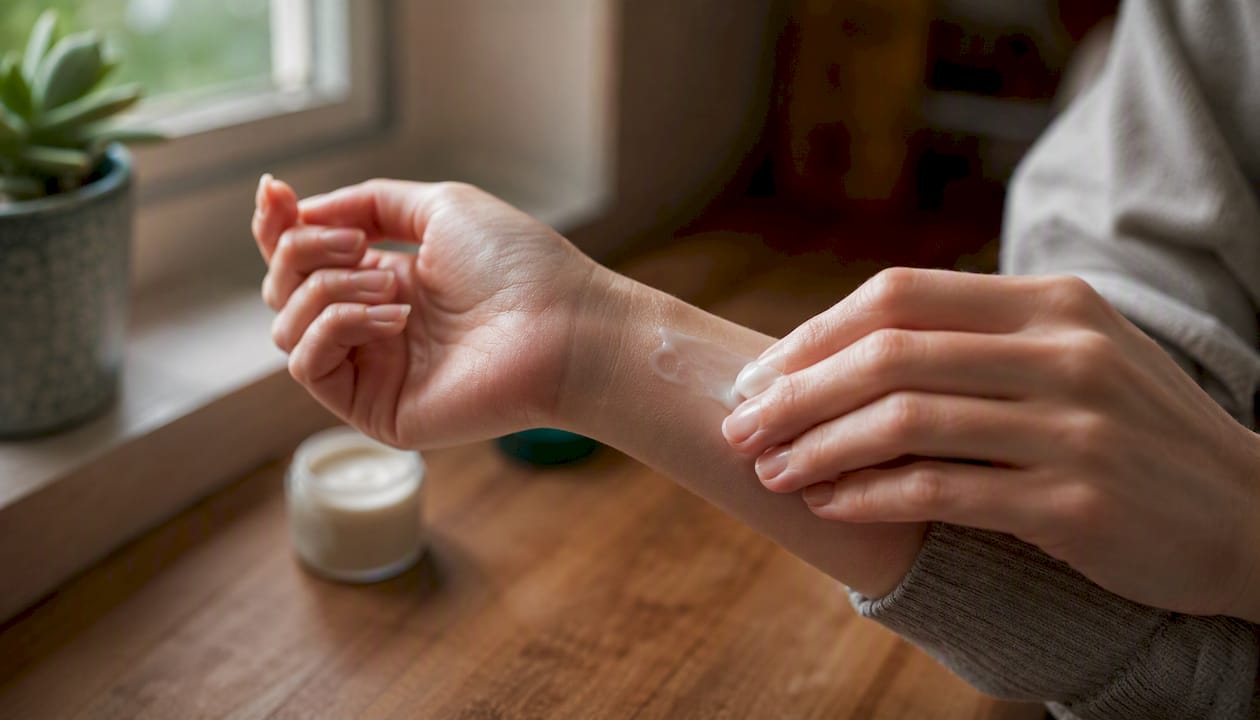
Pro Tip: Patch-test any new serum on the inner forearm for 48 hours before applying it to your face. This is especially worth doing with peptide serums that contain additional actives like niacinamide or vitamin C.
How to pick a peptide serum and a ceramide moisturizer
Labels can be misleading. Here’s what to actually look for.
For peptide serums:
Look for a named peptide in the first half of the ingredient list. “Peptide complex” or “proprietary blend” with no INCI names is a red flag. The most studied options include palmitoyl tripeptide-1, palmitoyl tetrapeptide-7, and GHK-Cu (copper peptide). Check whether the formula includes a delivery vehicle like liposomes or uses palmitoylation, since these improve stratum corneum partitioning. Airless pump packaging matters: peptides degrade on exposure to air and light. Water-based serums with a slightly acidic pH (around 5.5–6.5) are the most common and stable format.
Avoid using high-concentration AHAs or BHAs (pH below 4) in the same routine step as peptides. Strong acids can degrade peptide bonds. If you use both, apply them at different times of day.
For ceramide moisturizers:
The label should list at least two or three ceramide species (NP, AP, EOP are the most common), ideally alongside cholesterol and a fatty acid like linoleic or stearic acid. A ceramide-only formula without those co-lipids won’t organize into proper lamellar structures. Lipid-rich creams and ointments are more effective delivery vehicles for ceramides than lightweight lotions. Formulation vehicle matters here in a way it doesn’t for water-soluble actives.
On cost: ceramide moisturizers tend to deliver reliable, well-evidenced barrier benefit at moderate price points. Peptide serums vary more in price and formula quality, and a higher price tag doesn’t guarantee better peptide delivery. The how to boost collagen production guide covers what to look for when evaluating collagen-support claims more broadly.
Safety, common incompatibilities, and myths worth correcting
What not to mix with peptides (at the same time):
- Strong exfoliating acids at low pH (AHAs, BHAs below pH 4): can hydrolyze peptide bonds. Use them at different times of day or on alternate nights.
- Very high-concentration vitamin C (L-ascorbic acid at pH below 3.5): the same pH concern applies. Buffered vitamin C derivatives (ascorbyl glucoside, sodium ascorbyl phosphate) are generally fine alongside peptides.
- Copper peptides and other peptides together: copper ions can interact with and degrade other peptide types. Use copper peptide products separately from signal peptide formulas, or look for products specifically formulated to include both. The copper peptides and niacinamide guide covers compatible pairings in more detail.
Myth vs. fact:
- Myth: Peptides hydrate skin immediately. Peptides are signaling molecules, not humectants. Immediate hydration comes from hyaluronic acid and ceramides. Peptides work on a weeks-to-months timeline.
- Myth: More peptide types in one formula means better results. Different peptide classes can interfere with each other. A focused formula with one or two well-studied peptides at effective concentrations often outperforms a kitchen-sink blend.
- Myth: Ceramides are only for dry skin. Oily and combination skin types also benefit from barrier support, especially after using retinoids or exfoliants that temporarily compromise the stratum corneum.
When to consult a dermatologist: If you develop persistent redness, stinging, or breakouts after introducing a new peptide or ceramide product, stop using it and see a board-certified dermatologist. Reactions are uncommon with these ingredients, but they can signal an underlying sensitivity or a formulation issue worth investigating.
What the clinical evidence actually shows
The evidence base for ceramides and peptides is not equal, and understanding that gap helps set realistic expectations.
Ceramides have the stronger clinical record. Randomized controlled trials show ceramide-containing moisturizers reduce TEWL and improve barrier measures in dry and atopic skin populations. This is well-replicated, mechanism-clear evidence: ceramides work in the stratum corneum, where they don’t need to penetrate further to do their job.
Peptides have a more complicated picture. The mechanistic rationale is solid. The in-vivo delivery evidence is not. Most topical peptides exceed the 500-Da passive diffusion limit, and independent quantification of actual dermal delivery in living human skin is rare. Small trials show promising results, but sample sizes are limited and formulations are often proprietary, making replication difficult.
A small clinical trial of an HA serum paired with a peptide-rich cream found visible improvements in crow’s feet (31%), forehead wrinkles (23%), and fine lines (21%) after 8 weeks of twice-daily use. Both products were well tolerated. The caveat: the sample was small and the formulations were proprietary, so the results can’t be generalized to every peptide product on the market.
What the evidence tells you: Ceramides are a reliable, well-evidenced barrier repair tool. Peptides are a plausible, promising anti-aging strategy with a growing but still limited in-vivo evidence base. Using both is rational precisely because they address different problems through different mechanisms.
Limitations to keep in mind: Most peptide studies use proprietary formulations, making it hard to know whether a different product at a different concentration would produce the same results. Penetration uncertainty remains the central unresolved question for topical peptides. And for both ingredient classes, long-term studies beyond 12 weeks are sparse.
The case for keeping your routine simple
The peptides vs ceramides debate sometimes gets framed as a choice, and that framing misses the point. These ingredients don’t compete for the same receptor or the same layer of skin. Ceramides work at the surface. Peptides aim deeper. Stacking them is not redundant; it’s logical.
What I’d push back on is the tendency to keep adding actives in search of faster results. Peptides are slow. That’s not a flaw; it’s how signaling biology works. Adding a third or fourth active on top of a peptide serum and ceramide moisturizer rarely accelerates the timeline and often compromises the barrier you’re trying to support. A two-step routine done consistently for 12 weeks will outperform a six-step routine abandoned after three.
Sunscreen is the one non-negotiable addition. Ceramides help protect the collagen you have. Peptides work to build more. UV exposure degrades both faster than any serum can replace them.
The Copper Peptide Anti-Aging Serum from Copperpeptides fits this routine precisely
If you’re looking for a peptide serum that slots cleanly into the layering order above, the Copper Peptide Anti-Aging Serum from Copperpeptides is formulated with high-purity GHK-Cu and medical-grade hyaluronic acid in a single step. The HA provides immediate surface hydration while the copper peptides work on collagen support over time, which is exactly the pairing the clinical rationale calls for.
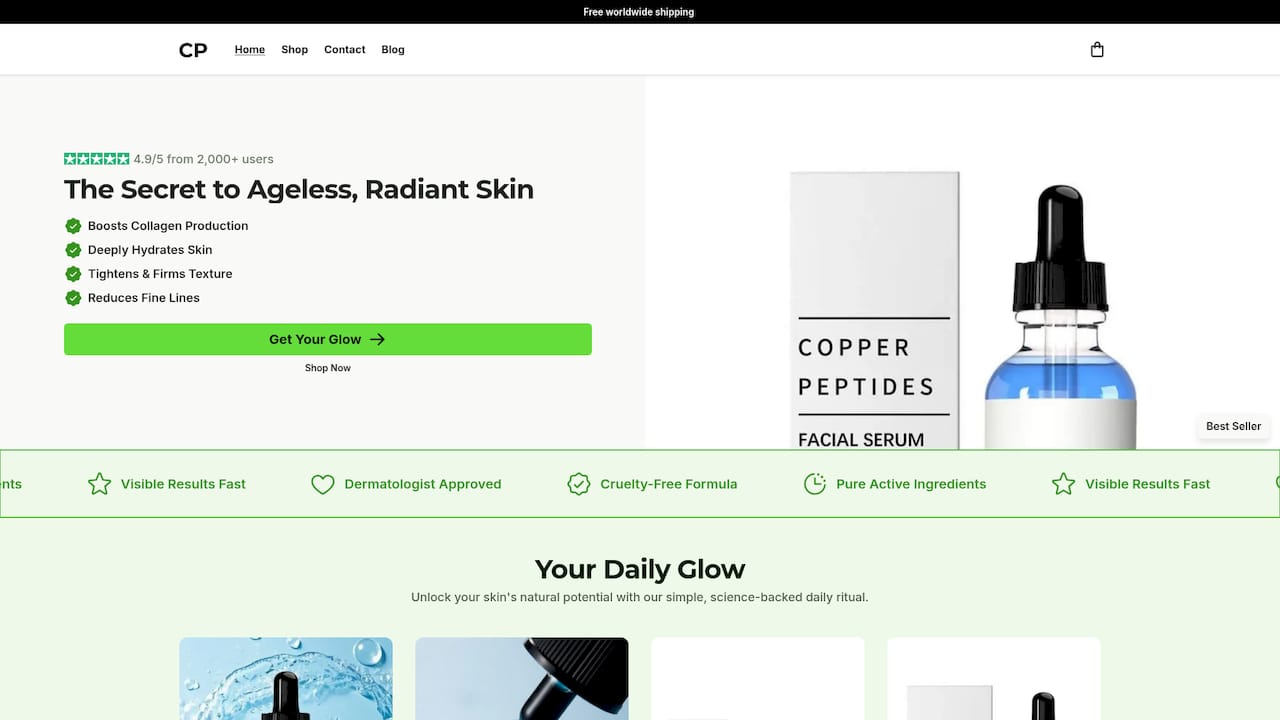
Apply it on clean skin after cleansing, follow with your ceramide moisturizer, and add SPF in the morning. It’s dermatologist-endorsed, cruelty-free, and designed for all skin types including sensitive. The formulation is gentle enough for daily use, and Copperpeptides backs it with a return policy built around confidence in the product. Most people notice a difference in texture and firmness within four to six weeks. Visit the Copperpeptides store to order directly.
Sources
- Peptides Vs. Ceramides: How They Compare, According to Dermatologists
- InterFuse HA + peptide cream trial (PMC)
- Peptides vs ceramides compared (FormBlends)
- Ceramides Vs. Peptides: Which One Is Better for Mature Skin? (Prevention)
Recommended
- Copper Peptides vs Matrixyl: Which One Actually Works? – Copper Peptides Store
- Peptides for Beginners: Copper Peptide Serums Guide – Copper Peptides Store
- Best Serums for Crepey Skin: Dermatologist-Backed Picks – Copper Peptides Store
- Copper Peptides and Niacinamide: How to Use Them Together – Copper Peptides Store