

Topical copper peptides, specifically GHK-Cu, can modestly soften fine lines and improve skin firmness when used consistently over several weeks to months. They work as a supportive addition to a skincare routine, not a substitute for retinoids, and the evidence supports applying them to skin, not injecting them. Expect gradual, subtle change rather than a dramatic transformation.
TL;DR:
- Copper peptide serums can provide modest improvements in skin firmness and fine lines, with visible effects typically appearing after 4 to 6 weeks of consistent use.
- The strongest evidence for wrinkle reduction comes from textile and wound healing studies, while topical serum results are smaller and often industry-funded.
- Delivery into the dermis remains uncertain, making formulation quality and proper layering more critical for effectiveness than concentration alone.
- Combining copper peptides with retinoids or vitamin C requires timing adjustments, as mixing can destabilize these ingredients and reduce results.
- Injectable copper peptides are not supported by science and pose safety risks, unlike topical applications which are generally low risk with proper patch testing.
Table of Contents
- Does Copper Peptides Wrinkles Research Hold Up?
- What Copper Peptides (GHK-Cu) Are and How They Work in Skin
- What the Clinical Evidence Says About Copper Peptides and Wrinkles
- How to Use Copper Peptide Serums for Wrinkles
- Safety, Side Effects, and the Injection Trend You Should Avoid
- Copper Peptides vs. Retinoids and Vitamin C for Wrinkles
- Clinician-Backed Formulation and Where to Learn More
- The Gap Between Marketing Promises and What the Data Supports
- Where to Start With Copper Peptides for Your Own Skin
- Sources
- FAQ
Does Copper Peptides Wrinkles Research Hold Up?
The short answer: partly, and with real caveats worth understanding before you buy anything. GHK-Cu, short for glycyl-histidyl-lysine copper, is a naturally occurring tripeptide bound to a copper ion. Your body actually produces it, and levels decline as you age, which is part of why researchers got curious about applying it topically in the first place.
That biological backstory matters because it explains why copper peptides for skin keep showing up in dermatology research instead of fading as a passing trend. The compound isn’t synthetic marketing invention. It’s a molecule your own tissue already makes, just in smaller amounts as decades pass.
What Copper Peptides (GHK-Cu) Are and How They Work in Skin
GHK-Cu sits at the intersection of wound healing science and cosmetic chemistry, and that dual identity explains both its appeal and its limits. The peptide chain (glycine, histidine, lysine) binds copper tightly, and that copper binding is what activates its biological effects rather than the peptide alone.
Inside skin tissue, GHK-Cu interacts with several processes tied to visible aging:
- It stimulates fibroblasts to produce more collagen and elastin, the structural proteins that keep skin from sagging and creasing.
- It supports lysyl oxidase (LOX) activity, an enzyme that cross-links collagen fibers into a stronger structural mesh.
- It influences integrin expression on skin cells, which affects how cells adhere and communicate during tissue remodeling.
- It has a documented role in angiogenesis, the formation of small blood vessels that feed skin with nutrients and oxygen.
Research on copper’s role in skin biology describes increased extracellular matrix protein expression and wound healing gene activity when GHK-Cu is applied in experimental models. That’s the mechanistic case for anti-aging copper peptides: a plausible biological pathway connecting the molecule to firmer, more resilient skin.
Here’s where the marketing conversation and the chemistry conversation split. Copper peptide complexes, where copper is chelated to a peptide chain, behave very differently from simple copper oxide particles or ionic copper used in wound dressings, textiles, and some cosmetic devices. The peptide binding changes how the copper interacts with cells and how stable the compound is in a formula. When a product label says “copper peptides,” it should mean the chelated complex, not loose copper oxide added for a marketing bump.
The real bottleneck for how copper peptides work topically comes down to delivery. GHK-Cu is a larger molecule than something like a simple humectant, and getting it past the stratum corneum into living dermal tissue, where fibroblasts actually live, is not guaranteed just because it’s in a bottle. Formulators address this with smaller peptide fragments, lipid-based carriers, and encapsulation technology, but how much intact peptide reaches its target from a standard serum remains an open variable in the research. That uncertainty doesn’t cancel the biology. It just means results depend heavily on formulation quality, a point worth remembering before comparing products on price alone.
What the Clinical Evidence Says About Copper Peptides and Wrinkles
The evidence for copper peptides wrinkles claims comes in two flavors: strong data from copper textiles and wound contexts, and thinner, mixed data from topical facial serums. Conflating the two is where a lot of marketing overreaches.
The clearest signal: Double-blind, placebo-controlled trials of copper-oxide pillowcases and textiles have shown statistically significant reductions in facial fine lines and wrinkles after 4 to 8 weeks of nightly use, measured through 3D imaging and independent expert grading. This is genuinely useful data. It confirms that sustained copper exposure to skin produces measurable structural change, not just a placebo response.
But a pillowcase isn’t a serum, and the delivery mechanism is different from a topical product applied for a few minutes each night. Small controlled trials testing GHK-Cu facial creams directly reported increased skin density, thickness, and reduced fine lines compared to a vehicle-only control, according to a review of clinical copper peptide studies. These trials support the concept, but most were small in sample size, and several had ties to the companies selling the tested product. That’s not disqualifying, but it means the results deserve a more skeptical read than a large, independently funded trial would.
The most important recent data point is a 2026 systematic review and meta-analysis pooling 19 randomized trials with over one thousand participants. It found that peptides were generally well tolerated and improved some skin-aging measures, but the pooled effect on wrinkles specifically was modest, and much of that benefit came from oral peptide formulations rather than topical serums applied to the skin.
What this means in practice: if you’re expecting a topical copper peptide serum to deliver retinoid-level wrinkle reduction, the pooled clinical data doesn’t back that up. The honest expectation is a modest, gradual improvement in firmness and fine lines, not a dramatic reversal.
A few recurring limitations show up across this body of research, and they’re worth knowing before you read any product’s before-and-after photos:
- Sample sizes in topical trials are often small, sometimes fewer than 30 participants, which limits how confidently results generalize.
- A meaningful share of positive topical studies have industry funding, which doesn’t invalidate results but does warrant a more careful read of methodology.
- Outcome measures vary between studies (self-reported improvement versus 3D imaging versus expert grading), making direct comparison difficult.
- Uncertainty about actual dermal penetration means researchers can’t always confirm how much of the applied peptide is doing the biological work measured.
What does “statistically significant” actually look like on a face? For most participants in these trials, it meant a measurable reduction in wrinkle depth or an uptick in skin density metrics, changes visible to an expert grader with imaging equipment, but often subtle to the naked eye in a mirror. That’s an important distinction. A p-value confirming a real effect isn’t the same as a visibly obvious transformation, and reduce wrinkles with copper claims should be read with that gap in mind.
How to Use Copper Peptide Serums for Wrinkles
Getting real value from a copper peptide serum comes down to routine placement and patience more than any single hack. Here’s a practical sequence that respects both the chemistry and your skin barrier:
- Cleanse first. Start with a gentle cleanser to remove residue without stripping your skin’s natural barrier, which copper peptides need intact to work efficiently.
- Apply the copper peptide serum to damp skin. Damp (not wet) skin can improve absorption of water-soluble actives.
- Layer hyaluronic acid or a moisturizer next. This locks in hydration and helps hold the peptide serum against skin rather than letting it evaporate.
- Finish with sunscreen in the morning. UV damage undoes structural collagen work faster than any serum can rebuild it.
On layering with other actives, timing is the whole game. Copper ions can destabilize vitamin C (specifically L-ascorbic acid) and certain retinoid formulations if applied in the same layer, and some acids can alter the pH environment copper peptides need to stay stable. The safer approach is spacing: use vitamin C in the morning and your copper peptide serum at night, or alternate nights between a retinoid and a peptide serum rather than stacking them in one application. Strong exfoliating acids (glycolic, salicylic in higher concentrations) should generally be used on separate nights from peptide serums to avoid overwhelming a sensitized barrier.
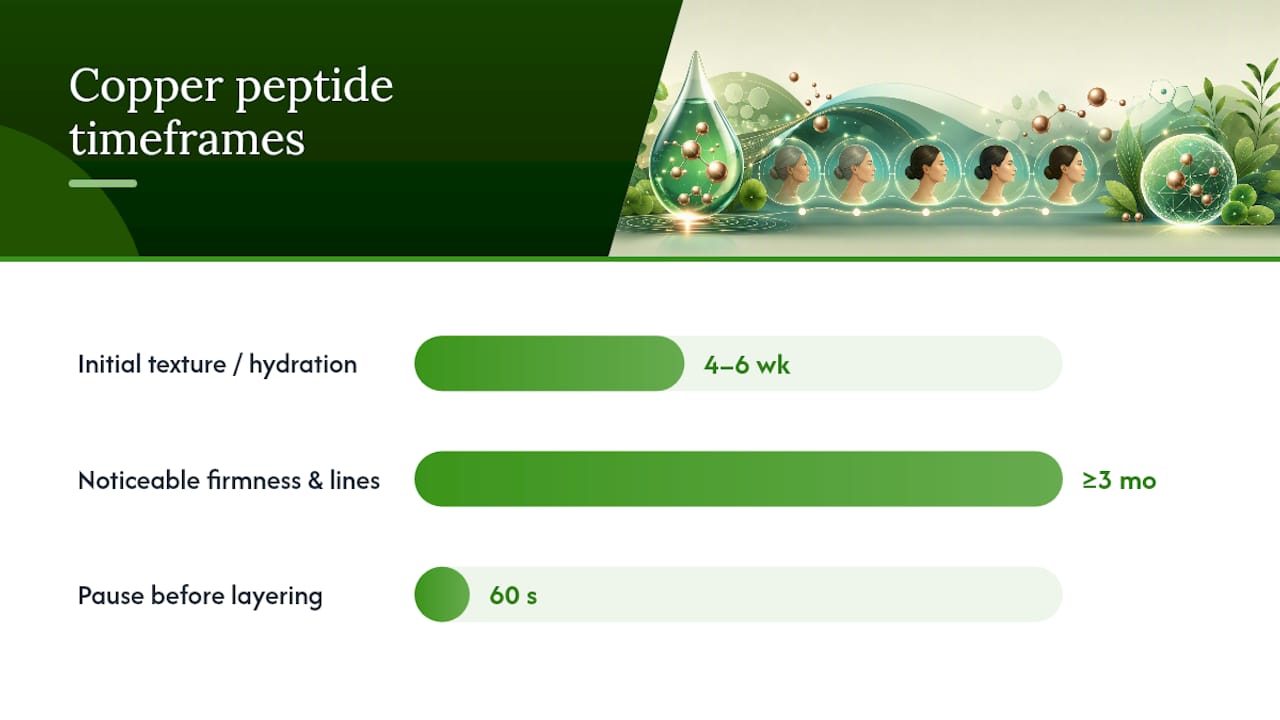
On timeline, be realistic. Most people using a topical copper peptide serum consistently notice initial changes in skin texture and hydration around 4 to 6 weeks in, with more noticeable firmness and fine-line softening building over 3 months or longer of steady use. This tracks with how collagen remodeling actually works biologically. It’s a slow rebuild, not a quick fix.
Formulation quality changes outcomes more than most people assume. A serum’s concentration of active peptide, whether it’s paired with a stabilizing vehicle, and whether hyaluronic acid is included as a hydration carrier all affect how much benefit you actually get. A dermatologist-reviewed usage protocol can help you avoid common application mistakes that blunt results.
Pro Tip: Apply your copper peptide serum to slightly damp skin right after cleansing, then wait about 60 seconds before layering anything else. That brief pause gives the peptide a moment to settle before hyaluronic acid or moisturizer seals it in.
Safety, Side Effects, and the Injection Trend You Should Avoid
Topical copper peptide serums are considered low-risk for most people, but they aren’t risk-free. The most common issues are mild irritation, redness, or contact dermatitis, typically showing up in people with already-compromised skin barriers, active eczema, or a known sensitivity to peptide or copper compounds. If you have very reactive or broken skin, patch-test on your inner arm for a few days before applying a new serum to your face.
People with conditions affecting copper metabolism, such as Wilson’s disease, should talk to a physician before adding any copper-based topical to a routine, since their bodies handle copper differently than most.
The bigger safety concern making headlines lately isn’t the serum at all. It’s injections. A growing number of clinics and individual consumers have started injecting copper peptides for cosmetic purposes, a practice that has moved well ahead of the science supporting it. This is a meaningful departure from anything the clinical trial data covers. Injectable use introduces systemic copper exposure risk, and the FDA has flagged safety concerns around bulk substances repurposed for injection or unregulated compounding without proper approval.
The line to remember: the clinical evidence supporting copper peptides for wrinkles is built entirely on topical and textile use. None of it validates injecting the compound, and doing so carries risks that haven’t been studied in any controlled trial.
Stop using a topical copper peptide product and consult a dermatologist if you notice persistent redness, swelling, blistering, or worsening skin sensitivity that doesn’t resolve within a few days of discontinuing use.
Copper Peptides vs. Retinoids and Vitamin C for Wrinkles
If you’re building a regimen and wondering where copper peptides for skin actually rank against the two most studied anti-aging ingredients, here’s the honest hierarchy.
Retinoids have decades of large, independently replicated clinical trials behind them, with well-documented dose-response relationships for wrinkle reduction and collagen stimulation. Vitamin C, particularly stabilized L-ascorbic acid formulations, also has a solid, independent evidence base for brightening and modest collagen support. Copper peptides sit a tier below both in terms of independent evidence volume. Direct head-to-head trials comparing topical GHK-Cu against retinoids or vitamin C are sparse, so any claim that peptide serums outperform either ingredient isn’t something the current research actually supports.
Where copper peptides earn their place is tolerance. Retinoids commonly cause peeling, dryness, and sun sensitivity, especially in the first several weeks of use. Vitamin C can sting or irritate reactive skin, particularly at higher concentrations. Copper peptides are generally gentler, making anti-aging copper peptides a reasonable option for:
- People who can’t tolerate retinoids due to dryness, peeling, or sensitivity.
- Those looking to add hydration and barrier support alongside firming benefits.
- Anyone wanting a lower-irritation entry point before working up to stronger actives.
- People already using a retinoid who want a complementary product for nights they skip it.
The practical recommendation dermatologists tend to land on: use a copper peptide serum as a supportive layer, not the centerpiece, alongside daily sunscreen and whichever core active (retinoid or vitamin C) your skin tolerates best. A closer breakdown of copper peptides versus vitamin C can help you sequence both if you want to use them together.
Clinician-Backed Formulation and Where to Learn More
Not every copper peptide serum on the market is formulated the same way, and formulation quality is exactly where the difference between “modest improvement” and “no noticeable change” tends to live. Copperpeptides formulates its serum with high-purity copper peptides combined with medical-grade hyaluronic acid, a pairing intended to support both the peptide’s stability and its delivery into skin, with usage guidance developed alongside dermatologist input.
A few things worth knowing if you’re evaluating any copper peptide product, including this one:
- Purity and concentration of the copper peptide complex affect both efficacy and irritation risk, so ingredient sourcing matters more than the word “peptide” on a label.
- Pairing with hyaluronic acid supports hydration retention while the peptide does its slower structural work over weeks.
Consistent users of copper peptide serums typically notice visible results within 4 to 6 weeks, a timeline consistent with how collagen remodeling works biologically. For readers who want the formulation specifics and clinician-informed application steps, the copper peptide benefits guide and dermatologist-approved skincare overview both go deeper than this article’s scope allows.
The Gap Between Marketing Promises and What the Data Supports
The biggest disservice done to copper peptides isn’t bad science. It’s bad framing. Too much marketing borrows the strong textile and wound-healing data to imply topical serums will deliver similar dramatic results, when the 2026 meta-analysis makes clear that topical-only effects are modest and partly overshadowed by oral formulation data in pooled studies.
That gap doesn’t mean copper peptides are a waste of money. It means the honest use case is narrower and more patient than the packaging suggests. The ingredient has a real, defensible mechanism, and small trials back up visible improvement in skin density and fine lines. What it isn’t is a retinoid replacement, and it isn’t remotely appropriate for injection despite what a growing subculture of consumers seems to believe.
If there’s one thing worth prioritizing, it’s sequencing over stacking. A gentle peptide serum paired consistently with sunscreen will likely do more for your skin over a year than sporadically layering five actives you can’t tolerate together. Consistency, not aggression, is what the evidence actually rewards here.
— British
Where to Start With Copper Peptides for Your Own Skin
Copperpeptides is built around one thing: a single, high-purity copper peptide serum formulated with medical-grade hyaluronic acid, rather than a shelf of overlapping products competing for your attention. That focus matters if you’re coming from an article that just walked through delivery challenges and formulation quality as the real differentiators in this category. You don’t need to guess which concentration or vehicle is doing the work; the formula is built around exactly the two factors that determine whether a copper peptide serum actually performs.
Some copper peptide serums are formulated to be suitable for all skin types, including sensitive skin, and include dermatologist-informed usage guidance. If you’ve read this far and want to see the specific ingredient breakdown and usage instructions, visit the copper peptide anti-aging serum product page to check formulation details and start your own 4 to 6 week trial period.
Sources
- Using Copper to Improve the Well-Being of the Skin
- Meta-analysis of peptides for skin aging (2026)
- The copper peptide trend has gone from creams to injections — ahead of the science
FAQ
What Are the Downsides of Using Copper Peptides?
The main downsides are mild irritation or contact dermatitis in sensitive skin, modest results compared to stronger actives like retinoids, and a real risk when people misuse copper peptides through unregulated injections instead of topical application.
Is Retinol or Copper Peptides Better for Wrinkles?
Retinol has stronger, more extensive independent clinical evidence for wrinkle reduction, while copper peptides are gentler and better tolerated, making them a supportive addition rather than a replacement for retinol.
Does Copper Actually Make Skin Look Younger?
Copper, specifically as GHK-Cu, supports collagen and elastin production and has shown measurable wrinkle reduction in copper-textile trials and small topical studies, though the effect from topical serums alone is modest rather than dramatic.
What Should You Avoid Mixing With Copper Peptides?
Avoid layering copper peptides directly with vitamin C (L-ascorbic acid) or strong exfoliating acids in the same application, since copper ions can destabilize these ingredients; space them out by using them on alternating days or different times of day.