

Topical copper peptides are safe for most people, with the typical downside being mild, short-lived tingling, a bit of redness, or an occasional breakout during the first few weeks. Serious reactions are uncommon, and systemic copper toxicity from a cosmetic serum is rare. Patch testing and easing in slowly are generally recommended to reduce the risk of irritation.
TL;DR:
- Most mild side effects, such as tingling and redness, are temporary, typically resolving within hours to a few days, especially during initial use.
- Individuals with eczema, rosacea, barrier damage, or nickel allergy should introduce copper peptides gradually and consult a dermatologist before regular use.
- Combining copper peptides with vitamin C should be avoided at the same time due to pH instability, while retinoids increase irritation risk if stacked together.
- Initiate use with patch testing, applying every other night, and increase frequency gradually over four weeks to minimize irritation.
- Serious reactions like blistering, swelling, or spreading rashes require immediate cessation and medical consultation, but systemic copper toxicity from topical serum is extremely rare.
Table of Contents
- Copper Peptides Side Effects: The Reactions People Actually Report
- Who Should Be Cautious With Copper Peptides?
- Can You Mix Copper Peptides With Vitamin C or Retinoids?
- How Do You Introduce Copper Peptides Without Triggering a Reaction?
- When Should You Stop Using Copper Peptides?
- What Does a Clinician-Backed Copper Peptide Routine Look Like?
- Why Most Copper Peptide Advice Misses the Real Risk
- Where to Start With a Copper Peptide Serum
- Sources
Copper Peptides Side Effects: The Reactions People Actually Report
Most side effects show up fast and fade fast. A tingling or faint metallic sensation right after application is normal and usually gone within a few minutes as the product absorbs. Redness can follow the same pattern, showing up immediately and settling within an hour, or it can build gradually over the first week or two as your skin adjusts to a new active ingredient.
Dermatologists describe copper peptides as generally well tolerated, with transient tingling, redness, and occasional breakouts as the most common complaints. Breakouts tend to show up in people who already deal with clogged pores, since some formulations can feel slightly heavier than a bare hydrator.
Pro Tip: If tingling turns into stinging that lasts more than a minute, or redness hasn’t calmed by the next morning, reducing frequency or pausing use is advised.
Here’s what separates a normal adjustment period from a problem worth addressing:
- Immediate tingling that fades in minutes: normal, no action needed.
- Redness that resolves within a day: normal during the first two to three weeks.
- Dryness or flaking: common if you’re also using retinoids or acids; add a barrier moisturizer.
- New breakouts confined to the first month: often a phase sometimes mistaken for purging, worth monitoring rather than panicking over.
- Persistent stinging or redness beyond two weeks: reduce frequency or pause use.
Healthline’s review of copper peptides echoes this pattern: irritation happens, but major risks from topical use are uncommon. The takeaway is that most reactions are a skin adjustment period, not a red flag.
Who Should Be Cautious With Copper Peptides?
Not every skin type reacts the same way, and a handful of conditions call for extra care before you add copper peptides to a routine.
- Eczema or atopic dermatitis: a weakened barrier absorbs actives differently and may flare more easily.
- Rosacea: already reactive skin can interpret a new active as a trigger, even a gentle one.
- Compromised barrier from recent procedures: chemical peels, laser treatments, or microneedling leave skin more permeable for days to weeks afterward.
- Known metal or nickel allergy: copper is a metal, and cross-sensitivity is possible even though it’s uncommon.
- Pregnancy or breastfeeding: topical safety data here is limited, so a quick check with your clinician is the safer move.
Clinician-sourced guidance suggests people with eczema, rosacea, or barrier damage should introduce copper peptides gradually and consider a conversation with a dermatologist first rather than guessing.
Pro Tip: If you fall into more than one higher-risk category, start with the product on a small test area for a full week before moving to your face, not just the standard 48-hour patch test.
Stop immediately and seek care if you notice blistering, swelling around the eyes or face, or any reaction that spreads rather than stays localized. Those are not typical copper peptide side effects.
Can You Mix Copper Peptides With Vitamin C or Retinoids?
The short answer is not at the same time, but that doesn’t mean you have to choose one or the other. The chemistry problem is specific: low-pH L-ascorbic acid vitamin C is acidic enough to destabilize copper ions, which can reduce effectiveness and raise irritation risk. Experts point to this as the main reason avoiding simultaneous use of pure vitamin C with copper peptides matters more than avoiding vitamin C altogether.
Retinoids pose a different kind of risk. It’s not a chemical clash, it’s cumulative irritation from stacking two strong actives that both increase cell turnover.
A workable schedule looks like this:
- Morning: vitamin C serum, followed by sunscreen.
- Evening (most nights): copper peptide serum on its own.
- Evening (alternate nights): retinoid instead of copper peptides, not alongside it.
- Every night: a barrier-supporting moisturizer layered over whichever active you used.
Some formulations use encapsulated or buffered vitamin C, which is more stable at a higher pH and pairs more easily with copper peptides. If you’re not sure which type you have, treat it as incompatible and separate by time of day rather than risk it. The same logic applies to strong AHAs and BHAs: alternate nights instead of layering.
How Do You Introduce Copper Peptides Without Triggering a Reaction?
Skipping the test phase is the single most common reason people report irritation. The fix is a short, boring routine that takes about 48 hours before you touch your face.
- Patch test first. Apply a small amount to your inner forearm and wait 24 to 48 hours, checking for redness, itching, or bumps.
- Start every other night. Give your skin a rest day between applications for the first two weeks.
- Increase gradually. If there’s no irritation after two weeks, move to nightly use.
- Watch concentration claims skeptically. Formulation quality, stabilizers, and pH matter more than the percentage on the label. A well-formulated 1% product often outperforms a poorly stabilized 3% one.
- Store it right. Keep the serum in opaque packaging, away from heat and light, and discard it if the color shifts or it develops an off smell. Copper peptides oxidize, and a degraded product is more likely to irritate.
Pro Tip: Apply copper peptide serum to slightly damp skin rather than bone dry. It helps the product spread evenly and cuts down on the pilling that sometimes causes uneven absorption and localized stinging.
When Should You Stop Using Copper Peptides?
Most reactions are minor, but a few signs mean stop first, ask questions later.
- Blistering or open sores: stop immediately, this is not a normal adjustment reaction.
- Facial swelling, especially around the eyes: seek same-day medical attention.
- Difficulty breathing or rapid spread of a rash: treat as an emergency, not a wait-and-see situation.
- Persistent irritation with no improvement after a week off the product: schedule a dermatology visit rather than restarting.
Systemic copper overload from a topical serum is genuinely rare. When it happens at all, it’s tied to oral supplementation or industrial exposure, not a nightly face serum. Overload symptoms, if they ever occurred, would look like nausea, abdominal pain, or neurologic symptoms, not localized skin redness. Local irritation and systemic toxicity are two different conversations, and conflating them tends to cause more unnecessary worry than the ingredient itself deserves.
What Does a Clinician-Backed Copper Peptide Routine Look Like?
Consistent, correctly sequenced use over four to six weeks is the timeframe most dermatologist-aligned protocols point to before visible firming and hydration changes show up.
That timeline comes from Copperpeptides’s own clinician protocol, and it’s worth being upfront that this specific figure is brand-sourced rather than an independent clinical trial finding. What it does line up with is the broader safety framework covered throughout this article: patch test first, alternate nights with retinoids, keep strong vitamin C separate, and support the barrier with a good moisturizer throughout.
| Protocol Step | What It Addresses | Why It Matters |
|---|---|---|
| Patch test, 24 to 48 hours | Allergic or irritant reactions | Catches sensitivity before facial use |
| Every-other-night start | Cumulative irritation | Lets skin adjust gradually |
| Separate from strong vitamin C | Ion destabilization | Preserves both ingredients’ effectiveness |
| Alternate with retinoids | Over-signaling and irritation | Reduces stacked-active side effects |
| Consistent use, 4 weeks | Visible results | Matches brand-reported timeframe |
Dermatologist endorsements cited by Copperpeptides support this same sequencing logic, but any specific medical question about your skin, especially if you’re in one of the higher-risk categories, still belongs with an independent clinician rather than a product guide.
Why Most Copper Peptide Advice Misses the Real Risk
The conventional wisdom treats copper peptides as either miracle collagen boosters or a mysterious risk. Neither framing holds up. The peer-reviewed evidence on GHK-Cu is genuinely encouraging at the mechanism level, showing wound-healing and gene-modulating effects in lab and animal models, but that’s a different thing than large-scale human safety trials, which remain thin. That gap doesn’t mean the ingredient is unsafe. It means the humility in how it’s marketed matters more than the hype.
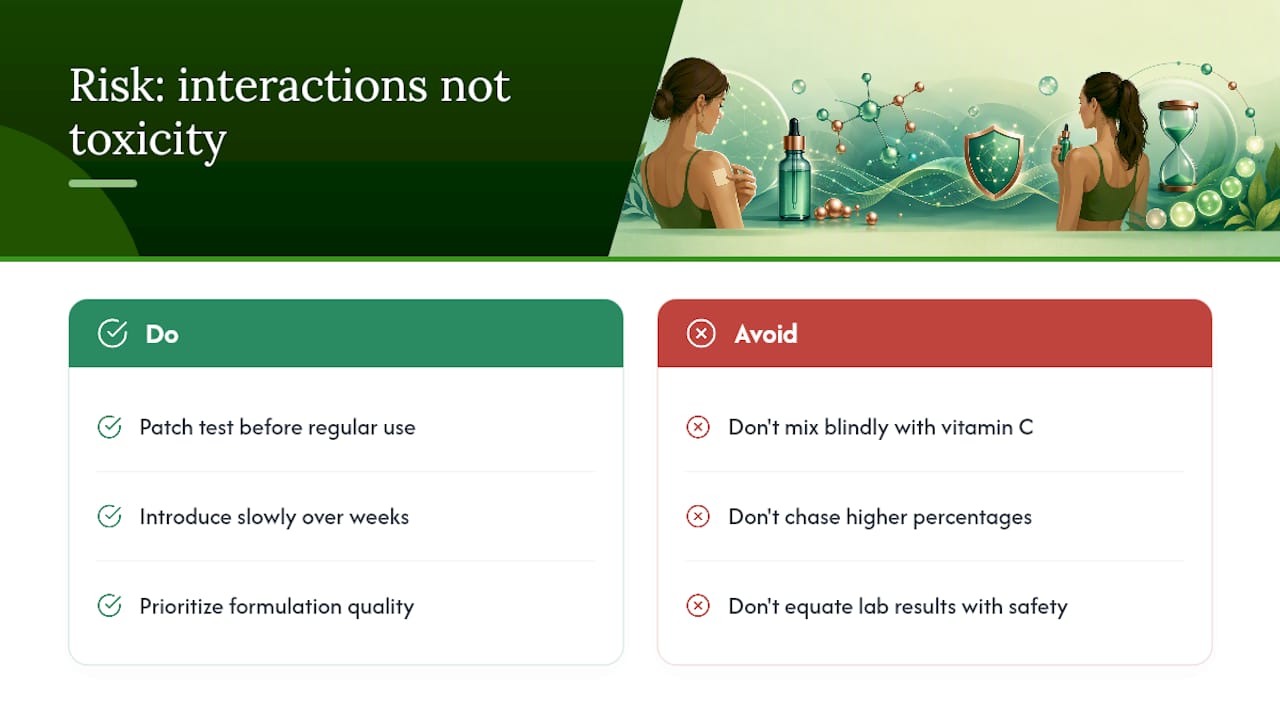
Where most advice actually fails readers is the interaction question. Everyone repeats “don’t mix with vitamin C” without explaining the acid chemistry behind it, so people either avoid vitamin C entirely or ignore the warning out of confusion. Understanding that it’s a pH and stability issue, not a blanket incompatibility, lets you actually use both ingredients well.
If you take one thing from this article, prioritize the patch test and the slow introduction over chasing a higher percentage. Formulation quality consistently beats raw concentration in how your skin actually responds.
— British
Where to Start With a Copper Peptide Serum
If you’ve read this far, you already know the safety profile checks out for most skin types when you introduce it correctly. Copperpeptides built its copper peptide anti-aging serum around exactly that principle: a high-purity formulation paired with medical-grade hyaluronic acid, so you’re not choosing between gentle and effective.
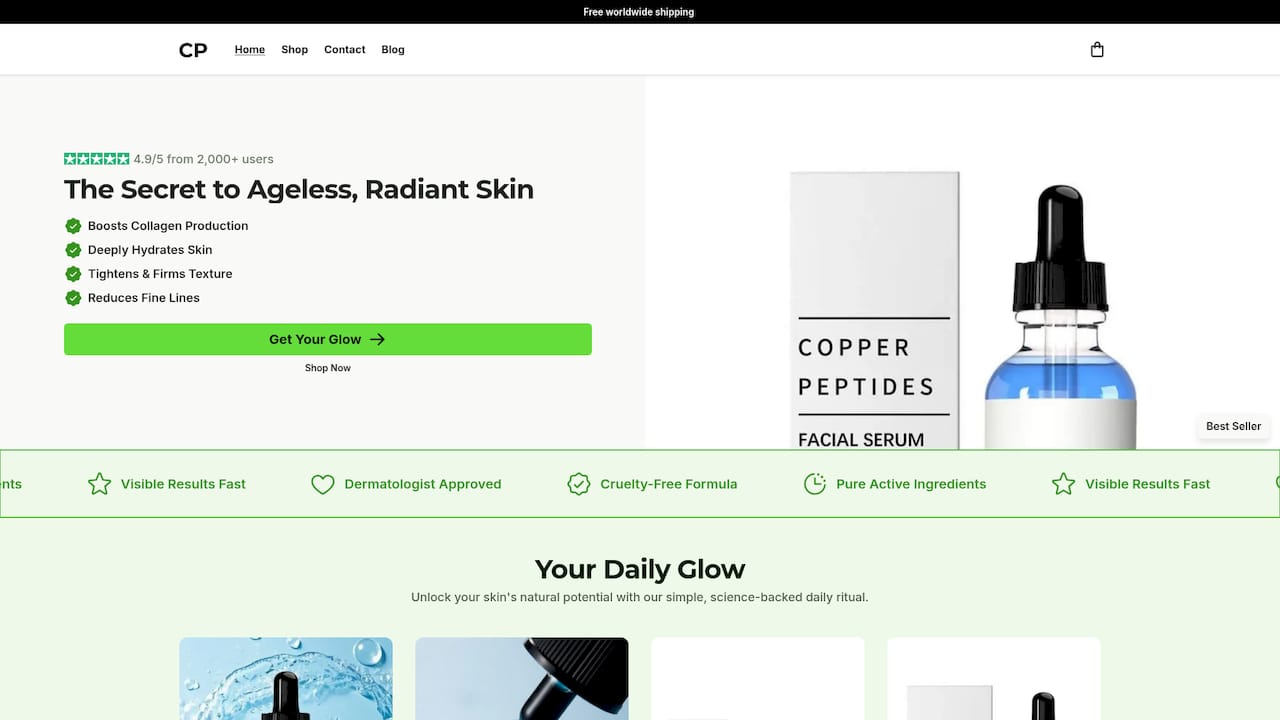
That combination matters for anyone coming out of this article cautious about irritation. A stable, well-formulated serum reduces the guesswork around degraded or poorly stabilized copper ions that cause unnecessary stinging. It suits people managing fine lines and firmness concerns who want a serum they can actually stick with alongside vitamin C and retinoids, not instead of them. The serum is designed to have a gentle profile suitable for sensitive skin types, and users may notice visible improvement within several weeks of consistent nightly use. Start with a patch test, then work the serum into the every-other-night schedule outlined above. If you want the full clinician protocol before you buy, Copperpeptides’s site walks through the complete routine.
This article is general information, not a substitute for advice from a qualified doctor. Consult a qualified healthcare professional about your own circumstances before acting on anything here.
Sources
- A Dermatologist’s Take on the Copper Peptide (GHK-Cu) Skin Care Trend
- Copper Peptides: Benefits for Skin and Hair Care, and How to Use Them
- GHK-Cu: biological activities and clinical potential (review)
- How to Use GHK-Cu Copper Peptide: Complete Topical Guide 2026
- What Are Copper Peptides? Benefits and Uses Explained by Dermatologists