

Topical copper peptide serums applied to intact skin carry low systemic exposure, but pregnancy-specific safety trials in humans don’t exist. That data gap, not any red flag in the research, is why most clinicians recommend caution. If you’re using a straightforward cosmetic serum, check the full ingredient list, skip anything injectable or growth-factor heavy, and confirm your plan with your OB-GYN before continuing.
TL;DR:
- Most safety data on copper peptides come from general cosmetic reviews and do not specifically evaluate pregnancy or breastfeeding risks.
- Topical copper peptides, used in typical cosmetic concentrations, are unlikely to cause systemic exposure, but no human pregnancy safety trials have been conducted.
- Checking ingredient lists for copper tripeptide-1 or GHK-Cu and avoiding formulations with growth factors, retinoids, or high concentrations is essential before use during pregnancy.
- During breastfeeding, serum application should skip the nipple and areola, and any accidental contact with the infant’s mouth requires thorough washing and medical consultation.
- If you used copper peptides during pregnancy, consult your OB-GYN with details on the product, application, and timing, especially if injection or oral products were involved.
Table of Contents
- Are copper peptides safe during pregnancy?
- How do you check if your serum is pregnancy-appropriate?
- Can I use copper peptides while breastfeeding?
- What if you already used a copper peptide product while pregnant?
- What does Copperpeptides know from real product use?
- Our editorial perspective: caution first, simplicity second
- A simpler formula makes this decision easier
- Sources
Are copper peptides safe during pregnancy?
The honest answer is “probably, but nobody has proven it.” That’s not a dodge. It’s the actual state of the research, and it’s worth understanding before you make a decision about your own skin.
The Cosmetic Ingredient Review (CIR) panel evaluated copper peptides at the concentrations typically used in cosmetics, generally under 10 parts per million, and concluded they’re safe based on negative safety test data. That’s a meaningful data point. CIR is the industry’s own expert safety panel, and a clean review at realistic-use concentrations means these ingredients aren’t showing toxicity signals in standard testing.
Here’s the catch: that review wasn’t designed around pregnancy or breastfeeding. It’s a general cosmetic safety assessment, not a reproductive study.
Separately, research on GHK-Cu (the copper peptide most common in skincare) suggests topical application results in negligible systemic exposure when the skin barrier is intact. But “negligible absorption” and “confirmed safe in pregnancy” are two different claims, and nobody has run the trial that would let anyone make the second one. A cosmetic-science review of peptide safety data confirms this same gap: the topical exposure literature exists, but pregnancy-specific human trials for cosmetic peptides largely don’t.
What actually matters for your risk assessment:
- Route of administration changes everything. Injectable or microneedled peptides bypass the skin barrier entirely and carry a different exposure profile than a serum sitting on top of intact skin.
- Absence of harm data is not the same as proof of safety. It just means the specific study hasn’t been done.
- Concentration matters. A cosmetic serum formulated in the low parts-per-million range is a different exposure scenario than a concentrated professional treatment.
The concentration CIR reviewed as safe, under 10 ppm, reflects typical over-the-counter cosmetic formulation, not clinical or injectable products.
How do you check if your serum is pregnancy-appropriate?
Before you toss every active in your medicine cabinet, run your product through this checklist. It takes about five minutes and answers most of the questions clinicians will ask you anyway.
- Find copper tripeptide-1 or GHK-Cu on the ingredient list. It should appear by name in the INCI listing, usually mid-list rather than at the top, which tells you roughly how concentrated it is.
- Scan the rest of the formula, not just the copper peptide. Retinoids, high-percentage AHAs or BHAs, and certain essential oils carry their own pregnancy precautions independent of what the copper peptide is doing.
- Check what the product is actually marketed for. A product built for microneedling, injection, or wound care is a different animal than a daily face serum, even if it lists a similar peptide.
- Look for growth-factor blends stacked alongside the peptide. These multi-active formulas complicate the safety picture because you’re no longer evaluating one ingredient’s exposure risk, you’re evaluating several at once.
- Patch-test on your inner arm for 24 to 48 hours before applying anywhere on your face. Pregnancy hormones frequently increase skin reactivity, so a product you tolerated fine before pregnancy isn’t guaranteed to behave the same way now.
- If anything on the label is unclear, stop and call your OB-GYN. Bring a photo of the ingredient list. It’s a two-minute question for them and it removes the guesswork entirely.
A dermatologist-backed overview of copper peptide safety walks through this same kind of ingredient-by-ingredient thinking if you want a second reference point.
Pro Tip: Simplify your routine to as few active ingredients as possible during pregnancy. A one-ingredient copper peptide serum is far easier to evaluate than a five-step routine layering acids, retinoids, and peptides together, because you’re only asking one question instead of five.
Can I use copper peptides while breastfeeding?
The main concern while breastfeeding isn’t systemic absorption through your own skin. It’s direct transfer to your infant’s mouth. That changes where and how you apply, more than whether you apply at all.
- Skip the nipple and areola entirely when applying any facial or body serum, including copper peptide products.
- If a product does contact that area accidentally, wash it off thoroughly before your next feeding.
- If you suspect your infant ingested any product, or you’re unsure whether skin contact occurred before nursing, call your pediatrician or OB-GYN rather than guessing.
- Prioritize the basics first: a gentle moisturizer and mineral sunscreen matter more day to day than any active ingredient.
- Separate your actives by time of day, copper peptide serum in the morning, something simpler at night, so you’re never combining unknowns in one application.
- Keep patch-testing new products even if you tolerated them fine before pregnancy or nursing; hormonal shifts during lactation can still change how your skin reacts.
What if you already used a copper peptide product while pregnant?
Don’t panic, and don’t assume the worst. Most topical exposures carry low risk, but a quick clinician check is still the right move.
- Stop using the product and write down the exact name, the full ingredient list, and when you last applied it.
- Note roughly how much you used and how often, if you can recall.
- Call your OB-GYN or prescribing clinician and share those details rather than waiting for your next scheduled visit.
- If the exposure involved an injection, microneedling device, or an oral supplement rather than a topical serum, treat it as more urgent and seek medical advice right away.
- Expect your clinician to ask about the product’s marketed use (cosmetic vs. clinical), the concentration if listed, and how far along you are in pregnancy, so have that information ready.
What does Copperpeptides know from real product use?
Copperpeptides is written and maintained with contributions from British, whose editorial work focuses on evidence-based skincare guidance. Here’s what our own product data and formulation notes actually show, separate from any pregnancy-specific claim:
- Customers typically report visible changes in skin texture and firmness within 4 to 6 weeks of consistent use.
- Our formulation pairs high-purity copper peptide with medical-grade hyaluronic acid, detailed further here, and is dermatologist-endorsed for general use.
- That timeline and formulation data reflect observed product use, not a pregnancy safety trial. They tell you what the serum does on skin generally, not what’s appropriate for your specific pregnancy or nursing situation.
- Any decision about starting or continuing use during pregnancy or breastfeeding should still run through your own OB-GYN, using your full ingredient list as the reference point.
Our editorial perspective: caution first, simplicity second
If you’re pregnant or nursing and wondering about your copper peptide serum, our stance is straightforward: pause, check the full ingredient list, and talk to your OB-GYN before you resume or start anything new — for detailed advice, see how to Ease Pelvic Girdle Pain in Pregnancy With Physio and a Simple Tracker. That’s not us being overly careful for the sake of it. It’s what the actual evidence supports, given that pregnancy-specific human trials simply don’t exist yet.
What we’d add beyond that: favor the simplest formula you can find, and don’t let sunscreen and moisturizer fall to the bottom of your routine while you’re sorting out which actives to pause. Those two do more daily work than any specialty serum. If you need ingredient details to bring to your clinician, reach out to our support team directly.
— British
A simpler formula makes this decision easier
One reason whole-formula checks get complicated is that most anti-aging serums stack five or six active ingredients into a single bottle. Every added retinoid, acid, or growth-factor blend is another variable you and your clinician have to evaluate separately.
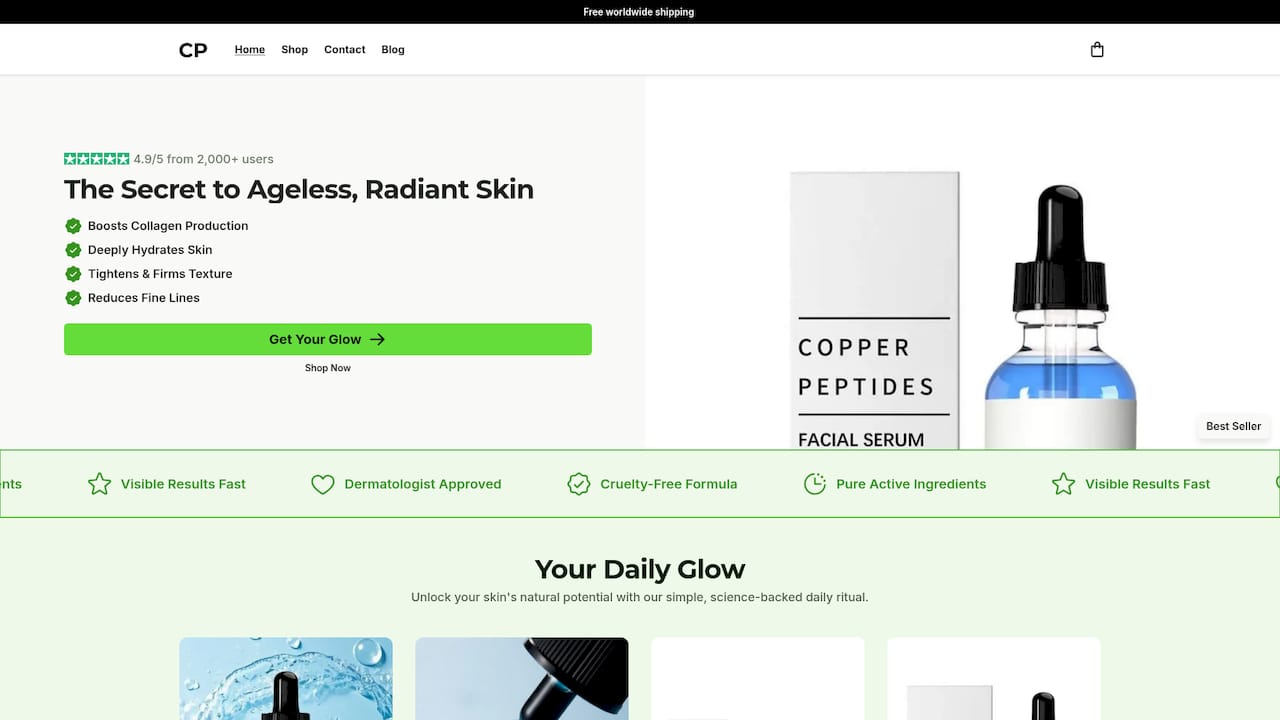
A high-purity copper peptide paired with medical-grade hyaluronic acid is one common serum formulation approach, focusing on simplicity without multiple competing ingredients. Such single-ingredient approaches can simplify clinician discussions by narrowing active ingredients to consider. Visible firmness and texture improvements can be observed with consistent use over several weeks according to some user reports.
If you’re weighing whether your current routine is too complicated to evaluate confidently, check the full ingredient list on the product page or browse Copperpeptides Store for formulation details and customer support. Bring that ingredient list to your OB-GYN before your next application, and let them make the final call for your pregnancy or nursing situation.
Sources
- Plasticsurgerykey
- Cosmetics journal article on peptide safety and topical exposure — DOI 10.3390/cosmetics4020016
This article is general information, not a substitute for advice from a qualified doctor. Consult a qualified healthcare professional about your own circumstances before acting on anything here.