

GHK-Cu, the tripeptide known as blue copper peptide, has real evidence behind its ability to support collagen production, skin repair, and firmness. It works over weeks, not overnight, so it won’t replace a retinoid or a laser session on its own. For most people chasing softer lines and tighter texture, a high-purity formulation like Copperpeptides offers a dermatologist-endorsed way to put that chemistry to work.
TL;DR:
- Copper peptides support collagen and tissue repair gradually over weeks, not providing overnight results like retinoids or laser treatments.
- The blue color indicates a high-quality, copper-bound peptide, and degradation causes loss of activity, requiring proper storage and inspection.
- Small, short-term studies show measurable improvements in skin firmness and wrinkle appearance, but large, long-term data remain limited.
- Copper peptides are generally safe for sensitive skin if patch tested, with minor reactions like tingling or redness often temporary.
- For best results, layer copper peptides on damp skin, wait four to six weeks to assess changes, and avoid mixing with incompatible active ingredients early on.
Table of Contents
- What Are Blue Copper Peptides, and Why Are They Blue?
- What Do Blue Copper Peptides Do for Skin?
- Are Blue Copper Peptides Safe for Sensitive Skin?
- How Do You Use Blue Copper Peptides in a Routine?
- What Does the Research Actually Show?
- Why We Formulate the Way We Do
- Try Copper Peptide Anti-Aging Serum
- Sources
What Are Blue Copper Peptides, and Why Are They Blue?
GHK-Cu, short for glycyl-L-histidyl-L-lysine bound to copper, is a naturally occurring peptide your body produces in decreasing amounts as you age. It was first isolated in 1973, and researchers have been studying its role in tissue repair ever since, according to background on GHK-Cu’s chemistry and history.
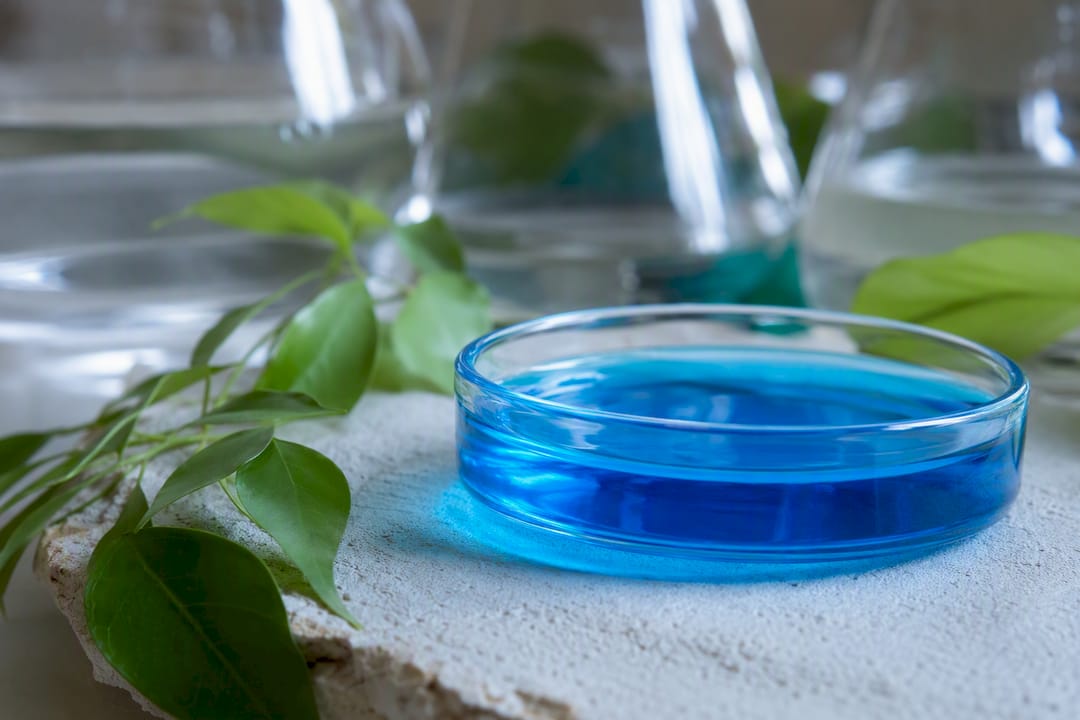
The blue color is not a dye or a cosmetic flourish. It comes from an electronic transition in the copper ion itself, a d-orbital shift that produces a distinct blue tone once copper locks into the peptide structure, typically in the 520 to 540 nanometer range. That color functions as a quality signal: if a product is supposed to be blue and isn’t, the copper has likely dissociated.
This distinction matters because GHK on its own, without the bound copper, doesn’t behave the same way biologically. The copper coordination is what stabilizes the molecule and appears central to its function in skin.
What Do Blue Copper Peptides Do for Skin?
The core benefit is collagen support. GHK-Cu stimulates collagen and glycosaminoglycan synthesis in fibroblasts, the cells responsible for rebuilding your skin’s structural scaffolding, and it also carries antioxidant and anti-inflammatory properties tied to tissue repair, per a detailed overview of peptide activity in skin biology.
Here’s what that translates to in practice:
- Improved firmness and elasticity as collagen density increases
- Faster wound healing and calmer inflammation, useful for barrier repair or lingering post-acne marks
- Gradual softening of fine lines with consistent use rather than a dramatic overnight change
- Antioxidant support that may help offset some environmental skin stress
A key data point: controlled facial studies have reported measurable improvements in firmness and wrinkle appearance with GHK-Cu formulations, though sample sizes tend to be small and study durations short. That’s a real signal, not proof of a miracle ingredient. If you want a deeper breakdown of the research, copper peptide benefits are covered in more depth on our blog. Compared to retinoids or in-office procedures, copper peptides work more gradually and gently, which makes them a strong complement rather than a direct substitute.
Are Blue Copper Peptides Safe for Sensitive Skin?
Copper peptides are generally well tolerated, even for reactive or sensitive skin, but no ingredient is risk-free for everyone. A patch test on your inner arm for 24 hours before applying to your face catches most reactions before they become a problem.
- Mild tingling or temporary redness can happen, especially on compromised skin
- People using strong actives (high-percentage retinoids, acids) should introduce copper peptides slowly and watch for irritation
- A blue product that turns pale, brown, or cloudy has likely degraded and lost activity
- Store products away from direct light and heat, since pH and light exposure are common causes of copper dissociation in cosmetic formulations
- If you’re pregnant, breastfeeding, or managing a skin condition, check with a dermatologist before adding any new active
Pro Tip: Hold your serum up to the light before each use. If the blue has faded to clear or turned murky, the copper has likely broken away from the peptide, and the product won’t deliver the same benefits it did on day one.
How Do You Use Blue Copper Peptides in a Routine?
Copper peptides work best layered thoughtfully, not stacked carelessly on top of everything else in your cabinet.
- Cleanse and tone first, then apply your copper peptide serum to damp skin.
- Follow with a moisturizer or heavier cream to lock in hydration; copper peptides pair naturally with hyaluronic acid.
- Use morning or evening, though many people prefer evening application alongside repair-focused routines.
- If you use retinoids, copper peptides and tretinoin can be used together, but alternating nights reduces the chance of irritation.
- Niacinamide is generally compatible and can be layered in the same routine without conflict.
- If you’re using vitamin C, apply it first and let it absorb before introducing copper peptides, since the two can interact under certain pH conditions.
Give it four to six weeks before judging results. That’s the window most visible improvement in texture and firmness tends to show up, based on how these formulations behave in practice. If you notice persistent redness or breakouts, scale back to every other day or consult a dermatologist.
Pro Tip: Introduce copper peptides on their own for the first two weeks before adding other actives, so you can tell exactly what your skin is reacting to if something feels off.
What Does the Research Actually Show?
The strongest evidence comes from controlled facial studies showing anti-wrinkle and firming effects, but the field still leans on modest sample sizes and short trial periods rather than large, multi-year data sets, as documented in the background research on GHK-Cu.
Mechanistically, copper acts as a cofactor for enzymes involved in building extracellular matrix, the scaffolding that keeps skin plump and structured. GHK-Cu also appears to modulate gene expression tied to tissue repair, based on the research summarized in the peptide and skin biology overview. Its square-planar copper coordination, confirmed through X-ray, EPR, and NMR spectroscopy, is what keeps the copper stable and biologically active rather than reactive and potentially damaging to skin cells.
Here’s where the evidence gets thinner:
- Most published trials have limited durations
- Sample sizes in published studies tend to be relatively small
- Independent replication across different labs and formulations remains limited
The practical implication: treat GHK-Cu as a supportive, longer-term tool for skin repair rather than an instant fix, and don’t expect results to rival a prescription retinoid within days.
Why We Formulate the Way We Do
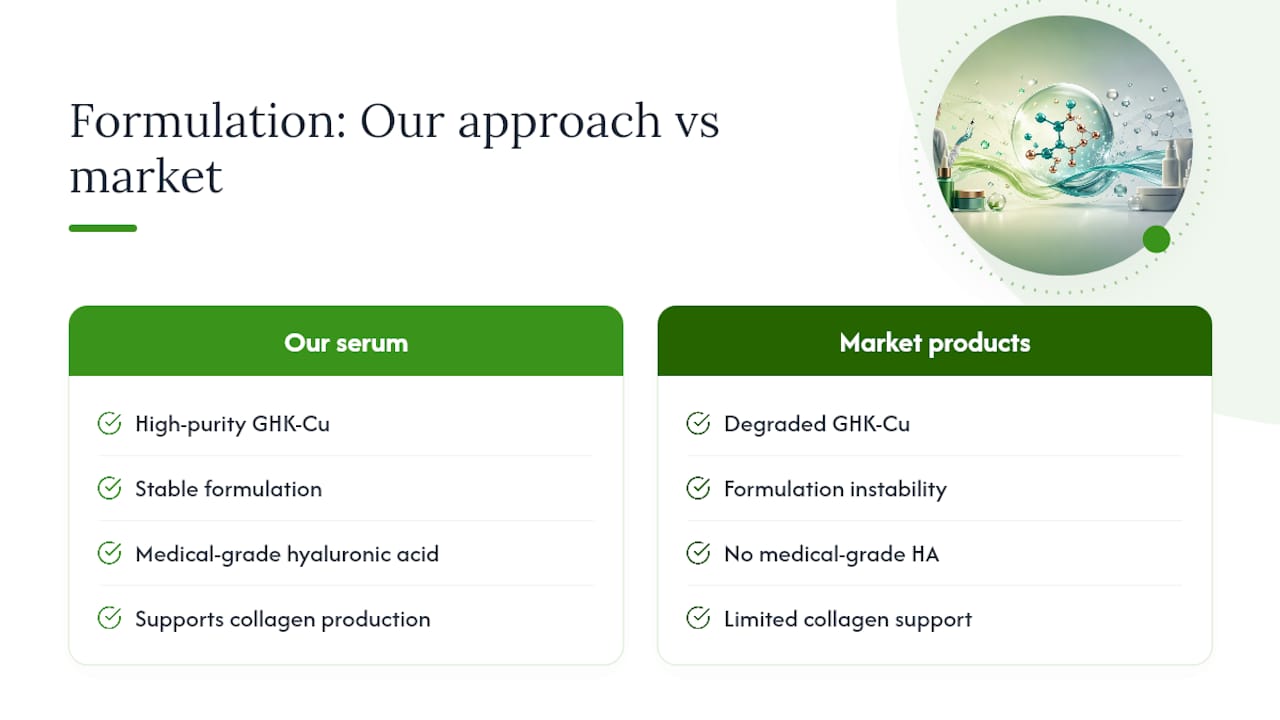
Copperpeptides built its serum around a simple idea: purity and stability determine whether GHK-Cu actually does anything once it’s on your skin. Our formulation combines high-purity copper peptides with medical-grade hyaluronic acid, an approach designed to support collagen production, deep hydration, and visible firming without irritating sensitive skin types.
Dermatologists have endorsed the serum for delivering gentle, transformative results rather than a harsh, high-risk approach to anti-aging. We built it because too many copper peptide products on the market degrade before they ever reach a customer’s bathroom shelf, and a faded blue serum helps no one.
— British
Try Copper Peptide Anti-Aging Serum
If you’ve read this far, you already understand why the science supports copper peptides and why formulation quality decides whether that science shows up on your face. The Copper Peptide Anti-Aging Serum pairs high-purity GHK-Cu with medical-grade hyaluronic acid, formulated to be gentle enough for sensitive skin while still delivering measurable firming and hydration.
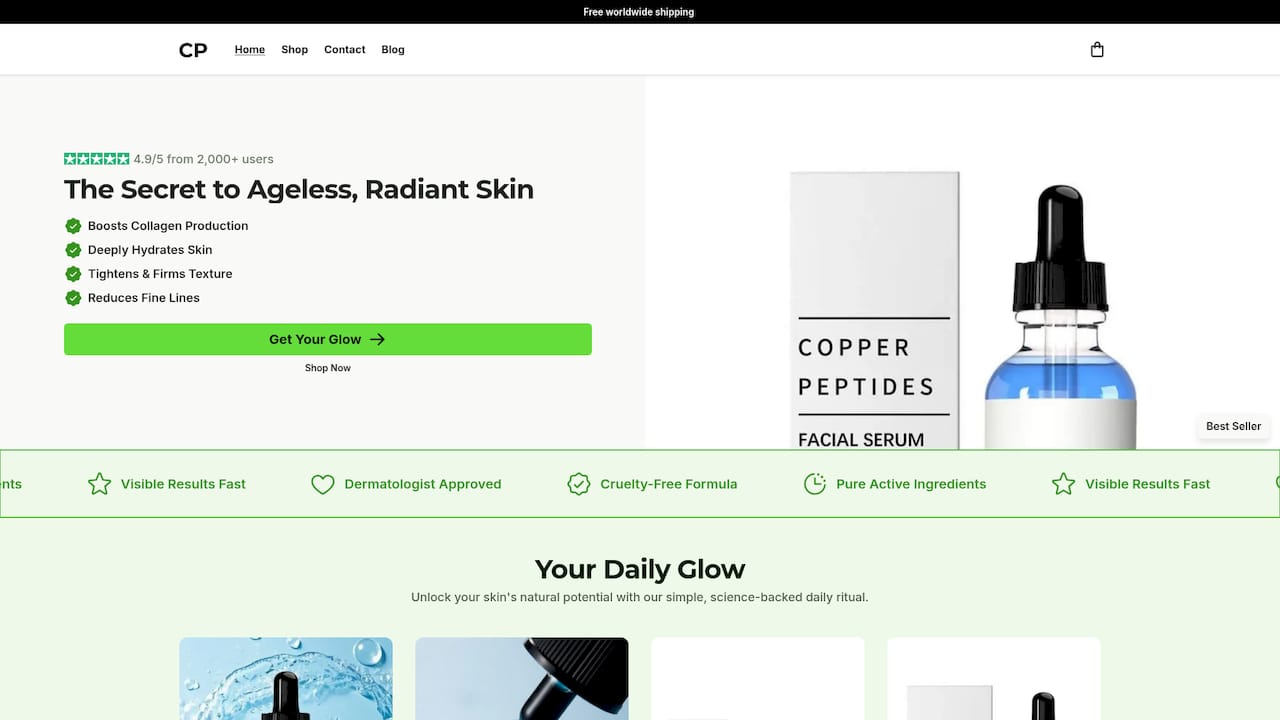
Many users notice visible improvement in texture and firmness after consistent use over several weeks, and the serum is backed by a return policy if it doesn’t work for your skin. Dermatologists have endorsed it for its gentle, non-irritating profile, and thousands of customers have already worked it into their routines worldwide. For a closer look at how it fits into a full regimen, our guide on dermatologist-approved skincare walks through the details. Visit the product page to check current availability and place an order.
Sources
- NCBI / Book chapter overview on peptides and skin biology
- Cosmetics journal article (DOI)
- Peer-reviewed biomolecules/cosmetic study (DOI)
Recommended
- Copper Peptide Benefits: A Science-Backed Skin Guide – Copper Peptides Store
- Copper Peptides Results: What to Expect and When – Copper Peptides Store
- Are Copper Peptides Safe? A Dermatologist-Backed Answer – Copper Peptides Store
- Paula’s Choice Alternatives: Best Copper Peptide Serums – Copper Peptides Store