

Topical skincare improves surface texture and hydration, but it cannot lift a cheek that has dropped from fat pad descent or bone loss. Mild to moderate sagging responds well to non-surgical energy devices or hyaluronic acid fillers, while advanced descent generally needs a surgical lift. Expect topicals to show results in weeks, energy devices in months, fillers within days, and surgery to deliver the most durable change over months of healing.
TL;DR:
- Non-surgical treatments like energy devices and fillers work best for mild to moderate sagging but are less effective on advanced tissue descent.
- Collagen loss, fat pad descent, and bone resorption all contribute to cheek sagging, with external factors like sun exposure and smoking accelerating this process.
- Injectable fillers restore volume and improve secondary signs of aging, but their effects last from nine to eighteen months, requiring repeated treatments.
- Topical skincare routines, including sunscreens, retinoids, and peptides, can improve skin quality but cannot lift sagging tissue or rebuild lost bone mass.
- Surgical midface lifts offer the most durable correction for advanced descent, with results lasting five to ten years, but are reserved for severe cases and require careful consultation.
Table of Contents
- What Causes Sagging Skin Cheeks?
- How Do You Know How Severe Your Cheek Sagging Is?
- Non-Surgical Cheek Lift Options: MFU, Radiofrequency, Lasers, and Threads
- Injectables and Volume Restoration for the Midface
- What Skincare for Sagging Cheeks Can Realistically Do
- When Is Surgery the Right Call for Sagging Cheeks?
- How to Choose a Cheek Sagging Treatment: A Consultation Checklist
- An Honest Note on Patience and Prevention
- Support Your Skin’s Foundation With Copperpeptides
- Sources
- FAQ
What Causes Sagging Skin Cheeks?
Cheek sagging is rarely one problem. It is usually three or four processes happening at once, each working on a different layer of the face.
The deepest driver is collagen loss. Dermal collagen production slows steadily after your mid-20s, and by age 80 or beyond, collagen levels can run much lower than they were in young adulthood, according to research on skin aging physiology. Less collagen means less structural scaffolding, so skin loses the tension that used to hold it against the bone.
Underneath the skin, the deep fat pads that give cheeks their round, youthful shape start to shrink and slide downward. At the same time, the ligaments anchoring those fat pads stretch out, and the maxillary bone itself resorbs slightly with age, giving the fat pads less shelf to sit on. Facial aging researchers describe this as a layered process, where bone, fat, and ligaments all change together, which is exactly why fixing only one layer, like the skin surface, rarely restores the original contour.
Several outside factors speed all of this up:
- Cumulative UV exposure breaks down collagen and elastin fibers faster than chronological aging alone.
- Smoking restricts blood flow to skin and accelerates collagen breakdown.
- Rapid or significant weight loss leaves behind skin that has lost its underlying fat support.
- Hormonal shifts, especially around menopause, and chronic nutritional deficits can thin the dermis further.
The visible result is a flattened “ogee curve,” the smooth S-shaped line that normally runs from the lower eyelid into the cheek. As it flattens, jowls become more defined along the jawline because the cheek volume that used to camouflage that transition is gone.
How Do You Know How Severe Your Cheek Sagging Is?
Grading your own sagging honestly saves you from wasting money on the wrong treatment. Here’s a rough framework clinicians use informally during consultations:
- Mild laxity: Slight flattening of the cheek when you look in a mirror under bright light, no visible jowling, skin still snaps back quickly when pinched. This tier usually responds to topical care and prevention alone.
- Moderate laxity: Noticeable flattening of the ogee curve, early jowl formation, skin takes a beat longer to recoil after a pinch test. This is where energy-based devices and volume-restoring fillers earn their keep.
- Advanced laxity: Visible jowls at rest, deep nasolabial folds, skin that folds rather than snaps back. Surgery tends to be the only option that meaningfully corrects this.
Body mass, skin thickness, and prior significant weight loss all affect which category you fall into and how you’ll respond to treatment. Thinner skin with a history of major weight loss often shows more visible descent than the same amount of fat loss would in someone with thicker skin. If you’re unsure which category applies, a consultation with a board-certified dermatologist or plastic surgeon typically includes a visual assessment, a pinch test, and sometimes photographs taken at rest and in motion to map exactly where support has been lost.
Non-Surgical Cheek Lift Options: MFU, Radiofrequency, Lasers, and Threads
For mild to moderate sagging, four non-surgical categories dominate clinical practice, and they are not interchangeable.
Microfocused ultrasound (MFU/HIFU) has the strongest track record among energy devices. A systematic review and meta-analysis found that 92% of patients showed investigator-reported improvement in skin tightening at 90 days, and patient-reported satisfaction rose from 42% at 90 days to 53% at 360 days, meaning the results actually kept improving for a full year after one treatment. MFU works by heating a precise depth of tissue to trigger new collagen formation, without cutting or damaging the surface.
Radiofrequency (RF) devices produce measurable neocollagenesis under the microscope, and systematic review data shows consistent improvement in facial laxity with a generally favorable safety profile. RF tends to be gentler than MFU, which makes it a reasonable starting point for genuinely mild cases.
Lasers and resurfacing deliver a stronger tightening effect than RF in many cases, but at a cost: more downtime, more discomfort, and a higher risk of pigment changes, especially in darker skin tones.

Thread lifts offer a mechanical, immediate lift by anchoring dissolvable sutures under the skin. They’re minimally invasive, but the lift is modest and typically fades within a year to eighteen months, making them more of a bridge option than a lasting solution.
A few practical notes apply across all of these:
- Most energy-based treatments require one to three sessions spaced weeks apart for full effect.
- Results build gradually over months, not overnight, for both MFU and RF.
- None of these options perform as well on very lax skin or in patients with a higher BMI, where the tissue may simply have too little structural support left to respond to heat-based collagen stimulation.
Injectables and Volume Restoration for the Midface
Fillers solve a different problem than energy devices. Instead of tightening existing skin, hyaluronic acid (HA) fillers replace lost volume directly, restoring the malar projection that used to hold the ogee curve in place and giving overlying skin something to rest against again.
Clinical data on midface augmentation backs this up: cheek volume restoration has been shown to improve patient satisfaction scores and produce secondary improvements in adjacent areas like under-eye hollows and nasolabial folds, often within one to six months, without those areas being treated directly. That’s a meaningful finding, because it means a well-placed cheek filler can make the whole midface look more rested.
Injectors choose fillers based on two properties: G prime (resistance to compression, which determines lifting strength) and cohesivity (how well the gel holds together under skin tension). A firmer, higher G’ filler placed deep near the bone lifts tissue; a softer, more cohesive filler placed superficially just smooths fine lines. Using the wrong one in the wrong plane is a common reason people feel disappointed with filler results.
Most HA fillers last between nine and eighteen months in the cheek before your body metabolizes them. Bruising, swelling, and mild asymmetry are common short-term effects, while the rarer but serious complication, vascular occlusion, is why filler injection should happen only with a trained, credentialed provider.
What Skincare for Sagging Cheeks Can Realistically Do
Topical products play a real but limited role. They improve skin quality, hydration, and surface firmness. They cannot move a fat pad back into position or rebuild resorbed bone, no matter what a label promises.
Sunscreen and retinoids remain the foundation of any regimen aimed at slowing further sagging. Dermatology society guidance consistently lists daily sunscreen and moisturizer as the baseline defense against further collagen breakdown, with retinoids as the most evidence-backed active for stimulating new collagen synthesis over time.

Peptides, including copper peptides, work differently. They support the dermal matrix and help skin hold onto moisture, which shows up as improved texture and a firmer surface feel rather than a lifted contour. Copperpeptides have covered the mechanism behind copper peptides and collagen synthesis in more depth, including realistic timelines for when those changes become visible.
Most people see textural and firmness improvements from a consistent topical routine within four to twelve weeks. Some copper peptide serums are formulated to show visible results within a few weeks, though individual timelines vary with skin type and consistency of use.
Pro Tip: Layer thin to thick: cleanser, then a peptide serum on damp skin to lock in hydration, then retinoid at night (never with the peptide serum in the same application), then sunscreen every morning without exception.
A few things to keep in mind for sensitive skin:
- Introduce retinoids slowly, two to three nights a week, before increasing frequency.
- Copper peptide formulations are generally well tolerated even on reactive or post-procedure skin.
- Stop any new product if you notice persistent redness or stinging that doesn’t settle within a few uses.
When Is Surgery the Right Call for Sagging Cheeks?
A cheek lift, sometimes called a midface lift, repositions the deep malar fat pad and tightens the SMAS layer, the fibrous tissue beneath the skin that holds facial structures in place. Unlike a full facelift, it focuses specifically on the mid-face rather than the jawline and neck.
Recovery generally runs one to two weeks before returning to normal activity, with final results settling in over several months. Results commonly last five to ten years, sometimes longer, which is a different order of durability than anything non-surgical.
Good surgical candidates typically show:
- Advanced descent with visible jowling at rest.
- Skin that no longer snaps back after a pinch test.
- Enough remaining skin elasticity to redrape well after tissue is lifted.
Anyone with only mild to moderate laxity is usually better served starting with staged non-surgical care first. Before booking surgery, confirm board certification in plastic surgery or facial plastic surgery, ask to see before-and-after photos of similar cases, and understand the specific risks: scarring, nerve irritation, and asymmetry among them.
How to Choose a Cheek Sagging Treatment: A Consultation Checklist
Walking into a consultation with a clear checklist keeps you from being talked into more than you need.
- Verify credentials. Ask specifically about board certification and how many similar cases the provider has treated.
- Ask to see before-and-after photos of patients with a similar skin type and severity to yours, not just their best results.
- Get the full treatment plan in writing, including expected number of sessions and the order they’ll happen in.
- Ask about downtime and documented side effects for your specific procedure, not general reassurance.
- Confirm there’s a follow-up plan to assess results and adjust if needed.
Watch for red flags: any provider who guarantees a specific lift result, skips a real discussion of risk, doesn’t require informed consent documentation, or pressures you to book multiple procedures on the first visit.
A sensible sequence for most people: sun protection and a topical regimen first, then volume restoration or an energy-based device if mild to moderate sagging persists, and surgery reserved for advanced descent. Costs vary widely by provider and region. Energy-based treatments and filler sessions each typically run into four figures per session, while a surgical midface lift costs substantially more upfront but needs far less frequent maintenance than fillers, which require repeat treatment every nine to eighteen months.
Pro Tip: Book separate consultations with a dermatologist and a plastic surgeon before committing. Their recommendations should mostly agree; if they wildly diverge, get a third opinion.
An Honest Note on Patience and Prevention
The biggest mistake I see people make is chasing one treatment expecting it to solve every layer of the problem. Skin, fat, and bone all age on different timelines, so the most reliable results come from a staged, multimodal plan and realistic patience, not a single procedure. Prevention, consistent sun protection, and steady topical care buy you real time before you need anything more invasive.
— British
Support Your Skin’s Foundation With Copperpeptides
None of the energy devices, fillers, or surgeries discussed above replace daily skin maintenance, and that’s where a focused topical routine earns its place. Copperpeptides makes a single-ingredient copper peptide serum formulated with medical-grade hyaluronic acid, designed to support collagen production, deepen hydration, and improve surface firmness and texture as part of a broader anti-aging routine.
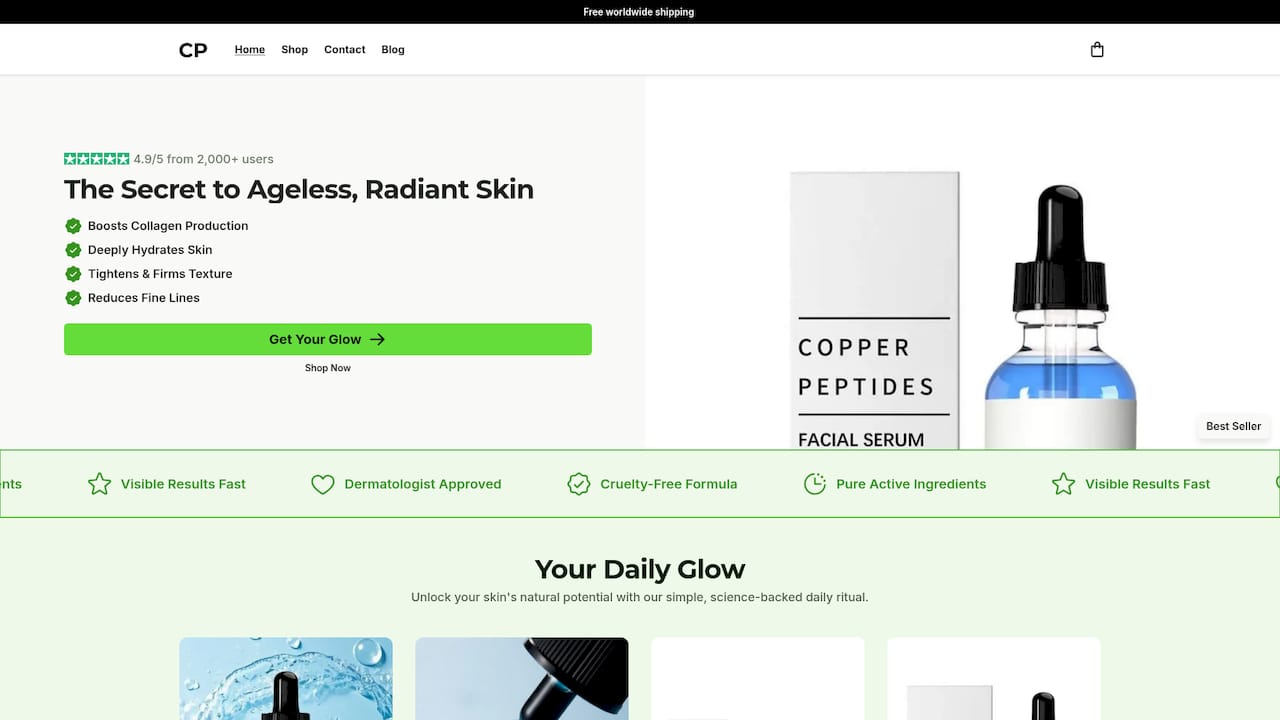
The formula is designed to be suitable for sensitive skin, with users often reporting visible improvement within several weeks. It won’t lift a descended fat pad, and no serum can, but it does the job topicals are actually good at: keeping the skin you have as healthy and resilient as possible while you decide whether energy devices, fillers, or surgery make sense for your level of sagging. The Copper Peptide Anti-Aging Serum is $20, backed by a 30-day money-back guarantee, and available directly from Copperpeptides’ collection page. If you’ve had recent weight loss affecting skin laxity, the brand’s guide on post weight loss skin tightening is worth reading before you start any regimen.
Sources
- Ageing and changes in the skin: pathophysiology and clinical relevance
- Many ways to firm sagging skin — American Academy of Dermatology
- Radiofrequency for facial rejuvenation: systematic review
For readers considering in-office energy-based or surgical evaluation, a qualified provider such as Yoyime Clinic can walk through which combination of treatments fits your specific anatomy.
FAQ
How Can I Tighten Saggy Cheeks?
Mild sagging responds to a consistent topical regimen of sunscreen, retinoids, and peptides over several weeks. Moderate sagging usually needs an energy-based device like microfocused ultrasound or radiofrequency, while advanced descent typically requires a surgical midface lift for lasting correction.
Which Vitamin Deficiency Causes Sagging Skin?
No single vitamin deficiency causes sagging on its own, but chronically low vitamin C impairs collagen synthesis since it’s a required cofactor in the process. Poor overall nutrition, including inadequate protein intake, also limits the raw materials skin needs to maintain collagen and elastin over time.
How Can I Naturally Tighten My Sagging Face Skin?
Daily sunscreen, a retinoid, adequate hydration, and a peptide-based serum are the most evidence-supported non-procedural steps, per American Academy of Dermatology guidance. Copperpeptides’ serum is formulated to support this approach, with visible firmness and texture improvements typically appearing within four to six weeks of consistent use.
What Tightens Face Skin the Most?
Among non-surgical options, microfocused ultrasound shows the strongest evidence, with 92% investigator-reported improvement at 90 days and continued gains through the following year. For advanced sagging, a surgical midface lift produces the most significant and durable tightening of any option covered here.
Does Copperpeptides Serum Replace Professional Cheek Treatments?
No. It’s designed as a topical adjunct that supports collagen production and hydration, not a substitute for energy-based devices, fillers, or surgery when structural descent is present. The Copper Peptide Anti-Aging Serum is priced at $20 with a 30-day money-back guarantee for anyone building it into a broader skincare routine.