

The best over-the-counter approach to firming crepey skin after weight loss is a high-purity GHK-Cu copper peptide serum paired with medical-grade hyaluronic acid, used consistently for at least 8 to 12 weeks.
- Collagen and elastin stimulation: GHK-Cu activates the fibroblasts and enzymes responsible for rebuilding structural skin tissue.
- Hydration and plumping: Hyaluronic acid restores water content in skin left thin and dry after significant fat loss.
- A strong safety track record: Decades of topical use back GHK-Cu as one of the gentler active ingredients available without a prescription.
Combined, the two ingredients outperform either one alone. Lab testing on a 1:9 GHK-Cu to hyaluronic acid ratio produced up to a 25-fold increase in collagen IV in cell models, a formulation detail that matters more than most product labels let on.
Key Takeaways
A high-purity GHK-Cu copper peptide serum combined with medical-grade hyaluronic acid is the most effective over-the-counter option for firming crepey, post-weight-loss skin.
| Point | Details |
|---|---|
| Combination beats single ingredients | GHK-Cu paired with hyaluronic acid at a 1:9 ratio outperforms either ingredient used alone. |
| Apply twice daily | Morning and night application to clean, damp skin produces the most consistent results. |
| Patch test first | Test on the inner forearm for 24 to 48 hours before applying to larger areas. |
| Results take 8 to 12 weeks | Early hydration shows up in 1 to 2 weeks, but firmness gains take two to three months. |
| Copperpeptides matches the criteria | The brand’s Copper Peptide Anti-Aging Serum pairs high-purity GHK-Cu with medical-grade hyaluronic acid and dermatologist endorsement. |
Table of Contents
- How Copper Peptides and Hyaluronic Acid Tighten Post-Weight-Loss Skin
- How to Apply a Copper Peptide Serum for Crepey Skin
- What to Look for When Choosing a Copper Peptide Serum
- Is Copper Peptide Serum Safe for Sensitive Skin?
- How Long Until You See Results From Copper Peptide Serum?
- Try Copper Peptide Anti-Aging Serum From Copperpeptides
- Frequently Asked Questions
- Sources
How Copper Peptides and Hyaluronic Acid Tighten Post-Weight-Loss Skin
GHK-Cu works by waking up fibroblasts, the cells that manufacture collagen and elastin, while hyaluronic acid rehydrates tissue that has been stretched and then left slack. Neither ingredient does the whole job alone. Skin that loses volume quickly, the way it does after major weight loss, tends to lose both structural protein and water content at the same time, so a serum addressing only one half of that equation underperforms.
The mechanism runs deeper than “boosts collagen.” Copper itself is a required cofactor for lysyl oxidase, an enzyme that cross-links collagen and elastin fibers into a stable matrix. Without adequate copper delivery to the dermis, that cross-linking process weakens, which is part of why skin loses bounce with age or after rapid body changes.
- GHK-Cu stimulates collagen and elastin synthesis directly in fibroblasts.
- Copper activates lysyl oxidase, cross-linking new collagen into a durable structure.
- GHK-Cu upregulates glycosaminoglycans, the sugar molecules that help skin retain moisture.
- Hyaluronic acid plumps the epidermis and supports the dermal-epidermal junction where firmness is felt most.
- Combined at the right ratio, the two produce measurable collagen IV gains neither achieves solo.
A 2023 study in the Journal of Cosmetic Dermatology found that a roughly 1:9 ratio of GHK-Cu to low-molecular-weight hyaluronic acid produced the strongest synergy, with ex-vivo skin models showing about a 2-fold increase in collagen IV compared to either ingredient used alone. A separate review of GHK-Cu research spanning cell studies to human trials backs its role in wound healing and tissue remodeling, the same biological pathway skin relies on to regain firmness after stretching.
None of this matters if the formula can’t get the peptide into skin. Hyaluronic acid’s molecular weight, the vehicle carrying it, and how the product is packaged all determine whether lab-level synergy shows up on your arm or thigh. That’s why the buying criteria below deserve real attention, not a glance at the front label.
How to Apply a Copper Peptide Serum for Crepey Skin
Apply a copper peptide and hyaluronic acid serum twice daily, morning and night, directly to clean, slightly damp skin in the areas showing looseness: upper arms, abdomen, inner thighs, and under the chin.
- Cleanse the area with a mild, fragrance-free wash and pat skin until just damp, not fully dry.
- Apply a thin layer of serum to the target zone, pressing rather than rubbing it in.
- Follow with a fragrance-free moisturizer to seal in hydration.
- In the morning, layer sunscreen over everything if the area will see sun exposure.
- Repeat morning and night, and take a photo under the same lighting once a week to track change.
Before committing to daily use, patch test on the inner forearm for 24 to 48 hours. Watch for redness, itching, or stinging that doesn’t fade within an hour of application. If skin looks calm after two days, you’re clear to expand to your full routine.
Pro Tip: Copper peptides and retinoids can deactivate each other when layered together, so use copper peptide serum in the morning and save retinoids for a separate night, or alternate nights entirely. If you’re using copper peptides alongside niacinamide, that pairing is generally safer to layer in the same routine.
A few cautions worth repeating: don’t stack multiple new active ingredients at once when trying a copper peptide serum for the first time, and if irritation persists beyond a few days of consistent use, stop and check with a dermatologist rather than pushing through it.
What to Look for When Choosing a Copper Peptide Serum
Not every “copper peptide” product on the shelf delivers a meaningful dose. Ingredient lists that bury copper tripeptide-1 near the bottom, after a dozen fillers, are a signal the concentration is cosmetic in name only rather than functional.
- Look for copper tripeptide-1 (GHK-Cu) listed near the top third of the ingredient panel.
- Confirm the product pairs it with medical-grade hyaluronic acid, ideally specifying molecular weight.
- Check for stable, opaque or airless packaging, since copper peptides degrade with light and air exposure.
- Favor brands that publish concentration ranges rather than hiding behind vague “proprietary blend” language.
- Prioritize dermatologist endorsement, published study references, and a clear return policy over flashy marketing copy.
Effective topical concentrations in commercial serums typically fall between 0.05% and 2% depending on the product’s intended use, with serums for body application usually sitting toward the middle of that range. If a brand won’t tell you where its formula lands, that’s worth treating as a red flag rather than a minor omission.
Pro Tip: If you’re new to peptide skincare, start with a serum at the lower end of the concentration range and build tolerance over a few weeks. Experienced users with no history of sensitivity can move to a higher-concentration formula sooner. For more on how hyaluronic acid weight affects absorption, this guide to hyaluronic acid pairings breaks down LMW versus HMW options.
Is Copper Peptide Serum Safe for Sensitive Skin?
Copper peptides carry one of the better safety profiles among cosmetic actives, and most people, including those with sensitive skin, tolerate them well when introduced gradually.
Mild, temporary redness or a slight stinging sensation on first use is the most common reaction, and it typically fades within the first week as skin adjusts. Rare but worth watching for: persistent itching, breakouts in the treated area, or a rash that spreads beyond where you applied the product. Stop use immediately if any of those occur and consult a dermatologist before restarting.
- Patch test on the inner forearm for 24 to 48 hours before full application.
- Watch for redness or itching that doesn’t resolve within an hour.
- Discontinue and consult a professional if irritation persists past a few days.
If you’re pregnant or breastfeeding, talk to your doctor before adding any new topical active to your routine, copper peptides included, since dedicated safety data for that population specifically is limited.
How Long Until You See Results From Copper Peptide Serum?
Expect surface-level hydration improvements within 1 to 2 weeks, with measurable firmness and fine-line changes typically appearing between 8 and 12 weeks of consistent, twice-daily use.
- Weeks 1 to 2: Skin feels smoother and more hydrated as hyaluronic acid takes effect.
- Weeks 4 to 6: Early tightening and texture improvements become noticeable in good lighting.
- Weeks 8 to 12: Collagen remodeling produces measurable gains in elasticity and reduced fine lines.
- Months 3 to 6: Cumulative firmness continues to build with sustained use.
A small open trial testing a copper, amino acid, and hyaluronic acid combination found elasticity improved by roughly 23% and skin thickness by about 7% after just four weekly applications, though the study involved only five subjects and shouldn’t be read as a guarantee.
Pro Tip: Photograph the same area weekly under identical lighting and from the same angle. Progress from a topical serum is gradual, not dramatic, and it’s easy to miss week-to-week change without a consistent visual record. Set expectations accordingly: this is a topical strategy for firming skin texture, not a substitute for procedures that remove excess tissue.
A Realistic Take on What Topical Serums Can and Can’t Do
Consistent twice-daily use over a full 12-week cycle is the single biggest factor separating people who see real change from people who give up too early. Copper peptide serum works with your skin’s own repair machinery, and that machinery needs sun protection, adequate protein intake, and steady hydration to do its job well. No serum outruns a habit of skipping sunscreen or crash dieting between weigh-ins.
Author bio placeholder: insert British author credentials and skincare background here.
Try Copper Peptide Anti-Aging Serum From Copperpeptides
If you’ve read this far, you already know what a copper peptide serum needs to actually work: high-purity GHK-Cu near the top of the ingredient list, medical-grade hyaluronic acid at the right molecular weight, and packaging that keeps the formula stable. Copperpeptides built its Copper Peptide Anti-Aging Serum around exactly that specification, rather than cutting corners on concentration to hit a lower price point.
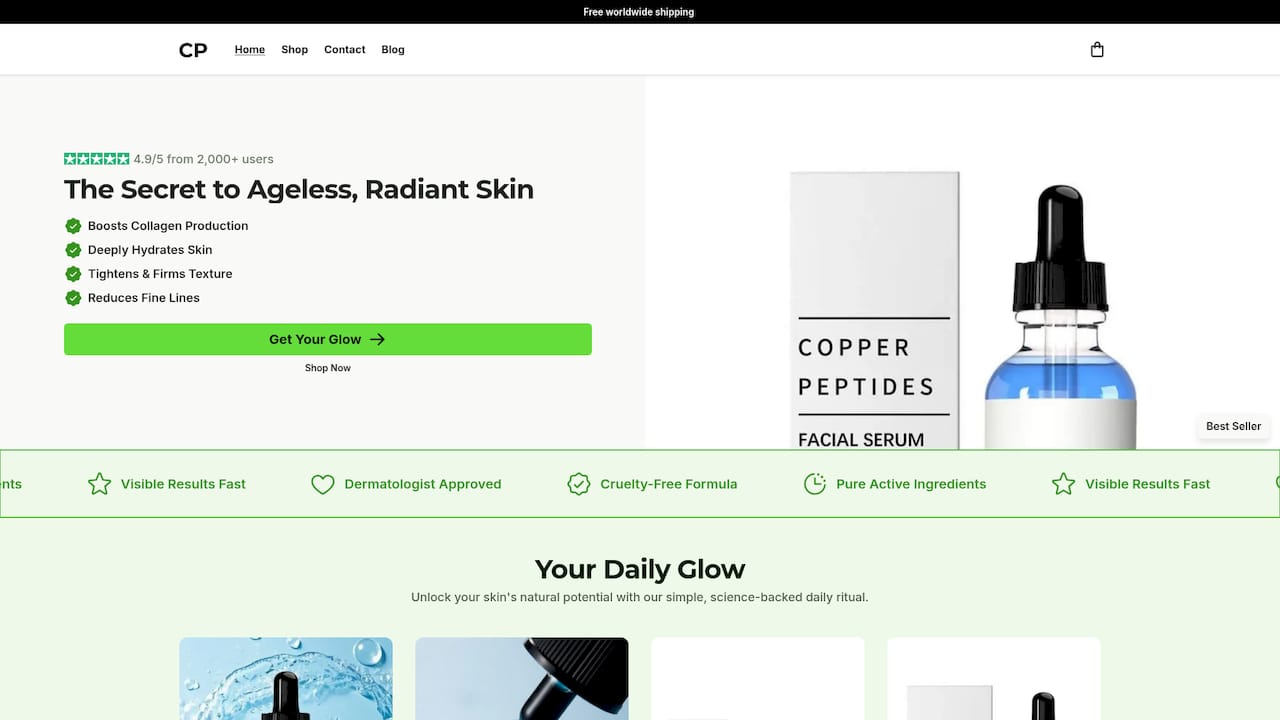
The formula pairs high-purity copper peptides with medical-grade hyaluronic acid in a stable, light-protected bottle, and it’s dermatologist-endorsed for use across skin types, including sensitive skin. Most users notice visible firming within four to six weeks of twice-daily application, and thousands of customers globally have stuck with the routine long enough to see the full 12-week results. Copperpeptides backs every order with a straightforward return policy, so trying it carries little downside if your skin doesn’t respond the way you hoped.
Keep in mind this is a cosmetic serum, not a medical treatment, and individual results vary based on skin condition and consistency of use. If firming your post-weight-loss skin texture is the goal, order the serum today and start your first patch test this week.
Frequently Asked Questions
Can a copper peptide serum tighten loose skin after major weight loss? It can visibly improve skin firmness and texture in areas with mild to moderate looseness by boosting collagen and elastin production, but it won’t remove significant excess skin the way a surgical procedure would.
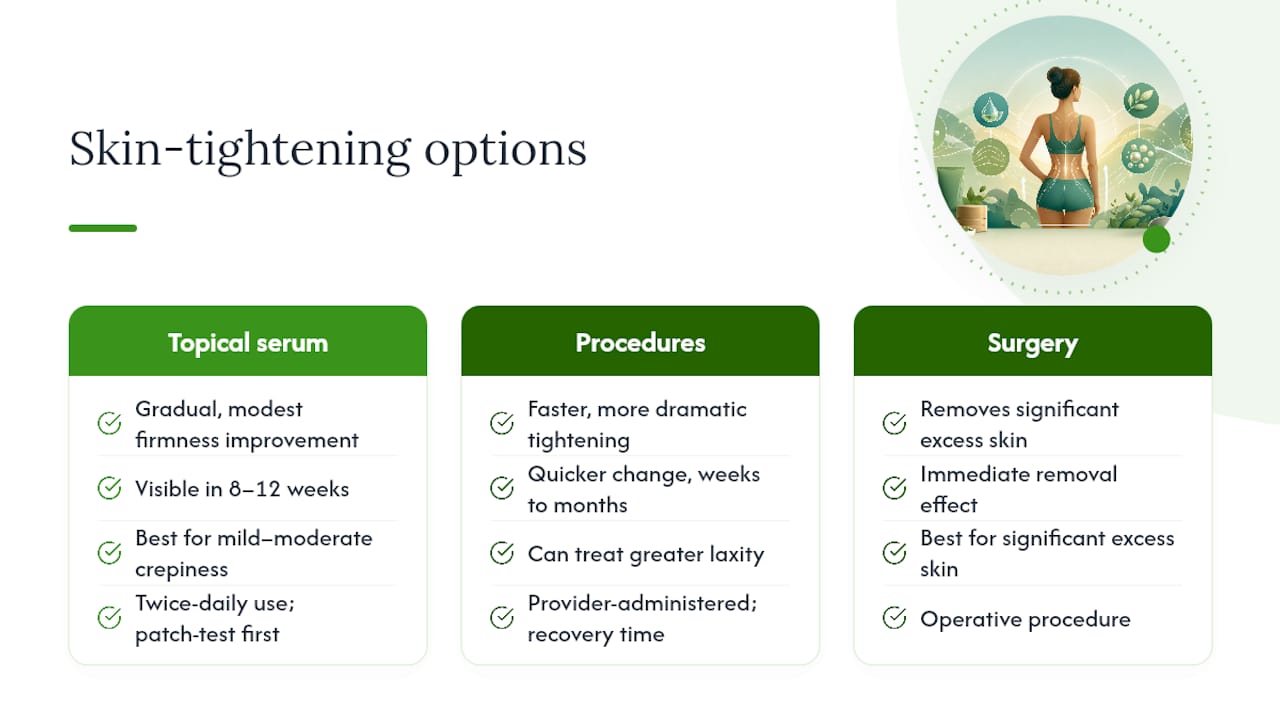
How does post weight loss skin tightening with a topical serum compare to professional treatments like radiofrequency or laser? Topical serums produce gradual, modest improvements over months, while procedural treatments like radiofrequency or laser resurfacing can produce faster, more dramatic tightening, at a much higher cost and with recovery time. A copper peptide and hyaluronic acid serum is best suited to mild to moderate crepiness, not severe skin laxity.
Do I need to use copper peptides and hyaluronic acid as separate products, or is a combined serum better? A single serum formulated with both ingredients at an effective ratio, such as the 1:9 GHK-Cu to hyaluronic acid ratio shown to boost collagen IV, simplifies your routine and ensures the two ingredients work together rather than competing for absorption.
Why isn’t my skin tightening even though I’ve used the serum for a few weeks? Visible firmness typically takes 8 to 12 weeks of consistent, twice-daily use to show up, so a few weeks usually isn’t enough time. Factors like sun exposure, poor hydration, and inconsistent application can also slow visible progress.
Is copper peptide serum safe to use every day? Yes, for most people, twice-daily use is both safe and necessary to see results, provided you’ve patch tested first and aren’t experiencing ongoing irritation.
Sources
- Synergy of GHK‑Cu and hyaluronic acid on collagen IV upregulation (Jiang et al., Journal of Cosmetic Dermatology, 2023)
- Evaluation of an elastin-inducing composition containing amino acids, copper, and hyaluronic acid (MDPI, Elastic Lab® trial)
Recommended
- How to Boost Collagen Production for Younger Skin – Copper Peptides Store
- Best Serums for Crepey Skin: Dermatologist-Backed Picks – Copper Peptides Store
- Best Hydrating Serums for Firming and Anti-Aging Skin – Copper Peptides Store
- Best Hyaluronic Acid Serums for Firming Skin: Copper Peptide Pairings – Copper Peptides Store