

Home care can soften nasolabial folds and slow how fast they deepen, but it cannot erase creases caused by real volume loss under the skin. Start today with daily SPF 30+, a nightly retinoid or peptide serum, and steady hydration. If your midface looks flatter or hollow rather than just lined, that’s a structural change no serum fixes, and it’s worth a consultation. Expect topical results in weeks to months; only fillers correct volume loss immediately.
TL;DR:
- Consistent use of a broad-spectrum SPF 30+ protects against UV damage, which accelerates collagen breakdown and deepens nasolabial folds.
- Topical ingredients like tretinoin, peptides, hyaluronic acid, and vitamin C can improve skin quality, but only fillers can immediately restore lost volume.
- Facial exercises may modestly strengthen cheek muscles and improve circulation, but they do not replace structural support provided by professional treatments.
- Microcurrent devices offer low-risk, gradual skin improvements, while dermarollers pose risks if used improperly and do not replace volume enhancement.
- For significant hollowing or persistent deepest folds, seeking a qualified professional ensures safe, effective filler or structural treatments.
Table of Contents
- How Can You Treat Nasolabial Folds at Home?
- Which Daily Habits Slow Fold Progression?
- Which Topical Ingredients Actually Reduce Nasolabial Lines?
- Do Facial Exercises Really Tighten Nasolabial Folds?
- Do At-Home Devices Like Microcurrent or Dermarollers Help?
- When Should You See a Professional for Nasolabial Folds?
- What Realistic Expectations Should Guide Your Routine?
- How Copperpeptides Fits Your At-Home Routine
- Sources
- FAQ
How Can You Treat Nasolabial Folds at Home?
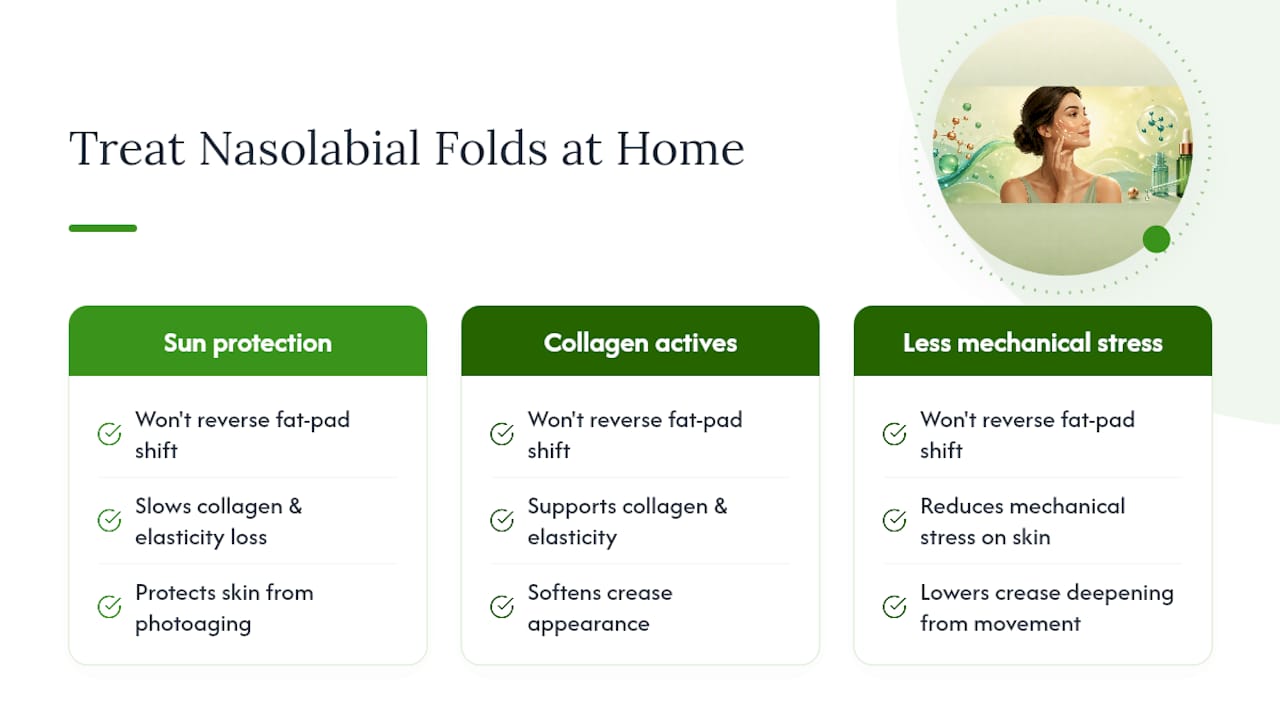
The honest answer: consistency beats intensity. Nasolabial folds form because cheek fat pads thin and shift, skin loses collagen and elasticity, and decades of smiling and talking etch the crease deeper. Cleveland Clinic notes these folds are a normal anatomical feature that gets more visible with age. That’s genetics and gravity at work, not just skincare neglect. Nobody erases that combination with a $20 bottle, no matter what the label promises.
What you can do is slow the slide and improve skin quality around the fold, which makes it look softer even if the underlying structure hasn’t changed. That means daily sun protection, ingredients that support collagen, and habits that reduce unnecessary mechanical stress on the skin. The clinical term for this crease, if you want to sound less like a search query and more like a dermatology patient, is the nasolabial fold or melolabial fold. Some people call them smile lines or laugh lines, same structure, friendlier name.
Which Daily Habits Slow Fold Progression?
Sunscreen is not optional if you’re serious about this. UV exposure drives the majority of visible facial aging, breaking down collagen and thinning skin faster than almost anything else you control. A broad-spectrum SPF 30 or higher, reapplied every two hours outdoors, does more preventive work than most serums on the shelf.
Beyond sun protection, a handful of habits compound over months:
- Moisturize twice daily and layer a hyaluronic acid serum underneath to keep skin plump and reduce the appearance of fine creasing.
- Sleep on your back when possible. Side-sleeping presses your cheek into the pillow for hours nightly, and that repeated compression can deepen creases over years.
- Quit smoking, or don’t start. Smoking restricts blood flow and accelerates collagen breakdown, aging skin faster than sun exposure alone in some studies.
- Eat enough protein and vitamin C. Collagen synthesis needs amino acids and ascorbic acid as a cofactor. Skimping on either shows up in skin quality eventually.
- Stay hydrated, though this affects overall skin plumpness more than it directly changes fold depth.
Track progress with the same lighting, same angle, same time of day, once a week. Skin fluctuates daily with sleep and hydration, so daily comparisons will make you think nothing’s working when it actually is.
Pro Tip: Take your progress photos in natural window light, not overhead bathroom lighting. Overhead light casts shadows into folds and exaggerates them, which will make you doubt a routine that’s actually working.
Which Topical Ingredients Actually Reduce Nasolabial Lines?
Four ingredients have real evidence behind them, and layering them correctly matters as much as picking the right ones.
- Tretinoin or retinol. Prescription tretinoin is the most studied topical for photoaging, and it measurably increases dermal collagen over 6 to 12 months of consistent use. Over-the-counter retinol works through the same pathway but more slowly, since it has to convert to retinoic acid in the skin first. Start two to three nights a week to build tolerance, then increase frequency as your skin adjusts.
- Peptides, including copper peptides. Peptides signal skin to behave as though it’s repairing itself, which supports collagen production over time. Copper peptides specifically pair well with hydrating ingredients because they work on the collagen substrate rather than causing the irritation retinoids sometimes do.
- Hyaluronic acid. HA holds up to 1,000 times its weight in water, plumping skin temporarily and making fine lines less visible within hours. That’s a hydration effect, not a structural one. It’s the difference between filling a wrinkle and inflating the whole area around it, which is why medical-grade HA serums work best paired with a collagen-supporting ingredient rather than alone.
- Vitamin C. Ascorbic acid is a cofactor your body needs to synthesize collagen, and it also provides some antioxidant protection against UV damage when used in the morning under sunscreen.
A workable routine: vitamin C serum and SPF in the morning, retinoid or peptide serum with an HA layer at night. Patch-test any new active on your inner forearm for 48 hours before applying it to your face, especially retinoids.
Pro Tip: Never layer a fresh retinoid application directly under vitamin C the same night. They can destabilize each other. Split them by time of day instead.
Do Facial Exercises Really Tighten Nasolabial Folds?
Facial exercises have a real but modest evidence base. Small studies suggest daily practice can strengthen cheek muscle tone and improve local circulation, which may soften the visual depth of a fold gradually. Nobody should expect filler-level change from repetitions alone.
Common exercises worth trying:
- Cheek lifts: smile without showing teeth, hold for 5 to 10 seconds, repeat 10 to 15 times.
- Mouth-corner pulls: pull corners of your mouth outward against resistance from your fingers, hold, release.
- Internal cheek resistance: puff air into one cheek, then the other, 10 reps each side, to engage the buccinator muscle.
Do these daily for at least 8 to 12 weeks before judging results. That’s a real time commitment, and most people quit before the window where change would show.
Massage and gua sha can improve circulation and help product absorption, but skip them over active acne, open wounds, or recent procedures. Use light pressure. This is skin manipulation, not deep tissue work, and pressing hard doesn’t speed anything up.
Do At-Home Devices Like Microcurrent or Dermarollers Help?
Microcurrent and EMS devices work differently even though they get lumped together. Microcurrent uses very low current to stimulate cellular activity without triggering visible muscle contraction. EMS uses higher current to actually contract the muscle, closer to a workout for your face. A small trials found measurable zygomaticus muscle thickness changes after weeks of EMS use (https://pureliftlab.com/blogs/skincare/how-to-reduce-nasolabial-folds-at-home), which is a real but narrow finding from one small study, not proof any device rebuilds lost cheek volume.
Dermarolling carries real risk if you get it wrong. Improper needle depth and poor sterilization increase infection and scarring risk meaningfully, and at-home rollers rarely match the controlled depth of professional microneedling.
- Microcurrent: low risk, modest evidence, best as a complement to topicals.
- EMS: some muscle-level evidence, but not a volume fix.
- Dermarollers: sterilize before every use, stay at 0.25mm or shallower, and stop if you see redness lasting more than a day.
No device on the market replaces lost midface fat. Treat them as an addition to your topical routine, never a substitute for it.
When Should You See a Professional for Nasolabial Folds?
Ask yourself one question: is this a texture problem or a volume problem? Fine surface lines that soften when you apply moisturizer are texture. A visible hollow or shadow beneath the fold, one that doesn’t budge no matter how hydrated your skin is, usually means midface volume loss, and that’s structural.
A randomized trial comparing hyaluronic acid and collagen fillers found both produce similar improvement early on, but HA held its results better at six months, while collagen gave a stronger immediate effect. Biostimulators like poly-L-lactic acid work differently again, building collagen gradually over months rather than filling space instantly.
Before booking with any injector:
- Ask about their training credentials and how many nasolabial fold treatments they perform monthly.
- Confirm they stock hyaluronidase on-site, the reversal agent for HA filler complications.
- Ask whether they plan to treat the fold directly or address midface volume loss as the root cause.
Walk away from anyone promising to “erase” the fold completely, anyone without a stated emergency protocol, or pricing dramatically below the local average. All three are red flags.
What Realistic Expectations Should Guide Your Routine?
The skincare industry oversells what a bottle can do, and nasolabial folds are ground zero for that overselling. The honest position is that you’re managing a structural, genetic, and cumulative process, not curing it. Support collagen, protect from UV, hydrate consistently, and give it months rather than days.
Copperpeptides builds its serum around that same principle: copper peptides for collagen support, paired with medical-grade hyaluronic acid for hydration, because that combination addresses skin quality without pretending to replace lost facial volume. Anyone claiming a topical alone reverses genuine volume loss is selling a fantasy. Anyone dismissing topicals entirely because they can’t perform surgery is missing the part that actually is within your control: the skin quality surrounding the fold, which responds well to consistent, evidence-backed care.
— British
How Copperpeptides Fits Your At-Home Routine
If you’ve read this far, you know the ingredients that matter: copper peptides for collagen support, medical-grade hyaluronic acid for hydration, and consistency over months. That’s exactly what Copperpeptides built its serum around, one high-purity formulation instead of a shelf of half-measures.
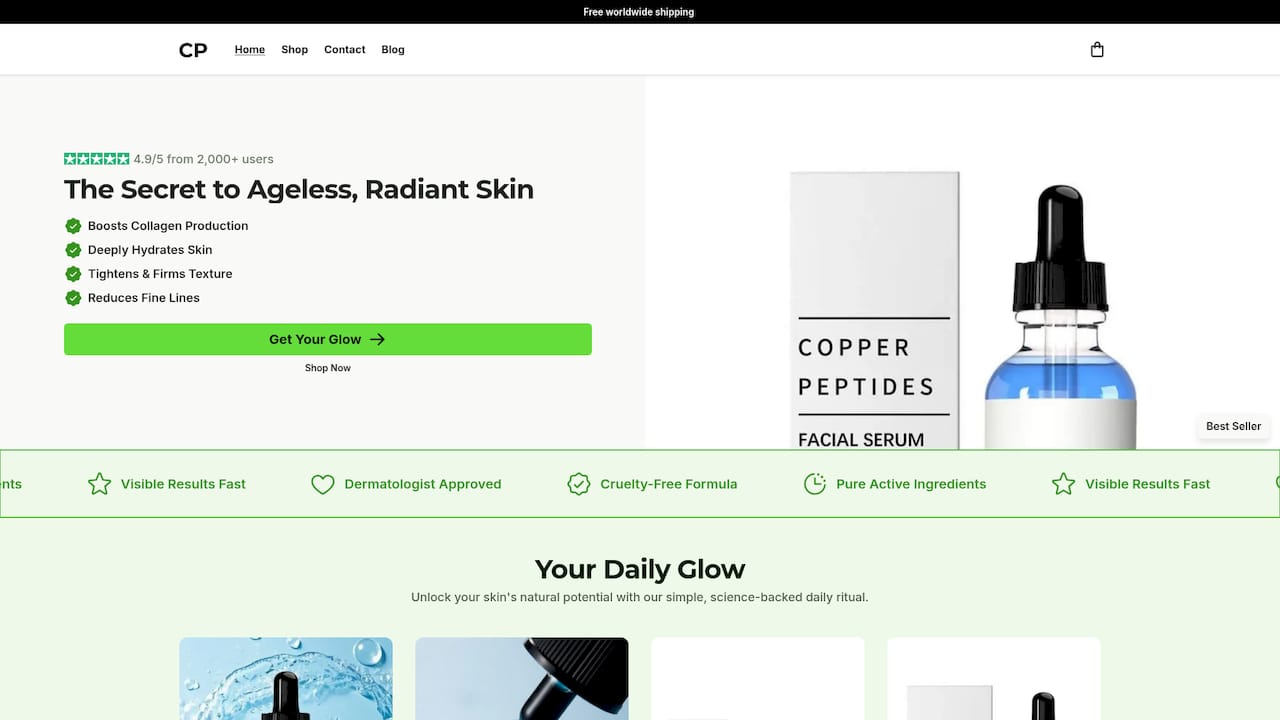
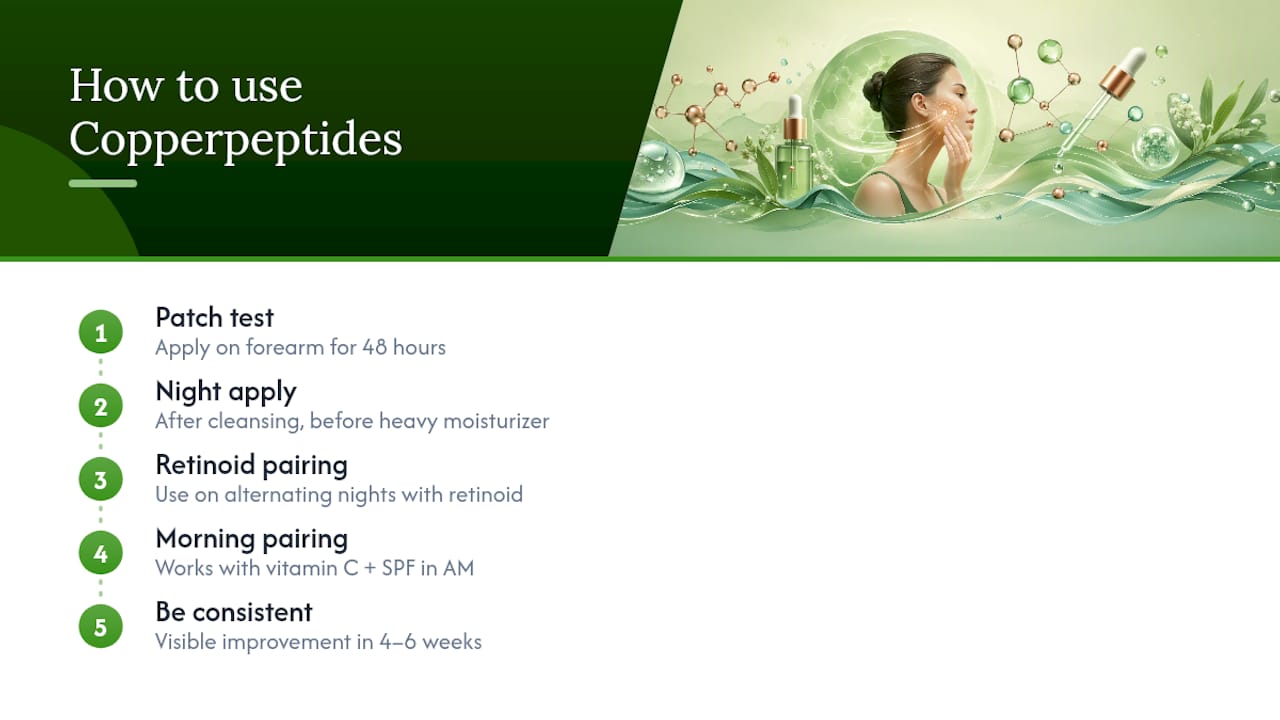
Slot it into your nightly routine after cleansing, before your heavier moisturizer, and patch-test on your forearm for 48 hours first if you’re new to actives. Use it consistently, and visible improvements in texture and firmness typically show up within four to six weeks, according to the brand, with dermatologists endorsing its gentle profile for sensitive skin types. It pairs well with a retinoid at night on alternating evenings, or with your morning vitamin C and SPF routine without conflict.
The Copper Peptide Anti-Aging Serum is available as a one-time purchase, with pricing and purchase details available on the brand’s website. If you’re ready to stop guessing at ingredient labels and start with a formula built specifically for collagen support, check out the full collection and see if it fits your routine.
This article is general information, not a substitute for advice from a qualified doctor. Consult a qualified healthcare professional about your own circumstances before acting on anything here.
Sources
- Nasolabial Folds (Smile Lines) — Cleveland Clinic
- How to reduce nasolabial folds — Healthline
- What are nasolabial folds and can exercise help? — Medical News Today
- A Prospective Study Comparing the Efficacy of Hyaluronic Acid and Collagen in the Treatment of Nasolabial Folds — PMC
FAQ
Can You Fix Nasolabial Folds Naturally?
You can soften their appearance and slow progression with SPF, retinoids or peptides, hydration, and facial exercises, but natural methods can’t reverse genuine midface volume loss the way fillers do.
How Do Koreans Get Rid of Nasolabial Folds?
Popular Korean skincare routines emphasize layered hydration, consistent SPF, and gentle massage techniques like gua sha to support circulation, alongside professional treatments for deeper structural changes when needed.
What Is the Root Cause of Nasolabial Folds?
They form from a combination of cheek fat pad thinning, natural collagen and elastin loss with age, repeated facial expression, sun damage, and genetics.
What Tightens Nasolabial Folds?
Topical retinoids and peptides support collagen production over months, hyaluronic acid plumps skin temporarily, and professional options like HA or collagen fillers address volume loss directly when home care isn’t enough.