

Yes, you can absolutely use hyaluronic acid with peptides, and the combination is one of the more sensible pairings in skincare science. Hyaluronic acid (HA) pulls moisture into the skin’s surface layers, while peptides work deeper as signaling molecules that prompt fibroblasts to produce collagen and support the extracellular matrix. They target different layers and different problems, which is exactly why they work well together. For a U.S.-available option that combines both, the Copper Peptide Anti-Aging Serum from Copperpeptides pairs high-purity copper peptides with medical-grade HA in a single dermatologist-endorsed formula.
Key Takeaways
Hyaluronic acid and peptides are complementary, not redundant: HA delivers immediate surface hydration while peptides work over weeks to support collagen and skin structure.
| Point | Details |
|---|---|
| HA and peptides are compatible | Apply peptides first to clean, damp skin, then layer HA on top to lock in moisture. |
| Realistic timeline is 8–12 weeks | A clinical trial reported notable texture improvement at 8 weeks and further improvement at 12 weeks with twice-daily use. |
| Formulation quality determines results | Look for multi-weight HA, named palmitoylated peptides, airless packaging, and fragrance-free formulas. |
| Most skin types benefit | Dry, mature, and sensitive skin see the strongest gains; patch-test first and consult a dermatologist for active conditions. |
| Copperpeptides recommendation | The Copper Peptide Anti-Aging Serum combines medical-grade HA with high-purity GHK-Cu copper peptides in a dermatologist-endorsed, all-skin-type formula. |
Table of Contents
- How hyaluronic acid and peptides work together
- What benefits to expect and when
- How to apply peptides and hyaluronic acid in your routine
- What not to mix with hyaluronic acid or peptides
- What to look for in a hyaluronic acid and peptide serum
- What the clinical evidence actually shows
- Is a combined HA and peptide serum right for you?
- Recommended concentration ranges for HA and peptides
- The best combined HA and peptide serums in the U.S. market
- Copperpeptides Copper Peptide Anti-Aging Serum
- The case for patience in a category that oversells speed
- Sources
How hyaluronic acid and peptides work together
Hyaluronic acid is a humectant, meaning it attracts and holds water molecules. A single gram of HA can bind up to 1,000 times its weight in water, which explains the immediate plumping effect you feel within hours of applying a good hyaluronic acid serum. Its primary job is surface hydration, and it does that job fast.
Peptides are short chains of amino acids that act as messengers. Applied topically, they signal skin cells to behave more like younger skin: producing more collagen, strengthening the dermal matrix, and in some formulations, mildly inhibiting muscle contractions that deepen expression lines. The evidence for topical peptides is smaller and more variable than for HA, but the mechanistic rationale is sound, and formulation strategies like palmitoylation and encapsulation have meaningfully improved real-world delivery.
Where each ingredient acts in the skin
- Surface (stratum corneum): High-molecular-weight HA forms a film here, reducing transepidermal water loss and smoothing texture almost immediately.
- Epidermis: Low-molecular-weight HA penetrates further, reaching the upper epidermis for deeper hydration. Research confirms that smaller HA fragments produce modest deeper hydration effects compared to the surface film created by high-MW HA.
- Dermal-epidermal junction and dermis: Signal peptides, carrier peptides, and palmitoylated peptides target fibroblasts here, influencing collagen synthesis and ECM behavior. Delivery technologies like liposomes and lipophilic conjugation are what make this possible for larger molecules.
The practical upshot: HA gives you visible results today; peptides build structural improvements over weeks. Using both in the same routine addresses both timescales.
Penetration and evidence comparison
| Ingredient type | Skin depth reached | Speed of visible effect | Evidence strength |
|---|---|---|---|
| High-MW HA | Surface/stratum corneum | Hours | Strong (humectant mechanism well-established) |
| Low-MW HA | Upper epidermis | Hours to days | Moderate (limited in vivo data) |
| Signal/carrier peptides | Dermis (with delivery tech) | Weeks | Modest (small RCTs, variable) |
What benefits to expect and when
The honest timeline splits into three phases, and knowing them prevents the frustration of abandoning a regimen too early.
Within 24–48 hours: HA delivers immediate surface plumping. Fine lines look softer because the skin is better hydrated, not because collagen has changed. This is cosmetic improvement, not structural, and it reverses if you stop using the product.
Weeks 2–8: With consistent twice-daily use, peptides begin influencing collagen signaling. Skin texture tends to feel smoother, and some users notice improved firmness. The changes are subtle at this stage.
Weeks 8–12 and beyond: This is where clinical data becomes relevant. A 12-week clinical study of twice-daily HA serum followed by a peptide-rich cream in subjects with photodamaged skin reported investigator-assessed tactile neck texture improvements of 48% at 8 weeks and 68% at 12 weeks. Tone and fine lines also improved. The study was small, so those percentages should be read as directional rather than definitive, but the trajectory is consistent with what the mechanism predicts.
Study signal: The 12-week PMC trial found a substantial investigator-assessed improvement in tactile neck texture, with high tolerability across all participants. Small sample size, but the direction of effect aligns with the known biology.
One caveat worth stating plainly: many topical-peptide trials are small and industry-funded, and large head-to-head comparisons against prescription retinoids simply do not exist yet. Peptides are not a retinoid replacement. They are a gentler, well-tolerated option with a plausible mechanism and a growing body of supporting evidence.
Formulation quality and consistent use matter more than the ingredient list alone. A poorly preserved peptide serum in a jar with daily light and air exposure will not perform the way the clinical data suggests.
How to apply peptides and hyaluronic acid in your routine
Apply thinner, more active serums first and seal with thicker products last. That single rule covers most layering questions. Practical layering guides consistently recommend peptides before HA, and the reasoning is straightforward: peptides need access to clean skin to signal effectively, and HA applied on top locks in moisture without blocking that earlier interaction.
AM routine
- Cleanse with a gentle, pH-balanced cleanser.
- Pat skin to damp (not dripping wet).
- Apply peptide serum to damp skin. Use 2–3 drops and press gently rather than rubbing.
- Wait approximately 60 seconds.
- Apply HA serum while skin is still slightly damp. This is important: HA needs ambient or skin moisture to draw from.
- Follow with a moisturizer to seal everything in.
- Finish with SPF 30 or higher. Peptides do not increase photosensitivity, but unprotected UV exposure undoes collagen support faster than any serum can rebuild it.
PM routine
- Double-cleanse if you wore sunscreen or makeup.
- Apply peptide serum to clean, damp skin.
- Wait ~60 seconds, then apply HA serum.
- Follow with a richer moisturizer or face oil as an occlusive, especially in dry climates.
Patch-test guidance: Apply a small amount of the peptide serum to the inner forearm for 24–48 hours before full-face use. Start every other day for the first week if your skin is sensitive. Most people tolerate peptides well, but some formulations contain additional actives that can cause mild irritation.
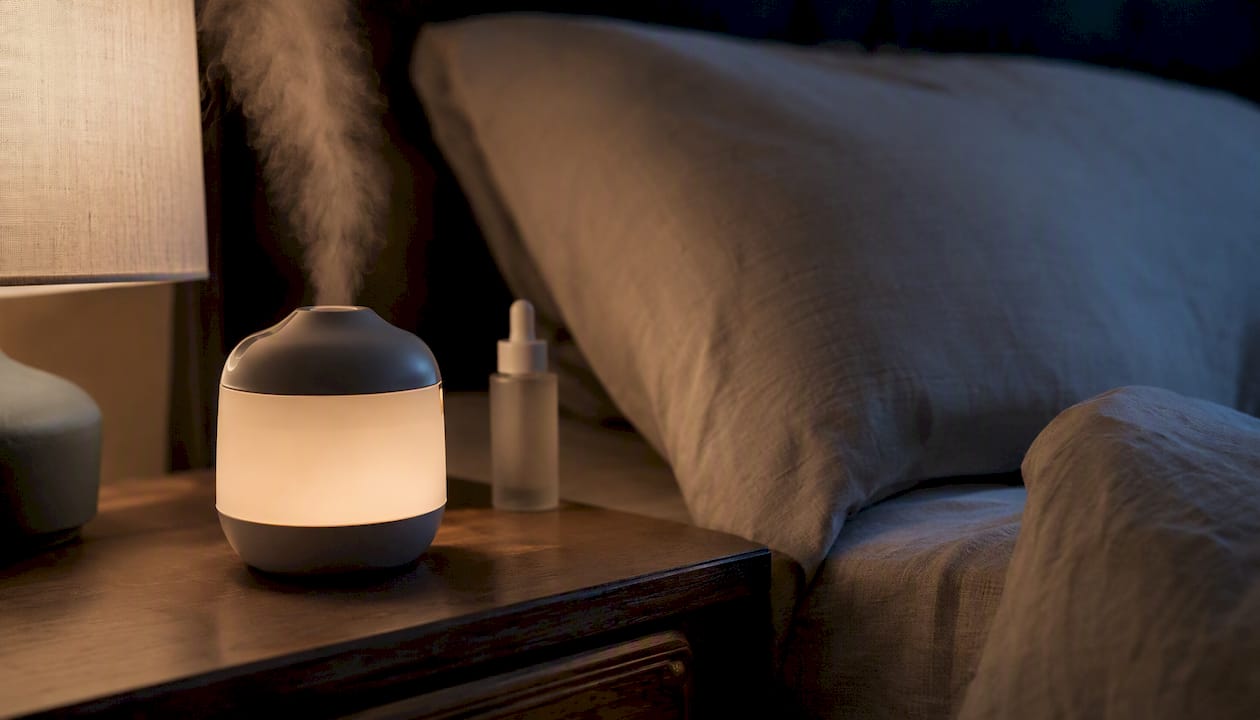
Pro Tip: In low-humidity environments, HA can pull moisture from the deeper dermis upward if there is not enough ambient moisture available. Always apply HA over slightly damp skin and follow immediately with a moisturizer or occlusive to prevent this. In very dry climates, a humidifier in your bedroom adds a meaningful assist.
Combining with other actives: Peptides and HA are compatible with niacinamide, antioxidants, and most gentle actives. For guidance on pairing copper peptides specifically with niacinamide, see this detailed compatibility guide. With retinoids and strong AHAs, separate usage by time of day: retinoids at night, peptides in the morning, or alternate nights. High-strength vitamin C (L-ascorbic acid at low pH) can destabilize some peptides, so apply vitamin C in the morning and peptides in the evening if you use both.
What not to mix with hyaluronic acid or peptides
HA and peptides are broadly safe together, and neither ingredient is particularly reactive. The cautions worth knowing are specific and practical.
- Strong AHAs/BHAs at high concentrations: Glycolic acid above 10% or salicylic acid above 2% can temporarily disrupt the skin barrier. Applying peptides immediately after a strong acid exfoliant on compromised skin increases the chance of irritation. Use exfoliants on separate nights, or wait until skin has fully recovered before applying peptides.
- High-strength L-ascorbic acid vitamin C: Formulated at pH 2.5–3.5, this can degrade certain peptides on contact. Use them at different times of day rather than layering them directly.
- Retinoids: Not a contraindication, but retinoids cause cell turnover that can temporarily sensitize skin. Applying peptides in the morning and retinoids at night is the standard approach and avoids any interaction concern.
- Myth: HA cancels out peptides. It does not. HA is a humectant with no known chemical interaction with peptide signaling molecules. The concern likely comes from the idea that a thick HA layer could slow peptide absorption, which is why applying peptides first matters, not because HA deactivates them.
- Myth: More peptides at once means faster results. Stacking five peptide products in one routine does not accelerate collagen synthesis. The signaling pathway has a ceiling, and overloading the skin with actives increases irritation risk without proportional benefit.
Safety note: If you experience persistent redness, stinging, or breakouts after introducing a new peptide or HA product, stop use and consult a dermatologist before restarting. Allergic contact dermatitis to peptide formulations is uncommon but documented.
What to look for in a hyaluronic acid and peptide serum
The ingredient list tells most of the story, but packaging and formulation context matter just as much.
Ingredient checklist:
- Multi-weight HA: Look for both sodium hyaluronate (high-MW) and hydrolyzed hyaluronic acid or sodium hyaluronate crosspolymer (lower-MW). Multi-weight formulas address both surface and deeper hydration.
- Named peptide classes: Signal peptides (palmitoyl tripeptide-1, palmitoyl tetrapeptide-7), carrier peptides (copper peptides/GHK-Cu), and neurotransmitter-inhibiting peptides (acetyl hexapeptide-3) each have different targets. A formula with at least one named, well-studied peptide is more credible than one listing “peptide complex” with no specifics.
- Delivery technology: Palmitoylation (the “palmitoyl” prefix on peptide names) increases lipid solubility and stratum corneum partitioning. Liposomal encapsulation serves the same purpose for water-soluble peptides. Formulation research supports these strategies for improving functional outcomes.
- pH stability: Peptides are generally stable at pH 4–7. A formula that also contains high-strength vitamin C or very low-pH acids in the same bottle is a formulation red flag.
Packaging flags:
- Airless pump or opaque, sealed bottle: peptides and HA both degrade with repeated air and light exposure. Jars are a poor choice for either ingredient.
- Fragrance-free: especially relevant for sensitive skin, since fragrance is one of the most common contact allergens in skincare.
- Preservative system listed: a well-preserved formula protects both the actives and your skin.
Price and formulation reality: Quality combined HA and peptide serums in the U.S. market typically run $30–$90 for a 1 oz bottle. Below $20, multi-weight HA and named palmitoylated peptides are rarely present in meaningful concentrations. Above $90, you are often paying for brand positioning rather than formulation superiority. The $40–$70 range covers most well-formulated options with clinical testing and appropriate packaging.
What the clinical evidence actually shows
The strongest direct evidence for a combined HA and peptide regimen comes from a 12-week PMC-published clinical trial in subjects with photodamaged skin. Participants applied an HA-based serum twice daily followed by a peptide-rich cream. Investigator assessments at 8 and 12 weeks showed measurable improvements in skin texture, tone, and lines/wrinkles, with the 68% tactile texture improvement at 12 weeks being the headline finding. Tolerability was high across the group.
Beyond that specific trial, the evidence base for each ingredient separately is well-established for HA and growing for peptides. A review of topical peptide evidence notes that most trials are small (roughly 20–60 participants) and frequently industry-funded, which limits how confidently you can generalize the results. Topical peptides show a mechanistically plausible effect on collagen support in small RCTs and in vitro work, but the evidence quality is more variable than for prescription retinoids or topical HA.
| Study / source | Participants | Regimen | Key outcome |
|---|---|---|---|
| PMC clinical trial (2023) | Small photodamaged cohort | HA serum + peptide cream, twice daily, 12 weeks | 48% texture improvement at 8 weeks; 68% at 12 weeks |
| Peptide evidence review | Meta-analysis of small RCTs | Various topical peptide formulas | Modest collagen-support signal; variable across studies |
| HA molecular weight study | Ex vivo / limited in vivo | Low-MW vs high-MW HA | Low-MW penetrates deeper; high-MW surface film |
Limitations worth stating: No large, independent, head-to-head trial has compared a combined HA and peptide serum against prescription tretinoin for anti-aging outcomes. The existing data supports using these ingredients as a well-tolerated, over-the-counter option with real but modest structural benefits, not as a clinical-grade alternative to prescription care.
Is a combined HA and peptide serum right for you?
Most skin types benefit from this combination, with very few exceptions.
Dry skin: Strong fit. HA addresses the immediate moisture deficit while peptides support the barrier and collagen over time. Pair with a richer moisturizer to seal.
Oily/acne-prone skin: Generally well-tolerated. Choose a lightweight, non-comedogenic formula. Peptides do not trigger breakouts, and HA is oil-free. Avoid formulas with heavy occlusives in the serum itself.
Combination skin: Apply to the full face; the formula will not over-hydrate oily zones because HA is water-based, not oil-based.
Sensitive skin: Peptides are among the gentler actives available. Choose fragrance-free, preservative-appropriate formulas and patch-test first. For targeted guidance on mature or crepey skin, this resource on serums for crepey skin covers dermatologist-backed options.
Mature/photoaged skin: The highest-benefit group. Collagen loss accelerates after age 30, and the combination of immediate hydration and collagen-signaling support addresses the two most visible signs of photoaging simultaneously.
When to see a dermatologist:
- Persistent redness, stinging, or contact dermatitis after introducing a new serum
- Active severe acne or a compromised skin barrier (use prescription care first)
- You are already on a prescription retinoid or topical steroid regimen and want to add peptides (confirm compatibility with your prescriber)
- Concerns about a specific skin condition that over-the-counter products are unlikely to resolve
Recommended concentration ranges for HA and peptides
Exact proprietary concentrations are rarely disclosed on labels, but the field has developed practical benchmarks based on published formulation research and clinical use.
Hyaluronic acid: Effective topical HA serums typically use sodium hyaluronate at concentrations between 0.1% and 2%. Below 0.1%, the humectant effect is minimal. Above 2%, the formula becomes tacky without proportional benefit. Multi-weight formulas often combine high-MW HA at 1–2% with low-MW hydrolyzed HA at 0.1–0.5%, targeting both surface and deeper hydration simultaneously.
Peptides: Palmitoylated signal peptides like palmitoyl tripeptide-1 are typically effective in the 0.001%–0.01% range by weight, because they act at the signaling level rather than as structural ingredients. Copper peptides (GHK-Cu) are commonly used at 0.1%–1%. Higher concentrations do not necessarily produce proportionally better results and can increase the risk of formulation instability or skin sensitivity.
The practical read: A label listing a named palmitoylated peptide or copper peptide in the first half of the ingredient list, alongside multi-weight HA, is a reasonable signal of an effective concentration. Peptides listed near the very end of a long ingredient list (after preservatives) are likely present at sub-functional levels. For a deeper breakdown of peptide classes and their specific targets, this guide to types of peptides for skin health covers the science clearly.
The best combined HA and peptide serums in the U.S. market
The U.S. market for combined HA and peptide serums has grown considerably, and the quality range is wide. Here is an honest look at what the category offers.
What the best options share: Multi-weight HA (not just sodium hyaluronate alone), at least one named and well-studied peptide class, airless or opaque packaging, and clinical testing or dermatologist involvement in formulation. Consumer press like Cosmopolitan’s peptide serum roundup reflects the market’s direction: shoppers want firming and plumping without injectables, and the best serums deliver a credible version of that.
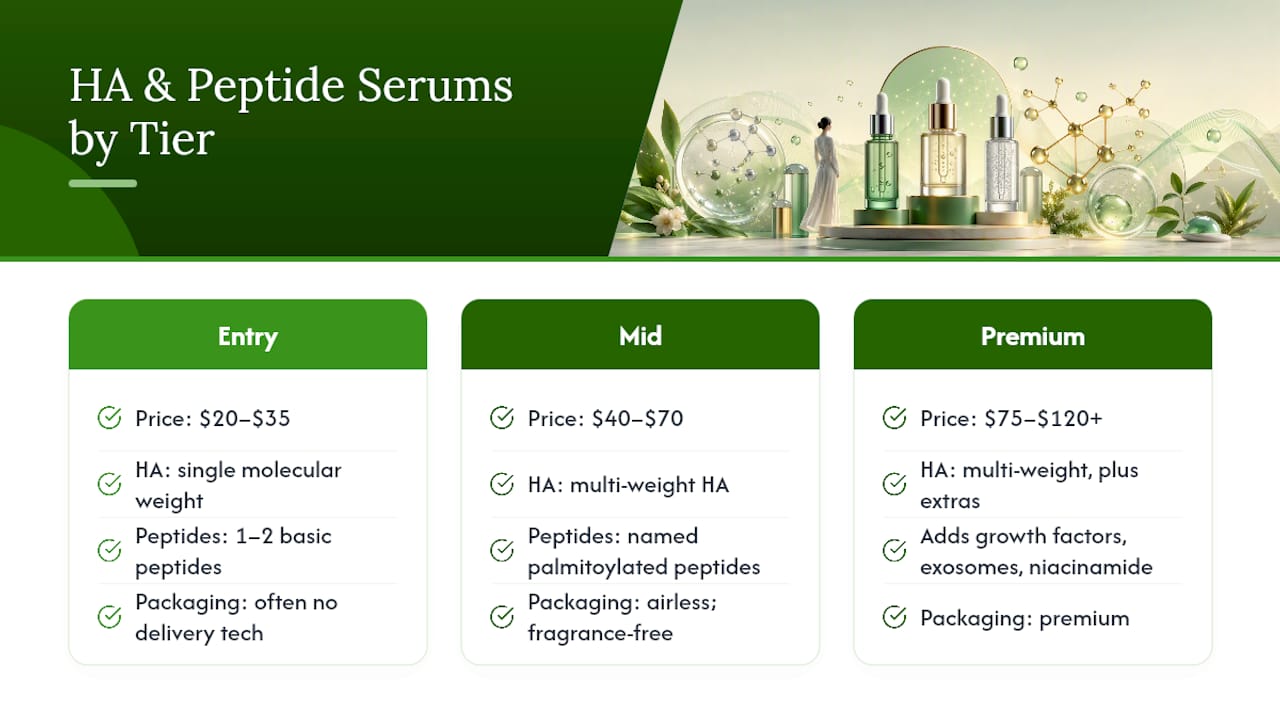
Entry-level options ($20–$35): These typically use a single molecular weight of HA and one or two peptides, often without delivery technology. They provide surface hydration reliably but are less likely to produce the deeper structural improvements seen in clinical trials. Good for first-time users testing tolerance.
Mid-range options ($40–$70): This is where formulation quality tends to jump. Multi-weight HA, named palmitoylated peptides, airless packaging, and fragrance-free formulas are common at this price point. Most of the clinical evidence in the literature maps to this tier. The Copper Peptide Anti-Aging Serum from Copperpeptides sits here, combining medical-grade HA with high-purity GHK-Cu copper peptides in a formula designed for all skin types including sensitive.
Premium options ($75–$120+): Often include additional actives (growth factors, exosomes, niacinamide) alongside HA and peptides. The added complexity can be beneficial or unnecessary depending on your skin’s needs. Packaging is typically excellent. The formulation advantage over a well-made mid-range serum is real but incremental.
Pros and cons of combined vs. separate products:
Buying a combined HA and peptide serum simplifies your routine and reduces the risk of layering errors. The tradeoff is less flexibility to adjust concentrations independently. Separate products let you dial in each ingredient but require more knowledge to layer correctly. For most people, a well-formulated combined serum is the more practical choice.
Copperpeptides Copper Peptide Anti-Aging Serum
If you have read this far, you understand what separates a well-formulated HA and peptide serum from a mediocre one. The Copper Peptide Anti-Aging Serum from Copperpeptides checks the boxes that matter: medical-grade hyaluronic acid for immediate, lasting hydration; high-purity GHK-Cu copper peptides for collagen support and firming; and a formula tested across all skin types, including sensitive.
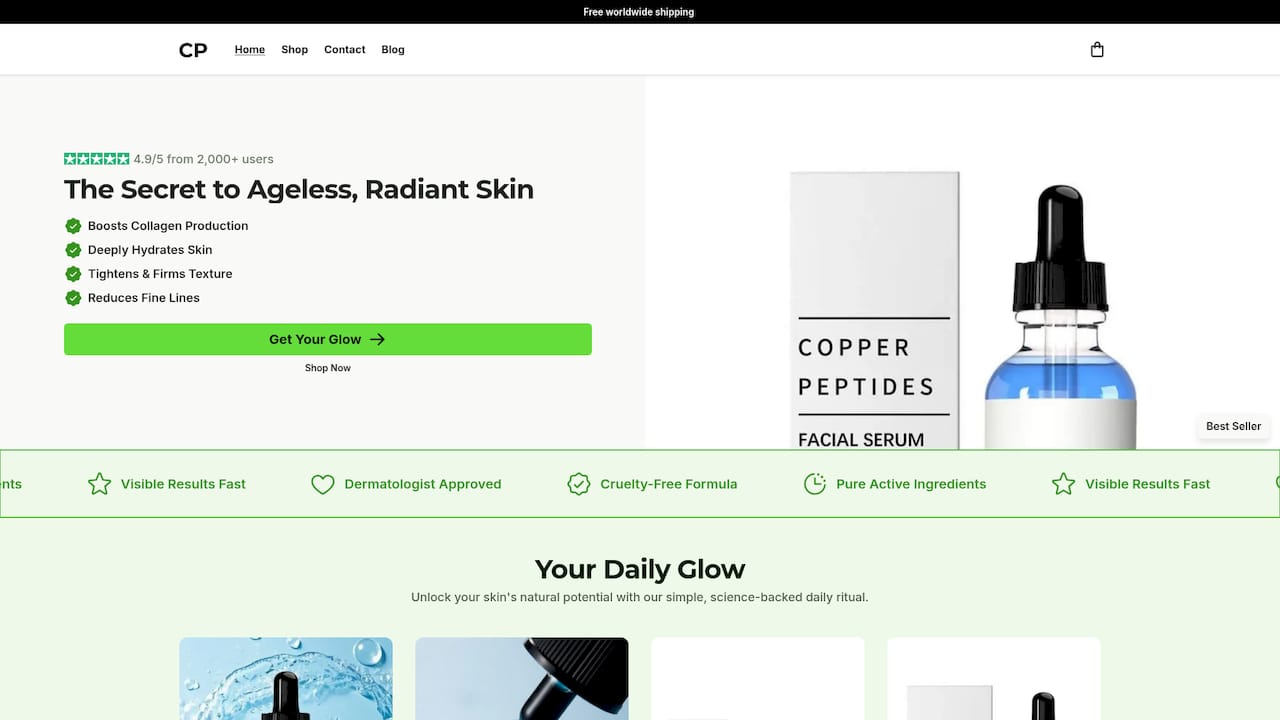
Dermatologists have endorsed the formula for its tolerability, and the brand backs it with a return policy that reflects genuine confidence in the product. Thousands of customers have used it consistently and reported visible improvements in firmness, texture, and radiance. The serum fits directly into the AM and PM routines described in this guide: apply it to clean, damp skin as your peptide step, wait 60 seconds, then follow with your HA moisturizer or a standalone HA serum if you prefer layering. Most users see meaningful results within 4–6 weeks, with continued improvement through 12 weeks of consistent use.
For a broader look at how copper peptides support collagen and skin density, the science-backed copper peptide benefits guide on the Copperpeptides site covers the mechanism in detail. Ready to start? Visit the product page to order directly.
The case for patience in a category that oversells speed
The skincare industry has a speed problem. Every serum promises visible results in days, which sets up a cycle of disappointment and product-hopping that benefits brands more than skin. The clinical evidence for HA and peptide combinations tells a different story: the most meaningful structural improvements in the PMC trial appeared at 12 weeks, not 12 days. The 8-week mark showed real progress, but the 12-week mark showed substantially more.
What this means practically is that the reader who commits to a single well-formulated serum for three months, applies it consistently twice a day, and does not abandon it at week three because the results feel subtle is the one who gets the outcome the clinical data describes. Patience is not a passive virtue here. It is the actual mechanism.
The other thing worth saying: HA and peptides are not a replacement for sunscreen, sleep, or hydration. They are a meaningful addition to a baseline that already includes those things. A peptide serum applied over sun-damaged, dehydrated skin will underperform relative to the same serum used by someone who has addressed the fundamentals. The science is real. The results are real. But they compound with good habits, not instead of them.
Sources
- Efficacy and tolerability of a hyaluronic acid‐based serum and a peptide‐rich cream for the face and neck in subjects with photodamaged skin - PMC
- Peptide vs Hyaluronic Acid: Which Actually Works Better? | FormBlends
- Can I Use Peptides and Hyaluronic Acid Together? | ChokChok
- Pubmed
- Pubmed
- Doi
- The 13 Best Peptide Serums for Firm, Glowy, “Botox-Free …
Recommended
- Best Hyaluronic Acid Serums for Firming Skin: Copper Peptide Pairings – Copper Peptides Store
- Best Hydrating Serums for Firming and Anti-Aging Skin – Copper Peptides Store
- Dermatologist Approved Skincare: Best Copper Peptide Serum – Copper Peptides Store
- How to Boost Collagen Production for Younger Skin – Copper Peptides Store