

A dermatologist-endorsed copper peptide serum built on GHK-Cu and medical-grade hyaluronic acid is one of the more reasonable anti-aging options for sensitive skin, provided you introduce it slowly. Most people notice hydration and softer texture within a couple of weeks, while firmness and fine-line changes build gradually over one to three months. Patch testing first is not optional if your skin reacts easily.
TL;DR:
- Copper peptide serums are generally suitable for early signs of aging, such as fine lines and thinning skin, especially if skin is sensitive or compromised.
- Starting slowly with patch tests and gradually increasing frequency is crucial to avoid irritation or reactions, particularly for reactive or inflamed skin.
- Visible hydration improvements occur within one to two weeks, while firming and wrinkle reduction typically emerge between weeks 3 and 12.
- Combining copper peptides with strong acids, retinoids, or vitamin C should be done with spacing to prevent destabilizing the active ingredients.
- Look for serums that specify GHK-Cu, use medical-grade hyaluronic acid, and have dermatologist-tested, transparent formulations for safety and consistency.
Table of Contents
- What Does Perioral Dermatitis Skincare Actually Mean Here?
- Is a Copper Peptide Serum Right for Your Skin Type?
- How Do You Safely Introduce a Copper Peptide Serum?
- When Will You See Results From Copper Peptides?
- What Are the Safety Risks and Possible Side Effects?
- How Do You Choose a Trustworthy Copper Peptide Serum?
- Overview of Perioral Dermatitis: Causes and Symptoms
- Which Ingredients Are Safe to Use During a Flare?
- What Habits Help Prevent Flare-Ups Long Term?
- When Should You See a Dermatologist for This?
- A Cautious, Evidence-First Take on Copper Peptides
- Why Copperpeptides Fits a Sensitive-Skin Routine
- Sources
- FAQ
What Does Perioral Dermatitis Skincare Actually Mean Here?
Copper peptide serums work by feeding skin cells signals it already recognizes. GHK-Cu, short for glycyl-histidyl-lysine bound to copper, is a naturally occurring tripeptide fragment that shows up in the body during tissue repair. Applied topically, it supports collagen and elastin synthesis, activates wound-healing pathways, and helps rebuild a compromised skin barrier.
The clinical backing is more substantial than most peptide claims you’ll see on a bottle. A peer-reviewed review of GHK-Cu research documents randomized and instrument-based trials showing increased skin density, improved firmness and elasticity, and measurable wrinkle volume reduction after 8 to 12 weeks of consistent use.
By the Numbers: In trials cited by that review, twice-daily GHK-Cu application produced a significant reduction in wrinkle volume compared with a comparator peptide, with even larger reductions against a plain control serum.
That’s a meaningful number, but it comes from controlled trial conditions, not a guarantee for every face. Hydration and collagen remodeling also run on different clocks. The plumping you feel in week one is mostly the hydrating base, typically medical-grade hyaluronic acid, doing its job fast. Structural change, the kind that actually improves firmness, is cumulative and shows up later.
Is a Copper Peptide Serum Right for Your Skin Type?
Copper peptides tend to suit people dealing with early fine lines, thinning skin, or a barrier that’s been roughed up by over-exfoliating or harsh actives. They are also a common landing spot for people who can’t tolerate retinoids but still want a collagen-support ingredient in rotation.
Not everyone is a good candidate right away. Watch for these situations before you start:
- Active, severe inflammatory skin conditions like uncontrolled rosacea or eczema flares should be addressed first.
- Recent procedures such as chemical peels, microneedling, or laser treatments call for dermatologist clearance before adding new actives.
- A documented metal allergy, particularly to copper or nickel, warrants extra caution and a slower introduction.
- Any history of reacting to peptide or growth-factor products deserves a longer patch-test window than usual.
Copper is actually a comparatively weak sensitizer next to many other metals used in skincare and textiles, and topical copper formulations haven’t shown widespread adverse reactions in tested settings. That’s a reassuring trust signal, but it’s not a substitute for checking your own skin’s response first.
How Do You Safely Introduce a Copper Peptide Serum?
Sensitive skin does better with a slow ramp than an enthusiastic dive-in. Here’s a sequence that works for most reactive skin types.
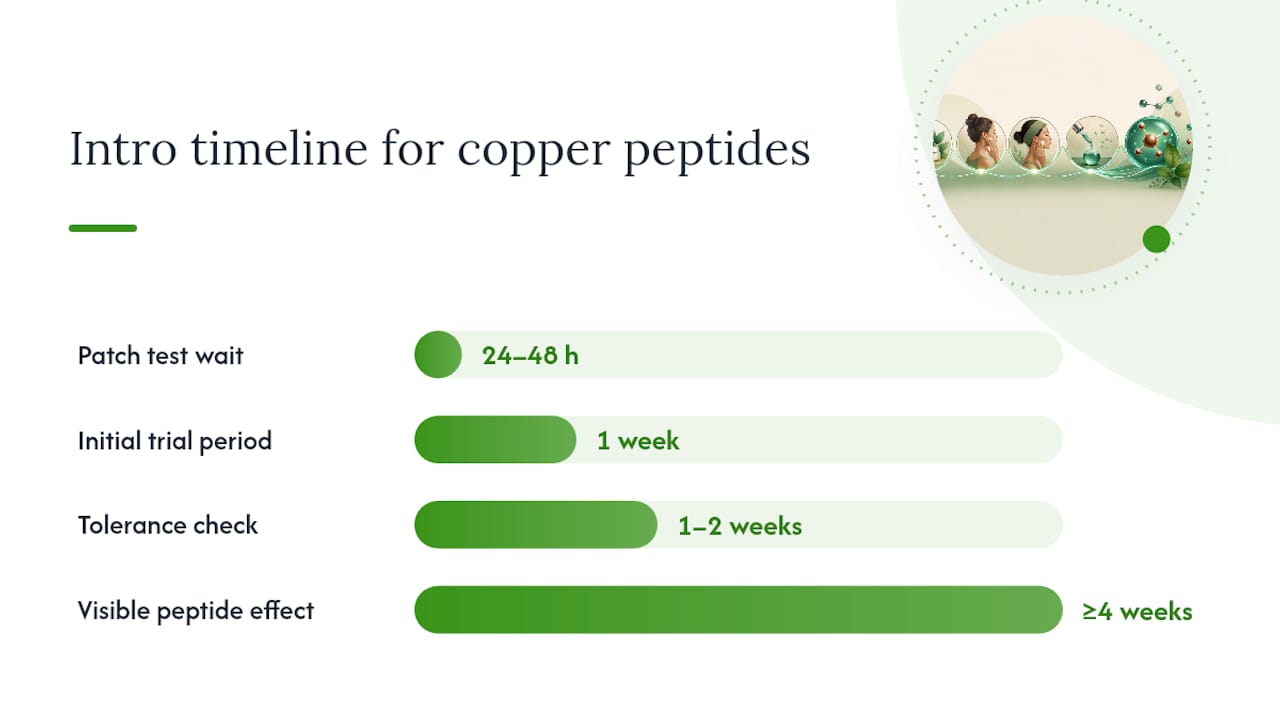
- Patch test first. Apply a small amount to your inner forearm or behind your ear, then wait 24 to 48 hours. Redness, itching, or swelling means stop and skip this product; mild, brief tingling that fades within minutes is usually fine.
- Start at 2 to 3 nights a week. Give your skin a full week at this frequency before judging tolerance.
- Increase gradually. If there’s no irritation after one to two weeks, move to every other night, then daily as tolerated. Reactive skin may need to stay at 2 to 3 times weekly for a longer stretch.
- Apply on clean, dry skin. Cleanser, then serum, then moisturizer. Save sunscreen for the morning routine, since copper peptides work fine layered under it.
- Separate from strong acids and retinoids. Alternate nights or apply them hours apart rather than stacking. High-strength vitamin C and very acidic exfoliants can destabilize the peptide and irritate skin when applied right before it.
Pro Tip: If early “plumping” confuses you into thinking the serum isn’t working later on, remember that a hydrating base like medical-grade hyaluronic acid delivers that fast, visible bounce. The firming effect from the peptide itself is a slower, separate process, so don’t judge the product’s real performance until week four or beyond.
For a deeper walkthrough on stacking actives without cancelling them out, this guide to layering copper peptides covers common combinations worth avoiding.
When Will You See Results From Copper Peptides?
Expect a three-stage timeline rather than one big reveal. In the first one to two weeks, most people notice better hydration and slightly smoother texture. That’s the hyaluronic acid base and early barrier support at work.
Clinician-facing guidance on copper peptide result timelines points to visible firmness and early fine-line softening for many users between weeks 3 and 6, with stronger, more consistent results by weeks 8 to 12.
That lines up with a small instrument-based study of 30 women aged 33 to 77, where an advanced-delivery copper peptide formula showed measurable firmness and density gains as early as week 1, with the improvements holding through week 4. Track your own progress with monthly photos in the same lighting, and pay attention to skin texture and how your face feels under your fingers, not just how it looks in a mirror.
What Are the Safety Risks and Possible Side Effects?
Copper peptides have a good tolerance record, but “well tolerated” doesn’t mean “risk-free” for every face. Here’s what actually shows up in practice.
- Mild, temporary redness or tingling right after application is common and usually fades within an hour.
- True allergic reactions, meaning persistent swelling, hives, or spreading itchiness, are rare but mean you should stop immediately.
- Combining copper peptides with strong acids, retinoids, or high-strength vitamin C in the same routine can destabilize the peptide and increase irritation risk.
- Layering multiple aggressive actives at once (acid plus retinoid plus peptide, same night) is the most common cause of unexpected flare-ups.
Dermatologists generally advise introducing copper peptides slowly for reactive skin types and spacing them from other strong actives rather than layering everything at once. If irritation shows up after you’ve already started, drop back to two nights a week, let skin settle for a week, then re-patch-test before resuming a normal schedule. Persistent or worsening symptoms are a reason to check in with a dermatologist rather than push through.
How Do You Choose a Trustworthy Copper Peptide Serum?
Not every bottle labeled “copper peptide” delivers the same thing, and the formulation details matter more than the marketing copy around them.
- Formulation clarity: the label should specifically name GHK-Cu, not just “copper” or a vague “peptide complex,” and pair it with a hydrating base like medical-grade hyaluronic acid.
- Stability and delivery: newer delivery technologies that stabilize the peptide tend to show earlier measurable results and better skin penetration than older formulations.
- Clinical and trust signals: look for dermatologist testing, instrument-based study data, and clear patch-test instructions on the product page or blog.
- Commercial transparency: a real return policy and clear ingredient sourcing tell you more than a five-star review count ever will.
A brand willing to publish its patch-test guidance and dermatologist-approval claims openly is usually more trustworthy than one that just slaps “clinically proven” on the front label with no backup.
Overview of Perioral Dermatitis: Causes and Symptoms
Perioral dermatitis is a distinct inflammatory skin condition that shows up as small red bumps, sometimes with scaling or a faint rash, clustered around the mouth, nose, or eyes. It’s different from acne or standard irritation, and it tends to flare in cycles rather than settling quickly on its own.
Common triggers include prolonged use of topical steroid creams, heavy or occlusive moisturizers, fluoride toothpaste in some cases, and certain cosmetic ingredients that disrupt the skin’s natural barrier. Hormonal shifts and overuse of harsh cleansers or exfoliants can also set it off. The condition tends to affect women more often than men, and it frequently appears in people who unknowingly self-treat a minor rash with steroid cream, which can quiet symptoms briefly before making the underlying flare worse.
Recognizing the pattern early matters because the standard instinct, reaching for a stronger cream, is usually the wrong move. The bumps typically stay confined to a narrow band around the mouth, sparing the immediate lip line, which helps distinguish it from other facial rashes. Anyone noticing a persistent cluster of small bumps that doesn’t respond to normal skincare adjustments within a couple of weeks is dealing with something that needs a different approach than typical breakout care.
Which Ingredients Are Safe to Use During a Flare?
Simplicity is the goal here, not a packed routine with five active ingredients competing for attention. Skin dealing with this kind of irritation needs support, not more stimulation.
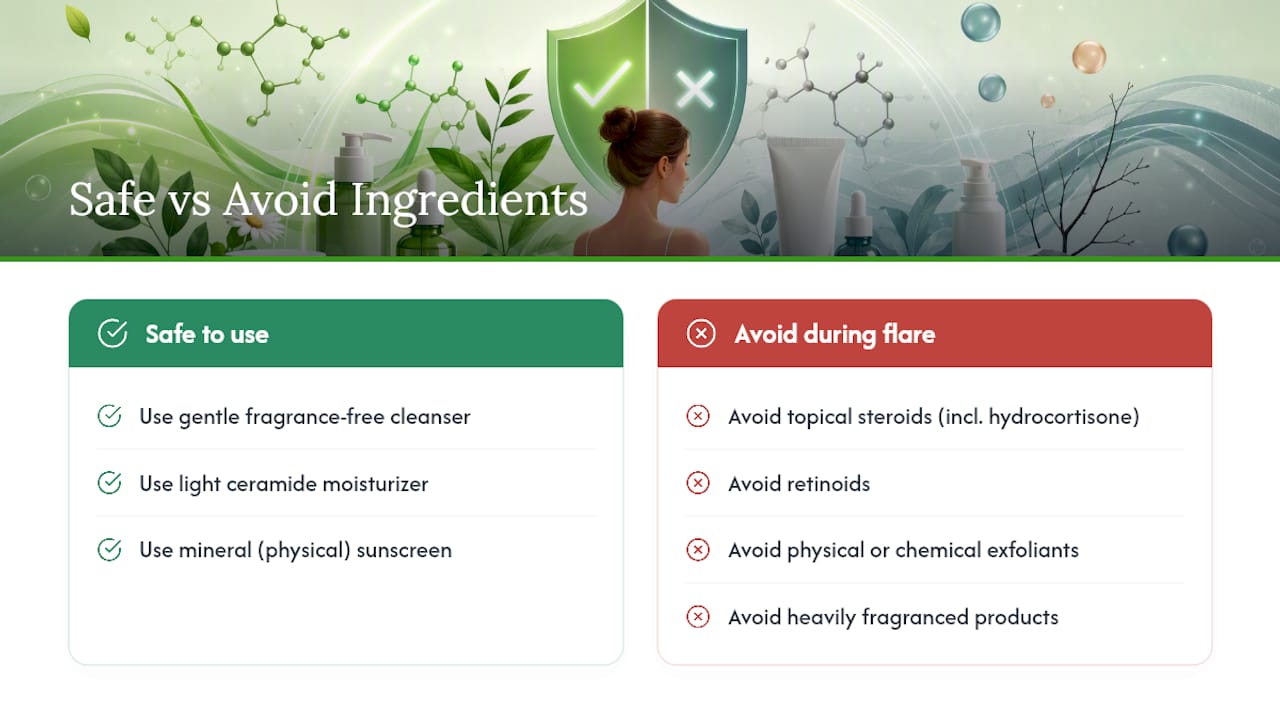
A gentle, fragrance-free cleanser is the foundation of any routine built around calming a reactive complexion. Look for formulas free of sulfates and harsh surfactants, since anything that strips the skin’s surface oils tends to make inflammation worse, not better. Bar soaps and foaming cleansers with a high pH are common culprits worth dropping entirely during a flare.
Moisturizers matter just as much, and lighter is usually better. Heavy, occlusive creams packed with mineral oil or petroleum-based ingredients can trap moisture against already-inflamed skin and prolong a flare. A thin layer of a non-comedogenic, ceramide-based moisturizer tends to work better for calming and rebuilding the barrier without adding fuel to the irritation.
Ingredients to avoid outright during an active flare include topical steroids (even over-the-counter hydrocortisone, unless a dermatologist specifically directs otherwise), retinoids, physical or chemical exfoliants, and heavily fragranced products of any kind. Sunscreen is still necessary, but a mineral formula tends to sit better on reactive skin than a chemical one during this window.
What Habits Help Prevent Flare-Ups Long Term?
Consistency beats intensity when you’re managing a condition prone to cycling back. The single biggest habit shift that helps most people is simplifying the routine and sticking with it rather than swapping products every time a flare starts.
Cutting products down to a gentle cleanser, a light moisturizer, and mineral sunscreen for a stretch of several weeks gives inflamed skin room to actually settle. Reintroducing anything new, including makeup, should happen one product at a time, with a few days of observation between additions.
Toothpaste swaps are worth trying if flares cluster around the mouth specifically. Switching to a fluoride-free formula for a few weeks is a low-cost experiment that resolves some cases entirely. Avoiding touching or resting your chin and mouth area on your hands throughout the day also reduces the transfer of oils, bacteria, and whatever residue is on your fingers.
Weather and humidity shifts can trigger flares too, so adjusting moisturizer thickness seasonally, lighter in humid months, slightly richer in dry winter air, helps some people avoid repeat episodes. Stress management genuinely matters here as well, since flare timing often tracks with high-stress periods for many people managing this condition.
When Should You See a Dermatologist for This?
A rash that persists beyond two to three weeks despite simplifying your routine and avoiding known triggers is a clear signal to book a dermatology appointment rather than keep experimenting on your own. Self-treating with over-the-counter steroid cream is one of the most common ways this condition gets prolonged instead of resolved.
Dermatologists typically diagnose perioral dermatitis through a visual exam, sometimes combined with a discussion of recent product changes or steroid use. Standard treatment often includes a course of oral or topical antibiotics, commonly in the tetracycline family, prescribed specifically to calm the inflammatory response rather than to fight infection in the traditional sense. Topical anti-inflammatory options, including certain prescription creams unrelated to steroids, may also be part of a treatment plan depending on severity.
Seek medical advice sooner rather than later if the rash spreads rapidly, becomes painful, oozes, or comes with swelling around the eyes. Those symptoms point to something that needs direct professional evaluation, not another week of trial and error with over-the-counter products.
A Cautious, Evidence-First Take on Copper Peptides
The honest position here is that copper peptides earn their reputation through patience, not hype. Skin that reacts easily benefits most from starting slow, watching for real signals rather than chasing a fast transformation, and treating barrier support as the actual goal rather than a side effect. Anyone dealing with an active or complicated skin condition should talk to a dermatologist before adding a new active, no matter how gentle the marketing sounds.
— British
Why Copperpeptides Fits a Sensitive-Skin Routine
One serum built around a single ingredient combination pairs GHK-Cu with medical-grade hyaluronic acid, and is dermatologist-endorsed and tested as non-irritating, which matters if you’ve been burned by “gentle” products before.
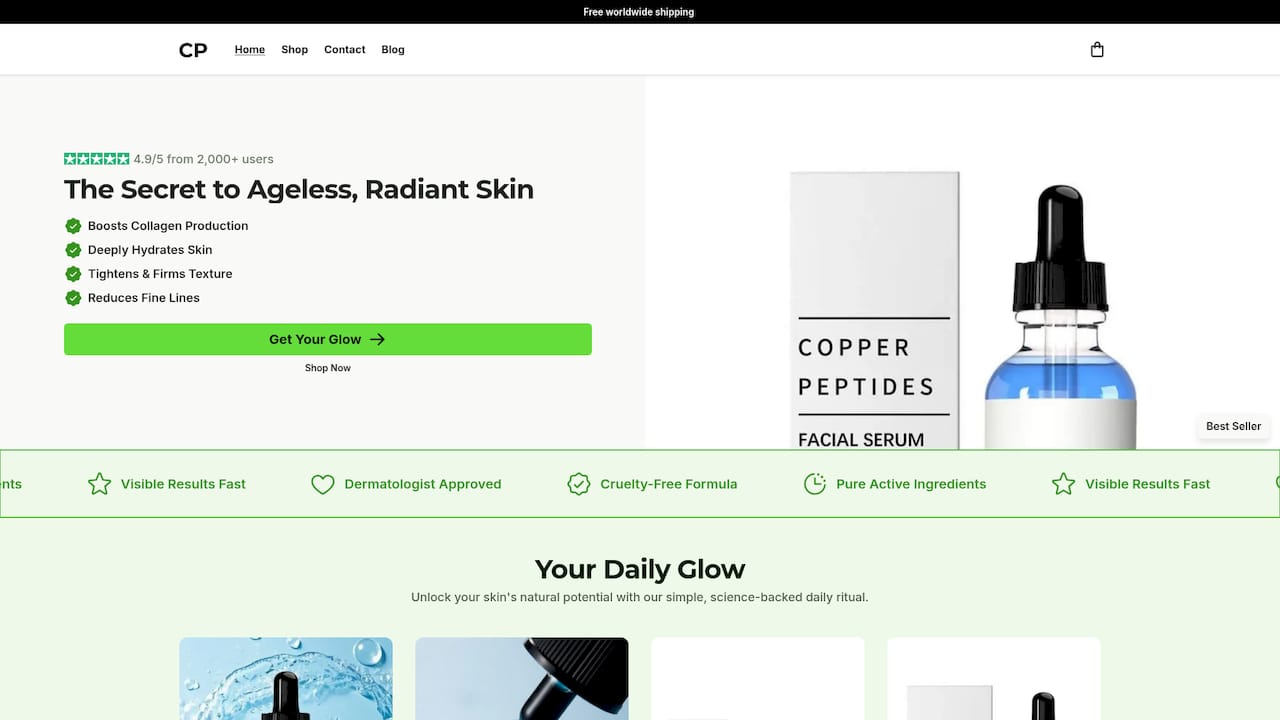
Most people see visible hydration improvements early, with firmness changes building through the 4 to 6 week mark that some copper peptide serums state as typical results windows. If it’s not a fit for your skin, some products offer a money-back guarantee to remove the pressure of committing blind. This suits anyone easing into a peptide routine for the first time, especially reactive or previously irritated skin looking for a well-formulated product instead of multiple uncertain ones. Check the Copper Peptide Anti-Aging Serum product page for full ingredient details and current pricing before you start your patch test.
Sources
- Regenerative and Protective Actions of the GHK‑Cu Peptide in the Light of the New Gene Data - PMC
- Q&A: Optimizing Copper Peptide Through Next-Generation Delivery | Dermatology Times
- How Long Do Copper Peptides Take to Show Results? | MHS Longevity
- What Are Copper Peptides? Benefits and Uses Explained by Dermatologists
FAQ
How Long Should I Patch Test a Copper Peptide Serum?
Apply a small amount to your inner forearm and wait 24 to 48 hours before using it on your face. Any redness, itching, or swelling means you should skip the product; mild tingling that fades quickly is generally fine.
Can I Use Copper Peptides With Retinol or Vitamin C?
Yes, but space them apart rather than layering them the same night. Dermatologists recommend alternating nights or applying strong acids and retinoids at a different time of day to avoid destabilizing the peptide.
How Fast Will I See Firmness Results?
Hydration improvements typically show up within one to two weeks, while visible firmness and fine-line changes usually build between weeks 3 and 6, with stronger results by weeks 8 to 12. Consistency matters more than the specific product you choose.
Is Copperpeptides Serum Safe for Sensitive Skin?
Some copper peptide serums formulate with high-purity GHK-Cu and medical-grade hyaluronic acid and are dermatologist-tested as non-irritating. Sensitive skin should still patch test first and introduce gradually, starting two to three nights a week.
How Much Does the Copper Peptide Anti-Aging Serum Cost?
The Copper Peptide Anti-Aging Serum is priced at $20 as a one-time purchase, backed by a 30-day money-back guarantee if it’s not the right fit for your skin.