

Topical peptides rarely cause the classic retinoid-style purge, but a recognizable pattern called the “copper uglies” shows up often enough in community reports to take seriously: a few weeks of dullness, flaking, and small bumps. Clinical evidence for that timeline is thin. Injectable or unregulated peptides carry a different, more serious risk profile entirely. Watch your skin for four to six weeks, patch test first, and stop if you see red flags.
TL;DR:
- Most users report a mild adjustment phase with copper peptides lasting three to six weeks, characterized by dullness, flaking, and congestion, which typically resolves on its own.
- Clinical trials show low irritation rates for topical GHK-Cu, with no documented purge window, indicating that purging is unlikely from proper cosmetic formulations.
- A true purge usually occurs in the usual breakout zones, involves superficial bumps, and resolves within six weeks, whereas reactions tend to spread and last longer.
- Introducing peptides gradually, patch testing, and supporting the skin barrier with moisturizers significantly reduces the risk of an adverse reaction or misinterpreted purging.
- Combining peptides with other actives like retinoids or acids on the same day increases irritation, so they should be introduced separately and spaced out.
Table of Contents
- What Skin Purging Actually Means
- Do Peptides Cause Purging? What the Evidence Actually Shows
- Copper Uglies vs. What Studies Document
- Is It Purging or a Reaction? Run These Checks
- How to Start Peptides Without Triggering a Reaction
- When to Stop and Call a Dermatologist
- What the Research and the Product Data Say Together
- How Peptides Actually Interact With Skin Cell Turnover
- Not All Peptides Behave the Same Way
- What Happens if You Push Through a Purge Anyway
- Common Myths About Peptides and Purging
- Balancing Anecdote and Evidence When Your Skin Reacts
- How Copperpeptides Fits a Safe Introduction Protocol
- Sources
- FAQ
What Skin Purging Actually Means
Purging is a real dermatologic phenomenon, but it has a narrow definition that gets stretched to cover almost any breakout. It happens when an active ingredient speeds up cell turnover enough to push preexisting microcomedones (clogged pores you can’t yet see) to the surface faster than they’d normally emerge on their own.
Retinoids and chemical exfoliants are the classic purge triggers because they act deep in the follicle, on the keratinocytes lining the pore wall, accelerating shedding across the whole face at once. That’s why a purge tends to look like a wave: several small breakouts appearing together, then clearing within four to six weeks.
Not every flare-up after starting a new product is purging. Some patterns that get mislabeled:
- A new moisturizer that’s simply too heavy for your skin type, causing ordinary congestion.
- An allergic reaction to a fragrance or preservative, which shows up as itching or diffuse redness, not confined breakouts.
- Weather, diet, hormones, or a new pillowcase coinciding with the timing of a product launch.
If the breakout isn’t concentrated in your normal problem zones, or if it keeps getting worse past week six, purging isn’t the most likely explanation.
Do Peptides Cause Purging? What the Evidence Actually Shows
The honest answer: there’s no clinical trial that has measured a standardized purge window for topical copper peptides. Published research on topical GHK-Cu, the copper peptide most common in cosmetic serums, reports minimal irritation at standard cosmetic concentrations, with no documented purge phase in the trial data itself.
That’s a meaningfully different category from what you’re most likely to have read about online. Harvard Health notes that many injectable peptides remain unregulated and under-studied, and that unregulated injectable products can carry real risks, including immune reactions and contamination. Topical copper peptide serum and an injectable peptide bought from a gray-market supplier are not the same risk category, even though both get called “peptides.”
A 2026 MDPI review examining therapeutic peptides across dermatology, metabolism, and endocrine use found real promise in the category but flagged a persistent gap: limited randomized human trials and no standardized safety framework across the field. That gap is exactly why so much of what circulates about peptides and purging comes from user forums rather than peer-reviewed data. Community reports of a copper peptide adjustment phase are consistent enough across threads to be worth documenting, but consistency across anecdotes isn’t the same evidentiary weight as a clinical trial.
Copper Uglies vs. What Studies Document
The term “copper uglies” describes a specific pattern reported often enough in user communities that it functions as informal shorthand: a rough patch of skin behavior that shows up after starting a copper peptide serum, then resolves.
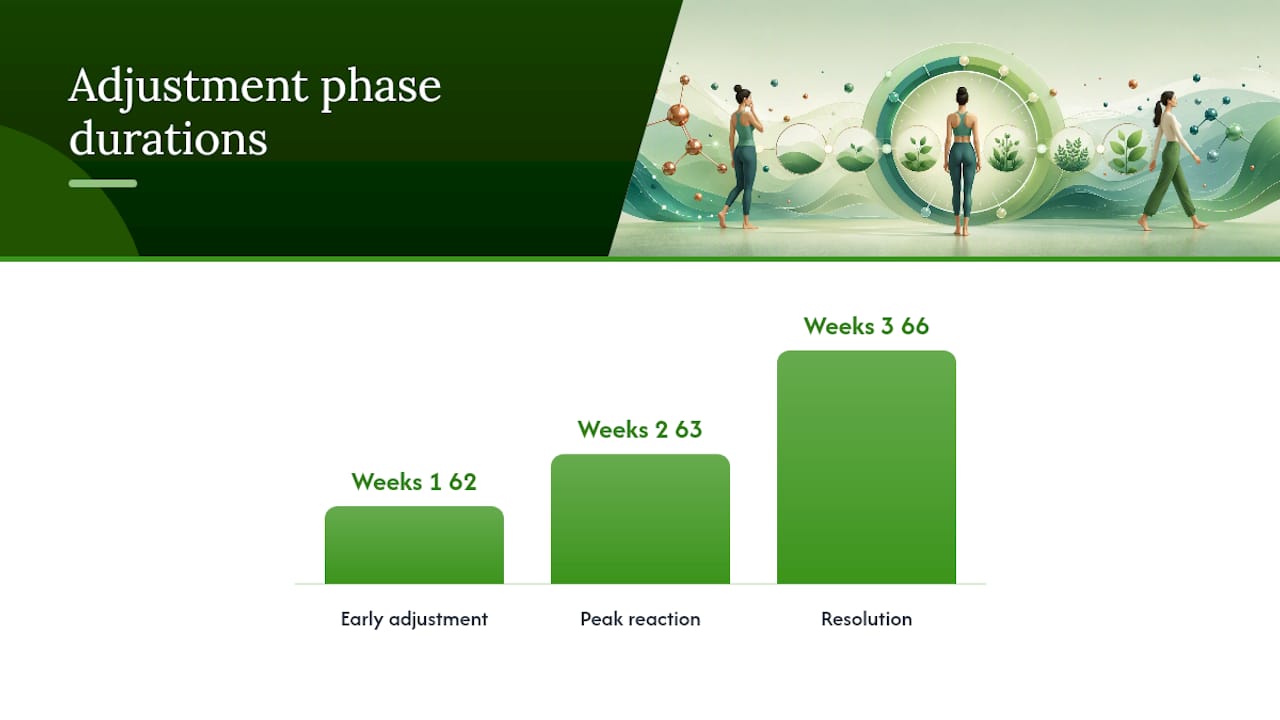
The commonly described timeline runs like this:
- Weeks 1 to 2: mild dullness or a slightly rough texture as skin adjusts.
- Weeks 2 to 3: the peak, often described as fine flaking plus small, superficial congestion bumps.
- Weeks 3 to 6: gradual resolution, with skin texture reported to improve past baseline.
Users managing through this window typically report success with a few adjustments: cutting back application frequency, layering in a ceramide-rich barrier moisturizer, pausing acids or retinoids until things settle, or switching to a lighter serum vehicle at a lower concentration.
Here’s the tension worth sitting with: this pattern is reported consistently across independent user threads, but published clinical literature on topical GHK-Cu doesn’t document a standardized purge at all, only low irritation rates at cosmetic concentrations. Both things can be true. Clinical trials are typically shorter and narrower in scope than the months of real-world use that generate forum posts, so an infrequent, self-limited adjustment phase could easily go unmeasured in a trial while still showing up in community reporting.
Pro Tip: If you’re mid-adjustment phase, resist the urge to add more actives to “fix” the flaking. Barrier support and patience usually resolve it faster than a second exfoliant ever will.
Is It Purging or a Reaction? Run These Checks
Before you decide whether to push through or stop, run through the signs in order.
- Check the location. Purging shows up in your usual breakout zones, the T-zone or jawline for most people. A reaction tends to spread beyond those areas, sometimes to skin that’s never broken out before.
- Check the texture and size. Purging looks like small, superficial bumps, similar to what you’d normally get, just more of them at once. A reaction often brings diffuse redness, swelling, or a rash-like texture that doesn’t resemble your typical breakouts.
- Check for sensation. Burning or stinging that lingers past the first few minutes of application points toward irritation or allergy, not purging. Purging itself usually doesn’t hurt.
- Check the clock. Purging tends to resolve within one to six weeks. If nothing has improved by week six, or things are trending worse, that’s not a purge anymore.
- Run a reduction test. Drop application to every third day for one week. If symptoms ease quickly, the product was likely a contributing irritant rather than triggering a true purge, which typically continues its course regardless of frequency changes.
Pro Tip: Photograph the same spot, same lighting, once a week. Memory lies about how bad week one looked compared to week three; photos don’t.
How to Start Peptides Without Triggering a Reaction
Most of what gets blamed on peptides is actually a rollout problem, not an ingredient problem. A slower start solves it more often than switching products does.
- Patch test first. Apply a small amount to your inner forearm or jawline and wait 24 to 48 hours before putting it anywhere near your full face.
- Step up gradually. Start every third day for the first week, move to every other day if tolerated, then daily by week two or three.
- Support the barrier the whole time. Pair the peptide serum with a ceramide-rich moisturizer and a medical-grade hyaluronic acid product to keep skin hydrated while it adjusts.
- Don’t stack actives on day one. Avoid introducing retinoids, acids, or microneedling in the same window you start a peptide. Formulation research shows that vehicle and concentration both affect how much a topical peptide penetrates and how much irritation it causes, so a lighter serum at a lower concentration is the safer starting point.
- Adjust based on response, not the calendar. If congestion or irritation keeps climbing instead of settling, drop frequency again or pause entirely rather than pushing through on schedule.
When to Stop and Call a Dermatologist
Most adjustment periods resolve on their own. Some signs mean you stop immediately and get medical attention, not dermatologist advice on a forum.
Emergency signs, seek care right away:
- Hives or facial swelling, especially around the eyes or lips.
- Any difficulty breathing.
See a dermatologist if:
- Breakouts are still getting worse, not better, past six weeks.
- A new, widespread rash appears that wasn’t there before.
- You develop severe pain or blistering at the application site.
Before that appointment, document what you can: product name and ingredient list, the exact date you started, weekly photos, and any other treatments happening at the same time, including injections or microneedling sessions. That timeline is often what lets a dermatologist tell reaction from adjustment in a single visit instead of several.
What the Research and the Product Data Say Together
Copperpeptides formulates its serum around high-purity copper peptides combined with medical-grade hyaluronic acid, and the brand states that most customers see visible changes within four to six weeks, the same window community reports describe for the adjustment phase to resolve.
That timeline lines up with what the clinician-facing literature recommends more broadly. The MDPI review urges caution and stepwise introduction for peptide products generally, given how few large human trials exist. The NCBI overview of therapeutic peptide regulation draws a clear line between peptides that went through rigorous drug trials and the far larger category of cosmetic or gray-market peptides that haven’t. Copperpeptides sits in the cosmetic category, tested for topical tolerability rather than marketed as a drug, which is a distinction worth understanding before you compare it to anything injectable.
How Peptides Actually Interact With Skin Cell Turnover
Peptides don’t work the way retinoids do, and that difference is the whole reason the purge conversation gets confusing. Retinoids bind to nuclear receptors inside keratinocytes and directly accelerate the rate those cells divide and shed, which is what produces a genuine purge: a flood of preexisting clogs pushed to the surface ahead of schedule.
Copper peptides like GHK-Cu work through a different pathway. GHK-Cu is a naturally occurring tripeptide that binds copper ions and appears to signal fibroblasts to increase collagen and elastin production, alongside some antioxidant and wound-healing activity. That’s a signaling function aimed at the dermis, the deeper skin layer, not a direct instruction to the surface keratinocytes to speed up shedding the way a retinoid does.
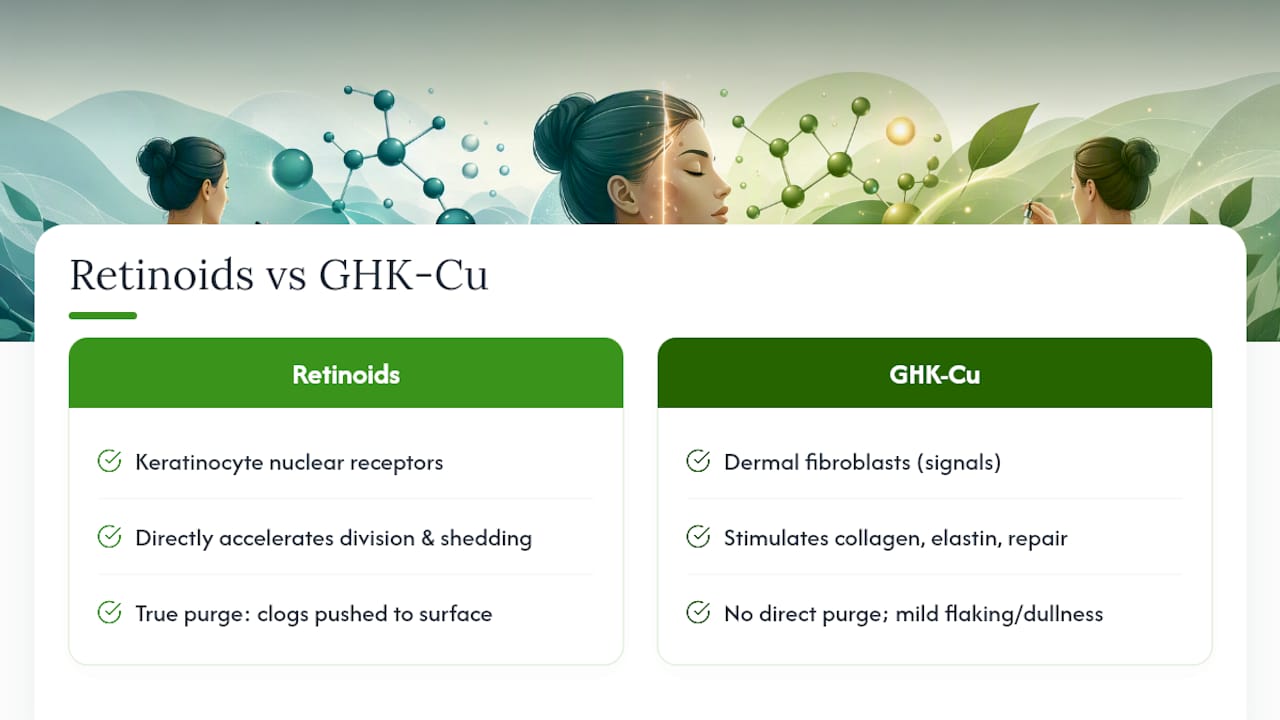
That mechanistic difference is exactly why clinical trial data doesn’t show a purge for GHK-Cu the way it does for tretinoin. If a copper peptide does provoke a mild adjustment phase in some users, the more plausible explanation isn’t accelerated turnover at all. It’s a formulation reaction, a shift in skin pH, or a temporary disruption to the surface barrier as new ingredients settle in. That would explain why the community-reported timeline (dullness and flaking, not the wave of deep cystic breakouts typical of a retinoid purge) looks different in character from a textbook purge, even while it gets called by the same name.
Not All Peptides Behave the Same Way
Lumping every peptide into one purge conversation misses how differently these molecules actually behave on skin. Copper peptides, signal peptides, carrier peptides, and neurotransmitter-inhibiting peptides (the Botox-mimicking category) all work through separate mechanisms, and the purge question doesn’t apply the same way to any of them.
Copper peptides (GHK-Cu): the category with the most community discussion of an adjustment phase, thanks to the “copper uglies” pattern. Clinical data shows low irritation at cosmetic concentrations with no documented purge.
Signal peptides (like Matrixyl): typically marketed for collagen support. Reports of purging are rare in community discussion, mostly because these peptides tend to ship in gentler, more stable formulations designed for daily use from day one.
Carrier peptides: deliver trace elements like copper or manganese into skin and are usually blended into broader formulas rather than used alone, which makes isolating a purge response to the peptide itself difficult even anecdotally.
Neurotransmitter-inhibiting peptides (Botox-like actives): work on muscle contraction signaling, not cell turnover, so there’s essentially no mechanistic pathway for a purge at all. Reports of skin reactions with this category tend to be simple irritation or allergy, not purging.
The pattern that emerges: purge-style reports cluster almost entirely around copper peptides, likely tied to their acidic pH requirements and the trace metal content itself, not something inherent to peptides as a category.
What Happens if You Push Through a Purge Anyway
Continuing a product through a genuine adjustment phase usually resolves fine, especially with the barrier support and reduced frequency strategies already covered. But “purge” isn’t a magic word that guarantees a happy ending if you keep going regardless of what your skin is telling you.
If what looks like purging is actually a low-grade irritant reaction, continuing daily use for weeks can extend a mild issue into a chronic one: persistent redness, a compromised barrier, and heightened reactivity to products you tolerated fine before. That’s the real cost of misreading the signal. It’s not that peptides themselves cause lasting damage; it’s that ignoring six straight weeks of worsening skin, on the assumption it must eventually resolve, delays the moment you actually address what’s going on.
On the other side, if it is a true, self-limited adjustment phase and you stop the product the moment things look rough, you never find out whether the ingredient would have worked. Community reports describing resolution by weeks three to six suggest that stopping at week two, right at the peak of a typical copper peptide adjustment, is often premature. The practical answer isn’t “always push through” or “always stop at the first bump.” It’s tracking the trajectory week over week and letting that data, not day-three panic, drive the decision.
Common Myths About Peptides and Purging
Myth: All peptides cause purging. Most don’t. Purge-pattern reports concentrate almost entirely around copper peptides; other peptide categories rarely generate the same discussion.
Myth: If your skin doesn’t purge, the product isn’t working. This one causes real harm because it pushes people to expect discomfort as proof of efficacy. Plenty of users see collagen and hydration benefits from copper peptide serums with zero adjustment phase at all.
Myth: Purging and breaking out are the same thing. They overlap in appearance but not in mechanism or duration. A true purge resolves faster and stays confined to your usual zones; an ordinary breakout or reaction doesn’t follow that pattern.
Myth: More product means faster results, so push through irritation. Concentration and vehicle both affect how a peptide penetrates skin, and more isn’t a shortcut, just a higher chance of irritation with no proof of faster benefit.
Myth: Topical and injectable peptides carry the same safety profile. They don’t. Topical cosmetic serums undergo tolerability testing at defined concentrations; injectable and gray-market peptides frequently lack that oversight entirely, which is a materially different risk conversation.
Balancing Anecdote and Evidence When Your Skin Reacts
Community reports of the copper uglies are worth taking seriously, but a pattern repeated across forum threads still isn’t clinical proof. If your skin is behaving the way this article describes, run the patch test and reduction test before assuming the worst. Consult a dermatologist if red flags show up. And if nothing purges at all, that’s not a failure. It just means your skin skipped the adjustment phase, not the benefit.
— British
How Copperpeptides Fits a Safe Introduction Protocol
If you’re ready to try a copper peptide serum after weighing the evidence, the practical question becomes which product actually supports a careful rollout. Copperpeptides formulates its serum with high-purity copper peptides and medical-grade hyaluronic acid, built around the same patch-test-first, step-up approach covered above rather than a push-hard, apply-daily instruction from day one.
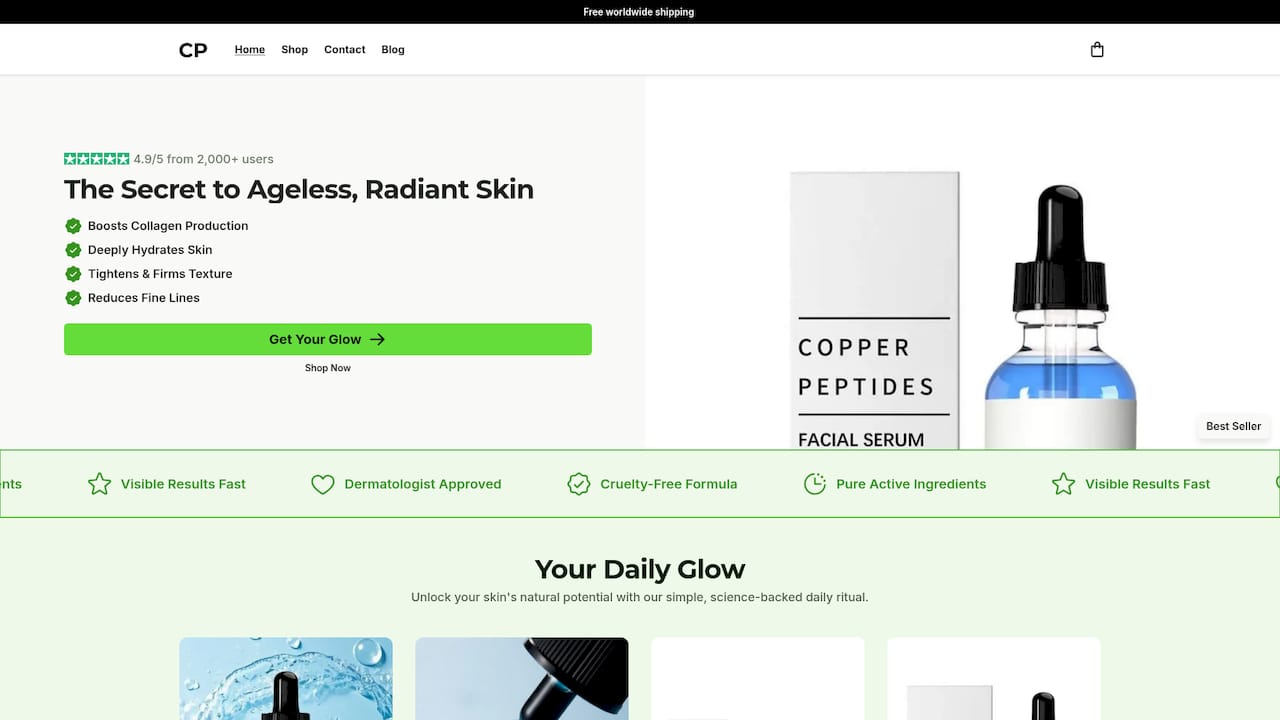
Most customers see visible firming and hydration changes within four to six weeks, in line with the timeline dermatological sources associate with skin adjustment generally. For troubleshooting during that window, the side effects and timing guide covers what to expect and when to scale back, and the step-up usage protocol walks through frequency and layering in more detail than this article has room for. The serum is offered with a return policy and formulation claims that the product is dermatologist-endorsed. If you want to start with a patch test and a real plan instead of guessing, check out the copper peptide anti-aging serum and begin the way this article recommends: slow, documented, and barrier-supported.
Sources
For readers who want the primary sources behind the claims in this article:
- Peptides: What they are, potential benefits, and safety concerns — Harvard Health
- Therapeutic peptides in aesthetic, metabolic and endocrine conditions — MDPI
- PMC article — clinical data on topical peptides
This article is general information, not a substitute for advice from a qualified doctor. Consult a qualified healthcare professional about your own circumstances before acting on anything here.
FAQ
Can Peptides Cause Purging?
Topical peptides rarely cause a classic clinical purge; published research on copper peptides shows low irritation with no documented purge window. Community reports describe a milder adjustment phase for some copper peptide users, but that’s based on anecdote, not trial data.
How Long Does the Copper Peptide Adjustment Phase Last?
Community reporting on the “copper uglies” describes a pattern that typically peaks around weeks two to three and resolves by weeks three to six. If your skin isn’t improving by week six, treat it as a reaction rather than an adjustment.
What Are the “Copper Uglies”?
The “copper uglies” is community shorthand for a reported adjustment phase after starting a copper peptide serum, usually described as dullness, fine flaking, and small congestion bumps that resolve within weeks. It’s a consistent user-reported pattern, not a clinically defined term.
What Should You Not Mix With Peptides?
Avoid starting retinoids, chemical exfoliants, or microneedling in the same window you introduce a new peptide serum, since stacking actives makes it much harder to tell which ingredient is causing any skin change. Introduce one active at a time and give each two to three weeks before adding another.
When Should I Stop Using a Peptide Serum?
Stop immediately if you develop hives, facial swelling, or breathing difficulty, and seek emergency care. See a dermatologist if breakouts worsen past six weeks or a new widespread rash appears.