

Peptide serums work by signaling skin cells to produce more collagen and elastin, which firms skin, softens fine lines, and improves hydration over several weeks of consistent use. The most reliable benefits include:
- Firmer, more resilient skin texture
- Softer expression lines and reduced wrinkle depth
- Stronger skin barrier function and better moisture retention
- Calmer, less reactive skin with reduced redness
- A brighter, more even tone
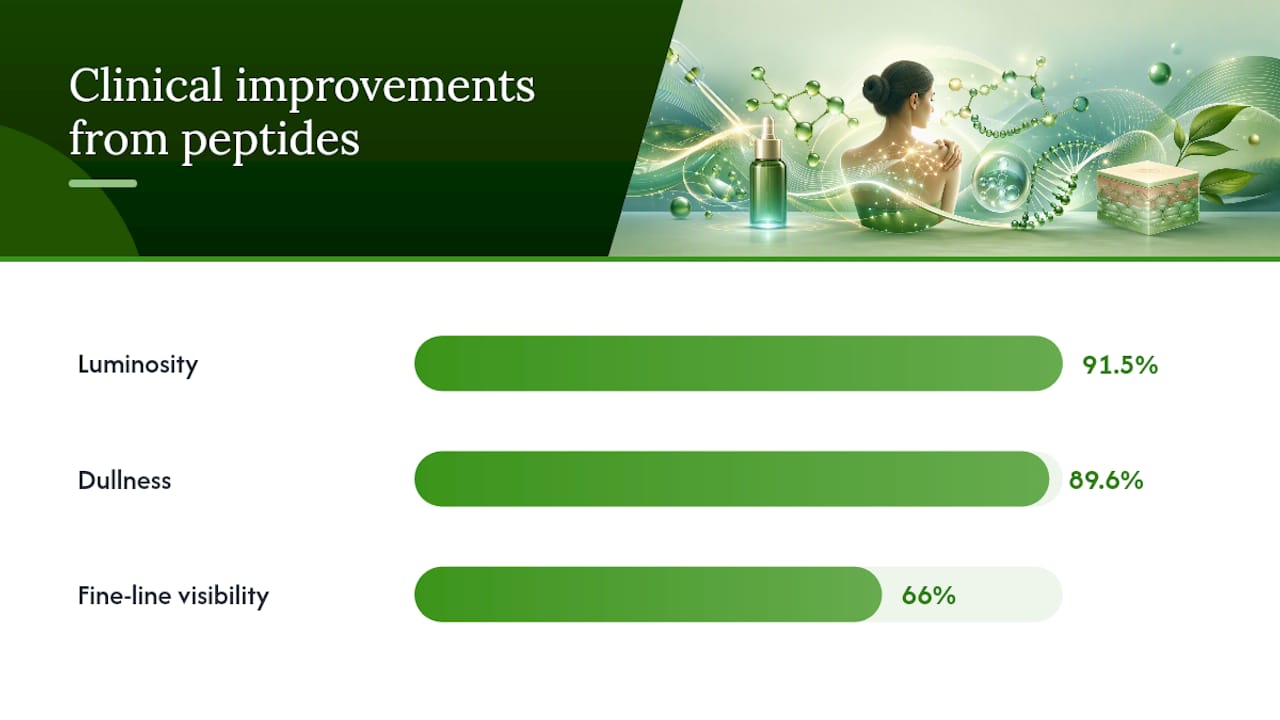
Most people notice early changes in hydration and glow by week 4, visible firming by week 8, and the fullest wrinkle-reduction results by week 12. A 12-week open-label study of a 10-peptide serum found 89.6% of subjects showed clinical improvement, with the biggest gains in luminosity and skin tone.
Key Takeaways
Peptide serums firm skin, soften expression lines, and improve hydration by signaling collagen production, with visible results typically emerging between weeks 4 and 12 depending on formulation.
| Point | Details |
|---|---|
| Core mechanism | Peptides signal fibroblasts to produce more collagen and elastin rather than acting like a filler. |
| Realistic timeline | Expect hydration changes by week 4, firmness by week 8, and wrinkle improvement by week 12. |
| Formulation matters most | Concentration, delivery system, and pH stability determine results more than the peptide name alone. |
| Pair with the right actives | Hyaluronic acid boosts hydration outcomes; strong acids and peptides should be used at separate times. |
| Copperpeptides option | A single-ingredient copper peptide serum with medical-grade hyaluronic acid, dermatologist-endorsed, with visible results in four to six weeks. |
Table of Contents
- What Are Peptides, and What Does a Peptide Serum Do?
- How Does a Peptide Serum Actually Work?
- What Benefits Can You Realistically Expect?
- What Types of Peptides Show Up in Serums?
- What Does the Clinical Evidence Actually Show?
- How Do You Choose a Peptide Serum That Works?
- How Should You Use a Peptide Serum in Your Routine?
- What Are the Limits and Safety Considerations?
- Who Actually Benefits Most From Peptides?
- Where Copperpeptides Fits Into Your Routine
- Sources
What Are Peptides, and What Does a Peptide Serum Do?
Peptides are short chains of amino acids, the same building blocks that make up the collagen and elastin fibers holding your skin’s structure together. That’s the key distinction from collagen supplements, which deliver whole or partially broken-down protein orally and rely on digestion to (maybe) reach skin at all. A peptide serum skips that step. It’s a concentrated topical formula built to sit directly on skin and deliver small signaling fragments where they can act.
Compared to other product types, the differences are practical, not just technical:
- Creams dilute actives in heavier bases meant for occlusion and comfort rather than concentration.
- Oral collagen supplements depend on digestion and have no guarantee of reaching the skin as intact peptides.
- Retinoids work through a completely different pathway (vitamin A receptors) and tend to act faster but with more irritation.
A serum sits in between: fast-absorbing, concentrated, and formulated specifically to get peptides to the skin’s surface layers with minimal interference.
How Does a Peptide Serum Actually Work?
Peptide serums primarily work by mimicking the fragments your body naturally produces during collagen breakdown, tricking skin cells into ramping up repair. That’s the short version. The longer one involves several distinct mechanisms, and knowing which one a product uses tells you what it’s actually built to do:
- Signal peptides bind to fibroblasts and prompt them to synthesize more collagen and elastin, the same way your skin would respond to minor injury without the injury itself.
- Carrier peptides, like copper peptides (GHK-Cu), transport trace minerals such as copper into skin, supporting enzyme activity involved in wound healing and collagen remodeling.
- Enzyme-inhibitor peptides slow down the enzymes that break down existing collagen, effectively putting a brake on degradation rather than pushing production.
- Neuropeptides interfere with the signals that trigger repetitive facial muscle contractions, softening the look of expression lines without paralyzing anything.
A signal peptide doesn’t repair a wrinkle directly. It nudges a fibroblast to behave the way it did when you were 25, and the visible change follows from that shift over weeks, not days.
What Benefits Can You Realistically Expect?
Peptide serums improve firmness, soften certain wrinkles, and boost hydration and tone, but how much and how fast depends entirely on which peptide, at what concentration, in what delivery system. Marketing copy tends to blur those variables. Clinical data doesn’t.
Wrinkle reduction. Expression lines (crow’s feet, forehead lines from repeated muscle movement) respond better to neuropeptides than deep photoaging grooves caused by decades of sun damage and collagen loss. One ex vivo and clinical study on a neuropeptide serum found up to a 66% reduction in fine line visibility in treated regions after 12 weeks, alongside measurable increases in epidermal thickness.
Firmness and elasticity. This tends to be the most consistently reported benefit, since collagen-stimulating peptides work slowly but steadily on skin’s structural support.

Barrier function and hydration. Peptides don’t hydrate the way hyaluronic acid does, but they support the skin barrier that keeps moisture from escaping in the first place. That’s part of why most formulas pair peptides with humectants.
Inflammation and redness. Some peptides carry mild anti-inflammatory activity, which is one reason dermatologists cite peptides as an option for people who react badly to stronger actives.
Tone and brightness. In the 10-peptide study, luminosity and dullness showed the strongest improvement of all measured outcomes, at 91.5% and 89.6% respectively.
By week 4, expect subtle hydration and glow changes. By week 8, firmness usually becomes noticeable to touch. By week 12, wrinkle depth and tone changes are typically visible enough to photograph. Formulation quality, not just peptide identity, decides whether you land at the low end of that range or the high end.
What Types of Peptides Show Up in Serums?
Different peptide classes target different aging mechanisms, so recognizing them on an ingredient list tells you what a product is actually designed to do.
- Signal peptides (palmitoyl pentapeptide-4, known widely as Matrixyl) stimulate collagen and elastin synthesis, best for general firmness and fine lines.
- Carrier peptides (copper peptides, GHK-Cu) deliver trace minerals that support wound-healing enzymes and collagen remodeling, best for overall skin quality and resilience.
- Enzyme-inhibitor peptides slow collagen breakdown, useful as a maintenance layer alongside signal peptides.
- Neuropeptides (acetyl hexapeptide-8, known as Argireline) relax the look of expression lines, best matched to crow’s feet and forehead lines.
Multi-peptide blends combine two or three of these classes to hit several mechanisms simultaneously, though that complexity raises formulation demands. A single, well-dosed peptide in a stable base can outperform a crowded ingredient list that skimps on concentration.
What Does the Clinical Evidence Actually Show?
Peer-reviewed trials show measurable skin improvements over 4 to 12 weeks for specific peptide formulations, but results vary sharply by peptide type, dose, and delivery method. That caveat matters more than most product pages let on.
The strongest data points come from two distinct trial types. The 10-peptide open-label study tracked 48 subjects over 12 weeks and found a high rate of overall clinical improvement, with the tightest gains in facial luminosity and neck firmness. The neuropeptide serum program used ex vivo tissue testing alongside a 12-week clinical arm, measuring actual epidermal thickness and microfold area rather than relying on subject self-report.
Instrumented measurements, things like epidermal thickness and microfold area captured by imaging rather than a subject checking a box on a satisfaction survey, give a far more defensible read on whether a peptide serum is doing something real.
A separate review of peptide research singles out Argireline and Matrixyl as the two peptides with the most consistent clinical trial support, with Argireline showing wrinkle depth reductions up to 30% at a 10% concentration. That same review flags the practical catch: most peptides exceed the molecular weight threshold that allows easy passive skin penetration, so delivery system matters as much as the peptide itself. Open-label studies also lack a placebo arm, and sample sizes in the 40 to 50 range, while useful, aren’t large enough to rule out every confounder. Treat trial results as a strong signal, not a guarantee for every product on a shelf.
How Do You Choose a Peptide Serum That Works?
Check the peptide type and concentration, the delivery system, the supporting ingredients, the pH, and the packaging before you check the price. Those six factors predict performance far better than marketing language does.
- Peptide identity and concentration: look for named peptides (Matrixyl, Argireline, copper peptides) rather than vague “peptide complex” labeling with no specifics.
- Delivery technology: palmitoylation (fatty-acid conjugation) or lipid-based delivery helps peptides get past the skin’s surface barrier, since most peptides are too large to penetrate on their own.
- Supporting humectants: hyaluronic acid paired with peptides improves both comfort and measurable hydration outcomes.
- Antioxidant content: vitamin C or E in the formula can help protect peptides from oxidative breakdown before they reach skin.
- pH balance: peptides are sensitive to pH extremes, so a serum formulated outside a stable range degrades faster and works less reliably.
- Packaging: opaque, airless-pump bottles protect peptides from light and air exposure far better than clear jars with wide openings.
Pro Tip: Store peptide serums away from direct sunlight and heat, and check whether the brand recommends refrigeration. Some copper peptide and neuropeptide formulas lose potency faster in a warm bathroom cabinet than most people expect.
How Should You Use a Peptide Serum in Your Routine?
Most peptide serums are formulated for twice-daily use, applied to clean, dry skin before heavier creams and after any water-based treatments. The order matters more than people assume.
- Cleanse and pat skin dry.
- Apply the peptide serum directly to skin, letting it absorb for a minute or two.
- Layer a hyaluronic acid serum or moisturizer on top to lock in hydration.
- In the morning, finish with sunscreen. At night, that’s usually the final step.
A few layering rules keep things from going sideways. Avoid applying strong acids (glycolic, salicylic) in the same session as a peptide serum, since low pH environments can break down peptide structure before it has a chance to act. High-strength retinoids and peptides can coexist in a routine, but many people do better alternating them by time of day or night rather than stacking both at once. When adding any new active, patch test on your inner arm for 48 hours first.
What Are the Limits and Safety Considerations?
Peptides are generally well tolerated, but they come with real limits: slower results than retinoids for some concerns, formulation-dependent efficacy, and a price tag that often runs higher than simpler actives. Cleveland Clinic’s guidance notes that hyaluronic acid and retinoids remain cheaper, well-proven options for specific goals, and that peptide effectiveness hinges heavily on how well a product is formulated.
- Results are typically more gradual than retinoids, especially for deep photoaging wrinkles.
- Consistency matters. Stopping use tends to reverse gains within weeks since peptides don’t produce permanent structural change on their own.
- Patch test any new peptide serum, and stop use if you notice persistent redness, stinging, or breakouts beyond the first few applications.
- See a dermatologist if irritation persists past a week or if you’re combining peptides with prescription treatments.
- Store serums in a cool, dark place, and check the expiration date since oxidized peptide formulas lose potency and can irritate skin.
Who Actually Benefits Most From Peptides?
Peptides suit people with sensitive skin, those in a maintenance phase after using stronger actives, and anyone building a routine around gentler, complementary ingredients. If you have significant photoaging or deep static wrinkles, a dermatologist-guided retinoid or prescription option will likely move faster. Peptides are the better long game for skin that just needs steady, low-drama support.
Where Copperpeptides Fits Into Your Routine
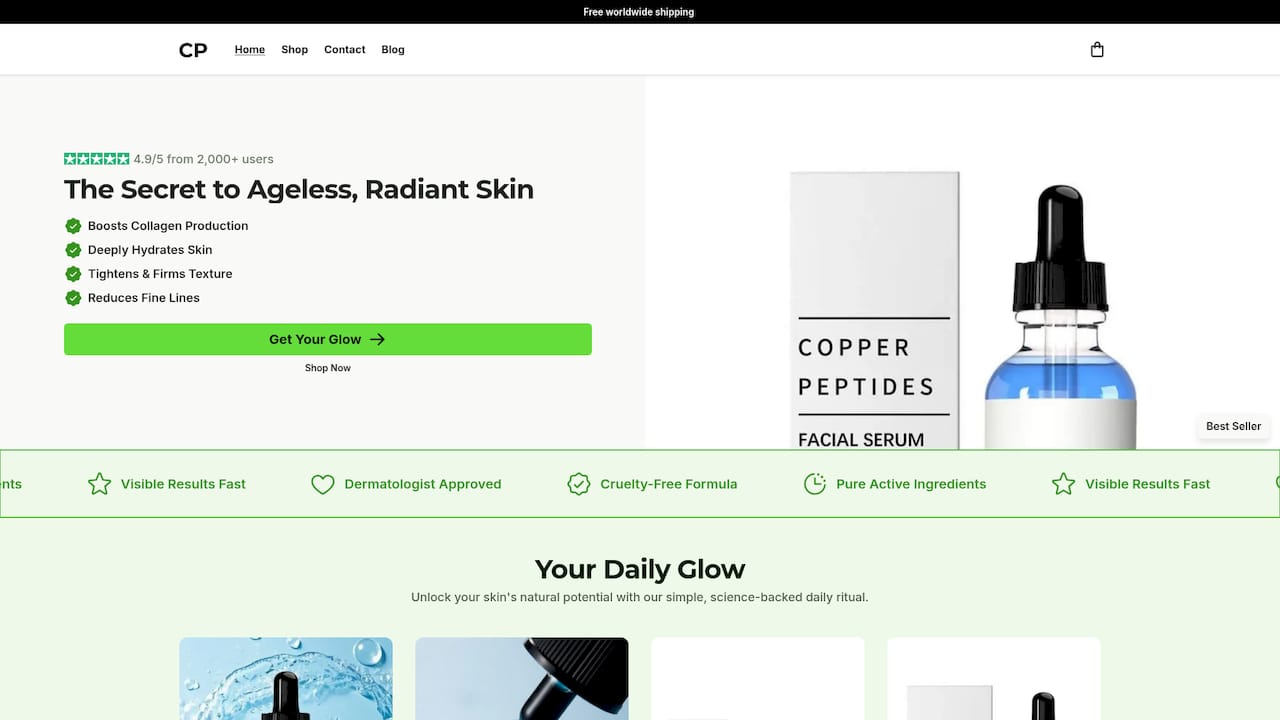
If you’ve read this far, you know formulation quality decides whether a peptide serum earns its price tag or just sits in a cabinet. Copperpeptides built its copper peptide anti-aging serum around that exact standard: a single-ingredient, high-purity copper peptide formula combined with medical-grade hyaluronic acid, nothing diluted, nothing vague on the label.
What sets it apart for readers weighing their options:
- Targets firmness, collagen support, and hydration in one formulation rather than a crowded, unstable blend.
- Formulated for stability, addressing the same pH and delivery concerns covered in the buying checklist above.
- Suited to all skin types, including sensitive skin, and dermatologist-endorsed for gentler long-term use.
- Visible results typically appear within four to six weeks of consistent, twice-daily application.
If you’re ready to see what a stable, well-dosed copper peptide formula can do for your skin, visit the Copperpeptides store to check current availability and start your order.
Sources
- An Open‐Label Study to Assess the Efficacy and Tolerability of a Multifunctional, 10‐Peptide Face and Neck Serum to Address Skin Quality - PMC
- Peptides for skin: Uses, Benefits and Side Effects - Cleveland Clinic Health Essentials
Recommended
- Peptides for Beginners: Copper Peptide Serums Guide – Copper Peptides Store
- Best Serums for Crepey Skin: Dermatologist-Backed Picks – Copper Peptides Store
- Best Copper Peptide Serums: Expert-Vetted Picks for 2026 – Copper Peptides Store
- Dermatologist Approved Skincare: Best Copper Peptide Serum – Copper Peptides Store