

The best copper peptide serum for most people is the Copper Peptide Anti-Aging Serum from Copperpeptides — a high-purity GHK-Cu formula in an airless pump that delivers real structural support for skin without the instability problems that sink cheaper options. Dermatologists describe copper peptides as “skin longevity” tools that build collagen and elastin over time rather than offering overnight fixes, so the serum you pick needs a stable, well-formulated vehicle to actually deliver results. Expect visible improvement in texture, hydration, and firmness with consistent use over several weeks.
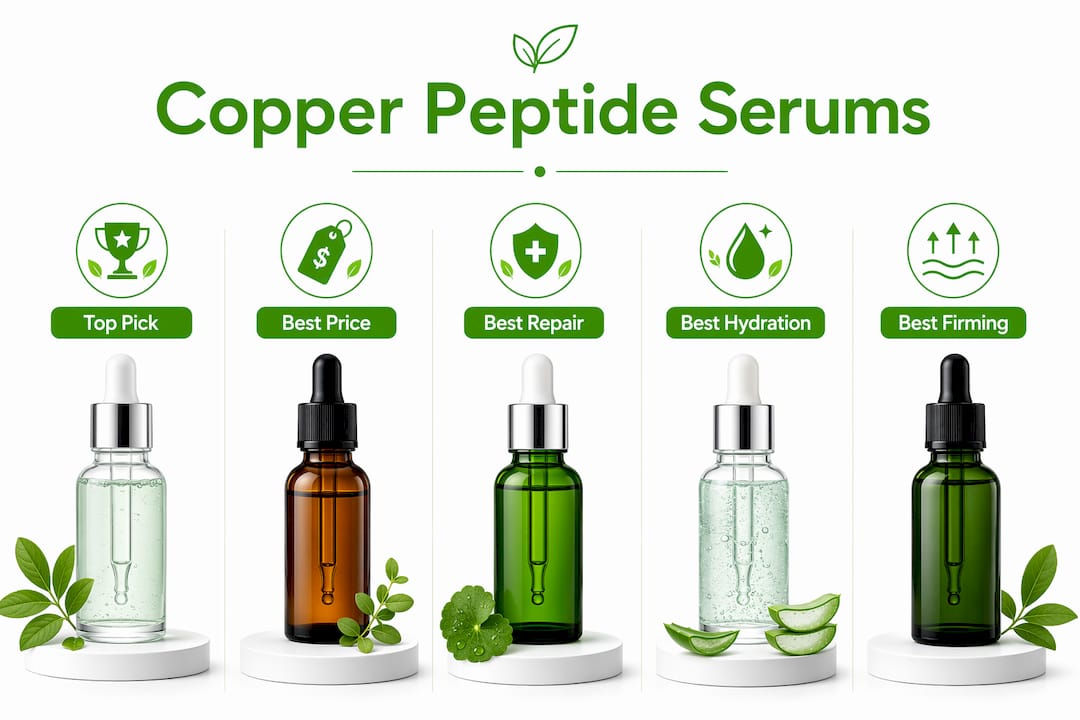
Top 5 quick picks:
- Best overall: Copper Peptide Anti-Aging Serum — Copperpeptides (high-purity GHK-Cu, airless pump, dermatologist-endorsed, all skin types)
- Best budget: The Ordinary Multi-Peptide + Copper Peptides 1% Serum (transparent INCI, accessible price per mL)
- Best for dry skin: Biossance Squalane + Copper Peptide Rapid Plumping Serum (squalane + hyaluronic acid for immediate moisture)
- Best for sensitive or acne-prone skin: CosRx The 6 Peptide Skin Booster (lightweight, fast-absorbing, gentle vehicle)
- Best for intensive repair: Allies of Skin Copper Tripeptide & Ectoin Advanced Repair Serum (ectoin + multi-peptide barrier support)
Table of Contents
- How the top copper peptide serums compare
- Why the Copperpeptides serum earns the top spot
- The other top contenders and what they’re each best for
- How to choose the right copper peptide serum for your skin
- How to apply a copper peptide serum without wasting it
- What not to mix with copper peptides
- How we evaluated these serums
- Key Takeaways
- Why the formulation standards behind this recommendation matter
- The Copperpeptides serum: where to buy and what to expect
- Sources and further reading
How the top copper peptide serums compare
| Product | Best For | Key Actives / GHK-Cu | Packaging | Skin Type | U.S. Availability | Derm/Clinical Support | Results Timeline |
|---|---|---|---|---|---|---|---|
| Copper Peptide Anti-Aging Serum — Copperpeptides | Barrier repair, hydration, all-around anti-aging | High-purity GHK-Cu + medical-grade HA | Airless pump, opaque | All types, incl. sensitive | Direct (copperpeptides.store) | Dermatologist-endorsed | 4–6 weeks |
| Allies of Skin Copper Tripeptide & Ectoin Advanced Repair Serum | Intensive repair, stressed/damaged skin | Copper tripeptide + ectoin + multi-peptide | Dropper | Most types | Brand site, Sephora | NEA Seal of Acceptance | Several weeks |
| The Ordinary Multi-Peptide + Copper Peptides 1% Serum | Budget entry-level peptide exposure | 1% copper peptides + multi-peptide blend | Dropper | Most types | DECIEM, Sephora, Target | High INCI transparency | Several weeks |
| Biossance Squalane + Copper Peptide Rapid Plumping Serum | Dry/dull skin, immediate plumping | Copper peptides + squalane + HA | Dropper | Dry, normal | Sephora, brand site | Clean beauty certified | Several weeks for hydration effect |
| INNBEAUTY Project Elastic Skin Growth Factor Serum | Firming + calming for dry/acne-prone | Peptides + growth factor analogs + humectants | Dropper | Dry, acne-prone | Brand site, Ulta | Peptide + GF blend | Several weeks |
| CosRx The 6 Peptide Skin Booster | Sensitive skin, daily layering | 6-peptide blend, lightweight vehicle | Dropper | Sensitive, oily | Amazon, Ulta, brand site | Gentle formulation | Several weeks |
| Medik8 Liquid Peptides Advanced MP | Fine lines, expression wrinkles | Complex multi-peptide blend | Dropper | Most types | Medik8 US, Dermstore | Clinically positioned | Several weeks |
| Peach & Lily Copper Peptide Pro Firming Serum | Firming, texture improvement | Copper peptides + firming cofactors | Dropper | All types | Ulta, brand site | Consumer-friendly formula | Several weeks |
Pro Tip: Price per mL varies widely across this list. The Ordinary delivers the lowest cost per mL, but GHK-Cu concentration (practical cosmetic range: 1–3% for most market formulations) and packaging stability matter more than raw volume — a cheaper serum in a jar exposed to air degrades faster than a pricier one in an airless pump.
Why the Copperpeptides serum earns the top spot
The Copperpeptides Anti-Aging Serum is built around two things that most competitors compromise on: high-purity GHK-Cu as the primary active and a stabilizing vehicle that keeps it effective from first pump to last. Medical-grade hyaluronic acid rounds out the formula, adding deep hydration without competing with the peptide complex. The airless, opaque pump is not just a packaging choice — it actively limits light and air exposure, which preserves peptide stability over the product’s shelf life in a way that dropper bottles and jars simply cannot match.
Strengths:
- High-purity GHK-Cu as the lead active, not buried in a multi-peptide blend
- Medical-grade hyaluronic acid for barrier hydration without occlusion
- Airless pump packaging protects formula integrity
- Dermatologist-endorsed and suitable for all skin types, including sensitive
- Cruelty-free; backed by a return policy that removes purchase risk
Limitations:
- Single-product focus means you need separate actives for exfoliation or retinoid benefits
- Not the lowest price per mL on the market
- Direct-to-consumer only (not available in physical retail stores)
Most users report noticeable improvement in skin texture and firmness after consistent use for several weeks. Apply at night on clean, dry skin, or split AM/PM if your routine allows. The return policy means you can try it without risk. Buy directly at Copperpeptides.
Clinical and lab studies confirm copper peptides stimulate collagen and glycosaminoglycan production — but they work as supportive, structural tools rather than rapid wrinkle erasers. Consistent daily use over weeks is what produces results.
The other top contenders and what they’re each best for
Each of the serums below fills a specific gap the Copperpeptides serum doesn’t target. Here’s where they actually earn their place.
Allies of Skin Copper Tripeptide & Ectoin Advanced Repair Serum The standout here is ectoin, a stress-protection molecule that pairs with copper tripeptide to rebuild barrier resilience after UV damage, pollution, or over-exfoliation. The National Eczema Association has recognized the formula, which is a meaningful signal for anyone with reactive or compromised skin. It costs more than most options on this list, but for skin that needs genuine recovery support, the multi-peptide plus ectoin combination is hard to beat.
The Ordinary Multi-Peptide + Copper Peptides 1% Serum At its price point, nothing else comes close for sheer accessibility. The INCI list is fully disclosed, and the 1% copper peptide concentration sits at the lower end of the 1–3% practical range cited in formulation commentary. Good for first-time peptide users or anyone building a routine on a tight budget. The dropper packaging is the main trade-off — less protective than an airless pump.
Biossance Squalane + Copper Peptide Rapid Plumping Serum Squalane is one of the most skin-compatible emollients available, and pairing it with copper peptides and hyaluronic acid creates a serum that addresses dryness and dullness fast. The “rapid plumping” claim reflects the hydration response more than structural collagen work. If your primary concern is dry, tight skin rather than deep wrinkles, this is the most comfortable daily option on the list.
INNBEAUTY Project Elastic Skin Growth Factor Serum Growth factor analogs are a different class of active from GHK-Cu, and this serum blends both approaches. The humectant base makes it well-suited for dry or acne-prone skin that needs firming without stripping. The formula is more complex than most, which means more potential for sensitivity — patch test first.
CosRx The 6 Peptide Skin Booster Thin, fast-absorbing, and gentle enough for daily use under SPF or makeup. The six-peptide blend doesn’t lead with GHK-Cu specifically, but the lightweight texture makes it the easiest option to layer without pilling. Best for sensitive skin types who want a peptide boost without committing to a heavier serum.
Medik8 Liquid Peptides Advanced MP Medik8 positions this as a targeted treatment for fine lines and expression wrinkles, with a complex peptide blend that includes signal peptides alongside structural ones. It fits best in an established anti-aging stack rather than as a standalone. Available through Medik8 US and Dermstore.
Peach & Lily Copper Peptide Pro Firming Serum A consumer-friendly formula that balances copper peptides with firming cofactors in a texture most people find easy to use daily. It doesn’t lead with concentration transparency the way The Ordinary does, but the accessibility and availability at Ulta make it a practical pick for anyone who prefers in-store shopping.
How to choose the right copper peptide serum for your skin
The label tells you most of what you need to know — if you know what to look for.
What to check on the label:
- GHK-Cu presence: It should appear in the INCI list by name. If it’s absent or buried after the tenth ingredient, the concentration is likely negligible.
- Concentration: 1–3% GHK-Cu is the practical cosmetic range. Higher isn’t always better without vehicle and penetration data to back it up.
- pH: Look for a near-neutral vehicle, ideally pH 5.5–7. Acidic formulas destabilize the copper complex.
- Packaging: Airless or opaque dispensers protect the formula. Jars and clear dropper bottles expose peptides to air and light.
- No ascorbic acid in the same bottle: Vitamin C and copper peptides compete chemically. A formula that combines them is a red flag for stability.
Decision rules by skin goal:
- Hydration + barrier repair: Copperpeptides serum (GHK-Cu + medical-grade HA, airless pump)
- Budget entry-level: The Ordinary (1% copper peptides, full INCI disclosure)
- Dry or dull skin: Biossance (squalane + copper peptides for immediate moisture)
- Sensitive or reactive skin: CosRx 6 Peptide Booster (lightweight, gentle vehicle)
- Post-procedure recovery: Allies of Skin (ectoin + copper tripeptide for barrier rebuilding)
Pro Tip: Pairing copper peptides with barrier-supporting ingredients like squalane or hyaluronic acid reduces irritation risk and improves hydration outcomes — look for serums that already include one of these, or layer them in your routine.
How to apply a copper peptide serum without wasting it
Apply to clean, fully dry skin. That single step prevents most of the pilling and absorption problems people run into. At night is the preferred timing for most routines, though splitting AM/PM works if your skin tolerates it.
Sequence and timing:
- Cleanse and pat skin completely dry.
- Apply 2–3 drops (or one pump) of the copper peptide serum directly to skin.
- Wait approximately 5 minutes before layering anything else. Applying a moisturizer or occlusive too quickly is the main cause of pilling.
- Follow with a moisturizer or barrier cream. At night, a heavier occlusive is fine after the wait time.
- In the morning, finish with SPF.
Layering rules that actually matter:
- Keep strong AHAs and BHAs on separate nights from your copper peptide serum. The low pH of exfoliating acids destabilizes GHK-Cu.
- Ascorbic acid (vitamin C) goes in the morning; copper peptides go at night. Never in the same application.
- Retinoids and copper peptides can coexist in a routine, but alternate nights if your skin is new to both.
Pro Tip: Apply to dry skin, not damp. Wet skin dilutes the serum and changes the pH microenvironment at the surface, which can reduce how effectively GHK-Cu absorbs.
What not to mix with copper peptides
The compatibility issue most people miss isn’t about irritation — it’s about chemistry. Low pH destabilizes the GHK-Cu complex, which means mixing copper peptides with acidic actives doesn’t just risk redness; it can neutralize the active ingredient before it does anything.
| Active | Handling Recommendation |
|---|---|
| AHAs (glycolic, lactic acid) | Separate nights, or use AHA in AM and copper peptides at night |
| BHAs (salicylic acid) | Same rule as AHAs — alternate evenings |
| Ascorbic acid (Vitamin C) | Use Vitamin C in the AM, copper peptides at PM only |
| Retinoids (retinol, tretinoin) | Alternate nights if new to both; can combine once skin is acclimated |
| Niacinamide | Generally compatible; no known destabilization |
| Squalane / HA | Complementary — pair freely |
| Benzoyl peroxide | Avoid same application; oxidizing agents can degrade peptides |
“Copper peptides are not a replacement for retinoids — they work through a different mechanism and are best used as complementary tools, either on alternate nights or in a split AM/PM routine.” — Westlake Dermatology
When to see a dermatologist: Persistent redness, itching, or breakouts after starting a copper peptide serum warrant a professional check — copper sensitivity is rare but real. If you’re using copper peptides post-procedure (laser, microneedling, chemical peel), they’re well-suited as recovery support, but they don’t replace in-office treatments when maximal wrinkle reduction is the goal.
How we evaluated these serums
Candidates were assessed on six criteria, weighted in this order: formulation quality, packaging stability, evidence and clinical support, safety profile, price/value, and usability.
Evaluation criteria:
- GHK-Cu presence and concentration: Verified via INCI list; flagged products where copper peptides appeared too low in the ingredient order to be meaningful.
- pH and vehicle stability: Near-neutral pH (5.5–7) required for GHK-Cu integrity, per formulation standards.
- Packaging: Airless or opaque dispensers scored higher than dropper bottles or jars.
- Evidence base: Clinical studies, PubMed-indexed research on copper peptide mechanisms, and dermatologist commentary informed efficacy claims.
- Safety: Checked for known destabilizing co-ingredients (ascorbic acid in the same formula), allergen potential, and sensitivity flags.
- Price/value: Evaluated on price per mL and concentration transparency, not raw bottle price.
Primary sources used:
- PubMed-indexed studies on GHK-Cu and collagen synthesis
- Westlake Dermatology clinical commentary
- Women’s Health dermatologist interviews
- FormBlends formulation analysis
- National Eczema Association product evaluations
- Get the Gloss beauty press roundups
This article is general information, not medical or dermatological advice. Confirm ingredient suitability for your specific skin condition with a licensed dermatologist.
Key Takeaways
The Copperpeptides Anti-Aging Serum leads this list because it combines high-purity GHK-Cu with a stable airless pump and dermatologist endorsements — the three factors that most directly predict whether a copper peptide serum actually works.
| Point | Details |
|---|---|
| Check the INCI list first | GHK-Cu must appear by name and near the top of the ingredient list to be effective. |
| pH and packaging matter as much as concentration | A near-neutral pH (5.5–7) and airless or opaque packaging preserve GHK-Cu stability. |
| Never mix with ascorbic acid or strong acids | Low-pH actives destabilize the copper complex; keep them in separate AM/PM applications. |
| Expect results over several weeks | Copper peptides build structural support gradually — consistent daily use is what drives improvement. |
| Copperpeptides serum is the top overall pick | High-purity GHK-Cu, medical-grade HA, and airless pump make it the strongest all-around option for U.S. buyers. |
Why the formulation standards behind this recommendation matter
Most copper peptide roundups rank by popularity or price. The criteria that actually predict whether a serum delivers — GHK-Cu concentration, vehicle pH, and packaging integrity — get glossed over because they require reading an INCI list rather than a star rating.
The Copperpeptides serum earns its top position because it satisfies all three of those formulation standards simultaneously. The airless pump isn’t a premium aesthetic choice; it’s the difference between a peptide complex that’s active at week eight and one that’s degraded by week three. The medical-grade hyaluronic acid isn’t filler — it creates the hydration environment that helps GHK-Cu penetrate rather than sit on the surface.
The honest trade-off: this serum is a structural, long-term tool. It won’t resurface skin the way a retinoid does, and it won’t deliver the immediate glow of a vitamin C serum. What it does — steadily, reliably — is support the collagen and barrier infrastructure that makes every other active in your routine work better. That’s the case for copper peptides generally, and it’s why formulation quality matters more here than in almost any other serum category.
Copperpeptides is the publisher of this article and the maker of the recommended serum. The evaluation criteria above were applied consistently across all products regardless of that relationship.
The Copperpeptides serum: where to buy and what to expect
Firmer, better-hydrated skin with fewer visible fine lines is a realistic outcome from the Copperpeptides Anti-Aging Serum — not in three days, but in four to six weeks of consistent use. The formula is built for all skin types, including sensitive, and the airless pump delivers a precise dose every time without exposing the remaining product to air.
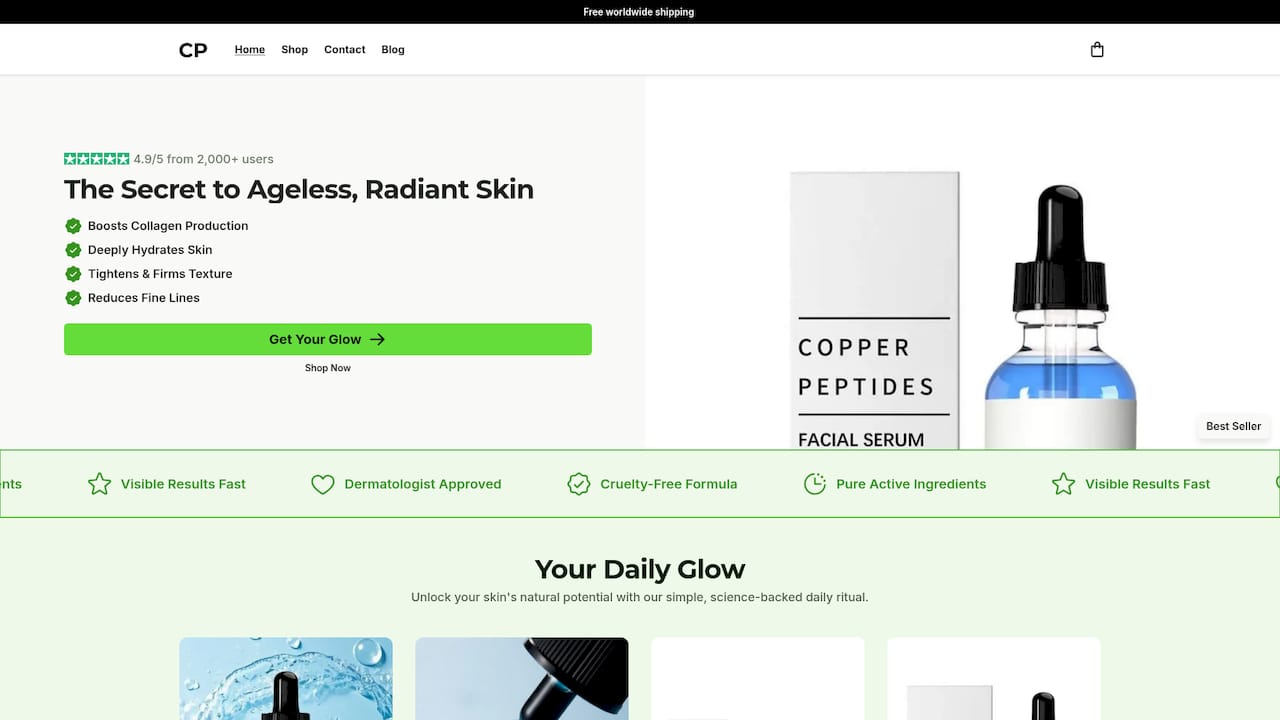
The serum is available exclusively through Copperpeptides, which means no retail markup and a direct return policy that protects your purchase. Dermatologist endorsements back the formula’s safety and efficacy claims. For storage, keep it away from direct sunlight and heat to maintain peptide stability — a bathroom cabinet or bedroom shelf works fine.
If you’ve been comparing options on this list and want the serum with the strongest formulation credentials and the lowest friction to try, this is the one to start with. Visit the product page, check the full ingredient list, and place your order directly.
Sources and further reading
The claims in this article draw on peer-reviewed research, clinical dermatology commentary, and formulation analysis. Key sources are listed below.
| Source | What It Covers |
|---|---|
| PMC4556990 — PubMed Central | Copper peptide mechanisms: collagen synthesis, wound healing, and skin remodeling |
| PMC10051580 — PubMed Central | Peptide activity in skin aging and barrier function |
| PMC5306286 — PubMed Central | GHK-Cu biological activity and cosmetic applications |
| Westlake Dermatology — GHK-Cu Trend | Clinical dermatologist commentary on copper peptide use, mixing rules, and realistic expectations |
| Women’s Health — Copper Peptides Explained | Dermatologist interviews on skin longevity framing and post-procedure use |
| FormBlends — Best Copper Peptide Serum | Formulation analysis: pH, concentration ranges, packaging, and pilling behavior |
| National Eczema Association — Product Evaluations | NEA Seal of Acceptance criteria for sensitive-skin product validation |
“GHK-Cu has been shown in laboratory and clinical settings to stimulate collagen and glycosaminoglycan synthesis — but topical delivery depends heavily on formulation pH, vehicle, and packaging integrity. A well-formulated serum in a stable dispenser is not optional; it’s the mechanism.” — Synthesized from PubMed Central research on GHK-Cu and FormBlends formulation analysis
How to evaluate a source’s credibility on copper peptides: Look for INCI transparency (full ingredient list with order), a Certificate of Analysis (COA) for concentration claims, and packaging that matches the stability requirements of the active. Marketing copy that omits pH or concentration data is a signal to dig deeper before buying.