

Apply hyaluronic acid before your moisturizer, on skin that’s still slightly damp from cleansing, and follow immediately with a moisturizer to seal it in. Don’t wait for the serum to dry first. This sequence, backed by dermatological guidance, works for morning and evening routines and matters more in dry climates.
TL;DR:
- Applying hyaluronic acid to damp skin and sealing with an occlusive moisturizer immediately is essential to prevent water loss and optimize hydration.
- Using too much serum or waiting for it to dry reduces the water your skin can retain, diminishing hyaluronic acid’s effectiveness.
- Applying hyaluronic acid to dry skin, especially in low-humidity conditions, can pull moisture from deeper layers and cause tightness or dryness.
- Adjust routines based on climate: use richer occlusives in dry environments and lightweight gels in humid conditions to maintain hydration.
- Most users should apply hyaluronic acid twice daily, but layering with other actives like retinoids requires careful sequencing to avoid irritation or reduced benefits.
Table of Contents
- How to Apply Hyaluronic Acid Before Moisturizer, Step by Step
- Why the Order Actually Matters
- Common Layering Mistakes That Undo the Benefits
- Adjusting the Routine for Humidity and Travel
- Morning vs. Night: Layering With SPF, Retinoids, and Other Actives
- The Evidence Behind This Routine
- Possible Side Effects and Skin Reactions
- How to Choose the Right Hyaluronic Acid for Your Skin
- Why We Recommend This Routine
- A Serum That Fits Right Into This Routine
- Sources
How to Apply Hyaluronic Acid Before Moisturizer, Step by Step
The order is simple, but the details of each step decide whether the routine actually hydrates your skin or leaves it tighter than before you started.
- Cleanse with a gentle, non-stripping cleanser. Pat your face so it’s slightly damp, not bone dry and not dripping.
- Apply a small amount of a water-based hyaluronic acid serum. Press it into your skin with your palms rather than rubbing it in with your fingertips.
- Follow immediately with a moisturizer that contains an occlusive ingredient (think shea butter, squalane, or a ceramide-rich cream). Don’t pause to let the serum dry.
- If you use a hydrating toner or lightweight antioxidant serum (like a vitamin C formula), apply it before the hyaluronic acid, since the rule is thinnest to thickest.
- In the morning, finish with sunscreen once your moisturizer has absorbed.
The timing question trips up a lot of people. There’s no waiting period. Moisturizer goes on right after hyaluronic acid, ideally within a minute, because the goal is to trap the water the serum just pulled into your skin before it evaporates. Healthline’s guidance on hyaluronic acid application backs this same sequence: treatment step first, occlusive moisturizer right behind it.
Pro Tip: If your serum feels tacky or takes a while to sink in, you’re probably using too much. Two to three drops covers the whole face. More product doesn’t mean more hydration, it just means more time waiting around for it to absorb.
Why the Order Actually Matters
Hyaluronic acid is a humectant. It binds water molecules and holds onto them, which is exactly why the sequence isn’t optional. A humectant needs a water source nearby to draw from. Applied to damp skin, it pulls from the moisture already sitting on the surface. Applied to bone dry skin, especially in a low-humidity room, it starts pulling water from deeper skin layers instead, which is the opposite of what you want.
Dermatologists sometimes describe hyaluronic acid as working “like a water balloon.” When it’s full of water, skin looks plumped and smooth. When there’s no water for it to hold, it can leave skin looking flatter than before, according to Harvard Health.
That’s where the moisturizer comes in. An occlusive moisturizer sits on top of skin and slows trans-epidermal water loss, the process by which water evaporates off your face into the air. Without that seal, whatever moisture hyaluronic acid just gathered escapes within minutes, particularly in a heated or air-conditioned room. Healthline notes that moisturizers containing occlusives like petrolatum or mineral oil are specifically what locks in the hydration hyaluronic acid draws to the surface.
The mechanism, in short: hyaluronic acid can hold up to roughly a thousand times its weight in water, a property described in reviews of its biomedical applications, which is precisely why it’s so widely used across serums, creams, and injectable treatments alike.
Waiting for the serum to fully dry before moisturizing wastes that window. Once evaporation starts, you’ve lost some of the benefit before your moisturizer ever touches your skin.
Common Layering Mistakes That Undo the Benefits
Most of the disappointment people report with hyaluronic acid traces back to a handful of habits, not the ingredient itself.
- Applying it to completely dry skin. In a low-humidity room, this can pull moisture from deeper skin layers rather than the surface, leaving skin feeling tighter, an effect documented in clinical notes on HA “backfiring”.
- Skipping the moisturizer afterward. Letting hyaluronic acid sit alone as your last step, especially overnight or in winter, gives it nothing to seal in.
- Stacking multiple humectant-heavy products with no occlusive. Layering three watery, hydrating serums back to back without a cream on top often ends in a tacky feel and, ironically, more water loss, not less.
- Rushing pH-sensitive actives right after hyaluronic acid. If you’re using a strong exfoliating acid, check the product’s own directions. Some brands recommend applying acids to dry skin first and using hyaluronic acid as a buffer afterward.
None of these mistakes are dramatic on their own. But stack two or three together, skip the moisturizer, apply to dry skin, layer three serums, and a genuinely good ingredient starts getting blamed for a routine problem it didn’t cause.
Adjusting the Routine for Humidity and Travel
Climate changes the math, even though the sequence stays the same. In dry, low-humidity air, apply hyaluronic acid to damp skin and move immediately to a richer, more occlusive night cream, something with shea butter or a petrolatum base holds up better than a light lotion. A hydrating facial mist midday gives the humectant something to grab onto if your skin starts feeling parched between applications.
Humid climates need the opposite adjustment. A heavy cream on top of hyaluronic acid in July heat just sits there feeling greasy. Swap in a lightweight gel-cream or lotion instead, and still finish with some occlusive, even a thin one, so the hydration doesn’t just evaporate off in the humidity anyway.
- Dry climate: damp skin, HA serum, richer occlusive cream, midday mist as needed.
- Humid climate: damp skin, HA serum, lightweight gel-cream or lotion.
- Air travel: mist periodically during the flight, and never let more than a few minutes pass between applying HA and sealing it in with moisturizer.
Pro Tip: Airplane cabin air runs drier than most deserts. If you’re flying long haul, skip the elaborate ten-step routine and just keep a travel-size mist and a thicker balm on hand, misting and resealing every couple of hours.
Morning vs. Night: Layering With SPF, Retinoids, and Other Actives
Most people can use hyaluronic acid twice daily, morning and evening, without any issue, since it’s considered gentle enough for all skin types. The two routines just end differently.
- Morning: cleanse, apply HA to damp skin, moisturize immediately, then finish with sunscreen once the moisturizer has absorbed.
- Night: cleanse, apply any pH-sensitive actives like retinoids or exfoliating acids per that product’s own instructions, then follow with hyaluronic acid and moisturizer.
One detail worth knowing if you use retinoids: applying hyaluronic acid can actually reduce the irritation and flaking that retinoids sometimes cause, acting as a buffer layer between the active and your skin, a pairing supported by dermatologist guidance. The general layering rule holds regardless of time of day: thinnest, most water-based products go first, thicker creams go last. Hyaluronic acid, being water-based, almost always belongs in that early “treatment” slot, right before your moisturizer closes things out.
The Evidence Behind This Routine
Dermatologists consistently describe hyaluronic acid as gentle enough for twice-daily use across skin types, a point echoed by both Harvard Health and the Cleveland Clinic, which also notes that topical HA products are generally considered safe, though oral supplements warrant a conversation with a healthcare provider first.
Some users of copper peptide and hyaluronic acid products report visible improvements in skin firmness and hydration within a few weeks of consistent use, a timeline consistent with what dermatologists endorse for gentle, twice-daily hyaluronic acid use… Some companies back their formulations with return policies built around long-term trust rather than a single sale.
Possible Side Effects and Skin Reactions
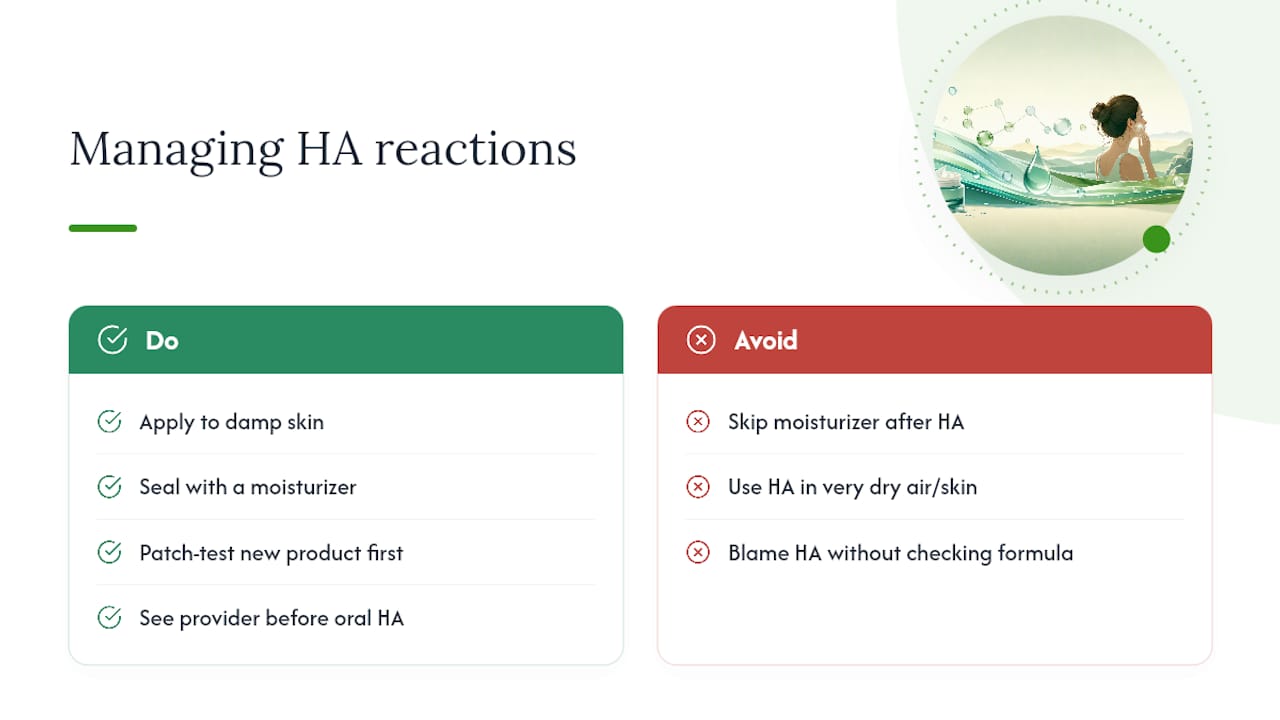
Topical hyaluronic acid has a strong safety record, and the Cleveland Clinic considers it generally safe for most skin types. True allergic reactions to topical HA are uncommon. When irritation does show up, it’s usually a formulation issue, not the hyaluronic acid itself. Fragrance, alcohol, or added acids in a serum can cause redness or stinging that gets mistakenly blamed on the HA.
The other reaction worth knowing about isn’t an allergy at all: paradoxical dryness. Apply hyaluronic acid to skin that’s too dry, in a room that’s too dry, and skip the moisturizer, and you can end up with tighter, flakier skin than when you started, since the humectant pulled moisture from deeper layers instead of adding any. This isn’t a sensitivity issue. It’s a sequencing issue, and it’s fixable by applying to damp skin and sealing with a moisturizer every time.
If you notice persistent redness, itching, or breakouts after starting a new hyaluronic acid product, patch test a small area for a few days before applying it to your whole face. And if oral hyaluronic acid supplements are on your radar rather than topical serums, that’s a conversation to have with a healthcare provider first, since the safety data there is less settled than for topical use.
How to Choose the Right Hyaluronic Acid for Your Skin
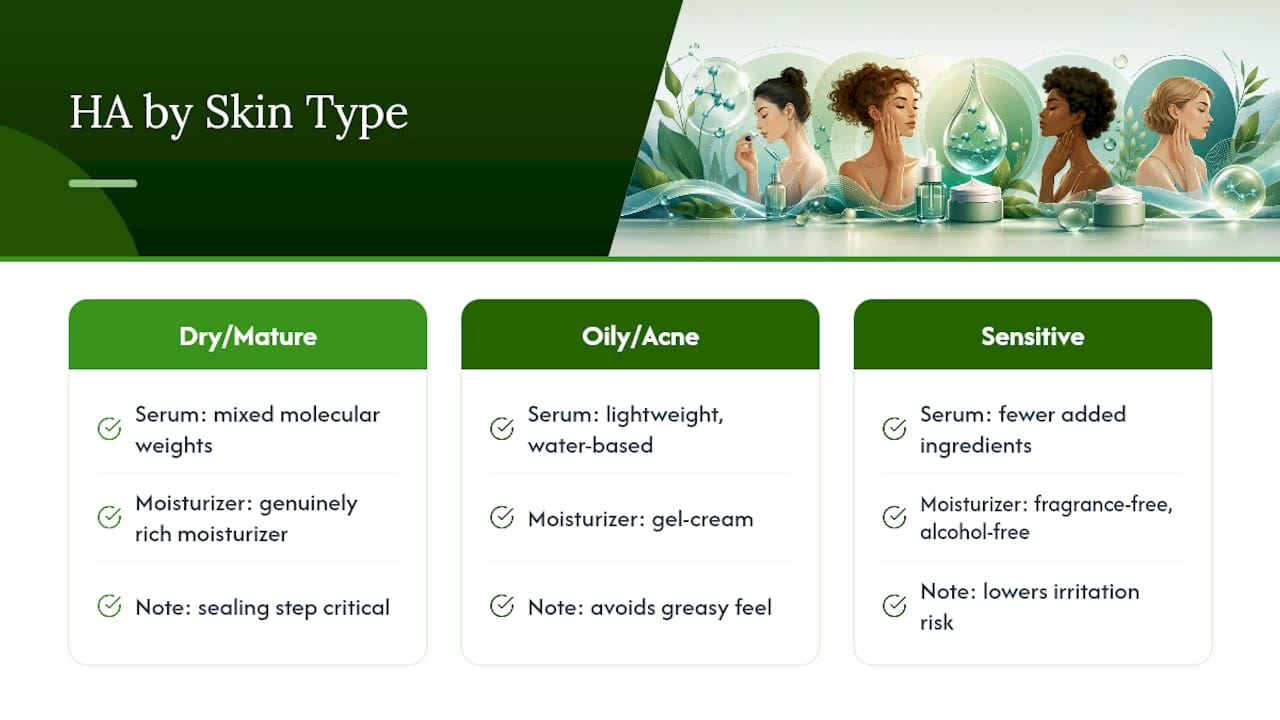
Not every hyaluronic acid serum behaves the same way, and the differences come down to molecular weight. Low molecular weight HA penetrates deeper into skin, while high molecular weight HA sits closer to the surface, forming a hydrating film. Many well-formulated serums blend both, which is worth checking for on the ingredient label if you can find it.
For dry or mature skin, look for a serum layered with a genuinely rich moisturizer, since dryness makes the sealing step even more critical. For oily or acne-prone skin, a lightweight, water-based HA serum paired with a gel-cream avoids the greasy feel some richer formulas cause. For sensitive skin, fewer added ingredients is generally safer. Fragrance-free, alcohol-free formulas cut down on irritation risk substantially.
If you’re combining hyaluronic acid with other actives long-term, it’s worth reading how copper peptides pair with hyaluronic acid in a layered routine, since the two ingredients tend to complement rather than compete with each other. Whatever product you land on, the sequencing rule doesn’t change: damp skin, HA, moisturizer, no gap in between.
Why We Recommend This Routine
The mistake we see most often isn’t choosing the wrong product, it’s treating hyaluronic acid as a finishing step instead of a bridge to the moisturizer. Customers who switch to applying it on damp skin and sealing immediately almost always report less tightness within days, not weeks. That’s consistent with what dermatologists have said for years: hyaluronic acid needs water to hold onto, and a good moisturizer is what keeps that water from disappearing. If you’re building out a fuller routine, our guide on layering copper peptides with other actives covers how to fit hyaluronic acid alongside firming ingredients without overcomplicating things.
— British
A Serum That Fits Right Into This Routine
If you’re already applying hyaluronic acid before moisturizer, Copperpeptides’ Copper Peptide Anti-Aging Serum fits into that same sequence rather than replacing it. The serum combines high-purity copper peptides with medical-grade hyaluronic acid in a single formulation, so it handles the hydration step and the collagen-support step at once.
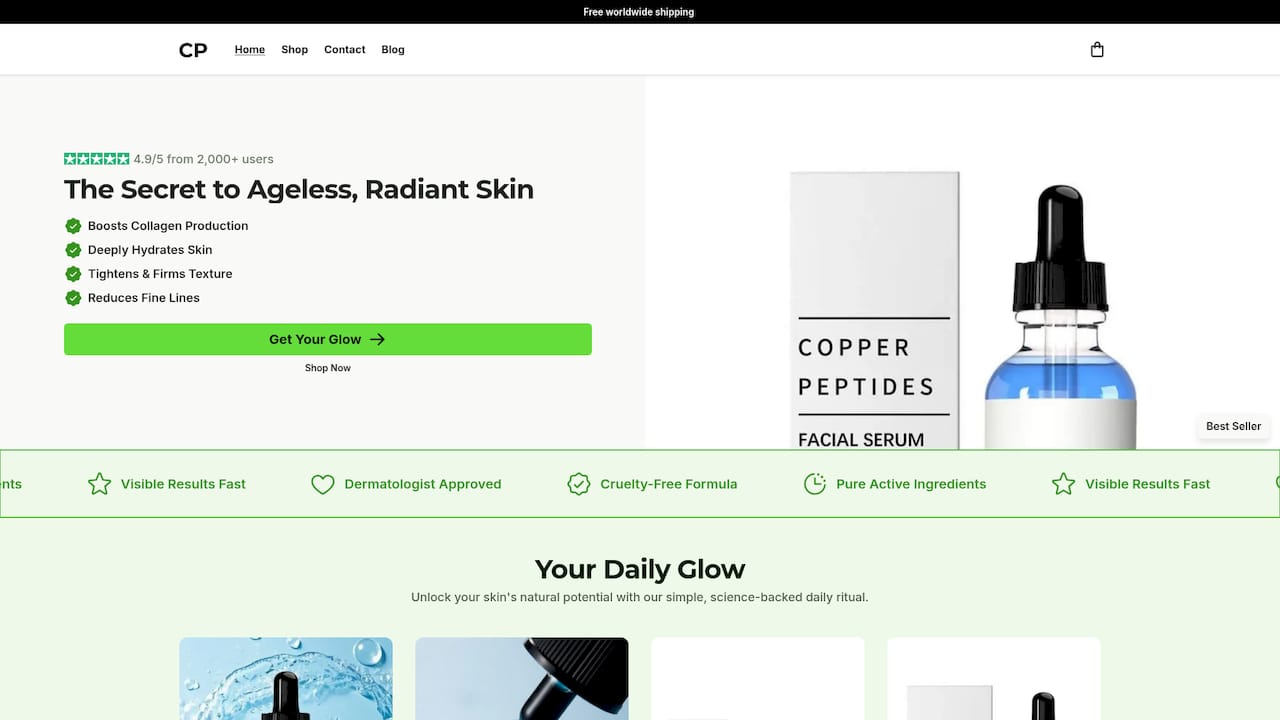
In practice, that means applying it to slightly damp, cleansed skin and following immediately with your regular moisturizer, exactly the sequence covered above. The formulation is designed to be gentle enough for sensitive skin while still working toward firmer texture and fewer fine lines over four to six weeks of consistent use. If your current routine already includes a separate copper peptide product, check the product page for full ingredient details and how it fits alongside what you’re using now.
Sources
- Hyaluronic acid for skin: Benefits, how to use it, and side effects - Harvard Health
- How to Use Hyaluronic Acid: Tips, Product to Try, and More - Healthline
- Hyaluronic acid: structure, production and biomedical applications - PMC
- Hyaluronic acid - Cleveland Clinic