

Low molecular weight hyaluronic acid is a smaller HA fragment, generally under 100 kDa, that penetrates skin more readily than the high molecular weight form sitting on the surface of most moisturizers. Used at the right fragment size or blended into a multi-weight serum, it can measurably improve hydration, elasticity, and post-procedure recovery. The catch: fragments at or below 20 kDa can trigger inflammatory signaling in lab studies, so size selection matters more than the “hyaluronic acid” label on the bottle.
TL;DR:
- Fragments below 20 kDa penetrate skin more deeply and can activate inflammatory pathways, so product labeling alone often does not reveal true fragment size.
- Multi-weight serums combine different HA sizes to provide immediate surface hydration and deeper biological signaling, balancing efficacy and safety.
- Clinical evidence supports LMW-HA’s role in improving skin hydration, reducing wrinkles, and aiding wound healing, with visible results typically appearing within two to eight weeks.
- Safety assessments show that HA fragments above 20 kDa have a low risk of inflammatory activation, with regulatory reviews rating HA as safe in cosmetic formulations.
- When choosing HA products, confirm the actual molecular weight ranges, total concentration, and sourcing details to ensure effective and safe skincare.
Table of Contents
- What Low Molecular Weight Hyaluronic Acid Actually Means
- How Molecular Size Changes What HA Does In Skin
- What Clinical Trials Actually Show About LMW‑HA
- Is Low Molecular Weight Hyaluronic Acid Safe To Use?
- Choosing A Product: Concentration, Blends, And Labels That Matter
- Building LMW‑HA Into Your Skincare Routine
- How Copperpeptides’ Formulation Reflects This Research
- What Still Needs To Be Answered About LMW‑HA
- Where LMW‑HA Fits If You Want Results Without Guessing On Fragment Size
- Sources
What Low Molecular Weight Hyaluronic Acid Actually Means
Hyaluronic acid (HA) is a naturally occurring polysaccharide, a long chain of sugar units that your skin, joints, and eyes used to hold water and cushion tissue. In its native state, HA in the body can stretch to several million daltons in molecular weight. That’s enormous for a biomolecule, and it’s exactly why native HA can’t slip past the outer layer of skin on its own.
Low molecular weight hyaluronic acid (LMW‑HA) refers to HA that has been broken into smaller chains, typically through controlled enzymatic or chemical fragmentation. The literature doesn’t use one single cutoff, but you’ll commonly see these rough bands cited across dermatology reviews:
- High molecular weight (HMW‑HA): above 1,000 kDa, sits on the skin’s surface and forms a hydrating film.
- Medium molecular weight: roughly 100 to 1,000 kDa, partial penetration into the upper epidermis.
- Low molecular weight (LMW‑HA): roughly 10 to 100 kDa, penetrates deeper into the epidermis and upper dermis.
- Oligo or ultra-low molecular weight: below 10 to 20 kDa, penetrates furthest but carries the size-dependent inflammatory concerns discussed later.
Ingredient labels rarely spell out the kDa range, which is part of the confusion. On an INCI list, you’ll usually see “sodium hyaluronate” (the salt form of HA, more stable and more common in formulations) or occasionally “hydrolyzed hyaluronic acid,” which signals that the manufacturer has deliberately cut the polymer into smaller pieces. Neither term by itself tells you the actual molecular weight. A product can call itself “hydrolyzed” and still land anywhere between 5 kDa and 90 kDa, so the naming convention is a starting clue, not a spec sheet.
If you want to know the actual fragment size, the label alone won’t get you there. A short checklist helps:
- Look for a technical data sheet (TDS) or certificate of analysis on the brand’s ingredient supplier page, not just the retail product page.
- Search the product name plus “kDa” or “molecular weight” to see if the brand has published it anywhere, including on Instagram or in press materials.
- Contact the manufacturer directly. Reputable HA suppliers publish kDa ranges for their raw ingredient; if a skincare brand sources from one of them, they usually know the number.
- Treat vague marketing terms like “micro-molecular” or “nano hyaluronic acid” with skepticism. These aren’t standardized scientific terms, and reputable reviews on molecular-weight-dependent HA behavior rely on kDa figures, not marketing shorthand.
Multi-weight or hybrid serums, which combine two or more HA fragment sizes in one formula, sidestep some of this ambiguity by design. Understanding the difference between hyaluronic acid and sodium hyaluronate also helps you read ingredient panels with more confidence, since the salt form dominates modern formulations for stability reasons rather than performance alone.
How Molecular Size Changes What HA Does In Skin
Size determines behavior. That’s the single fact that explains almost every clinical difference between HMW‑HA and LMW‑HA, and it comes down to two separate biological stories: how far a molecule can physically travel through skin, and how skin cells respond once it arrives.
Penetration depends on the stratum corneum acting like a sieve. Large HA molecules, the kind you’d find in a basic moisturizing gel, are too big to pass through intact skin and instead sit on the surface, drawing in atmospheric moisture and slowing water loss. Fragments below roughly 100 kDa behave differently. Reviews synthesizing this evidence point to a consistent pattern: as molecular weight drops, penetration into the epidermis and upper dermis increases, and the smallest fragments, below about 20 kDa, reach the deepest layers tested in skin models.
Once inside, HA fragments interact with cell receptors, and this is where the size story gets more interesting than a simple “smaller is better” narrative. Two receptor systems matter most:
- CD44, the primary HA receptor on keratinocytes and fibroblasts, binds HA fragments of varying sizes and helps regulate cell migration, proliferation, and the signaling that supports collagen remodeling.
- Toll-like receptors (TLR2 and TLR4), part of the innate immune system, recognize HA fragments as a potential danger signal, a leftover evolutionary response to tissue injury, since fragmented HA appears naturally at wound sites.
Here’s the tension that makes fragment size a genuine formulation decision rather than a marketing footnote: CD44 engagement tends to support the “good” outcomes people want from HA, tissue remodeling, fibroblast activity, wound repair signaling. TLR engagement, on the other hand, is more associated with inflammatory signaling. Cell studies cited in dermatology reviews indicate that HA fragments at or below 20 kDa are more likely to activate TLR4 and drive pro-inflammatory markers like TNF-alpha in laboratory models.
Fast fact: fragments under roughly 20 kDa show pro-inflammatory receptor activity in cell-culture studies, while fragments in the 50 kDa and above range appear to favor CD44-mediated remodeling signals without the same inflammatory profile, according to the EMJ scoping review on LMW‑HA in dermatology.
There’s also a hydration tradeoff worth understanding before you assume “deeper penetration” automatically means “better hydration.” Water-binding capacity in HA is partly a function of chain length. A large HMW‑HA molecule can hold vastly more water per molecule than a small fragment simply because it has more surface area and more sites for water molecules to attach. That’s why HMW‑HA remains the workhorse for surface hydration and that plumped, dewy look people associate with hyaluronic acid serums.
LMW‑HA isn’t competing on raw water-holding capacity. It’s doing a different job: reaching cells that HMW‑HA never touches and triggering biological activity once it’s there, including signals tied to angiogenesis (new blood vessel formation supporting tissue repair) and antioxidant activity noted across the scoping review’s synthesis of preclinical and clinical studies. That’s the practical reason dermatology formulators increasingly favor combining weights rather than picking one size and calling it done. You get surface hydration from the large molecules and deeper biological signaling from the small ones, without leaning entirely on the size range most associated with inflammatory activation in lab models.
What Clinical Trials Actually Show About LMW‑HA
Cell studies explain the mechanism, but clinical trials are what tell you whether any of this translates into visible skin change. The evidence here is real, if still limited in scale, and it spans three delivery routes: topical, oral, and injectable or hybrid formulations used in dermatologic procedures.
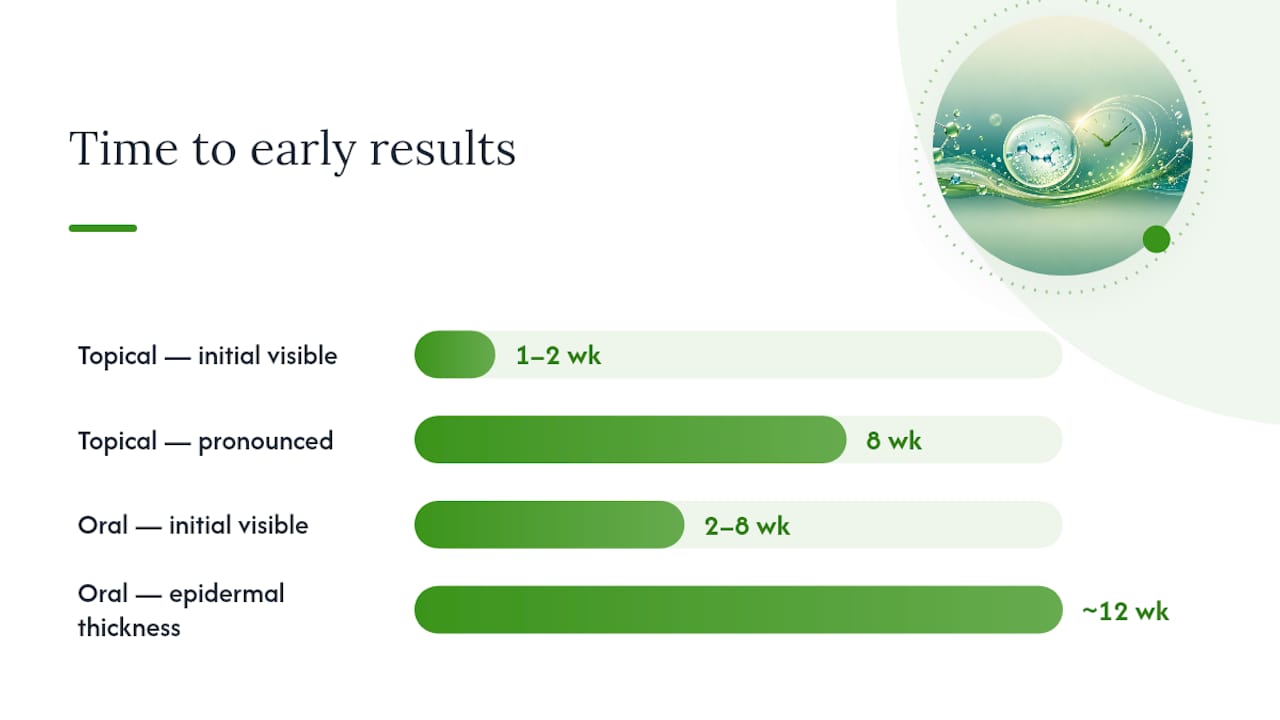
Adjusted for molecular weight, the study documented measurable improvements in skin hydration and reductions in wrinkle depth, with some multi-weight formulations showing visible changes within one to two weeks and more pronounced results by eight weeks. That timeline matters for setting expectations: LMW‑HA serums aren’t an overnight fix, but they’re also not a three-month commitment before you see anything.
Broader dermatologic applications. A 2024 scoping review pulled together clinical and preclinical evidence across a wider set of use cases than the standard “wrinkle cream” framing suggests. The review noted signals supporting LMW‑HA’s role in:
- Wound healing, tied to the angiogenic and remodeling signals described in the mechanism research above.
- Rosacea management, where barrier support and reduced transepidermal water loss appear relevant.
- Scar appearance, particularly in post-procedure and post-surgical contexts.
- Hybrid dermal fillers, where LMW‑HA fragments are combined with HMW‑HA or cross-linked HA to balance volumizing effects with tissue integration.
The review describes LMW‑HA as showing evidence of antioxidant, angiogenic, and wound-healing activity, with topical and hybrid formulations penetrating skin more readily than high molecular weight HA, based on a synthesis of small clinical and preclinical studies rather than one definitive trial.
That’s an important qualifier. The EMJ scoping review is explicitly a synthesis of smaller studies, not a single large trial settling the question. It’s strong enough evidence to justify the clinical interest LMW‑HA has attracted, but readers should understand the difference between “consistent signal across multiple small studies” and “one landmark trial with thousands of participants.” Dermatology, especially for cosmetic ingredients, rarely gets the latter.
Oral HA. This route surprises people who assume HA only works when applied directly to skin. Randomized trials using oral HA supplementation, typically dosed around 100 to 200 mg per day, reported improved skin hydration within two to eight weeks, with some studies documenting increased epidermal thickness after roughly 12 weeks of continued use. The mechanism differs from topical application entirely. Oral HA gets broken down in digestion and appears to influence the body’s own HA synthesis and turnover rather than delivering intact fragments to skin tissue directly.
Post-procedure use. This is where fragment size and delivery method intersect most directly with clinical practice. After procedures like microneedling, laser resurfacing, or chemical peels, skin barrier integrity is temporarily compromised, and clinicians increasingly favor LMW‑HA formulations, sometimes delivered through needleless systems like jet injection, to support hydration and reduce recovery time without introducing harsh actives. The rheology and viscosity of the formulation matters here as much as the raw kDa number, since a high-viscosity LMW preparation can behave differently in tissue than a thin, low-viscosity one at the same nominal molecular weight.
Taken together, the clinical picture supports LMW‑HA as genuinely useful across multiple applications, with the strongest data behind topical hydration and wrinkle depth, and reasonably solid support for oral supplementation timelines. The wound-healing, rosacea, and hybrid filler applications rest on a thinner and more preliminary evidence base, promising, but not yet backed by the volume of large-scale trials that topical hydration claims have.
Is Low Molecular Weight Hyaluronic Acid Safe To Use?
Yes, at the concentrations and fragment sizes used in typical cosmetic products, and the safety data behind that answer is more robust than most skincare ingredient claims get. But “safe in general” and “safe regardless of fragment size” are two different statements, and conflating them is where a lot of confused product marketing comes from.
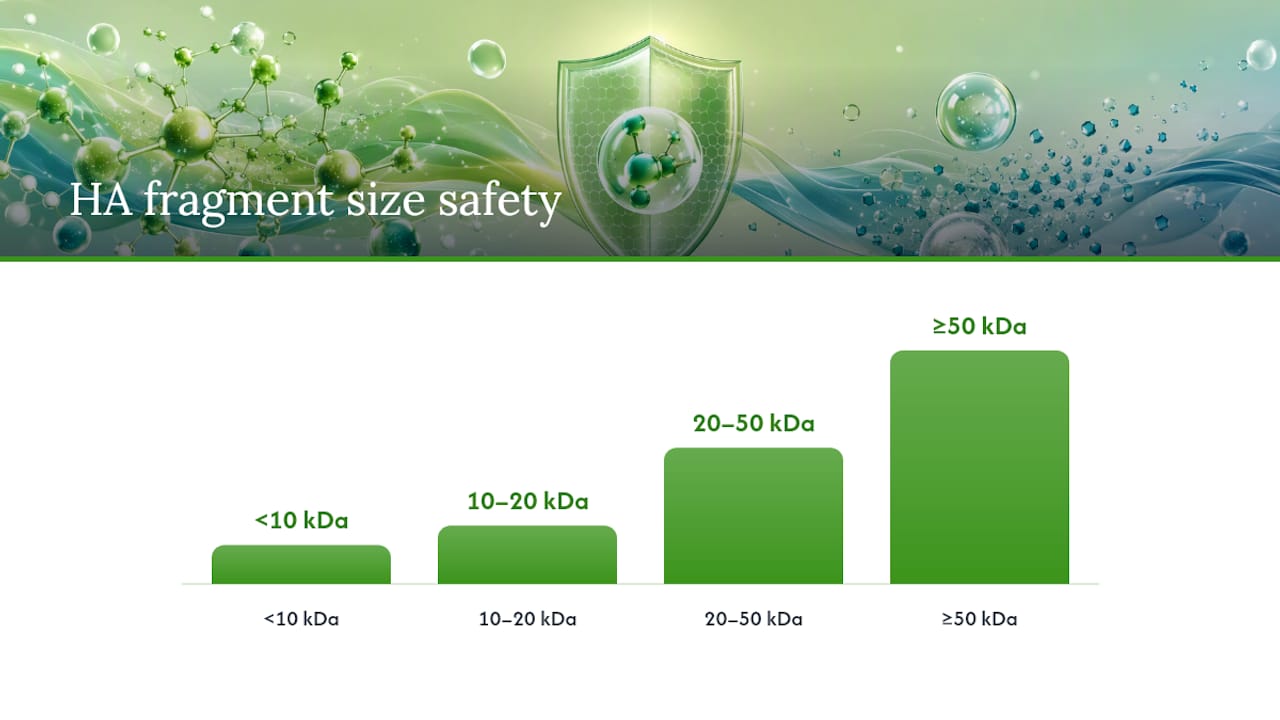
The concern traces back to the receptor biology covered earlier. Cell-culture studies have shown that HA fragments at or below roughly 20 kDa can activate TLR4 signaling and increase inflammatory markers like TNF-alpha. That’s a real finding, replicated across multiple lab studies, and it’s the reason dermatology reviews flag ultra-low molecular weight fragments as a category worth watching rather than automatically assuming smaller is safer or more effective.
Here’s the nuance that keeps this from being alarming: those inflammatory signals show up primarily in isolated cell models, not in the whole-skin clinical trials described in the previous section. The scoping review notes that clinical translation is context-dependent, and that topical and oral studies using fragments above the ultra-low range have generally reported favorable safety profiles alongside their efficacy findings. A lab dish isn’t intact skin with its full barrier, immune regulation, and enzymatic environment, so a signal in a petri dish doesn’t automatically predict a rash on your face.
Regulatory bodies back this up at a structural level. Safety assessments from bodies like the Cosmetic Ingredient Review (CIR) and the Scientific Committee on Consumer Safety (SCCS) have evaluated hyaluronic acid for cosmetic use and rated it safe at customary concentrations, a conclusion reinforced by large post-market safety analyses covering years of consumer use across countless HA-containing products. That’s meaningfully different from a single small trial; it’s an aggregate view across a huge population of real-world users.
Practically, here’s how to translate all of this into a shopping decision:
- Skip products that market ultra-low kDa fragments as a selling point. If a brand is specifically advertising sub-10 kDa or sub-20 kDa fragments as superior penetration, treat that as a yellow flag rather than a premium feature.
- Favor 50 kDa and above LMW‑HA, or hybrid multi-weight formulas. This range appears to preserve meaningful penetration benefits while sitting outside the size band most associated with inflammatory receptor activation in lab studies.
- Patch-test new formulations after any in-office procedure. Post-microneedling or post-peel skin has a temporarily altered barrier, and even well-tolerated ingredients deserve a small test area first when skin is compromised.
- Ask about sourcing if you have a history of sensitive or reactive skin. Manufacturers sourcing from reputable HA suppliers can typically confirm fragment size ranges on request, even when it’s not printed on the retail label.
None of this means LMW‑HA is a risky ingredient category overall. It means fragment size is a real formulation variable, not a footnote, and the safety data supports thoughtful selection over blanket avoidance or blanket trust.
Choosing A Product: Concentration, Blends, And Labels That Matter
Concentration is the second variable that determines whether an LMW‑HA product does anything measurable, and it’s just as poorly communicated on packaging as molecular weight.
Multi-weight, or hybrid, serums have become the pragmatic answer to the “which molecular weight should I buy” question, largely because they don’t force you to pick one job for the ingredient to do. A well-formulated hybrid product typically layers three tiers of function:
- Surface tier (HMW‑HA, often 1,000+ kDa): forms a hydrating film, reduces transepidermal water loss, delivers the immediate plumped feel most people associate with hyaluronic acid.
- Mid-range tier (roughly 50 to 500 kDa): partial penetration into upper skin layers, contributing to smoother texture and gradual hydration improvement over days to weeks.
- Deeper tier (LMW‑HA, generally above 20 kDa but below 100 kDa in well-formulated products): reaches deeper epidermal and upper dermal layers, engaging CD44-mediated signaling tied to remodeling without leaning into the ultra-low range flagged in safety research.
Dermatology reviews and consumer health resources increasingly recommend this layered approach over single-weight formulas, precisely because it captures both the immediate cosmetic effect and the longer-term biological activity in one product rather than requiring readers to buy and layer multiple serums.
Pro Tip: Before buying a “multi-molecular-weight” serum, check whether the brand discloses actual kDa ranges for each tier. A product that names three weights but won’t specify any of them in kDa is giving you a marketing structure, not a technical one.
When you’re evaluating a specific product, a short list of questions separates a serious formulation from a vague one:
- What is the molecular weight range, in kDa, for each HA type in this formula?
- What is the total HA concentration, and does it fall within the 0.1% to 2% range used in published studies?
- Is there any clinical or consumer-testing data behind this specific formulation, not just the raw ingredient?
- Does the brand disclose sourcing for its hyaluronic acid, and can they confirm fragment size on request?
If a brand can answer all four without hedging, you’re likely looking at a formulation built on the same evidence base covered in this article rather than one riding on the ingredient’s general reputation. Pairing HA with other actives, particularly peptides, is another area where formulation quality shows itself, since the two ingredient classes support different but complementary mechanisms.
Building LMW‑HA Into Your Skincare Routine
Timing and pairing matter almost as much as fragment size once you’ve picked a product. LMW‑HA works well in both morning and evening routines, and because it’s generally non-irritating at customary concentrations, daily use twice a day is standard practice rather than something you need to ease into gradually.
A sensible layering order looks like this:
- Cleanse, then apply on slightly damp skin. HA of any molecular weight binds water more effectively when there’s some moisture present to draw from, so applying to a damp face rather than a bone-dry one improves the practical hydration effect.
- Apply LMW‑HA serum before heavier creams or oils. Lighter, water-based actives generally go on before occlusive or oil-based products, allowing the serum to reach skin rather than sitting on top of a barrier layer.
- Follow with a moisturizer containing HMW‑HA or other occlusive ingredients. This locks in the hydration the LMW‑HA fragment has already helped distribute, combining the surface film benefit with the deeper penetration benefit.
- Introduce retinoids or exfoliating acids on separate applications, not stacked directly on top. LMW‑HA pairs well with these actives over time by supporting barrier hydration during the adjustment period, but applying them simultaneously in the same layer can dilute both. Many people find alternating nights, or applying HA first and waiting a few minutes before an acid or retinoid, works better than combining them in one step.
- After in-office procedures, consult your clinician before resuming actives. Post-microneedling, post-peel, or post-laser skin often benefits specifically from HA-based hydration during recovery, but the timing and concentration should follow your provider’s guidance rather than your usual routine.
Antioxidants, particularly vitamin C, pair well with LMW‑HA because they target different problems, oxidative stress versus hydration and barrier support, without competing for the same skin real estate. The combination shows up often enough in formulation literature that it’s worth treating as a reasonable default pairing rather than something you need to research from scratch each time you shop. If you’re building out a full routine around this ingredient, a broader look at hydrating serums formulated for firming and anti-aging benefits can help you see how LMW‑HA typically slots in alongside other actives.
How Copperpeptides’ Formulation Reflects This Research
An anti-aging serum can be formulated around the premise that hydration and remodeling benefit from combining multiple active ingredients rather than relying on a single-weight HA molecule alone. Such formulas may include peptides and hyaluronic acid to provide both remodeling support and hydration, addressing multiple skin concerns in one application.
That pairing lines up with the hybrid-formulation logic dermatology reviews increasingly favor. Copper peptides work on skin firmness and fine lines through a different mechanism than HA, so combining them addresses two separate goals, tightening and hydration, in one application rather than requiring a multi-step stack.
The product’s positioning is supported by dermatologist endorsements and customer satisfaction data, with a return policy reflecting confidence in results. Improvement timelines of four to six weeks align with clinical evidence on hydration and remodeling effects.
Some formulations emphasize the use of medical-grade HA rather than unspecified generic blends, which relates to considerations about fragment size and sourcing transparency. Consumers are encouraged to understand the ingredient specifics beyond label claims.
What Still Needs To Be Answered About LMW‑HA
The biggest gap in this research area isn’t whether LMW‑HA works. It’s that too few studies report molecular weight with any consistency, which makes cross-study comparison harder than it should be for an ingredient this widely used. A trial testing “low molecular weight HA” at 40 kDa and one testing a blend averaging 15 kDa are testing different biological inputs, yet both often get filed under the same umbrella term in review articles and marketing copy alike.
Larger, indication-specific randomized trials would help too. The wound-healing and rosacea applications noted in the scoping review rest on preclinical and small clinical signals, promising, but thinner than the topical hydration evidence. Delivery technology is likely to move faster than the labeling problem gets solved. Needleless jet-injection systems and improved carrier molecules are already expanding how LMW‑HA gets used in hybrid filler and post-procedure contexts, independent of any change in how fragment size gets disclosed to consumers.
Until standardized kDa reporting becomes routine, the responsibility sits with the reader. Ask manufacturers for their technical data sheets. Treat vague size claims with the same skepticism you’d apply to any unverified marketing language, because right now, transparency varies enormously from one brand to the next.
— British
Where LMW‑HA Fits If You Want Results Without Guessing On Fragment Size
Reading ingredient panels and technical data sheets gets you most of the way to a smart purchase, but formulation execution still separates a well-built serum from a mediocre one. Copperpeptides’ anti-aging serum pairs medical-grade hyaluronic acid with high-purity copper peptides specifically because hydration alone doesn’t address firmness, and firmness alone doesn’t address dryness. The two mechanisms work on different problems at the same time.
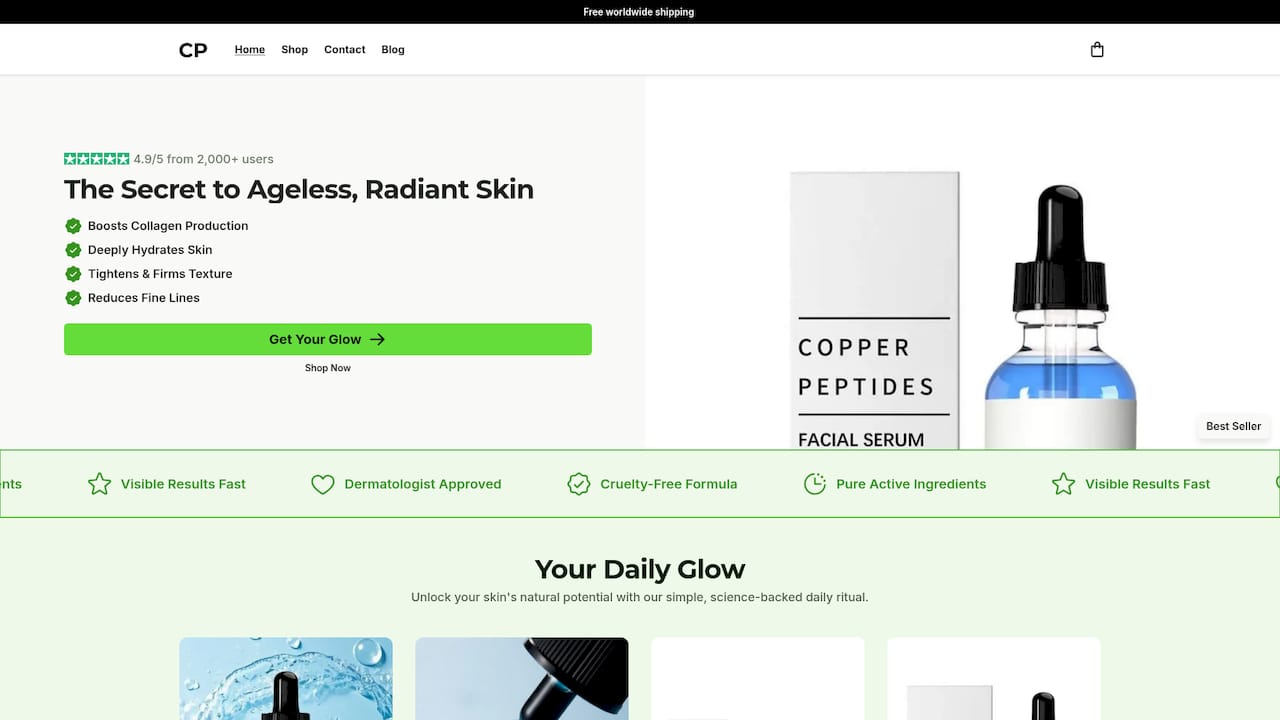
The formula is built for sensitive skin as much as any other skin type, with a purity standard designed to sidestep the concerns raised throughout this article about poorly disclosed or ultra-low fragment sourcing. If you’ve read this far and want an HA-based option that pairs remodeling support with hydration rather than making you choose one or the other, the Copper Peptide Anti-Aging Serum product page lists the full ingredient breakdown so you can check it against everything covered here. Most people see visible changes within four to six weeks, backed by a return policy that lets you evaluate results on your own skin before committing further.
Sources
The clinical and mechanistic claims throughout this article draw from a small set of frequently cited sources, worth bookmarking if you want to go deeper than any single skincare article can take you.
- Update on Low-Molecular Weight Hyaluronic Acid in Dermatology: A Scoping Review
- Hyaluronic acid for skin: Benefits, how to use it, and side effects - Harvard Health
- PMC review on hyaluronic acid and low-molecular-weight forms
This article is general information, not a substitute for advice from a qualified doctor. Consult a qualified healthcare professional about your own circumstances before acting on anything here.