

Dry skin is a skin type that doesn’t produce enough oil. Dehydrated skin is a temporary condition where the outer layer lacks water, and it can happen to anyone, including people with oily skin. If your skin is dry, reach for emollients and occlusives like ceramides or squalane. If it’s dehydrated, you need humectants like hyaluronic acid, applied to damp skin and sealed in.
Quick check before you keep reading:
- Has this been a lifelong pattern, worsening with weather and age? That points to dry skin.
- Did it show up fast after a flight, a hot shower streak, or a new retinol? That’s more likely dehydration.
Key Takeaways
Dry skin needs oil replacement through emollients and occlusives, while dehydrated skin needs water replacement through humectants sealed with a moisturizer.
| Point | Details |
|---|---|
| Know the deficit | Dry skin lacks oil long term; dehydrated skin lacks water and can hit any skin type suddenly. |
| Use the pinch test | Skin that takes more than a few seconds to bounce back suggests dehydration, not dryness. |
| Match ingredients to the problem | Use ceramides and squalane for dry skin; use hyaluronic acid on damp skin, then seal, for dehydration. |
| Watch your triggers | Hot showers, low humidity, and overused actives cause dehydration faster than most people realize. |
| Escalate when needed | Cracking, bleeding, or no improvement after weeks warrants a dermatologist visit. |
| Consider layered hydration support | Copperpeptides’ Copper Peptide Anti-Aging Serum combines hyaluronic acid with copper peptides for hydration and firming within a barrier-focused routine. |
This article is general information, not a substitute for advice from a qualified doctor. Consult a qualified healthcare professional about your own circumstances before acting on anything here.
Table of Contents
- Dry Skin vs Dehydrated Skin: What’s Actually Different
- Is Your Skin Dry or Dehydrated? Signs to Check
- What Causes Dry Skin vs What Triggers Dehydration
- The Right Ingredients for Dry Skin vs Dehydrated Skin
- How to Fix Dehydrated Skin (and Manage Dry Skin Long Term)
- When to See a Dermatologist About Skin Dryness
- What Most Skincare Advice Gets Wrong Here
- Where a Hydrating Serum Fits Into Your Routine
- Sources
Dry Skin vs Dehydrated Skin: What’s Actually Different
These two get lumped together constantly, but they’re not the same problem, and treating one like the other is why so many “moisturizing” routines fail. Dry skin, sometimes called xerosis, is a genuine skin type rooted in low sebum production. Your oil glands just don’t make enough lipid to keep the skin barrier supple, and that’s usually genetic or age-related, not something you did wrong last week.
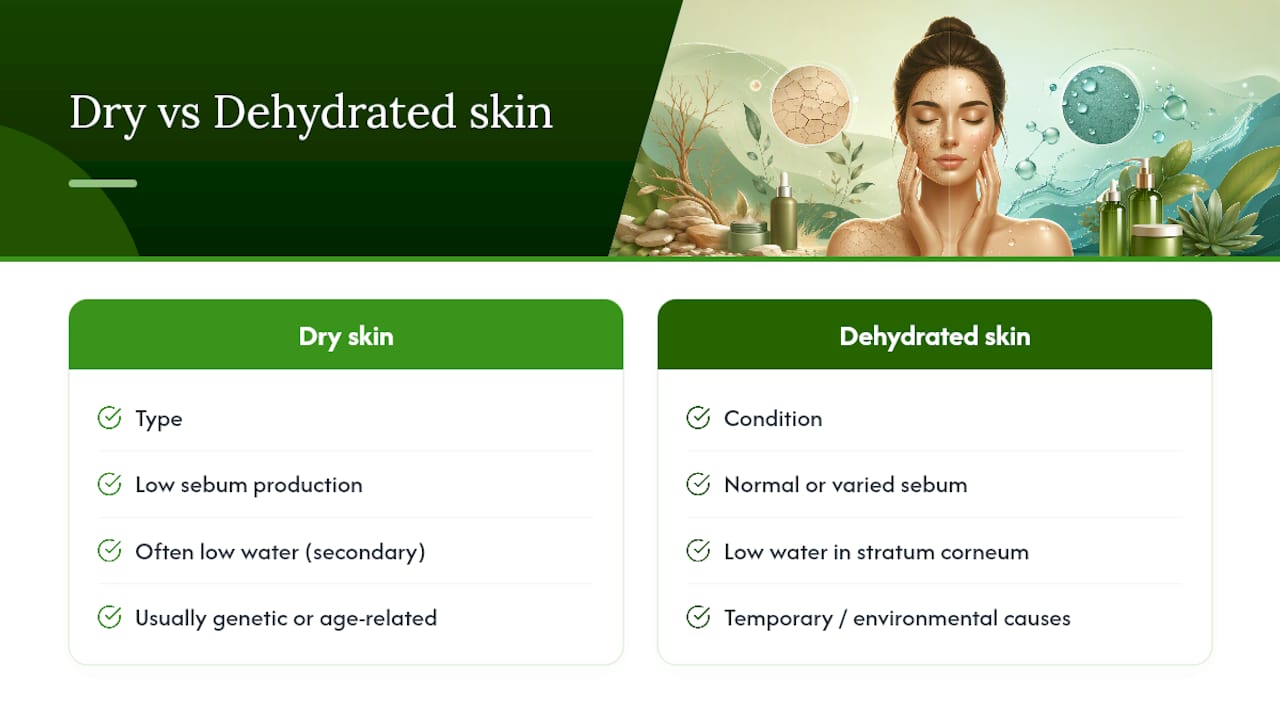
Dehydrated skin is different: it’s a condition, not a type, defined by low water content in the stratum corneum, the outermost layer of skin. Any skin type can become dehydrated, including oily and combination skin.
Here’s where it gets messy: the two overlap constantly. Lipid-deficient skin loses water faster because there’s no oily barrier to hold it in, so someone with chronically dry skin is also often dehydrated. Oily skin, meanwhile, can look shiny and still feel tight and parched underneath, because oil and water are two separate ledgers.
Is Your Skin Dry or Dehydrated? Signs to Check
Your skin usually tells you which problem you have if you know what to look for.
- Persistent flaking or rough patches. Visible scaling, cracks, or a sandpaper texture almost always point to dry skin rather than dehydration.
- Dullness with no real flaking. Skin that looks tired and grayish but isn’t peeling is a classic dehydration signal.
- Fine lines that appear and disappear. Crepey texture or fine lines that look worse by evening and better after a hydrating layer suggest a water problem, not an oil one.
- Reduced bounce. Skin that feels tight, especially after cleansing, and takes a moment to spring back is underhydrated.
You can also try the pinch test: gently pinch a small area of skin on your cheek or the back of your hand. If it snaps back almost instantly, hydration is probably fine. If it takes a noticeably longer time or shows fine lines while pinched, that’s a sign of dehydration. It measures elasticity, not oil, so a naturally dry but well-hydrated cheek can still pass this test easily.
Pro Tip: Do the pinch test on the back of your hand and your cheek separately. A mismatch between the two areas usually means dehydration, not a dry skin type, since a true skin type tends to show up more evenly across your face.
What Causes Dry Skin vs What Triggers Dehydration
Chronic dryness and sudden dehydration come from almost opposite directions.
Dry skin usually traces back to:
- Genetics, since some people simply produce less sebum for life.
- Aging, as oil production naturally slows over the decades.
- Underlying conditions like eczema, psoriasis, or hypothyroidism.
Dehydration tends to show up fast, often triggered by:
- Low humidity, indoor heating, and air travel.
- Long, hot showers that strip the skin’s surface.
- Overusing exfoliating acids or retinoids, which can compromise the skin barrier and cause rapid water loss.
That last point trips people up constantly. A strong glycolic acid or a nightly retinol isn’t inherently bad, but layering several actives at once, especially in a dry climate, is a fast route to tight, flaky, dehydrated skin that has nothing to do with your actual oil levels.
The Right Ingredients for Dry Skin vs Dehydrated Skin
Matching the ingredient to the actual deficit is where most routines go wrong.
For dry skin, you want oil-rich barrier support: emollients and occlusives that replace missing lipids. Ceramides, squalane, plant oils, and in more clinical formulations, petrolatum, all work by filling gaps in the skin barrier and slowing water loss from underneath. Richer creams and balms, not lightweight lotions, are the right call here.
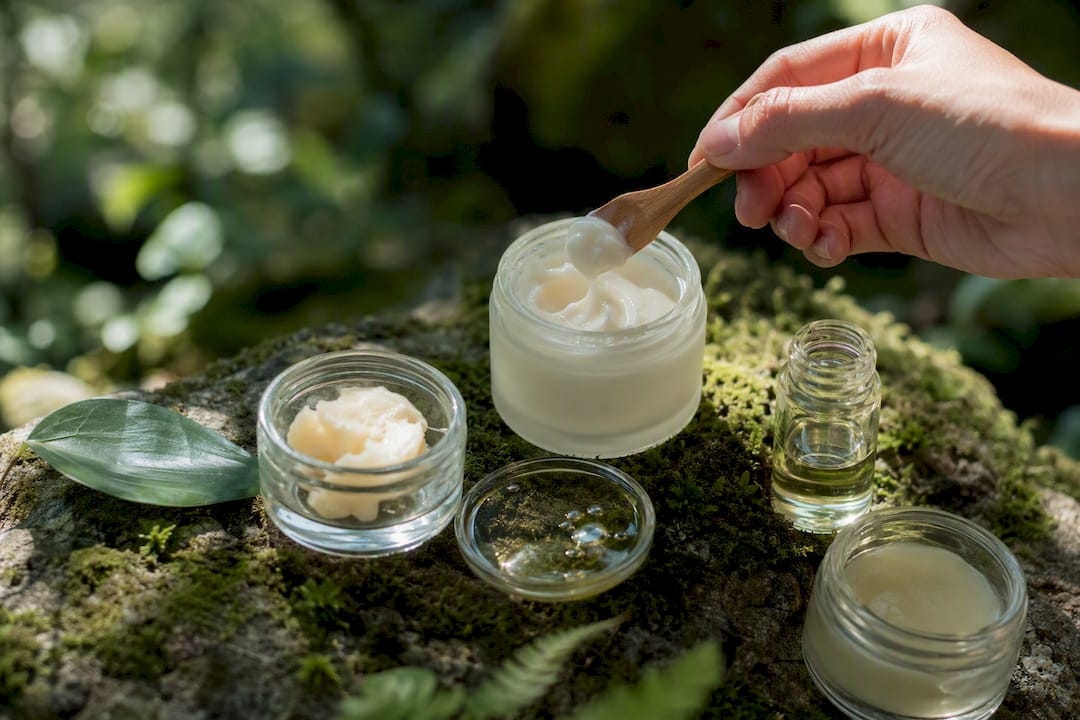
For dehydrated skin, the fix is humectants like hyaluronic acid and glycerin, applied to slightly damp skin so they can pull in water rather than pull it from the air (or worse, from deeper skin layers in a dry room). A humectant needs to be sealed with a moisturizer afterward, or it can actually backfire in low humidity.
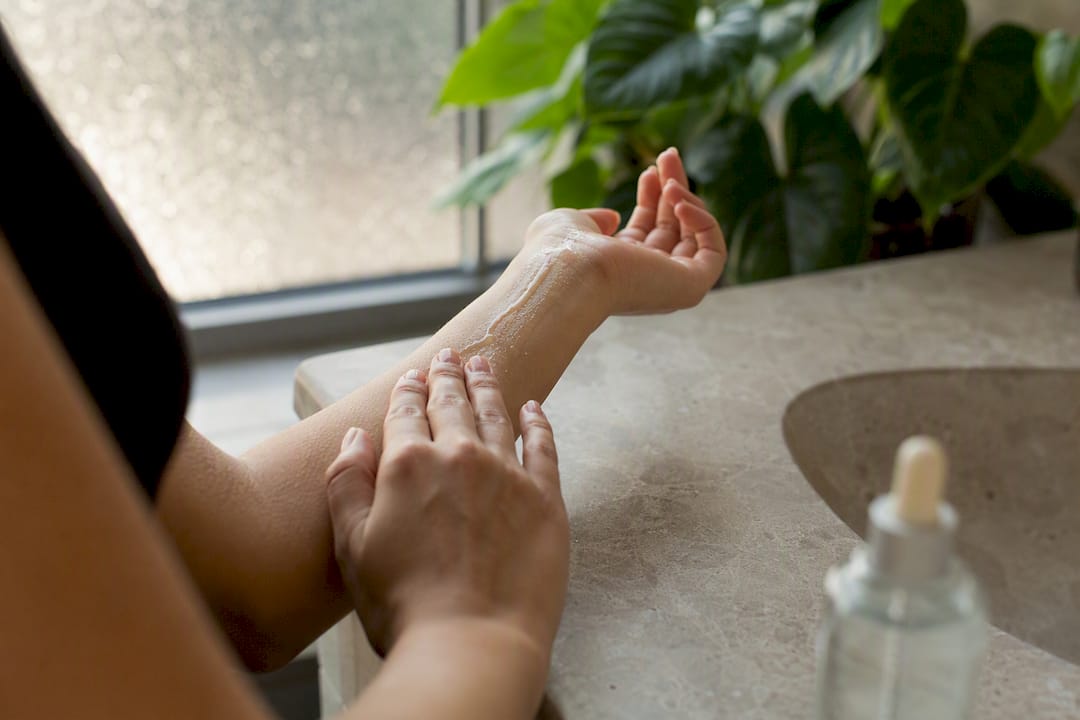
Ceramides sit in a useful middle ground: they support the barrier for dry skin and help dehydrated skin hold onto whatever moisture the humectant just delivered.
The mistake dermatologists flag most often is treating dehydration with a heavy, oil-based cream meant for dry skin. Oil seals; it doesn’t hydrate. If your skin is oily and dehydrated, a thick balm can leave you shiny and congested while the tightness underneath never resolves. The reverse mistake, using only humectants on truly dry skin without sealing them, leaves moisture free to evaporate right back out. If you’re building a routine for dry or aging skin, start with the deficit, not the product category you’re used to buying.
How to Fix Dehydrated Skin (and Manage Dry Skin Long Term)
A workable routine looks different depending on which problem you’re solving, but the order of operations follows the same logic.
- Cleanse gently. Skip hot water and foaming cleansers with sulfates, both of which strip lipids and worsen either condition.
- Apply a humectant to damp skin if dehydration is the issue. Hyaluronic acid works best when the skin still has some surface moisture to draw from.
- Layer a moisturizer suited to your skin type, richer for dry skin, lighter for oily-but-dehydrated skin.
- Seal with an occlusive on especially dry zones like cheeks, hands, or around the mouth, particularly overnight.
- Adjust your environment. A humidifier in dry indoor air, shorter and cooler showers, and easing off alcohol-heavy toners all reduce the load on your barrier.
Pro Tip: If a new medication, a long flight, or a change in climate lines up with when your skin went from fine to parched, treat it as dehydration first. It usually responds within days to weeks once triggers are removed and a humectant plus sealing routine is in place. True dry skin doesn’t resolve that fast; it needs ongoing maintenance, not a quick fix.
Drinking more water can support overall health, but it rarely resolves persistent dry skin on its own; topical barrier repair is what actually does the work.
When to See a Dermatologist About Skin Dryness
Most dry or dehydrated skin responds to routine changes. See a dermatologist if you notice:
- Cracking that bleeds or won’t heal.
- Severe stinging, burning, or spreading redness.
- No improvement after several weeks of consistent barrier care.
A clinician can run more objective tests than a pinch test, including a corneometer reading that quantifies surface hydration, and can prescribe barrier-repair treatments or investigate underlying conditions like eczema or thyroid issues that a store-bought routine won’t fix.
What Most Skincare Advice Gets Wrong Here
Most generic advice treats “hydration” as one problem with one solution: buy a moisturizer, apply daily, done. That’s why so many people cycle through products convinced nothing works, when the real issue is that they’ve been sealing in oil they don’t lack while their skin quietly loses water, or drowning a genuine lipid deficiency in humectants that evaporate by lunch.
The correction is simple to state and easy to skip in practice: identify the deficit before you shop. A rich cream on dehydrated, oily skin creates congestion without solving tightness. A light hyaluronic serum on truly dry, mature skin evaporates without a sealing layer and leaves you more parched than before you started.
If there’s one place I’d push back on conventional wisdom, it’s the idea that more product equals better results. A two-step routine that matches water or oil to the actual problem beats a seven-step routine built on guesswork. Get the diagnosis right first. The product choice gets a lot easier after that.
— British
Where a Hydrating Serum Fits Into Your Routine
Once you’ve matched your routine to the right deficit, a well-formulated serum can do double duty instead of adding another step you’ll skip. The Copper Peptide Anti-Aging Serum from Copperpeptides pairs medical-grade hyaluronic acid, a humectant that draws water into the surface layers, with copper peptides that support collagen production and skin firmness over time.

It’s built to layer, not replace: apply it to slightly damp skin after cleansing, then follow with a moisturizer or occlusive if your skin skews dry, especially through colder months when indoor heating pulls moisture out of the air. Copperpeptides formulates it for sensitive skin too, so it fits into a barrier-focused routine rather than fighting against one. Visit the product page to see the full ingredient breakdown and check current availability.
Sources
- Dehydrated vs dry skin: Differences and more — Medical News Today
- Dry Skin vs Dehydrated: How to Tell the Difference — Healthline
- Dry Skin vs. Dehydrated Skin: How To Tell The Difference | The Well (Northwell)
- Dry Skin Vs Dehydrated Skin: What’s the Difference? — SELF