

For dry, sensitive, aging skin, the Copper Peptide Anti-Aging Serum from Copperpeptides is the best dry skin serum available today. It pairs high-purity copper peptides (for collagen support and texture repair) with medical-grade hyaluronic acid (for deep, lasting hydration) in a single fragrance-free formula safe for even reactive skin.
- What it does: Supports collagen synthesis, firms skin texture, and deeply hydrates
- Who it’s for: Chronically dry, sensitive, or aging skin prone to fine lines and dullness
- Timeline: Visible improvement typically appears within 4–6 weeks of consistent use
- Why it stands out: High-purity formulation, dermatologist-endorsed, cruelty-free, backed by a return policy
Table of Contents
- What actually makes a serum work for dry, sensitive skin?
- How do you choose the right serum for dry, aging skin?
- Who should use a copper peptide serum, and who should pause?
- How to apply a copper peptide serum for dry skin
- When will you actually see results?
- Why Copperpeptides’ serum is the right choice for dry, aging skin
- Key Takeaways
- The case for keeping it simple
- Get the Copper Peptide Anti-Aging Serum from Copperpeptides
What actually makes a serum work for dry, sensitive skin?
Not all hydrating serums address the same problem. Dermatologists draw a clear line between dry skin (a lipid deficiency) and dehydrated skin (a water deficiency). Dry skin needs both water-attracting humectants and oil-based emollients to restore what the barrier is missing. Dehydrated skin primarily needs water replenishment. Many people have both at once, especially as skin ages.
Copper peptides: more than just hydration
Copper peptides are small protein fragments bonded to copper ions. They signal fibroblasts to produce more collagen and elastin, accelerate wound repair, and improve overall skin texture over time. That mechanism is distinct from a standard hydrating serum. You get structural improvement alongside moisture, which is why copper peptides belong in an anti-aging dry-skin routine rather than just a basic humectant formula.
Hyaluronic acid: molecular weight matters
Medical-grade hyaluronic acid at multiple molecular weights works at different skin depths. High-molecular-weight forms sit on the surface and reduce water loss; low-molecular-weight forms penetrate deeper to plump from within. A formula using only one weight delivers partial results. Multi-weight hyaluronic acid is the standard worth looking for.
Barrier-repair and soothing ingredients
For sensitive dry skin, barrier repair is non-negotiable. Ceramides restore the lipid matrix. Ectoin, described by Paula’s Choice as a “stress-protection molecule,” helps the skin retain moisture and resist environmental stressors. Madecassoside (from centella asiatica) calms inflammation and supports healing.
Dr. Alexandra Bowles recommends pairing soothing agents like madecassoside with humectants such as hyaluronic acid when treating sensitive, dry skin — repairing the barrier while simultaneously providing hydration. This combination addresses both the symptom (dryness) and the underlying cause (compromised barrier) at the same time.
Pro Tip: Avoid serums with added fragrance, high-alcohol toners, or high-concentration exfoliating acids if your skin is dry and sensitive. These strip the barrier faster than any active ingredient can rebuild it.
How do you choose the right serum for dry, aging skin?
A good serum for this skin type earns its place on three grounds: ingredient quality, formulation transparency, and trust signals that reduce purchase risk.
Checklist: what to look for
- Copper peptides listed in the INCI (not buried at the bottom, which signals a trace amount)
- Multi-weight hyaluronic acid or sodium hyaluronate at more than one molecular size
- Ceramides or ectoin for barrier reinforcement alongside humectants
- Soothing agents (madecassoside, panthenol, or niacinamide) for sensitive skin compatibility
- Fragrance-free and dye-free formula — non-negotiable for reactive skin
- Dermatologist endorsement with a documented clinical timeline (4–6 weeks is the credible standard)
- Transparent return policy — a brand confident in its results backs them up
Red flags to skip
- Undisclosed active concentrations (you cannot evaluate what you cannot see)
- Fragrance listed as a primary ingredient, not a trace
- Aggressive pH adjusters without buffering agents
- No patch-test guidance or safety information on the product page
Formulation transparency and a clear return policy are the two trust signals that separate credible brands from marketing-heavy ones.
Who should use a copper peptide serum, and who should pause?
Copper peptide serums suit people with chronically dry skin, sensitive aging skin showing texture changes or fine lines, and anyone who wants collagen support without the irritation risk of prescription retinoids. They work particularly well as a gentler alternative for skin that cannot tolerate high-concentration vitamin A derivatives.
Pause or consult a dermatologist first if you have:
- Active open wounds or broken skin (copper peptides accelerate repair but should not be applied to open lesions)
- A confirmed copper allergy
- A current prescription topical regimen (retinoids, topical antibiotics) — interactions are possible and worth discussing with your provider
- Pregnancy or breastfeeding — consult your OB or dermatologist before adding any active serum
Patch testing is simple and worth doing every time with a new serum. Apply a small amount to the inner forearm or behind the ear. Wait 24–48 hours. No redness, itching, or swelling means you are clear to apply it to your face. If you do react, stop immediately and consult a dermatologist before retrying.
Pro Tip: If you use multiple potent actives (vitamin C, retinoids, AHAs), introduce the copper peptide serum on its own for the first two weeks. Stacking too many actives at once makes it impossible to identify what caused a reaction.
How to apply a copper peptide serum for dry skin
Technique affects results more than most people expect. Applying to slightly damp skin immediately after cleansing helps humectants draw moisture into the skin rather than pulling from the air (which in dry climates can actually dehydrate further).
- Cleanse with a gentle, sulfate-free cleanser. Pat skin until slightly damp, not dripping.
- Apply 2–3 drops of the copper peptide serum. Press gently into skin; do not rub.
- Wait 60 seconds for the serum to absorb before the next step.
- Follow with a moisturizer containing ceramides or an occlusive ingredient (shea butter, squalane) to seal hydration and prevent transepidermal water loss.
- Morning routine: finish with SPF 30 or higher. Copper peptides do not increase photosensitivity, but unprotected UV exposure degrades collagen faster than any serum can rebuild it.
- With retinoids or vitamin C: apply the copper peptide serum first on its own nights, alternating with retinoids rather than layering both in the same session until your skin has adapted.
Pro Tip: Over-applying hydrating serums is one of the most common mistakes. Two to three drops cover the full face. More product does not mean more hydration — it usually means sticky residue and wasted serum.
When will you actually see results?
Realistic expectations prevent returns and build long-term trust in a product. Here is what the clinical timeline looks like for a copper peptide serum used consistently twice daily:
| Timeframe | What you can expect |
|---|---|
| Days 1–7 | Improved surface hydration, less tightness after cleansing |
| Weeks 2–4 | Smoother texture, reduced flakiness, more comfortable skin |
| Weeks 4–6 | Visibly plumper fine lines, more even tone, noticeable glow |
| Weeks 8–12+ | Firmer skin, collagen-driven improvement in texture and elasticity |
Visible results typically appear within 4–6 weeks for hydration and texture. Collagen-driven firmness takes longer, usually 8–12 weeks of consistent use. Individual results vary based on skin condition, age, climate, and how well the rest of the routine supports the serum (especially the moisturizer step).
Consistency matters more than frequency. Skipping applications regularly resets progress. Two applications daily, every day, outperforms sporadic three-times-daily use.
Why Copperpeptides’ serum is the right choice for dry, aging skin
Copperpeptides offers a specialized anti-aging serum that leverages copper peptides to enhance collagen production, deeply hydrate, and firm skin texture, effectively combating fine lines and promoting a radiant glow. The serum’s high-purity formulation combined with medical-grade hyaluronic acid ensures safety and efficacy for all skin types, including sensitive skin.
- High-purity copper peptides at a concentration designed for visible anti-aging results
- Medical-grade, multi-weight hyaluronic acid for surface and deep hydration
- Fragrance-free, dye-free, cruelty-free formula suitable for reactive and sensitive skin
- Dermatologist-endorsed with a documented 4–6 week results timeline
- Return policy that reflects confidence in the product’s performance
On price and value: the serum sits in the mid-range for active anti-aging serums, well below medical-grade clinic treatments and comparable to other dermatologist-endorsed formulas. Given the dual mechanism (collagen support plus hydration), it replaces what would otherwise be two separate products.
Key Takeaways
The Copper Peptide Anti-Aging Serum from Copperpeptides is the top serum for dry, sensitive, aging skin because it combines collagen-supporting copper peptides with medical-grade hyaluronic acid in a single fragrance-free formula backed by a 4–6 week clinical timeline.
| Point | Details |
|---|---|
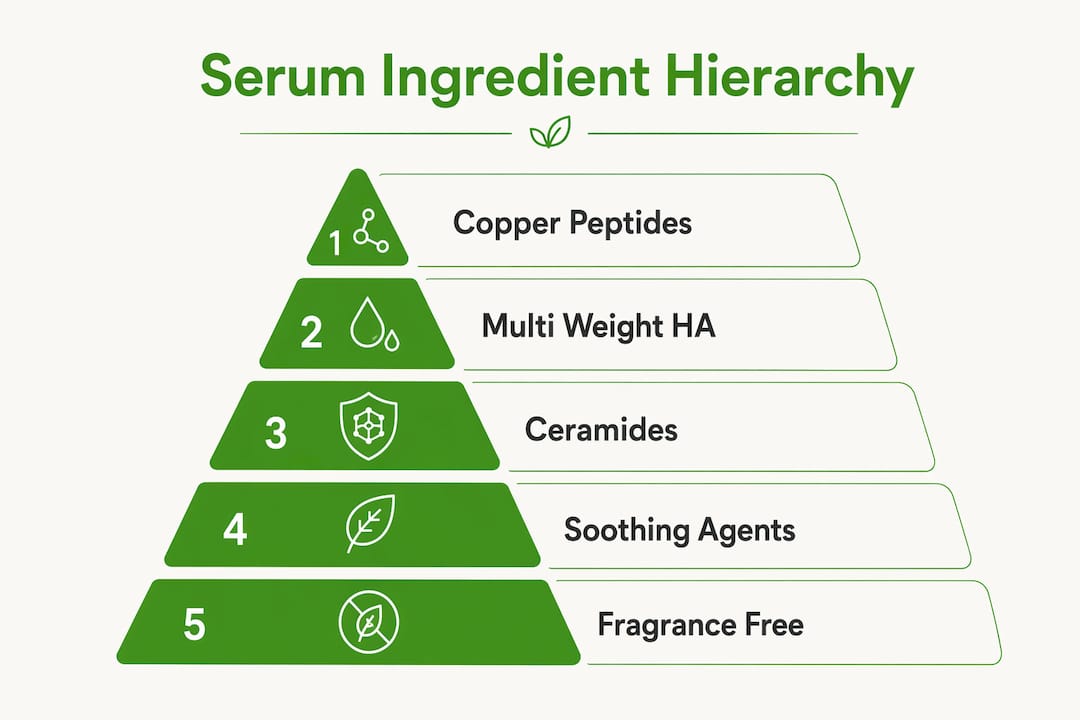
| Ingredient priorities | Look for copper peptides, multi-weight hyaluronic acid, ceramides, and a soothing agent like madecassoside. |
| Application rule | Apply 2–3 drops to slightly damp skin, then seal with a moisturizer to prevent water loss. |
| Results timeline | Expect hydration and texture improvement in 4–6 weeks; collagen-driven firmness takes 8–12 weeks. |
| Safety first | Patch test for 24–48 hours; consult a dermatologist if using prescription topicals or if pregnant. |
| Copperpeptides | The Copper Peptide Anti-Aging Serum delivers both collagen support and deep hydration in one dermatologist-endorsed formula. |
The case for keeping it simple
The conventional wisdom in anti-aging skincare pushes complexity: stack retinoids, vitamin C, peptides, AHAs, and three different moisturizers, and your skin will thank you. In practice, that approach backfires most often on exactly the people who need results most: those with dry, sensitive, aging skin.
A single high-purity copper peptide serum does something a multi-active stack rarely achieves for this skin type: it delivers meaningful collagen support and hydration without the irritation cascade that comes from layering too many potent actives. Sensitive skin does not need more ingredients. It needs the right ones, at effective concentrations, applied consistently.
The clinical timeline is also worth taking seriously. Four to six weeks is not a marketing promise; it reflects how long collagen remodeling and barrier repair actually take. Products that claim overnight transformation are either overstating results or relying on temporary surface effects. Choosing a serum with a realistic, dermatologist-backed timeline is itself a quality signal.
Get the Copper Peptide Anti-Aging Serum from Copperpeptides
Dry, sensitive, aging skin deserves a formula built specifically for it, not a generic hydrating serum repurposed for anti-aging. Copperpeptides’ Copper Peptide Anti-Aging Serum is formulated with high-purity copper peptides and medical-grade hyaluronic acid, dermatologist-endorsed, fragrance-free, and cruelty-free. Thousands of customers have seen real improvement in texture, hydration, and fine lines within the 4–6 week window.
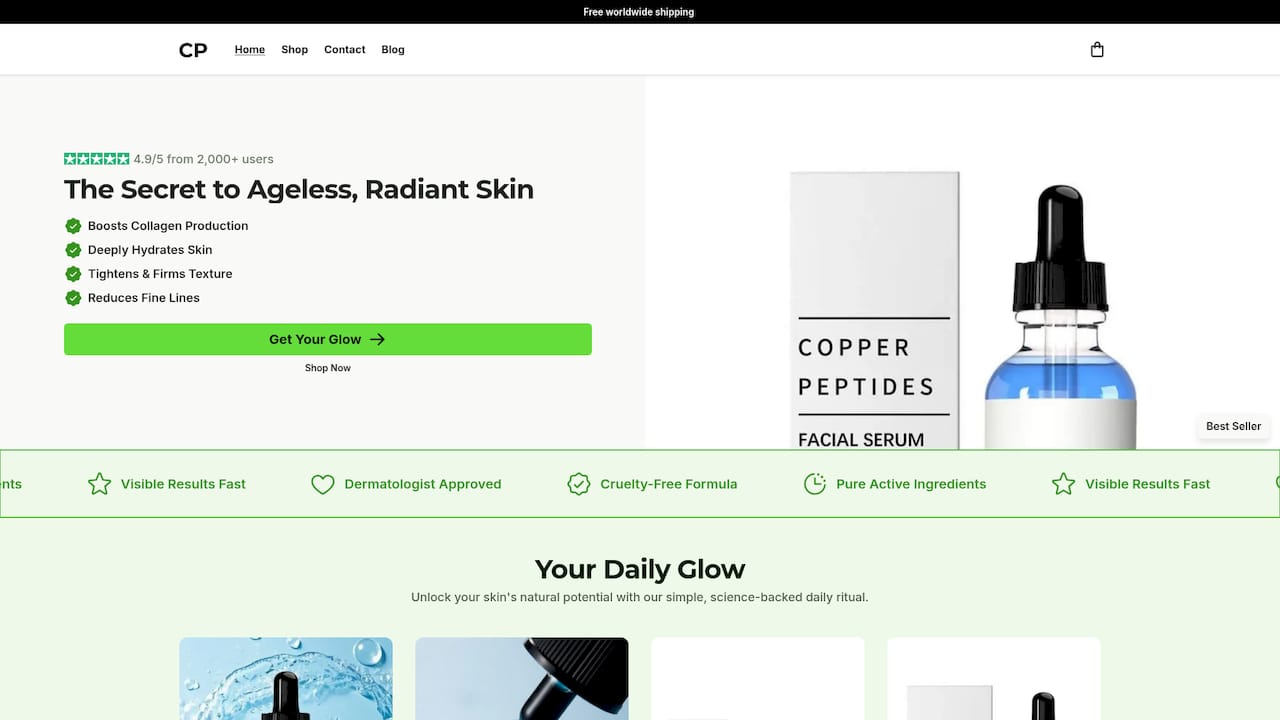
The return policy means there is no risk in trying it. Patch test on day one, apply consistently twice daily, and give it the full six weeks before judging results. Visit the Copperpeptides store to place your order and review full formulation details.
This article is for general informational purposes only and does not constitute medical or dermatological advice. Consult a qualified dermatologist for guidance specific to your skin condition.