

Yes, you can use copper peptides and retinol together, and for most skin types you should. The main risk isn’t irritation from combining them. It’s chemistry: copper ions in GHK-Cu can speed up retinol oxidation if the two actives sit on your skin at the same time in an unstable mix. Split them by time of day, or alternate nights if your skin runs sensitive, and both ingredients keep doing their job.
TL;DR:
- Using copper peptides and retinol together is safe if they are applied at different times, such as copper peptides in the morning and retinol at night, to prevent oxidation.
- Copper peptides like GHK-Cu support collagen signaling and skin repair, with visible effects typically appearing after 4 to 6 weeks of consistent use, and require stable, well-formulated products to remain effective.
- Retinol accelerates cell turnover and collagen production, with visible improvements in texture and photoaging emerging in weeks to months, but it can cause dryness, redness, and photosensitivity during initial use.
- The main chemistry concern is copper ions catalyzing retinol oxidation, which can be avoided by applying actives separately or waiting 20 to 30 minutes before layering on sensitive skin.
- For best results, split active application by time of day, start slow, and focus on product quality, carefully monitoring skin reactions to prevent irritation or barrier damage.
Table of Contents
- Copper Peptides vs. Retinol: A Quick Comparison
- What Do Copper Peptides Actually Do for Skin?
- What Does Retinol Do, and Why Does It Irritate Skin?
- Who Should Prioritize Retinol vs. Copper Peptides?
- Can You Really Use Copper Peptides With Retinol?
- How to Layer Copper Peptides and Retinol the Right Way
- Troubleshooting: Normal Adjustment vs. a Real Problem
- Sample Routines: Beginner, Intermediate, and Sensitive-Skin Plans
- Where the Clinical Evidence and Product Claims Actually Line Up
- The Smarter Way to Think About Combining Actives
- Where Copperpeptides Fits Into Your Retinol Routine
- Sources
- FAQ
Copper Peptides vs. Retinol: A Quick Comparison
Copper peptides and retinol solve different problems, which is exactly why so many routines end up using both. Retinol is the workhorse for cell turnover and collagen signaling. Copper peptides work more like a repair crew, supporting the skin’s structural matrix and helping it recover after stress or irritation.
- Copper peptides (GHK-Cu): support collagen and elastin signaling, calm and repair the skin barrier; visible firming or texture changes usually take 4 to 6 weeks of consistent use; downside is mild, rare sensitivity and a real formulation stability issue when mixed carelessly with retinol.
- Retinol: speeds up cell turnover and stimulates dermal collagen production, with photoaging improvements typically showing up within weeks to months depending on strength; downside is dryness, peeling, and photosensitivity, especially in the first few weeks.
The takeaway: these two ingredients are complementary in what they achieve but very different in how your skin tolerates them. Retinol asks for patience and sun protection. Copper peptides ask for stable formulation and careful pairing. Neither one replaces the other, and combining them well comes down to sequencing, not choosing sides.
What Do Copper Peptides Actually Do for Skin?
Copper peptides, most commonly formulated as GHK-Cu (copper tripeptide-1), work by signaling skin cells to behave more like they did when they were younger. The peptide binds copper and delivers it directly to cells involved in tissue repair, which is where the “wound healing” reputation comes from.
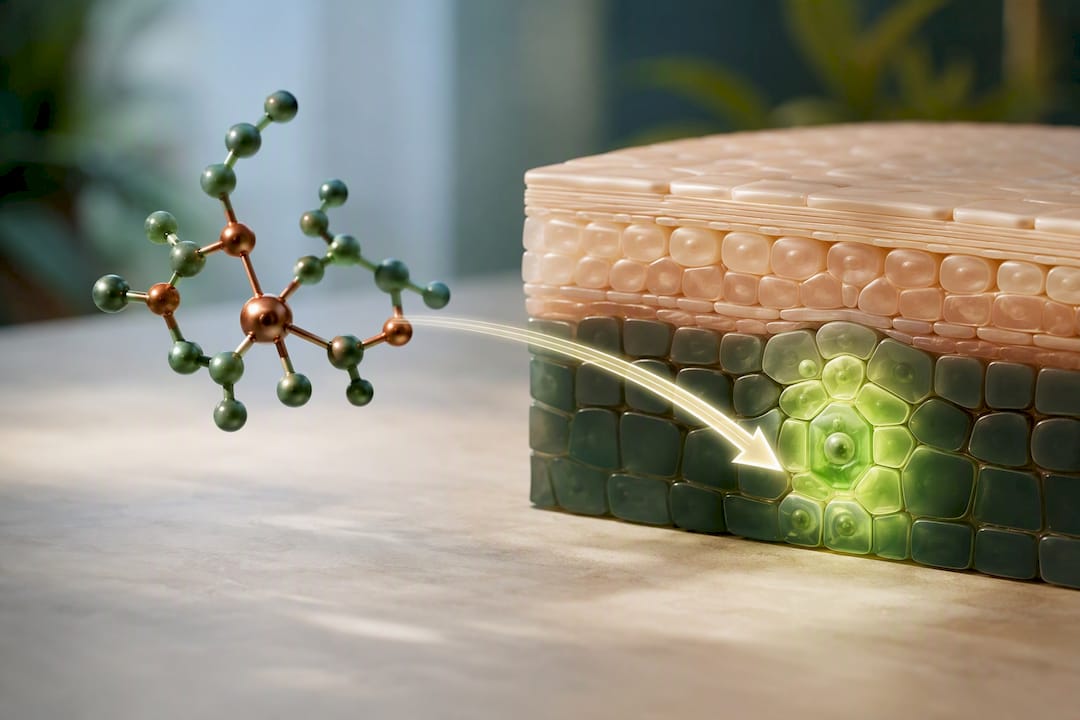
The research snapshot: Preclinical and some clinical studies show GHK-Cu supports collagen and glycosaminoglycan production and helps remodel the skin’s extracellular matrix, the structural scaffolding that keeps skin firm. That evidence base is genuinely encouraging, though it leans more heavily on mechanistic and wound-healing research than on large-scale cosmetic trials, so think of it as a strong signal rather than a settled verdict on anti-aging outcomes.
What matters just as much as the peptide itself is how it’s formulated. Copper peptides are notoriously pH-sensitive, and the vehicle carrying them (the base cream, serum, or gel) affects how well the peptide stays intact and active.
- GHK-Cu performs best in stable, buffered formulas that protect against oxidation.
- Packaging matters: opaque tubes and airless pumps limit light and air exposure that degrade the peptide over time.
- Antioxidant-rich vehicles help preserve both the peptide and any co-formulated retinol, per formulation stability research.
- Fresh product matters more with copper peptides than with most actives. An old, oxidized serum won’t just underperform, it may actively work against your goals.
If you’re shopping for a copper peptide serum, formulation quality is not a minor detail, and exploring skin supplements and supporting topical care can help you make an informed choice. It’s the difference between a product that delivers and one that quietly degrades on your bathroom shelf.
What Does Retinol Do, and Why Does It Irritate Skin?
Retinol works by pushing skin cells to turn over faster and by switching on genes involved in collagen production. That dual action, faster shedding of old cells plus new collagen synthesis, is why retinol remains one of the most consistently effective ingredients for texture, fine lines, and photoaging.
The evidence base: Topical retinoids reliably increase epidermal turnover and stimulate dermal remodeling, with visible improvement in photoaging typically appearing within weeks to months depending on formulation strength. Over-the-counter retinol is gentler and slower than prescription retinoids like tretinoin, which convert to active retinoic acid faster and hit harder, for better or worse.
That speed is also the source of retinol’s biggest downside.
- Dryness and flaking are common in the first two to six weeks as skin adjusts.
- Redness and stinging tend to show up with overuse or too-strong a starting concentration.
- Photosensitivity increases, which is why daily SPF isn’t optional during retinol use.
- Purging, a temporary breakout as turnover speeds up, gets mistaken for a bad reaction more often than it should.
None of this means retinol is fragile or risky when used correctly. It means retinol rewards a slow start far more than an aggressive one.
Who Should Prioritize Retinol vs. Copper Peptides?
The right ingredient depends on what your skin actually needs right now, not on which one has better marketing. Retinol earns priority when the main concern is photoaging, rough texture, or acne, since its turnover effect directly targets those issues. Copper peptides earn priority when the skin needs calming, barrier support, or recovery, which makes them a better first move after a procedure or during a flare of sensitivity.
- Choose retinol first if: you’re dealing with sun damage, uneven texture, enlarged pores, or active breakouts that respond to faster cell turnover.
- Choose copper peptides first if: your barrier is compromised, you’ve just had microneedling or a chemical peel, or your skin reacts badly to actives in general.
- Use both if: your skin tolerates retinol reasonably well and you want the added collagen support and calming effect copper peptides bring to the table.
The overlap case is common, and it’s where most of the confusion about “can you combine them” comes from. If your skin already handles retinol without excessive peeling, adding copper peptides on a separate schedule doesn’t create new problems. It usually improves comfort, since GHK-Cu’s barrier-supportive effects can offset some of retinol’s drying tendency. The one case where you should hold off combining them is during an active flare of irritation. Let the skin calm down on copper peptides alone before reintroducing retinol.
Can You Really Use Copper Peptides With Retinol?
Yes, and the chemistry concern is specific, not a blanket warning against pairing peptides with retinol in general. GHK-Cu contains copper ions, and metal ions like copper are known catalysts in oxidation reactions that can degrade retinol under certain conditions. That’s a formulation chemistry issue, not a skin-reaction issue, and it only matters when the two actives are mixed in an unstable way, either in the same product or applied back to back without separation.
The categorical advice to “never combine peptides and retinol” is an oversimplification. Copper-containing peptides are the actual exception, not peptides as a category. Plenty of peptides carry no oxidation risk with retinol at all.
pH plays a role too. GHK-Cu’s stability shifts with pH and vehicle composition, and conservative formulators recommend full separation between application times specifically because that stability can vary from one product to another. This is why:
- Same-product formulas combining copper peptides and retinol need careful, tested chemistry to avoid degrading either ingredient.
- Applying them back to back on damp skin increases the odds of surface interaction before either one fully absorbs.
- Waiting or splitting by time of day sidesteps the issue almost entirely, since there’s no direct contact for the copper ions to catalyze anything.
The practical fix is simple: give the two actives their own moment. You lose none of the benefit and remove nearly all of the risk.
How to Layer Copper Peptides and Retinol the Right Way
The safest, most widely recommended pattern splits the two actives by time of day: copper peptides in the morning, retinol at night. This avoids any direct interaction and lets each ingredient work without interference.
- Morning: cleanse, apply your copper peptide serum, follow with moisturizer and SPF.
- Night: cleanse, apply retinol on clean, fully dry skin, follow with a barrier-supporting moisturizer.
- If your skin is sensitive: alternate nights instead, retinol one night, copper peptides the next, skipping the AM/PM split entirely.
- If you must use both at night: apply retinol first, wait 20 to 30 minutes for it to absorb and for your skin’s surface pH to settle, then follow with copper peptides.
- Check absorption before layering: skin should feel dry to the touch, not tacky, before you add the next product.
For anyone whose skin reacts easily, the sandwich method helps: moisturizer, then retinol, then another light layer of moisturizer. It buffers retinol’s intensity without diluting its effect, and it adapts well if you’re adding copper peptides on the alternate structure above.
Pro Tip: If you’re not sure how your skin will handle both actives, default to the AM/PM split for the first month. Once you know your skin tolerates retinol well, alternating nights or same-night layering with a wait time becomes a lot more forgiving.
Troubleshooting: Normal Adjustment vs. a Real Problem
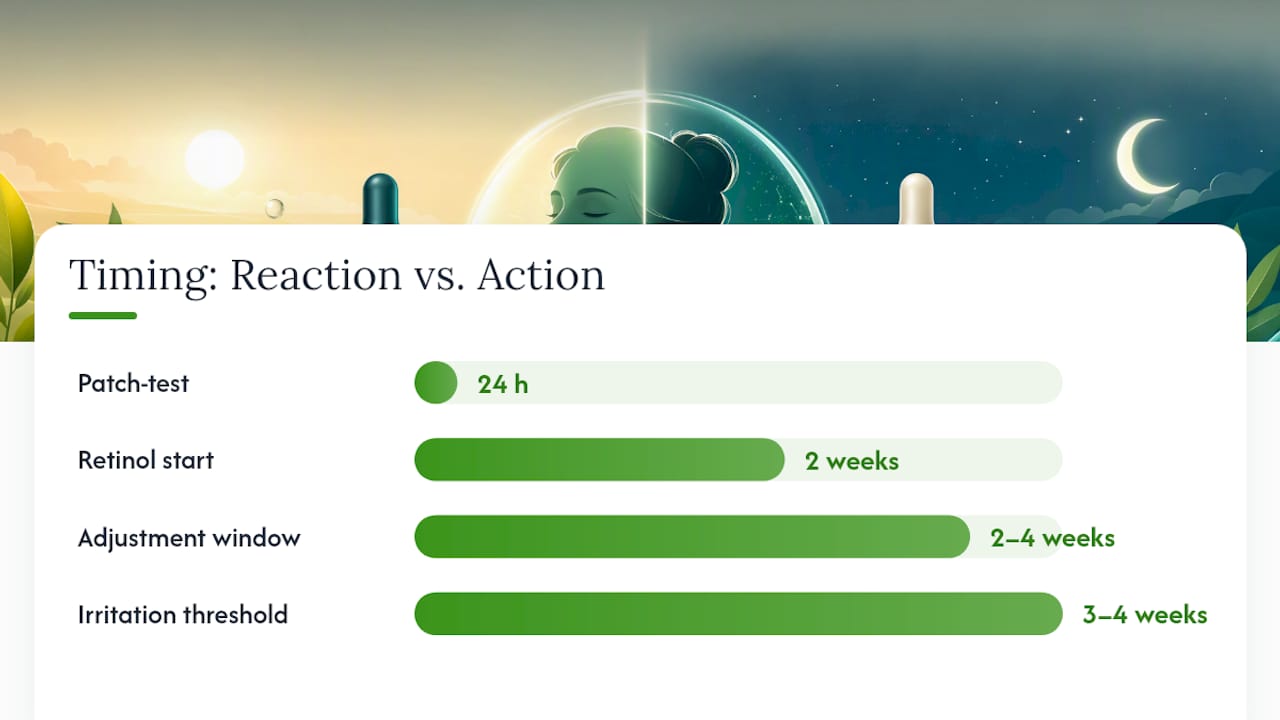
Some reaction in the first few weeks is expected. The trick is telling the difference between your skin adjusting and your skin telling you to back off.
Start slow with any new active: apply retinol two to three nights a week for the first two weeks, then increase frequency as tolerated. Patch-test copper peptide serums on the inner arm for 24 hours if you have a history of sensitivity, though reactions to copper peptides specifically are uncommon.
- Mild flaking, slight dryness, or a few new small breakouts (purging) in the first two to four weeks is typically normal adjustment.
- Persistent burning, visible redness that doesn’t fade, or a tight, cracked feeling signals barrier damage, not adjustment.
- Breakouts that show up as inflamed cysts rather than small bumps are less likely to be purging and more likely a reaction worth addressing.
Retinoid irritation, not peptide sensitivity, is the most common practical limitation people run into when combining potent actives, and easing up on frequency solves most of it. If irritation persists past three to four weeks, or you notice cracking, oozing, or pain, stop the retinol, focus on barrier repair with copper peptides and a bland moisturizer, and consult a dermatologist before restarting.
Sample Routines: Beginner, Intermediate, and Sensitive-Skin Plans
Pick the plan that matches where your skin is right now, not where you want it to be in six months.
Beginner plan
- AM: cleanse, copper peptide serum, moisturizer, SPF.
- PM: cleanse, retinol two nights a week, moisturizer.
- Increase retinol to three or four nights once skin tolerates it without peeling.
Intermediate plan
- AM: cleanse, copper peptide serum, moisturizer, SPF.
- PM: alternate retinol and a hydrating treatment night, ramping retinol strength or frequency slowly.
- Reassess every two to three weeks and increase retinol nights as tolerance builds.
Sensitive-skin plan
- Keep copper peptides and retinol on completely separate nights, no same-day use at all.
- Use the sandwich method on retinol nights to buffer intensity.
- Prioritize barrier repair: fragrance-free moisturizer, minimal other actives, consistent SPF.
Whichever plan you start with, consistency matters more than speed. A slower ramp that you actually stick with beats an aggressive one you abandon after a bad week.
Where the Clinical Evidence and Product Claims Actually Line Up
The chemistry and mechanism claims in this guide come from formulation science and peptide biology research, not marketing copy, and it’s worth being clear about where the line sits. GHK-Cu’s role in collagen and matrix support is backed by real preclinical and clinical literature. What’s brand-observed rather than independently verified is the specific timeline of results from any single product.
Copperpeptides’ clinician protocol page outlines how the brand frames its own results timeline, generally 4 to 6 weeks for visible firmness and texture changes. This lines up with the general onset window seen in copper peptide research. That’s a brand-reported observation, not a substitute for the underlying peer-reviewed data cited above.
For readers using the routines described in this guide, the practical fit is straightforward: a single, high-purity copper peptide serum applied in the AM slot (or on off-nights, for the sensitive-skin plan) avoids the formulation chemistry risk entirely while still giving the skin barrier and collagen support these routines are built around.
The Smarter Way to Think About Combining Actives
Most of the internet’s fear around copper peptides and retinol comes from treating a formulation-chemistry footnote like a universal skin-safety rule. It isn’t. The oxidation risk is real, but it’s a shelf-stability and same-application concern, not a reason to avoid pairing these two ingredients in a well-structured routine.
What actually determines your results is less glamorous than ingredient lists: product freshness, packaging, and whether you give each active its own moment to work. A high-quality copper peptide serum in a properly buffered, antioxidant-protected base, used on a separate schedule from retinol, sidesteps nearly every risk people worry about. If you’re building a routine from scratch and want one product to anchor the copper peptide side of it, a purpose-formulated, high-purity serum is the more reliable starting point than a multi-active blend where you can’t verify the chemistry yourself.
— British
Where Copperpeptides Fits Into Your Retinol Routine
If you’ve settled on the AM peptides, PM retinol split, or you’re alternating nights while your skin builds tolerance, the Copper Peptide Anti-Aging Serum is built specifically for that morning or off-night slot. It combines copper peptides with hyaluronic acid in a single formula, designed to support stability and efficacy.
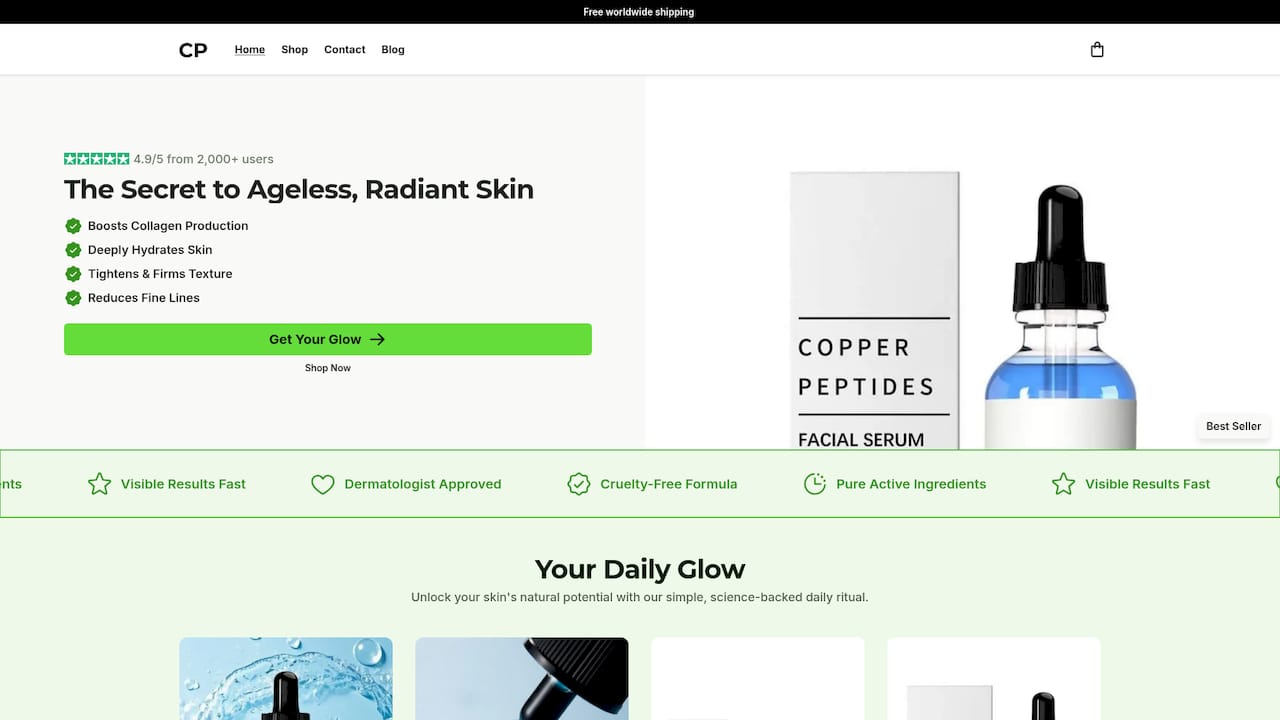
The formula is designed to be gentle enough for sensitive skin, addressing the needs of users seeking a dependable product on their non-retinol days. Visible firming and texture improvement typically appears in 4 to 6 weeks with consistent use. If you’re ready to add a stable, single-ingredient copper peptide serum to your routine, browse the full serum collection and start with the AM or off-night application described earlier. Orders come with a return policy that emphasizes trust and quality in skincare.
Sources
The chemistry and mechanism claims here draw on peer-reviewed and formulation-science sources, including research on GHK-Cu’s role in skin repair, a review of retinoid biology and photoaging outcomes, and cosmetic chemistry research on retinol stability. For sequencing tretinoin specifically, see Copperpeptides’ guide on combining copper peptides with prescription retinoids. Anyone using prescription-strength retinoids should confirm their routine with a dermatologist, since potency and irritation risk run higher than with OTC retinol.
- PMC: Research describing peptide effects on skin repair
- MDPI International Journal of Molecular Sciences: review on retinoid skin biology
- MDPI Cosmetics: formulation stability and factors affecting retinol
FAQ
Can You Use Retinol and Copper Peptides Together?
Yes. The safest approach is copper peptides in the morning and retinol at night, or alternating nights if your skin is sensitive. This avoids the copper-catalyzed oxidation risk that comes from mixing the two directly in an unstable formula.
What Shouldn’t You Mix With Copper Peptides?
Avoid applying copper peptides in the same application as retinol or strong exfoliating acids, since low pH and metal-ion interactions can affect stability. Separating by time of day or alternating nights removes most of this concern, as explained in the layering guidance above.
What Do Koreans Use Instead of Retinol?
Many Korean skincare routines favor gentler retinol alternatives like bakuchiol, along with peptides and niacinamide, to get turnover and firming benefits with less irritation. These ingredients don’t fully replicate retinol’s collagen-stimulating effect but suit people who can’t tolerate retinoids at all.
What Can You Layer Copper Peptides With?
Copper peptides layer well with hyaluronic acid, niacinamide, and most moisturizers without stability concerns. Copperpeptides’ own serum formula pairs copper peptides with medical-grade hyaluronic acid specifically because that combination supports hydration without introducing the oxidation risk retinol carries.
How Much Does the Copperpeptides Serum Cost?
The Copper Peptide Anti-Aging Serum is priced at $20 as a one-time purchase. It comes with a 30-day money-back guarantee for anyone testing it against their own skin’s response.