

If you can tolerate retinol, it generally delivers stronger, faster anti-aging results. Peptide serums are the gentler, smarter companion, and for some skin types, the better primary choice.
Here is the short version of how to decide:
- Retinol wins on speed and evidence. Randomized controlled trials document measurable wrinkle reduction, procollagen upregulation, and improved skin texture over weeks to months. No peptide has that volume of independent replication.
- Peptides win on tolerability. They carry no photosensitivity risk, no pregnancy contraindication, and rarely cause the peeling and redness that sideline many new retinol users.
- Pregnancy or breastfeeding? Use peptides. Retinoids are contraindicated as a precautionary measure; peptides have no known teratogenic risk.
- The best routine often uses both. Retinol at night for resurfacing, peptides in the morning or layered after retinol for barrier support and recovery.
Your immediate next step: if you are new to actives, start with a peptide serum for several weeks to build baseline hydration and barrier strength, then introduce a low-strength retinol gradually.
Key Takeaways
Retinol delivers faster, more clinically replicated anti-aging results, while peptide serums offer a gentler, barrier-supportive alternative that works in every routine slot retinol cannot occupy.
| Point | Details |
|---|---|
| Retinol has stronger evidence | Multiple RCTs confirm procollagen upregulation and wrinkle reduction; no peptide has equivalent independent replication. |
| Peptides win on tolerability | No photosensitivity, no pregnancy contraindication, and low irritation risk make peptides the safer daily active. |
| Layering order matters | Apply retinol to near-dry skin first, wait one to two minutes, then apply peptide serum to protect pH-sensitive complexes. |
| Pregnancy means peptides only | Retinoids are contraindicated during pregnancy and breastfeeding; peptides carry no known teratogenic risk. |
| Copperpeptides fits both roles | The Copper Peptide Anti-Aging Serum works as a standalone for retinol-free routines or as a post-retinol recovery layer. |
Table of Contents
- What are peptide serums and how do they work?
- What is retinol, how does it work, and what are the safety flags?
- How do peptide serums vs retinol actually compare?
- Can you use peptides and retinol together, and how do you layer them?
- Who should use peptides, who should use retinol, and who needs both?
- What side effects should you expect, and how do you manage them?
- How long does it take to see results from peptides vs retinol?
- What does the clinical evidence actually say?
- How to choose between peptides and retinol: a quick checklist
- An editorial perspective on building a real routine
- Why Copperpeptides fits naturally into this routine
- Sources
What are peptide serums and how do they work?
Peptides are short chains of amino acids, the same building blocks that make up proteins like collagen and elastin. In skincare, they function as signaling molecules, telling skin cells to produce more structural proteins or, in some cases, delivering trace minerals that support repair processes.
The three main classes you will see on labels:
- Signal peptides (palmitoyl pentapeptide-4, palmitoyl tripeptide-1): mimic collagen breakdown fragments to trigger new collagen synthesis via TGF-beta and related pathways.
- Carrier peptides (GHK-Cu, copper peptides): bind and deliver trace elements like copper to enzymes involved in collagen and elastin cross-linking; also studied for wound-healing and antioxidant support.
- Neurotransmitter-inhibiting peptides (acetyl hexapeptide-3, also marketed as Argireline): aim to reduce muscle micro-contractions that deepen expression lines.
Formulation matters more for peptides than for most actives. Signal peptides often need lipid conjugation (look for “palmitoyl” in the INCI name) to improve partitioning through the stratum corneum. Molecular size and the vehicle’s pH also affect how much peptide actually reaches the dermis. Independent data confirming meaningful dermal delivery at cosmetic concentrations is still limited, which is worth knowing when you read marketing claims. For a deeper look at how copper peptides specifically work, the copper peptide benefits guide from Copperpeptides covers the mechanistic evidence clearly.
Pro Tip: When reading labels, prioritize products that list a palmitoyl-conjugated peptide in the top half of the ingredient list, use opaque or airless packaging (peptides degrade with light and air exposure), and show a pH between 5 and 7 for copper peptide formulas specifically.
What is retinol, how does it work, and what are the safety flags?
Retinol is a vitamin A derivative that your skin converts in two oxidation steps: retinol → retinaldehyde → retinoic acid. Retinoic acid is the pharmacologically active form. It binds nuclear receptors (RAR and RXR), which then upregulate genes responsible for procollagen synthesis and accelerate epidermal cell turnover. That dual action is why retinol addresses so many concerns at once.
The potency ladder, from mildest to strongest:
Retinyl esters → Retinol → Retinaldehyde → Prescription tretinoin (retinoic acid)
Each step up means faster results and higher irritation risk. Over-the-counter retinol requires conversion steps, so it delivers less active retinoic acid per concentration than prescription tretinoin. That conversion inefficiency explains why OTC products take longer to show results but are generally better tolerated.
Primary benefits of retinol:
- Reduces fine lines and deeper wrinkles through procollagen stimulation
- Improves uneven skin tone and hyperpigmentation by accelerating cell turnover
- Refines texture and minimizes pore appearance
- Treats acne by normalizing follicular keratinization
Key safety warnings:
- Photosensitivity: retinol degrades in UV light and makes skin more sun-sensitive; use at night and apply SPF 30+ every morning without exception.
- Pregnancy and breastfeeding: topical retinoids are contraindicated as a precautionary measure, extrapolated from the well-established teratogenicity of systemic retinoids. Avoid entirely.
- Irritation: erythema, peeling, and dryness are common in the first four to eight weeks, especially at higher concentrations.
Peer-reviewed clinical evidence confirms that topical retinoids increase procollagen expression and produce measurable improvements in photoaged skin, though results are dose- and formulation-dependent.
How do peptide serums vs retinol actually compare?
| Dimension | Peptide Serums | Retinol |
|---|---|---|
| Mechanism | Extracellular signaling; carrier delivery of trace minerals | Nuclear receptor activation; upregulates procollagen and cell turnover |
| Main benefits | Barrier support, hydration, collagen signaling, firmness | Wrinkle reduction, texture, pigmentation, acne |
| Speed to visible results | several weeks for gradual improvement | 4–12 weeks; faster at higher strengths |
| Irritation risk | Low; rare contact allergy | Moderate to high early on; peeling, redness, dryness common |
| Best for | Sensitive skin, rosacea, pregnancy, beginners, barrier repair | Tolerant adults with established lines, texture, or pigmentation concerns |
| Typical use time | AM and/or PM; flexible | PM only (photosensitivity) |
| Pregnancy safety | Considered safe; no known teratogenic risk | Contraindicated (precautionary) |
Quick picks based on the table:
- Best for sensitive or reactive skin: peptide serum, used morning and night.
- Best for visible lines and texture in tolerant adults: retinol, introduced slowly at night.
- Best for pregnant or breastfeeding skin: peptide serum exclusively.
- Best long-term strategy for most adults: both, in complementary routine slots.
As dermatologists summarize it, retinol is the stronger, faster resurfacing agent for texture and pigmentation, while peptides are a gentler, long-term support for barrier and collagen signaling.
Can you use peptides and retinol together, and how do you layer them?
Yes, they are generally compatible. The combination is mechanistically logical: retinol drives resurfacing and collagen gene expression while peptides support barrier recovery and hydration. Clinicians frequently recommend using both, with retinol at night and peptides in the morning or layered after retinol in the evening.
Layering order and timing
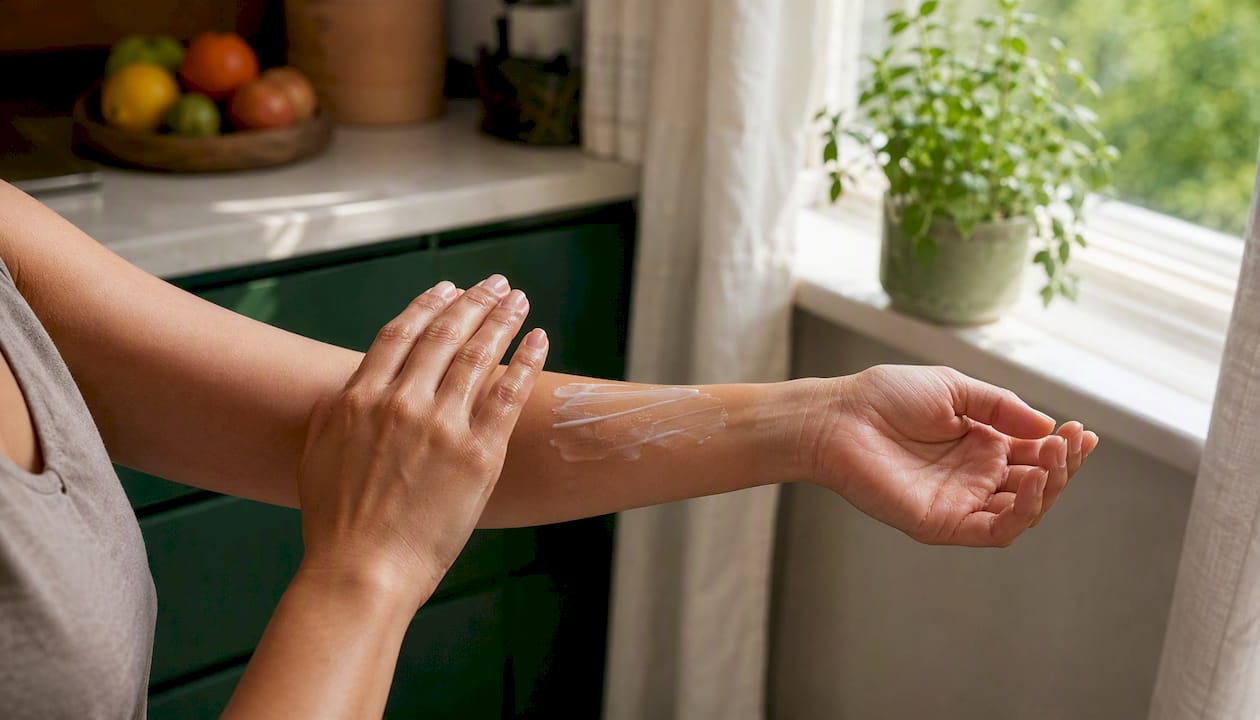
Apply retinol to near-dry, clean skin first. Wait one to two minutes, then apply your peptide serum. This sequence preserves retinol’s penetration into stratum corneum lipid channels and protects pH-sensitive peptide complexes from vehicle interference. Formulation guidance consistently supports this order.
Three sample routines
Beginner (weeks 1–4):
- Cleanse, pat skin mostly dry.
- Apply peptide serum (AM and PM).
- Moisturizer.
- AM only: SPF 30+.
- Introduce retinol at 0.025%–0.05% on one night per week only.
Intermediate (weeks 5–12):
- PM: Cleanse, pat mostly dry, apply retinol (0.05%–0.1%), wait two minutes.
- Apply peptide serum over retinol.
- Moisturizer.
- AM: Peptide serum, moisturizer, SPF 30+.
- Retinol frequency: two to three nights per week.
Advanced (week 12+):
- PM: Retinol or retinaldehyde (0.1%–0.3%) on retinol nights; peptide serum as the only active on recovery nights.
- AM: Peptide serum, antioxidant serum, moisturizer, SPF 30+.
- Retinol frequency: four to five nights per week as tolerated.
Pro Tip: If you use a vitamin C serum (L-ascorbic acid at low pH), apply it in the morning only. Strongly acidic vitamin C can destabilize copper peptide complexes, so keep them in separate routine slots. Copper peptide formulas perform best at a pH between 5 and 7.
For guidance on pairing peptides with hydrating actives like hyaluronic acid, the best hydrating serums guide from Copperpeptides covers practical pairings well.
Who should use peptides, who should use retinol, and who needs both?
The decision comes down to four factors: tolerance, age, skin condition, and pregnancy status.
Choose peptides as your primary active if you:
- Have sensitive, reactive, or rosacea-prone skin that flares with actives
- Are pregnant or breastfeeding (retinoids are contraindicated; peptides are the standard alternative)
- Are in your 20s building preventive collagen support rather than correcting established damage
- Have a compromised skin barrier from over-exfoliation or environmental stress
Choose retinol as your primary active if you:
- Are in your 30s or older with visible fine lines, texture irregularities, or hyperpigmentation
- Have oily or acne-prone skin that tolerates actives well
- Want the fastest, most evidence-backed route to measurable wrinkle reduction
- Have already established a solid moisturizing routine and can commit to daily SPF
Use both if you:
- Want to maximize anti-aging results while managing irritation
- Are in your 40s or beyond with multiple concerns (lines, texture, firmness, tone)
- Have tolerant skin but notice retinol dryness that a peptide serum can offset
Add a peptide serum every morning and on retinol-free nights. Expect to see texture improvement in eight to twelve weeks.
Scenario: Pregnant and concerned about early aging. Peptide serum morning and night is your go-to. Focus on barrier support and hydration. Return to retinol after breastfeeding ends.
Scenario: Rosacea or barrier-compromised skin. Skip retinol until the barrier is repaired.
What side effects should you expect, and how do you manage them?
Retinol side effects
- Erythema and peeling: most common in weeks two through six; typically resolves as skin adapts.
- Dryness and tightness: especially at concentrations above 0.1%.
- Photosensitivity: skin burns more easily; SPF is non-negotiable.
- Purging: temporary acne-like breakouts as cell turnover accelerates, usually clearing within four to six weeks.
Peptide reactions (less common)
- Contact allergy: rare but possible, usually to a formulation ingredient rather than the peptide itself.
- Formulation irritants: preservatives, fragrance, or high-concentration niacinamide in the same product can cause stinging or redness.
Management tactics
- Reduce frequency first. Drop retinol to once per week before abandoning it entirely.
- Use the retinol sandwich. Apply a thin layer of moisturizer before retinol, then another layer after. This buffers penetration without eliminating efficacy.
- Prioritize barrier repair ingredients alongside retinol: ceramides, niacinamide (at 5% or below), and panthenol.
- Switch to peptides temporarily if the barrier is visibly compromised (raw, stinging, peeling sheets of skin). Resume retinol only after the barrier recovers.
For sensitive or dry skin types managing retinol irritation, the best dry skin serum guide from Copperpeptides covers barrier-supportive options in detail.
Pro Tip: Patch test every new active on the inner forearm for 48 hours before applying to your face. If the reaction is to a peptide product, try a fragrance-free version of the same peptide class before concluding peptides don’t work for you. The irritant is often the vehicle, not the peptide.
How long does it take to see results from peptides vs retinol?
Set realistic expectations before you evaluate whether something is working.
Peptide serums:
- Within several weeks: improved hydration and skin feel.
- Over a few months: gradual improvements in firmness and early fine lines with consistent use.
Retinol:
- Within a month or two: improved texture and early reduction in fine lines at moderate concentrations.
- Over several months: measurable wrinkle reduction and more even tone with consistent use.
- Longer-term: further improvement in deeper lines and pigmentation, particularly at higher strengths.
Variability is real. Formulation quality, concentration, adherence, and individual skin biology all affect timelines. The general rule: give any new active a minimum of 12 weeks of consistent use before deciding it is not working. Progress photos taken in the same lighting every four weeks are far more reliable than daily mirror checks.
What does the clinical evidence actually say?
The evidence base for retinol and peptides is not equal, and knowing that gap helps you set honest expectations.
- Topical retinoids have multiple human randomized controlled trials documenting procollagen upregulation, epidermal thickening, and measurable wrinkle reduction. The PubMed evidence base for retinoids is among the strongest in cosmetic dermatology.
- Retinol commonly causes predictable early irritation; clinical reviews recommend gradual introduction and moisturizer buffering to reduce dropout.
- Peptide trials exist but are fewer, smaller, and often industry-funded. Some peptides, such as palmitoyl pentapeptide-4, showed modest improvements in small controlled trials. Independent replication at cosmetic concentrations is limited.
- Most head-to-head trials comparing peptide plus retinol combinations versus retinol alone are lacking. Combination use is mechanistically plausible, but clinical synergy remains unproven in RCTs.
“Retinol is the gold standard for correcting established signs of aging. Peptides are a long-term support to strengthen the skin and improve tolerability — they are not interchangeable with retinol for someone who needs visible correction, but they are genuinely useful alongside it.”
— Consultant dermatologist Dr. Derrick Phillips, as quoted in Vogue
As a systematic evidence appraisal notes, retinoids have stronger, replicated clinical evidence for wrinkle reduction, while peptide outcomes are more modest and less replicated. That does not make peptides ineffective. It means their role is best understood as supportive and complementary rather than as a like-for-like substitute for retinol’s resurfacing action.
For clinical context on peptide safety and evidence, the peptides evidence and safety guide from Cosmolaser provides a useful clinic-focused summary.
This article is general information, not medical advice. Consult a board-certified dermatologist before making changes if you have a diagnosed skin condition, are pregnant, or are considering prescription retinoids.
How to choose between peptides and retinol: a quick checklist
Work through these in order before buying anything.
- Check your pregnancy or breastfeeding status. If yes, peptides only. No retinol until cleared by your OB or dermatologist.
- Assess your current barrier. Stinging, flaking, or redness at baseline? Repair with peptides and ceramides for four to eight weeks before introducing retinol.
- Identify your primary concern. Visible lines, texture, and pigmentation point toward retinol. Hydration, firmness, and barrier support point toward peptides. Both concerns? Plan for both.
- Review your existing routine. Already using a low-pH vitamin C or an exfoliating acid? Map out timing before adding retinol or copper peptides to avoid pH conflicts.
- Start low and slow. Buy the smallest available size of retinol at 0.025%–0.05%. Introduce once per week. Evaluate after 12 weeks.
- Set a photo check-in. Take a photo in natural light on day one and every four weeks. Skin changes slowly; photos catch what mirrors miss.
- Book a dermatologist consult if you have rosacea, active eczema, or a history of severe retinol reactions before proceeding.
An editorial perspective on building a real routine
The conversation around peptide serums vs retinol tends to frame them as rivals. They are not. Retinol is a resurfacing tool with decades of clinical backing; peptides are a recovery and support system. Treating them as competitors is like debating whether to use a strength workout or sleep. Both matter, and the question is sequencing, not substitution.
What gets underestimated is how much the barrier state determines everything. They just skipped the foundation.
A practical approach: four to six weeks of a quality peptide serum morning and night, prioritizing hydration and barrier repair. Then introduce retinol at the lowest available concentration, twice a week, with a peptide serum layered after. Increase frequency only when the skin stops reacting. That patience is not timidity. It is the fastest route to tolerating higher retinol concentrations, which is where the real results live.
Copper peptides specifically deserve more credit than they get in the mainstream conversation. GHK-Cu has a more interesting mechanistic profile than most palmitoyl peptides, with evidence touching on wound healing, antioxidant activity, and collagen cross-linking support. The clinical trial base is still smaller than retinoids, but the tolerability advantage is real and meaningful for anyone who cannot use retinol.
Why Copperpeptides fits naturally into this routine
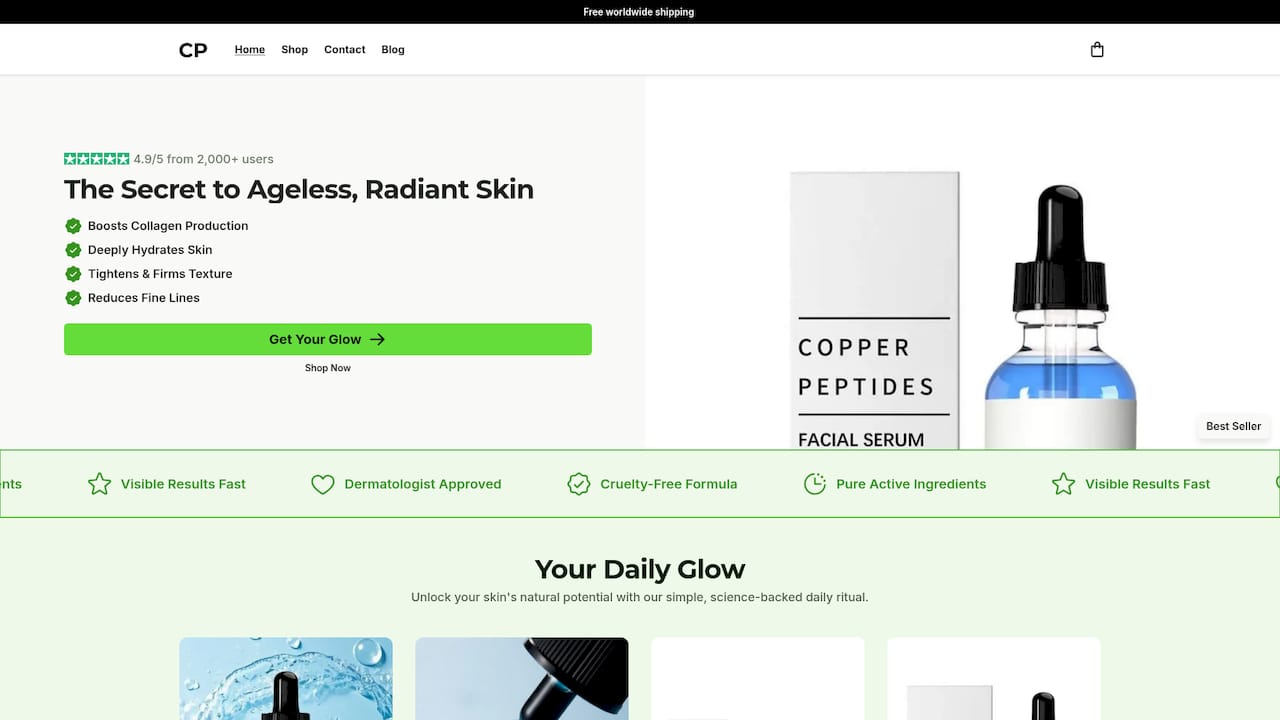
For readers who want a peptide serum that works in both the morning slot and as a post-retinol recovery layer. The Copper Peptide Anti-Aging Serum from Copperpeptides is formulated specifically for that role. It combines high-purity copper peptides (GHK-Cu) with medical-grade hyaluronic acid, giving you collagen signaling support alongside deep hydration in one step.
It fits three routine positions: as a standalone AM serum for those avoiding retinol, as a PM layer applied after retinol on active nights, and as the primary active on retinol-free recovery nights. The formula is dermatologist-endorsed, fragrance-free, and designed for all skin types including sensitive skin. Visible results typically appear within four to six weeks of consistent use.
This is Copperpeptides’s own product. If you are building a routine around the layering approach described in this article, or if retinol is not an option for you right now, it is a practical starting point. Visit the Copperpeptides store to review the full formulation details and return policy, or go directly to the product page to order.
Sources
The following sources informed the clinical and practical content in this article. For medical questions or prescription retinoid decisions, consult a board-certified dermatologist.
- Peptide vs Retinol: Which Is Better For Firmer Skin? | Vogue
- Pubmed
- Peptide Serum Before or After Retinol? | FormBlends
- Peptides and retinol both fight wrinkles, but which is best? | The Independent
The retinoid evidence base is well-established. Peptide evidence is growing but remains more limited, particularly for independent, large-scale trials. Use these sources as a starting point, not a substitute for personalized clinical advice.
Recommended
- Best Serums for Crepey Skin: Dermatologist-Backed Picks – Copper Peptides Store
- Best Dry Skin Serum for Sensitive, Aging Skin – Copper Peptides Store
- Best Wrinkle Serums: Dermatologist Picks for Fine Lines – Copper Peptides Store
- Best Hydrating Serums for Firming and Anti-Aging Skin – Copper Peptides Store