

Yes, most textured facial skin improves with a consistent routine: daily broad-spectrum SPF, controlled chemical exfoliation, a retinoid, and barrier hydration. Deep acne scarring or heavy sun damage often needs professional treatment on top of that. Expect the first real changes at 8 to 12 weeks, not days.
TL;DR:
- Consistent routine with SPF, chemical exfoliation, retinoids, and barrier hydration usually shows noticeable improvement at 8 to 12 weeks, not days.
- Deep scars or sun damage may require professional treatments like chemical peels, microneedling, or laser resurfacing for significant results.
- Overlapping strong actives, like multiple exfoliants and retinoids, can damage the skin barrier and worsen texture instead of improving it.
- Supporting the skin barrier with gentle cleansers, ceramide-rich moisturizers, and avoiding hot water enhances the effectiveness of active treatments.
- Peptide serums, such as copper peptides, strengthen the skin’s structure but should be added after establishing routine stability and barrier health.
Table of Contents
- Textured Skin Fix: What’s Actually Causing It
- A Simple Routine to Start This Week
- What AHAs, BHAs, and Retinoids Actually Do
- Repairing the Skin Barrier First
- When Should You See a Dermatologist for Texture?
- How Long Until You See Real Improvement?
- Where Peptide Serums Fit Into This Plan
- Why the “More Products, Faster Results” Mindset Backfires
- Where a Peptide Serum Belongs in Your Routine
- Sources
Textured Skin Fix: What’s Actually Causing It
Before you buy another serum, figure out which problem you’re solving. Textured skin isn’t one condition. It’s a symptom with several different root causes, and the wrong treatment for your specific cause can waste months.
Dead skin cell buildup is the most common culprit, especially past age 30 as natural cell turnover slows down. Sun damage thickens and roughens the outer skin layer over years, which is why sun-exposed areas like the forehead and cheeks often feel gritty compared to sun-protected skin. Aging brings a related but distinct issue: collagen decline, which causes crepey, uneven texture rather than the sandpaper feel of sun damage or congestion.
Acne, even mild or long-resolved acne, leaves behind micro-scarring and clogged pores that show up as texture. Dryness compounds all of the above. Dehydrated skin cells sit on the surface longer instead of shedding normally, which creates the rough, dull patches that feel worse in winter. Most people dealing with textured skin have two or three of these factors overlapping, which is exactly why a single-pillar fix (just exfoliate more, just moisturize more) tends to underperform.
A Simple Routine to Start This Week
You don’t need twelve products. You need four moves done consistently.
- Morning: Cleanse gently, apply an antioxidant serum like vitamin C if you have one, then finish with a broad-spectrum sunscreen. Never skip this step, even on cloudy days.
- Evening: Cleanse again, apply a retinoid or chemical exfoliant on scheduled nights, then seal in a barrier-supporting moisturizer.
- Weekly: Use chemical exfoliation one to two times a week to start. Skip physical scrubs with gritty particles. They tend to create micro-tears that worsen texture rather than smooth it.
- Before anything new: Patch-test on your inner forearm for 48 hours, and introduce only one new active at a time.
Pro Tip: Keep a simple log on your phone (date, product, reaction) for the first month. It’s the fastest way to spot which active is helping and which one is causing the redness you can’t otherwise explain.
What AHAs, BHAs, and Retinoids Actually Do
Each active targets a different mechanism, and picking based on your specific texture cause matters more than picking the trendiest ingredient.
- AHAs (glycolic and lactic acid) dissolve the bonds between dead surface cells. Start at 5 to 8% concentration, used two to three times weekly, and always follow with sunscreen the next morning since AHAs increase sun sensitivity.
- BHAs (salicylic acid) are oil-soluble, so they get inside the pore itself. If your texture is tied to clogged pores or acne, using BHA regularly can be particularly effective for that specific problem.
- Retinoids speed up cell turnover and stimulate collagen production, but they work slowly. Dermatologists typically recommend waiting a minimum of 12 weeks before judging whether one is working, and mild flaking or “purging” in the first month is common, not a sign of failure.
- Vitamin C works differently. It’s an antioxidant and a cofactor in collagen synthesis, best applied in the morning under sunscreen rather than layered with nighttime actives.
- Peptides and hyaluronic acid don’t exfoliate anything. They support the skin’s structure and hydration, functioning more as a foundation layer than a primary treatment on their own.
The biggest mistake here is stacking. Applying a strong AHA, a retinoid, and a physical scrub in the same week is a nearly guaranteed path to a compromised barrier, and a compromised barrier makes texture worse, not better. Watch for tightness, stinging, or visible flaking that doesn’t settle within a day. That’s your signal to pull back, not push through.
Repairing the Skin Barrier First
Every active you add works better, and irritates less, when your barrier is intact. This is the step most routines skip, and it’s usually why “the right ingredients” still don’t deliver results.
- Choose a gentle, fragrance-free cleanser, and skip hot water and foaming, alcohol-heavy washes that strip natural oils.
- Look for moisturizers containing ceramides, hyaluronic acid, and niacinamide. Ceramides rebuild the lipid matrix that holds moisture in, while hyaluronic acid pulls water into the surface. Apply moisturizer to slightly damp skin so it has something to seal in.
- Run a humidifier if you live somewhere dry, and limit showers to 5 to 10 minutes in lukewarm, not hot, water.
Pro Tip: If your skin ever starts burning, peeling excessively, or looking blotchy, drop every active for 3 to 5 days and run a bare-bones recovery routine: gentle cleanser, ceramide moisturizer, sunscreen. Nothing else. Most rebound irritation calms down within a week.
When Should You See a Dermatologist for Texture?
At-home care has limits. Deep acne scarring, pitted or boxcar scars, and heavy long-term sun damage usually respond too slowly to topicals alone, and that’s when in-office treatments earn their cost.
- Chemical peels range from superficial (mild, minimal downtime) to medium and deep (more dramatic results, longer recovery). Medium and deep peels carry a real hyperpigmentation risk for darker skin tones, so provider experience with your specific skin tone matters more than the peel’s marketed strength.
- Microneedling creates controlled micro-injuries that trigger collagen production, typically over three to six sessions spaced weeks apart.
- Laser resurfacing works similarly but with light energy instead of needles, and downtime varies widely by laser type and intensity.
- Before booking anything, ask how many sessions similar cases required, what results looked like on skin tones similar to yours, and whether the provider is a board-certified dermatologist or works directly under one.
Post-procedure, protect the results you paid for: strict SPF, no active retinoids or acids until your provider clears you, and gentle, barrier-focused care until the skin fully recovers.
How Long Until You See Real Improvement?
Prep your skin before you throw actives at it. Spend one to two weeks focused purely on barrier support and hydration if you’re currently using nothing or coming off irritation.
- Weeks 1 to 2: Barrier prep only. No new actives.
- Weeks 3 to 6: Introduce one active. AHA or BHA two times a week, or retinol two times a week, never both starting at once.
- Weeks 6 to 12: Gradually increase frequency as tolerated, watching for irritation at each step.
- Week 12 and beyond: This is when most clinical guidance says to actually evaluate results, since 12 to 16-week endpoints are the standard for measuring meaningful texture change.
Purging (small breakouts in the first 4 to 6 weeks of a new retinoid or exfoliant) is generally normal and tends to resolve on its own. Persistent, worsening irritation past that window is not normal, and it’s a sign to scale back. Take photos in the same lighting every 4 weeks, and track breakout frequency alongside how your skin actually feels by midday, not just how it looks in the mirror.
Where Peptide Serums Fit Into This Plan
Peptides don’t replace your exfoliant or your retinoid. They support what those actives are trying to build. Copper peptides specifically signal the skin to produce more collagen while reinforcing surface firmness, which makes them a logical layer once your barrier is stable rather than a first move for someone currently dealing with irritation.
The practical rule: don’t stack a peptide serum with a strong acid or retinoid in the same application. Apply exfoliants or retinoids at night, and use a peptide and hyaluronic acid serum like Copperpeptides’ formulation on alternate nights or mornings, once your skin tolerates its current actives without flaking or stinging. Patch-test any new serum for 48 hours first, and if redness or persistent bumps continue past a few weeks despite gentle use, see a dermatologist rather than adding more products.
Some users report visible firmness and hydration changes within a few weeks. That’s faster than most retinoid timelines, but it’s still a support player, not a substitute for sunscreen or exfoliation.
Why the “More Products, Faster Results” Mindset Backfires
The biggest misconception in skincare right now isn’t about which ingredient works. It’s about sequencing. People assume that because retinol, vitamin C, and a strong AHA are each individually effective, using all three in the same week must compound the results. It does the opposite. Overlapping actives compete for the same repair resources your skin has, and the barrier damage that follows shows up as texture, the very thing you were trying to fix.
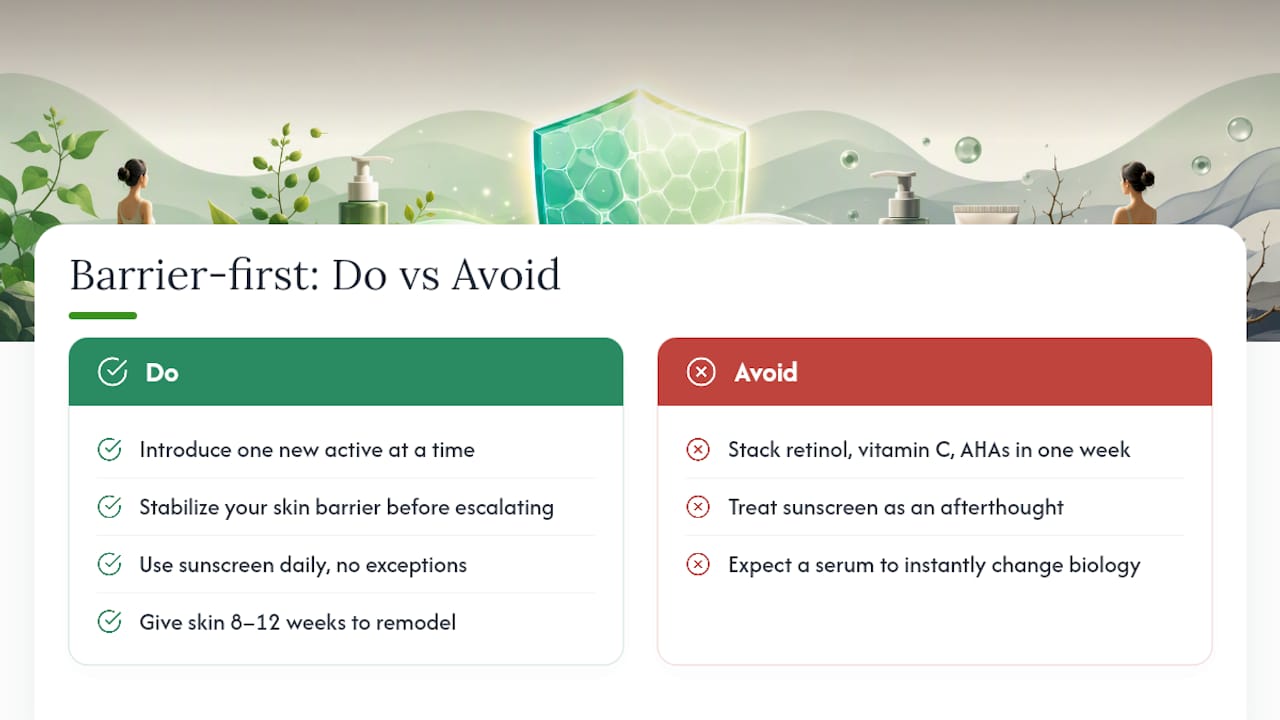
The dermatologist-aligned approach isn’t slower because it’s cautious for caution’s sake. It’s slower because skin genuinely takes 8 to 12 weeks to remodel at the cellular level, and no serum changes that biology. What separates people who actually fix textured skin from people who cycle through five products a year is restraint: one new active at a time, a stable barrier before escalation, and sunscreen treated as non-optional rather than an afterthought.
Where copper peptides earn a place in that plan is as reinforcement, not rescue. They’re not going to undo years of sun damage or replace what a dermatologist can do with a peel. But layered correctly into a barrier-first routine, they support the collagen work your retinoid is already doing, which is a more honest claim than most serums are willing to make.
— British
Where a Peptide Serum Belongs in Your Routine
There are copper peptide serums formulated with medical-grade hyaluronic acid, designed for the barrier-support layer this article just walked through. It’s not another exfoliant competing for space in your routine. It’s the collagen and hydration support that makes your retinoid and SPF actually pay off long term.
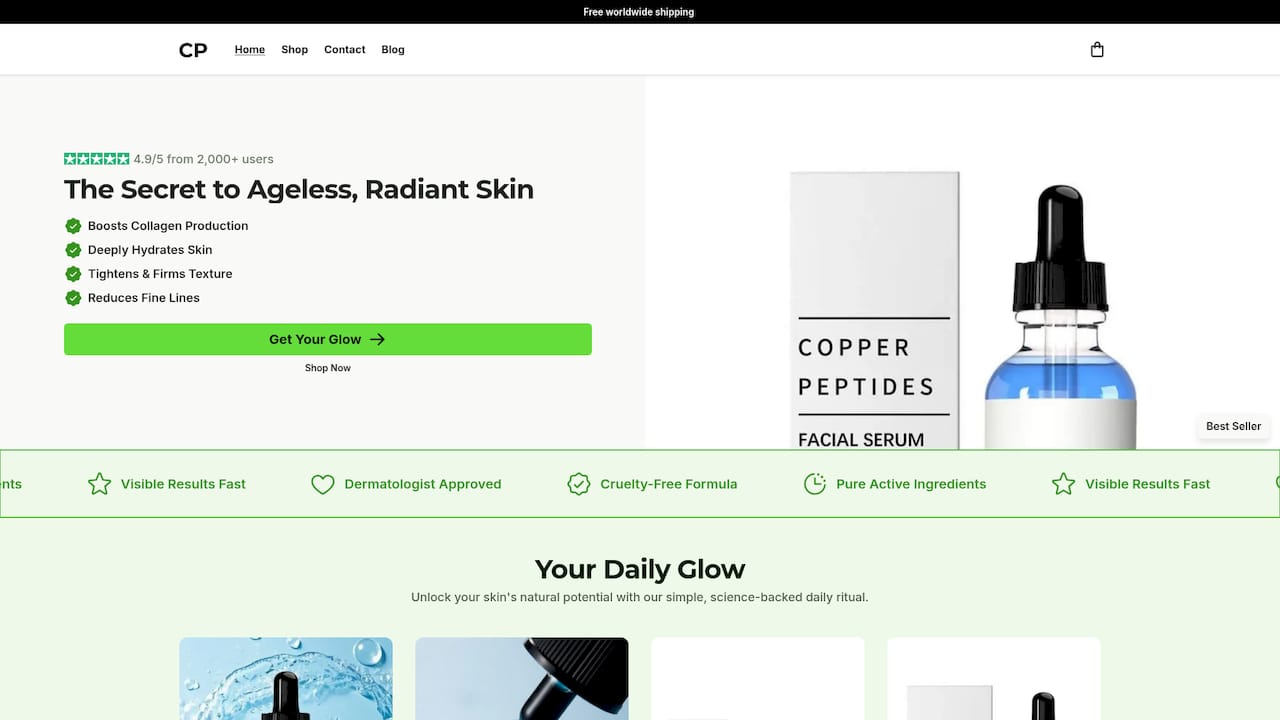
Such serums are generally suited for those past the “just started treating texture” phase, meaning a stable skin barrier and an existing sunscreen and active in place. Users may see visible firmness and hydration improvements over several weeks, and these products are often formulated to be gentle enough for sensitive skin types that react to heavier actives. If you’ve read this far and you’re wondering where to add support without introducing another irritant, check the Copper Peptide Anti-Aging Serum and patch-test it alongside your current routine this week.
Sources
- How to Improve Skin Texture: A Data-Driven Guide | SKŌR
- Dry skin - Diagnosis and treatment - Mayo Clinic
- 8 Treatments That Can Improve Your Skin Texture, According to Dermatologists