

Bakuchiol typically wins for active turnover and pigmentation concerns, while peptides tend to perform better for structural firming and repair. Both are gentler than classic retinoids: bakuchiol showed less irritation than retinol in a head-to-head trial, and peptides rarely cause sensitivity at all. If firming is your goal, skip to the routine and cost sections below.
TL;DR:
- A 2018 trial found 0.5% bakuchiol twice daily matched 0.5% retinol nightly for wrinkles and pigmentation over 12 weeks, with less scaling and stinging.
- Peptide results depend on the compound: palmitoyl pentapeptide 4 has clinical evidence for wrinkle reduction, while copper peptides support firmness and repair.
- Choose bakuchiol for pigmentation, palmitoyl peptides for fine lines, and copper peptides for laxity or repair; peptides are often gentler for reactive skin.
- Expect visible changes after 8 to 12 weeks of consistent use; product strength, delivery, and regular application affect the timeline.
- Patch test each product on your inner arm for 48 hours, add new actives at least two weeks apart, and pause use if irritation persists.
Table of Contents
- Mechanisms: How Peptides Differ From Bakuchiol at a Biological Level
- Clinical Evidence and Timelines for Results
- Which Skin Types and Concerns Favor Peptides or Bakuchiol
- Practical Routine Guidance: Concentrations, Order, and Start-Up Schedules
- Cost Comparison Between Peptides and Bakuchiol Products
- How Copper Peptide Formulations Fit Into an Evidence-Led Routine
- A Gentler Route to Firmer, More Hydrated Skin
- FAQ
- Sources
Mechanisms: How Peptides Differ From Bakuchiol at a Biological Level
Peptides are short chains of amino acids that act as chemical messengers, telling skin cells to behave a certain way; to understand their role in hair and skin health better, see their biological functions. Copper peptides and palmitoyl peptides are two common examples, and each works through a different signal: copper peptides support tissue repair and are frequently used for firming, while palmitoyl peptides like palmitoyl pentapeptide-4 are formulated to prompt collagen production at the cellular level.
Bakuchiol works differently. It is a single phytochemical, extracted from the Psoralea corylifolia plant, that modulates gene expression in a way that mimics retinoids. Research using gene-expression profiling found that bakuchiol upregulates collagen types I, III and IV in skin models, supporting the same cellular turnover pathways that retinol targets, without binding to the same receptors that cause retinoid irritation.
This distinction matters for how you think about “peptides” as a category. Unlike bakuchiol, which is one defined molecule, peptides cover dozens of distinct compounds with different jobs:
- Copper peptides: support firming, repair, and wound-healing type responses in skin tissue.
- Palmitoyl pentapeptide-4: targets fine lines and is one of the more clinically studied peptides for wrinkle reduction.
- Tetrapeptides: used in formulations aimed at elasticity and smoothness.
A product labeled “peptide serum” tells you almost nothing about which peptide it contains or at what concentration, so the ingredient list and research behind the specific peptide matter more than the category name. The practical takeaway: bakuchiol’s single, well-studied mechanism makes its results more predictable across products, while peptide performance depends heavily on which peptide you are using and how it is formulated.
Clinical Evidence and Timelines for Results
The strongest bakuchiol data comes from a 2018 randomized, double-blind trial comparing bakuchiol 0.5% applied twice daily against retinol 0.5% applied nightly. Over 12 weeks, both ingredients produced comparable reductions in wrinkles and pigmentation, but bakuchiol caused significantly less scaling and stinging. That tolerability gap is the main reason dermatology coverage treats bakuchiol as a viable retinol alternative rather than simply a weaker substitute.
Peptide evidence is more fragmented because it spans many different compounds. Relevant findings include:
- A 12-week, double-blind, split-face study of 93 participants found palmitoyl pentapeptide-4 (pal-KTTKS) produced measurable wrinkle reduction versus placebo.
- Separate trials on Tetrapeptide-68 reported wrinkle and firmness improvements over a similar 8 to 12-week window.
- A bakuchiol-containing night serum with added actives showed roughly an 11% decrease in wrinkles across five clinical studies totaling 103 subjects treated over 28 to 84 days.
Both ingredient categories generally need 8 to 12 weeks of consistent use before visible change shows up, which is standard for any ingredient working at the cellular turnover or collagen-signaling level. Formulation strength, delivery vehicle, and how consistently you apply the product all affect whether you land at the faster or slower end of that range. On tolerability, bakuchiol’s photosensitivity profile appears milder than retinoids in available trials, while peptides as a category rarely trigger photosensitivity at all, which is part of why they suit daytime routines more easily.
Which Skin Types and Concerns Favor Peptides or Bakuchiol
Matching the ingredient to your actual concern saves months of guessing. Here is a practical breakdown:
- Photoaging and pigmentation: bakuchiol is the stronger fit, given its retinoid-like turnover effect.
- Fine lines: either works, but peptide-specific trials like pal-KTTKS show targeted improvement here.
- Skin laxity and firmness: copper peptides tend to be the better-suited option, since their repair signaling supports tissue structure.
- Sensitivity or rosacea-prone skin: peptides are generally the gentler starting point, since they rarely cause irritation.
Reactive skin conditions need extra care. If you deal with perioral dermatitis or similar flare-prone skin, a gradual copper peptide introduction tends to be safer than jumping straight into a retinoid-adjacent ingredient like bakuchiol.
Combination use is reasonable once your skin tolerates each ingredient alone. Many routines pair a peptide serum in the morning with bakuchiol at night, though it is worth staggering the introduction by a couple of weeks so you can tell which ingredient is responsible if irritation shows up.
Pro Tip: Introduce one new active at a time and wait at least two weeks before adding the next, so you can track what your skin is actually reacting to.
Practical Routine Guidance: Concentrations, Order, and Start-Up Schedules
Start with a patch test on your inner arm for 48 hours before applying either ingredient to your face. The bakuchiol trial used 0.5% applied twice daily, which is a reasonable benchmark when checking product labels, though peptide concentrations vary widely by compound and brand, so compare against published research for that specific peptide where possible.
Layering follows one general rule: lightest texture to heaviest, with sunscreen always last in the morning.
- Morning: cleanser, peptide serum, moisturizer, sunscreen.
- Evening: cleanser, bakuchiol, hyaluronic acid serum, moisturizer.
Ramp-up schedule:
- Week 1 to 2: apply every other night to assess tolerance.
- Week 3 to 4: move to nightly use if no irritation appears.
- Week 5 onward: maintain consistent use and track changes against a baseline photo.
Pause use if you notice persistent redness, burning, or peeling that does not settle within a few days, and avoid combining bakuchiol with other exfoliating acids on the same night.
Cost Comparison Between Peptides and Bakuchiol Products
Pricing for both ingredient categories spans a wide range, driven mostly by concentration, formulation quality, and brand positioning rather than the raw ingredient cost. Mass-market bakuchiol serums sit at the lower end of the skincare aisle, while serums built around specific studied peptides, like pal-KTTKS or Tetrapeptide-68, often carry a premium tied to the research behind that compound.
Copper peptide formulations occupy a similar mid-range position, and ours is priced at $20 one-off for the Copper Peptide Anti-Aging Serum, which sits well below many prestige peptide lines while still using a high-purity formulation.
The practical comparison is less about ingredient category and more about what you are paying for within that category. A bakuchiol serum backed by the kind of 12-week trial data referenced earlier justifies its price differently than one with no published testing behind it. The same logic applies to peptides: a formulation using a studied concentration of a named peptide is a different purchase than a product that lists “peptides” generically on the label. Checking the ingredient list against published concentrations is the most reliable way to judge whether a price reflects real formulation strength or just brand markup.

How Copper Peptide Formulations Fit Into an Evidence-Led Routine
Copper peptides occupy a specific niche: firming and hydration support for people who want visible change without retinoid-level irritation risk. That niche lines up with what the broader peptide research shows, that targeted repair signaling tends to produce steadier, better-tolerated results than more aggressive turnover ingredients.
Our own 12-week dull skin data and the 4 to 6 week timeline comparison against growth factors reflect that pattern, and combining copper peptides with hyaluronic acid is a layering approach we detail further here. For sensitive skin types, including perioral dermatitis-prone skin, copper peptides are often the more forgiving entry point into active skincare.
Evidence-led skincare does not mean the most aggressive ingredient wins. It means matching the mechanism to the skin in front of you, and giving it the weeks that research says it actually needs.
— British
A Gentler Route to Firmer, More Hydrated Skin
If firming and hydration are your main goals and you want something gentle enough for sensitive skin, some copper peptide serums pair high-purity copper peptides with medical-grade hyaluronic acid, and formulations like these are often endorsed for their visible results within four to six weeks.
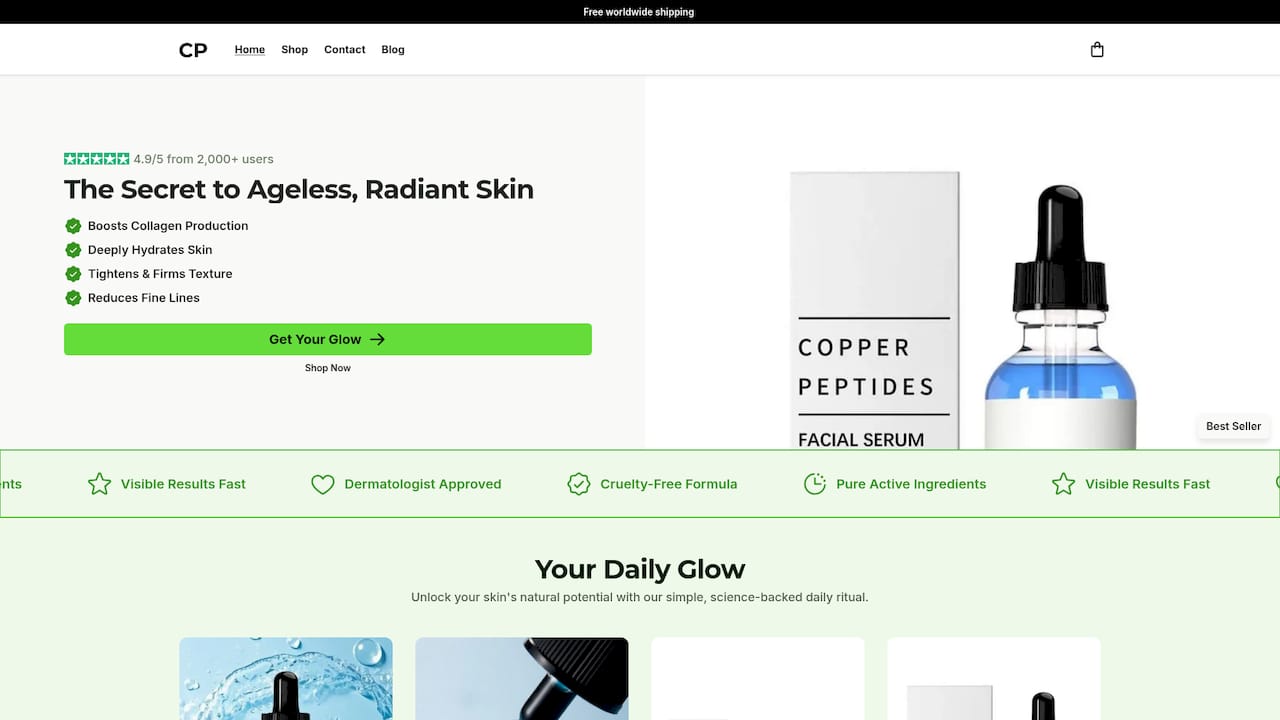
| What you get | Detail |
|---|---|
| Product | Copper Peptide Anti-Aging Serum |
| Price | $20 one-off |
| Guarantee | 30-day money-back guarantee |
Our 30-day money-back guarantee means you can try the serum risk-free. Browse the full product collection to get started.
FAQ
What are the key differences between retinol and bakuchiol, and which is better for my skin?
Retinol and bakuchiol both support cellular turnover and collagen signaling, but a 2018 randomized trial found comparable wrinkle improvement with significantly less scaling and stinging from bakuchiol over 12 weeks. Bakuchiol tends to suit sensitive or reactive skin better, while retinol remains a stronger option for those who tolerate it well and want a longer evidence history.
What is another name for bakuchiol?
Bakuchiol is extracted from Psoralea corylifolia, sometimes called babchi, and is frequently described as a retinol-like compound because of how it modulates gene expression similarly to retinoids. It is not a synthetic retinoid itself, just a plant-derived ingredient that produces similar effects.
Does bakuchiol boost collagen?
Yes, gene-expression and in vitro studies have shown that bakuchiol upregulates collagen types I, III and IV in skin models, which supports its reputation as a retinol-like functional ingredient. Clinical case studies tied to that research reported visible anti-aging improvements after 12 weeks.
What is a natural alternative to retinol?
Bakuchiol is the most studied plant-derived alternative to retinol, with clinical trial data showing comparable wrinkle improvement and better tolerability over 12 weeks. For those seeking a non-retinoid route focused on firming rather than turnover, copper peptides offer a different mechanism worth considering alongside bakuchiol.
Sources
- Prospective, randomized, double‐blind assessment of topical bakuchiol and retinol for facial photoageing
- Peptide clinical studies and review (multiple trials summarized)
- Bakuchiol: a retinol-like functional compound revealed by gene expression profiling and clinically proven to have anti‑aging effects
- Clinical evidence of the efficacy and safety of a new 3‑in‑1 anti‑aging topical night serum containing melatonin, bakuchiol, and ascorbyl tetraisopalmitate