

Copper peptides rarely cause lasting dullness. When skin looks flat or tired after starting a copper peptide product, the usual cause is irritation, a disrupted moisture barrier, or a clash with another active ingredient, not the peptide itself. If a reaction is severe, stop using the product right away; otherwise, patch test before applying it to your face again. The sections below walk through the causes, the research, how to test safely, and when a dermatologist should take a look.
TL;DR:
- Tightness and new sensitivity to familiar products point to barrier disruption; reduce other actives and use a plain moisturizer before blaming the peptide.
- Before facial use, apply the product to a small inner arm area twice daily for one week; stop if redness, itching, swelling, or rash appears.
- Keep copper peptides separate from low pH vitamin C, exfoliating acids, and retinoids; alternate nights or leave several hours between applications.
- Any blistering, intense swelling, a widespread rash, or breathing difficulty requires urgent care; see a dermatologist if irritation lasts over a week after stopping.
- Evidence remains limited: one small trial found no objective redness difference after laser treatment, while participants reported better skin quality after 12 weeks.
Table of Contents
- What users report: side effects and what dull skin usually means
- What clinical studies and dermatologists say about GHK-Cu safety
- How to test a copper-peptide product safely at home
- Routine and layering advice to avoid dullness
- When to stop and when to see a dermatologist
- What clinicians and users have found in practice
- Where conventional advice on copper peptides falls short
- A gentler way to try copper peptides
- FAQ
- Sources
What users report: side effects and what dull skin usually means
Most reactions tied to copper peptide serums are mild and short-lived. The pattern that worries people, skin that looks dull or lackluster a few days into a new routine, usually traces back to something other than the peptide molecule itself.
- Mild redness, stinging, or a tight feeling right after application
- Flaky texture or temporary dull-looking patches
- Occasional small breakouts, especially around the hairline or jaw
Telling purging apart from irritation comes down to timing and pattern. Purging tends to follow the introduction of an exfoliating acid or retinoid and shows up as small, contained breakouts in areas prone to congestion, usually clearing within a few weeks. Irritation shows up faster, often within a day or two, and spreads more broadly across wherever the product was applied. Barrier disruption, which is the most common reason skin looks dull after a new serum, announces itself through tightness and heightened sensitivity to products that never used to bother you.
Pro Tip: If your skin feels tight and looks dull at the same time, treat it as a barrier issue first: cut back on actives and add a plain moisturizer before assuming the peptide is to blame.
What clinical studies and dermatologists say about GHK-Cu safety
The research on GHK-Cu, the copper peptide most commonly used in skincare, is limited but consistent in one direction: it tends to be gentler than other copper compounds.
- A small randomized trial of GHK-Cu applied after CO2 laser resurfacing found no objective difference in erythema compared with controls, but patients using GHK-Cu reported better skin quality at 12 weeks, a gap between how skin looked under measurement and how it felt to the person wearing it, as described in this CO2 resurfacing study.
- Lab testing on keratinocytes found that GHK-Cu did not trigger the same irritancy biomarkers as inorganic copper salts like copper chloride and copper acetate, according to research comparing copper compounds.
GHK-Cu did not significantly raise irritancy-related biomarkers in lab testing, while the inorganic copper salts it was compared against did, per that same keratinocyte study. That distinction matters for anyone worried about copper itself causing harm. The caveat worth remembering: dermatologists and cosmetics editors note that copper peptides can be unstable in certain formulations and don’t pair well with low-pH actives, a point covered in coverage of copper peptide use. The evidence base is still thin, built mostly on small trials and lab models rather than large clinical studies.
How to test a copper-peptide product safely at home
A Repeat Open Application Test, known as a ROAT, is the standard way to check tolerance before committing to full-face use. The method comes from dermatology clinics and is simple enough to do at home.
- Pick a small, hairless patch of skin on your inner arm.
- Mark out a square roughly 2 by 2 inches.
- Apply a small amount of the product to that square.
- Repeat twice daily for one full week, per ROAT guidance from DermNet.
- Watch for itching, redness, swelling, or a rash forming in or around the test area.
- If no reaction appears after a week, the product is reasonable to introduce on your face gradually.
If redness, itching, or a rash shows up at any point, stop applying the product immediately and let the skin settle before deciding whether to retry. The American Academy of Dermatology recommends this kind of small-area testing for any new skincare product, and advises seeing a dermatologist if a reaction persists, since formal patch testing in a clinical setting can pinpoint the exact cause more precisely than a home test can.
Pro Tip: Test one new product at a time. Layering several unfamiliar actives during a ROAT makes it impossible to tell which one caused a reaction.
Routine and layering advice to avoid dullness
How you layer copper peptides matters as much as whether your skin tolerates them. Formulation experts and dermatologists flag the same combinations as problematic, since acidity or oxidation can break down the peptide before it does any good, a concern raised in reporting on copper peptide formulation.
- Avoid applying copper peptides at the same time as low-pH vitamin C, AHAs, BHAs, or retinoids.
- Alternate nights between peptides and acids, or use peptides in the morning and stronger actives at night.
- If you want both in the same routine, separate application by several hours rather than layering them back to back.
- Lean on hyaluronic acid for hydration and ceramides for barrier support while your skin adjusts.
- Skip physical exfoliation (scrubs, harsh brushes) during the first few weeks of introducing a new peptide product.
Clinical perspectives on peptide timelines, such as this overview of peptide skincare, note that visible changes from peptides generally take weeks rather than days, so a slow, supported introduction tends to serve skin better than rushing multiple actives in at once.
When to stop and when to see a dermatologist
Some reactions call for immediate attention rather than a wait-and-see approach. Blistering, intense swelling, a rash that spreads widely, or any breathing difficulty means stopping the product and seeking urgent medical care without delay.
Milder irritation that lingers more than a week after you’ve already stopped the product is a sign to book a dermatologist visit. A clinician will typically assess the skin, rule out contact dermatitis through formal patch testing, and may recommend a short course of topical steroids, emollients, or simply avoiding the ingredient going forward.
What clinicians and users have found in practice
The common clinical approach to a mild reaction is straightforward: stop the product, repair the barrier with hydration and emollients, then reintroduce slowly if the person wants to continue. Most dullness tied to copper peptides clears up once hydration improves and actives are separated. Severe reactions remain uncommon with GHK-Cu, which lines up with the lab findings showing a comparatively low irritancy profile.
— British
Where conventional advice on copper peptides falls short
Most guidance on copper peptides treats “dull skin” as a single problem with a single fix, when it’s really a symptom with three different causes: irritation, barrier disruption, and bad layering habits. The conventional advice, patch test and hope for the best, skips the diagnostic step that actually matters: figuring out which of those three is happening before deciding whether to stop or push through.

The evidence here supports a narrower claim than most articles make. GHK-Cu itself has a reassuring safety profile in the lab work available, but that doesn’t mean every copper peptide product is interchangeable. Formulation, pH, and what else is in the bottle do more to determine your experience than the peptide concentration on the label.
What readers should prioritize first isn’t finding the “best” copper peptide serum. It’s ruling out the layering mistakes, especially stacking peptides with acids or retinoids, that cause most of the complaints attributed to the ingredient itself. Fix the routine before blaming the molecule.
A gentler way to try copper peptides
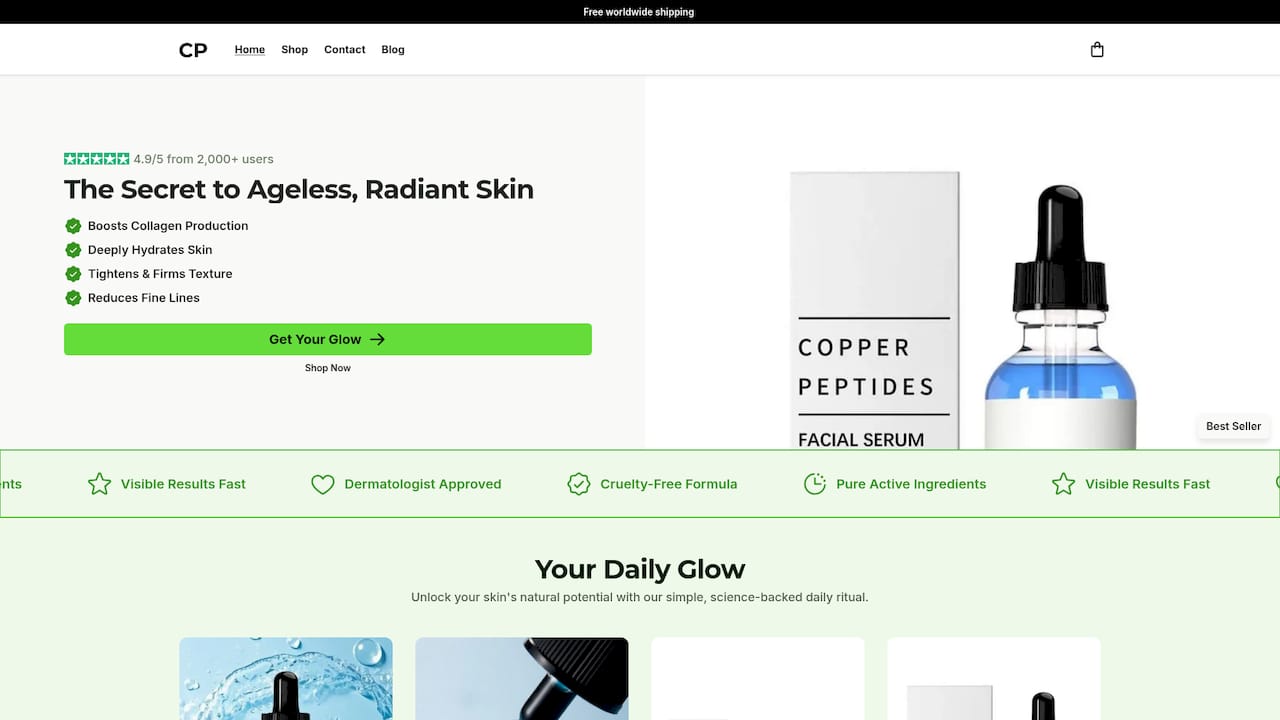
We built our serum around the same formulation concerns dermatologists raise about copper peptides: stability and compatibility. Our serum pairs GHK-Cu with hyaluronic acid, so hydration and barrier support come built in rather than left to a separate step you might skip.
- GHK-Cu formulated to support tolerability across skin types
- Hyaluronic acid included to address the hydration side of barrier repair
- Supported by a money-back guarantee if the serum doesn’t work out for your skin
| What matters | How our serum addresses it |
|---|---|
| Formulation purity | High-purity GHK-Cu formulation |
| Hydration support | Medical-grade hyaluronic acid included |
| Risk if it doesn’t suit you | money-back guarantee |
Our serum is designed to deliver visible results within several weeks of consistent use. If you’ve read through the testing and layering guidance above and want a formulation built with those concerns in mind, you can browse the serum on our product page.
This article is general information, not a substitute for advice from a qualified doctor. Consult a qualified healthcare professional about your own circumstances before acting on anything here.
FAQ
What should you not layer with copper peptides?
Avoid applying copper peptides at the same time as low-pH vitamin C, AHAs, BHAs, or retinoids, since the acidity or oxidation involved can degrade the peptide and increase irritation risk, a concern noted in reporting on copper peptide compatibility. Alternating nights or spacing application by several hours works better than layering them together.
How do you use a GHK-Cu peptide product?
Apply it to clean, dry skin, ideally on its own or paired with hydrating, pH-neutral ingredients like hyaluronic acid. Keep it separate in time from acids and retinoids, and introduce it gradually with a patch test first, following ROAT testing guidance before full-face use.
What has research found about GHK-Cu so far?
A small randomized trial found no objective difference in erythema after CO2 resurfacing, but patients reported better skin quality at 12 weeks when using GHK-Cu, as shown in that clinical study. Separate lab testing found GHK-Cu caused less biomarker-level irritation than inorganic copper salts, suggesting a comparatively gentle profile, per this keratinocyte research.
Does copper help with acne?
The available GHK-Cu research focuses on skin repair, collagen support, and comparative irritancy rather than acne treatment directly, so there isn’t clinical evidence specific to acne clearance. Any breakouts that appear after starting a copper peptide product are more often linked to purging from a paired active or to irritation than to the copper itself.
How long until copper peptides improve dull skin?
Visible changes from peptide use typically take several weeks rather than days, with some clinical perspectives pointing to a window of 8 to 12 weeks for noticeable results. Patience paired with a gentle, well-separated routine tends to produce better outcomes than rushing multiple new actives in at once.
Sources
- Repeat Open Application Test (ROAT)
- Repeat Open Application Test (ROAT) — AAD handout
- Effects of topical copper tripeptide complex on CO2 laser–resurfaced skin (2006)
- Selected biomarkers revealed potential skin toxicity caused by certain copper compounds (2016)
- Should we all be using copper peptides for our skin? (The Cut)