

Copper peptides, antimicrobial peptides like LL-37, and biomimetic peptides such as Oligopeptide-215 support skin barrier repair by signaling collagen production, tightening cell junctions, and calming the inflammation that keeps a damaged barrier from healing. They do not replace lipids. Ceramides and fatty acids seal water in immediately, while peptides work over weeks to rebuild the structural proteins underneath. Expect visible change in four to twelve weeks of consistent use, not overnight.
TL;DR:
- Peptides mainly support deeper signaling processes and do not replace lipids, which provide immediate sealing; expect visible results in four to twelve weeks.
- Copper peptides deliver trace metals essential for tissue remodeling, making them more suitable for structural support than for instant plumping.
- To repair a compromised barrier, start with lipid replenishment using ceramides and fatty acids before adding peptide serums for long-term strength.
- Peptide delivery can be hindered by degradation; formulation techniques like liposomal encapsulation improve their stability and effectiveness.
- Human research supports antimicrobial peptides’ role in strengthening tight junctions, while biomimetic peptides like Oligopeptide-215 are promising but still largely preclinical.
Table of Contents
- How Barrier Repair Peptides Work: The Biology Behind the Claims
- Peptide Types for Barrier Repair: A Practical Ingredient Guide
- Peptides, Ceramides, and Moisturizers: Where Each One Fits
- How to Use Barrier Repair Peptides: Application, Timing, and What to Expect
- The Evidence for Barrier Repair Peptides: Strengths and Gaps
- Why Copper Peptides Deserve More Credit Than They Get
- Building a Copper Peptide Routine That Supports Barrier Repair
- Sources
How Barrier Repair Peptides Work: The Biology Behind the Claims
Your skin barrier isn’t a single wall. It’s closer to a brick-and-mortar structure, where corneocytes act as bricks and lipids act as mortar, sitting on top of deeper layers that make collagen, regulate immune signaling, and manage moisture flow. Most peptide activity happens below the surface, in that deeper signaling zone, not in the mortar itself. That distinction explains why peptides and ceramides solve different problems.
Different peptide classes hit different targets:
- Signal peptides tell fibroblasts to produce more collagen and elastin, which thickens the dermal support structure over time.
- Carrier peptides, most notably copper peptides (GHK-Cu), deliver trace metal ions that act as cofactors for enzymes involved in tissue remodeling and wound healing.
- Antimicrobial peptides, including LL-37 and human β-defensins, improve tight junction barrier function in keratinocytes, which is the protein network that controls how much water and how many irritants pass between skin cells.
- Biomimetic peptides are engineered to mimic natural signaling molecules and can act on more than one pathway at once, including inflammatory routes like JAK–STAT and NF-κB.
A review of peptide classes in cosmetic formulation breaks these categories down further, noting that signal and carrier peptides dominate anti-aging formulas while antimicrobial peptides are increasingly studied for barrier and microbiome support. The mechanisms are distinct enough that a serum built around one class won’t automatically deliver the benefits of another.
Peptide Types for Barrier Repair: A Practical Ingredient Guide
Not every peptide on an ingredient list does the same job. Here’s how the main categories break down for someone trying to actually fix a compromised barrier rather than just chase a trendy label.
- Signal peptides (palmitoyl pentapeptide-4 and similar) prompt collagen and elastin synthesis, which firms skin and supports the structural layer beneath the barrier itself.
- Carrier peptides, specifically copper peptides, pair a metal ion with a peptide chain that helps deliver it into tissue where it supports enzymatic activity tied to collagen remodeling and wound repair. This is the category Copperpeptides focuses on, since GHK-Cu has one of the longer research histories among cosmetic peptides.
- Antimicrobial peptides like LL-37 and β-defensins reinforce tight junctions and support the skin’s immunologic defenses, which matters when a damaged barrier lets more irritants and microbes through than it should.
- Biomimetic engineered peptides, such as Oligopeptide-215, are built to act on multiple targets simultaneously. Early data on this one shows it can influence both structural barrier proteins and inflammatory signaling, making it one of the more interesting dual-action candidates in current formulation research.
- Delivery and stability caveats matter more than most labels admit. Peptides are large molecules that struggle to cross the stratum corneum on their own, and they can degrade in unstable formulas. Reviewers note that liposomal encapsulation, chemical modification, and penetration enhancers are the common fixes brands use to get peptides where they need to go.
Formulation quality decides whether any of this reaches your skin intact. A peptide with strong lab data can still underperform in a poorly stabilized product.
Peptides, Ceramides, and Moisturizers: Where Each One Fits
Think of barrier repair as a two-speed job. Lipids fix the emergency; peptides fix the foundation.
Ceramides, cholesterol, and free fatty acids fill the mortar between skin cells almost immediately, cutting transepidermal water loss and calming visible irritation within days. Replenishing these lipids is described as a necessary first step when the barrier is compromised, and peptides don’t substitute for that. Peptides instead signal the deeper repair processes, collagen synthesis, enzymatic remodeling, tight junction reinforcement, that take longer to show results but build lasting resilience.
A practical routine usually looks like this:
- If your barrier is visibly damaged (flaking, stinging, redness), prioritize ceramide and fatty acid replacement first.
- Add humectants like hyaluronic acid or glycerin to draw and hold water, then seal with an occlusive if your skin still feels tight.
- Layer in a carrier or signal peptide serum once the acute irritation has calmed, for longer-term structural support.
- Space peptides away from strong acids or retinoids, since low pH exfoliants and retinoid activity can degrade peptide structures or irritate skin that’s already compromised.
This sequencing mirrors dermatological guidance favoring lipid restoration before adding structural actives.
How to Use Barrier Repair Peptides: Application, Timing, and What to Expect
Getting the sequence right matters as much as picking the right peptide.
- Choose a leave-on format. Serums and creams give peptides the residence time they need on skin; rinse-off products rarely allow enough contact time for peptides to do meaningful work.
- Follow a consistent layering order. Cleanse, apply a hydrating serum, follow with your peptide serum, then lock it in with a moisturizer or occlusive. If you use retinoids or acids, alternate them to a different time of day.
- Apply once or twice daily, depending on the formulation’s concentration and your skin’s tolerance. Consistency drives results far more than dosage.
- Give it real time. Clinical guidance from the Cleveland Clinic on peptides for skin notes that visible change typically requires weeks of daily use, generally in the four to twelve week range, since you’re waiting on collagen turnover and cellular repair cycles, not a surface effect.
- Patch-test first, especially with sensitive skin, and check in with a dermatologist if you’re combining multiple actives or have an existing skin condition.
Pro Tip: Apply peptide serums to slightly damp skin. It helps with absorption and reduces the sting some people feel when layering actives on completely dry skin.
For a deeper breakdown of sequencing with other actives, see this guide on layering copper peptides with acids, retinoids, and humectants.
The Evidence for Barrier Repair Peptides: Strengths and Gaps
The strongest evidence sits with antimicrobial peptides. Research on LL-37 and human β-defensins shows measurable improvement in tight junction function in keratinocyte studies, giving this peptide class some of the clearest mechanistic support in the category. Reviews of cosmetic peptide formulation back this up with detail on how signal, carrier, and enzyme-inhibitor peptides are classified and where their delivery limitations lie, including the case for nanoencapsulation and microneedle-assisted delivery to overcome the skin’s natural resistance to large molecules.
Biomimetic peptides are the most exciting frontier and the least proven in humans. Oligopeptide-215 research found it restored expression of filaggrin and loricrin, two proteins central to barrier integrity, while also modulating JAK–STAT and NF-κB inflammatory signaling in preclinical models.
Dual-targeting peptides that act on both structural proteins and inflammatory pathways represent one of the more promising directions in barrier research, but the data behind them remains largely preclinical. Human trial confirmation is still the missing piece.
That gap doesn’t invalidate the science. It just means claims about biomimetic peptides deserve more caution than claims about better-studied classes like copper peptides or antimicrobial peptides.
Why Copper Peptides Deserve More Credit Than They Get
Most skincare content treats peptides as one interchangeable category, and that’s the core mistake. Copper peptides get lumped in with trendy signal peptides that promise instant plumping, when their real strength is different: GHK-Cu acts as a cofactor for enzymatic remodeling, a slower and more structural role that better matches what barrier repair actually requires.
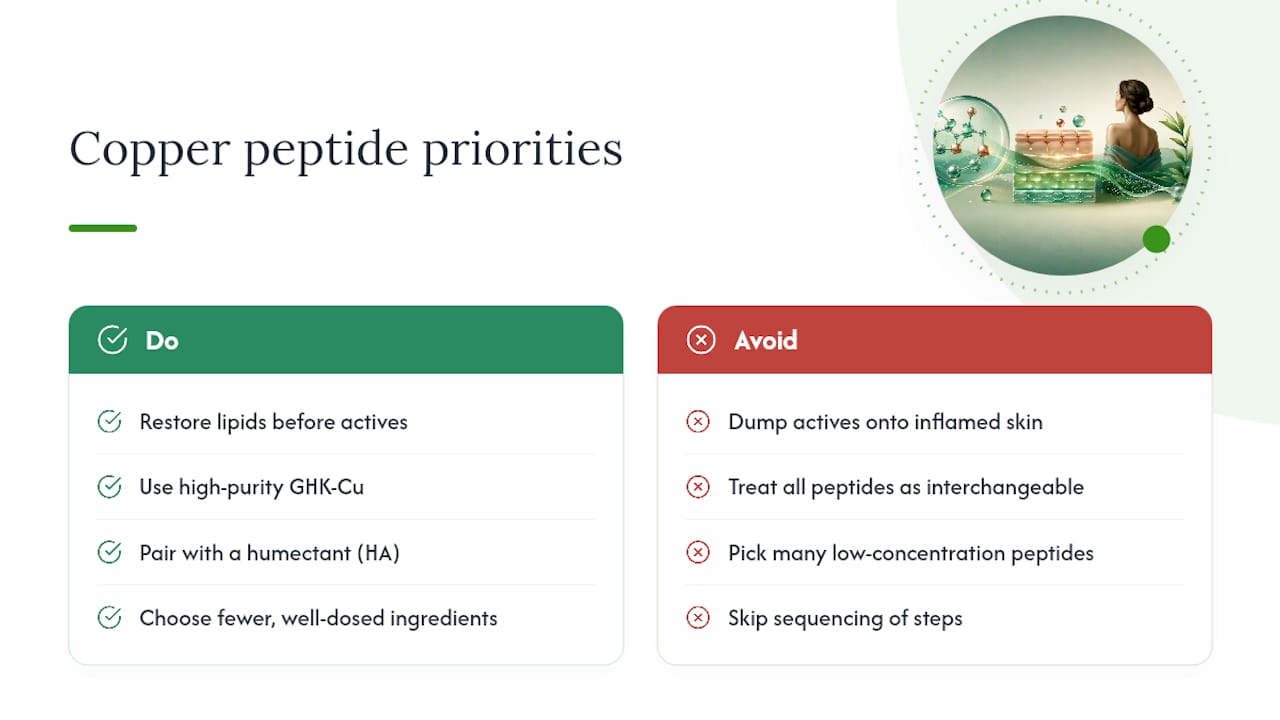
The conventional advice, “just add a peptide serum,” skips the sequencing question entirely. If your barrier is actively compromised, dumping actives on inflamed skin before restoring lipids is backwards. Fix the mortar first. Peptides work on the framework underneath, and that framework doesn’t heal faster just because you rushed the process.
If there’s one thing readers should prioritize, it’s formulation quality over ingredient-list length. A high-purity copper peptide paired with a humectant like hyaluronic acid outperforms a serum with a dozen peptides at negligible concentrations. Fewer, better-dosed ingredients beat a crowded label almost every time.
— British
Building a Copper Peptide Routine That Supports Barrier Repair
Copperpeptides built its serum around the carrier-peptide approach discussed throughout this guide: high-purity GHK-Cu paired with medical-grade hyaluronic acid, so the humectant hydration and the enzymatic remodeling work together rather than competing for space on your skin.
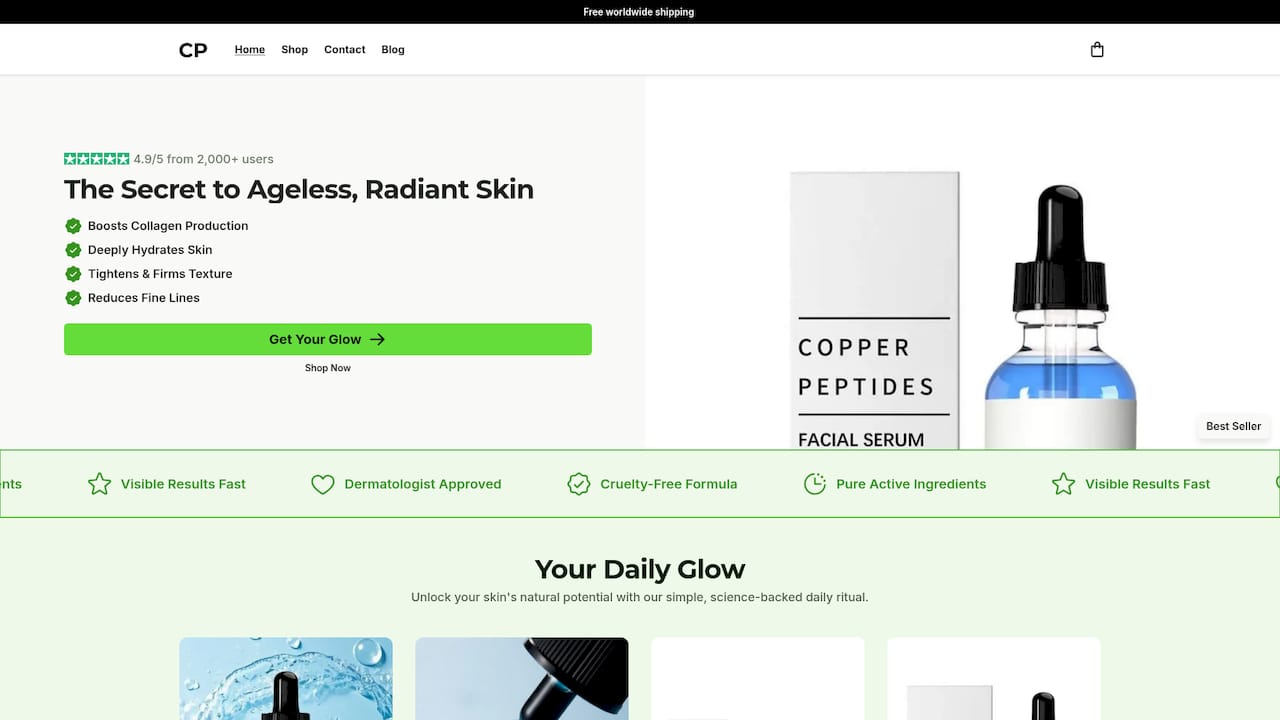
The application logic follows the same sequencing outlined above. Apply to clean, slightly damp skin, then layer a moisturizer or occlusive on top to lock it in. Use it consistently, once or twice daily, and give it the same four to six week window this article has referenced for peptide-driven change; some dermatologists suggest that timeframe for visible firmness and hydration improvements. It is described as suitable for sensitive skin and comes with a return policy for customers who want to try it without much risk. If you’re ready to move from theory to routine, the copper peptide anti-aging serum is the direct next step, or browse the full line at Copperpeptides to see how it fits alongside the ceramide and humectant products already in your routine.
Sources
- Role of Antimicrobial Peptides in Skin Barrier Repair - PMC
- Dual-targeting Oligopeptide-215 regulates skin barrier - Journal of Cosmetic Dermatology
- Moisturizers and barrier repair review - PubMed