

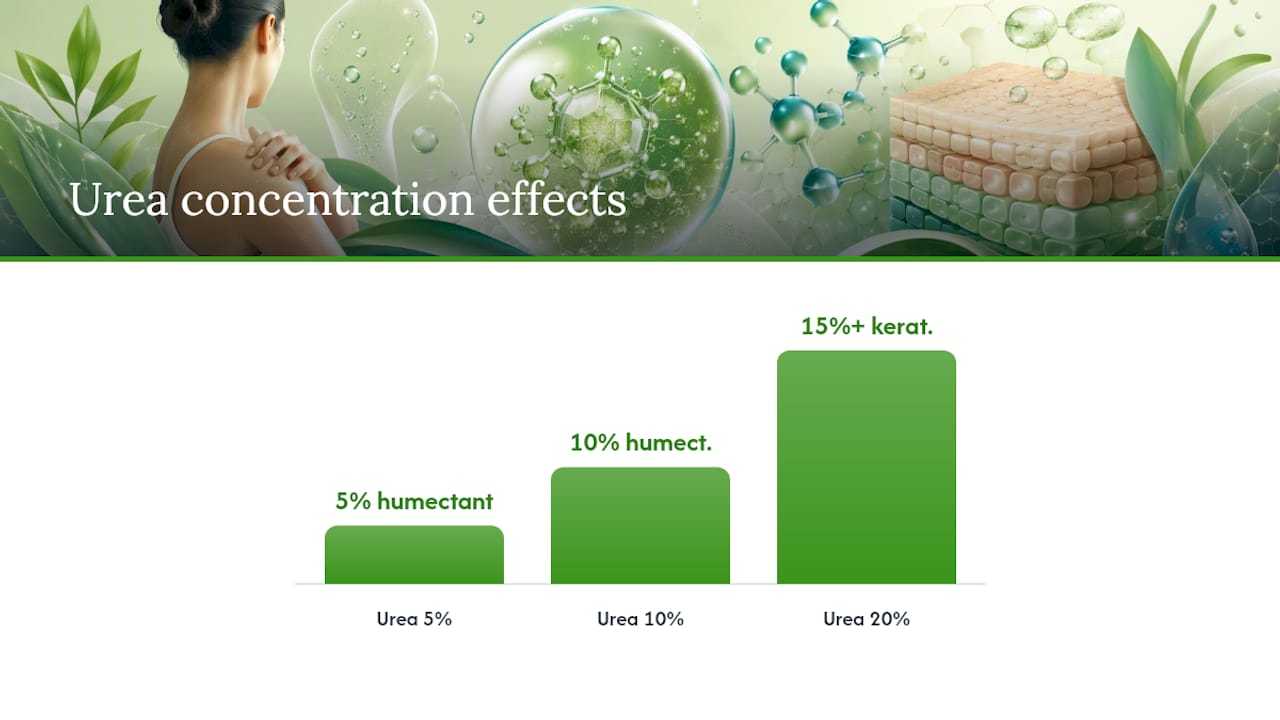
Pick hyaluronic acid for lightweight, immediate plumping on the face, especially under makeup or on sensitive skin. Pick urea for rough, flaky, or thickened skin, particularly on the body, where its keratolytic action at higher concentrations actually breaks down dead skin cells. Concentration decides everything: urea at 5–10% hydrates, while 15% or higher exfoliates. Most well-built routines end up using both, just in different places.
TL;DR:
- Urea at 10 to 25 percent is more effective for smoothing rough, thickened skin and addressing calluses and psoriasis plaques.
- Hyaluronic acid provides immediate plumping for the face, especially when layered under moisturizer, with effects appearing within minutes to hours.
- Urea in concentrations above 15 percent acts as an exfoliant, loosening dead skin bonds and resulting in visible improvements after consistent use over days.
- Using both urea and hyaluronic acid in a routine benefits different areas and concerns, with urea suited for textured or rough skin and HA for hydration and fine lines.
- High-percentage urea above 15 percent can cause irritation and should be patch tested, especially on broken, inflamed, or sensitive skin.
Table of Contents
- Urea vs Hyaluronic Acid: The Core Differences at a Glance
- How Urea and Hyaluronic Acid Actually Work on Skin
- Which Ingredient Fits Your Specific Skin Concern
- Side Effects, Irritation Risk, and When to See a Dermatologist
- How to Layer Urea and Hyaluronic Acid in One Routine
- What the Clinical Evidence Actually Shows
- Why We Treat HA as a Base Layer, Not a Fix-All
- A Practical Middle Ground: Medical-Grade HA Plus Copper Peptides
- Further Reading and Primary Sources
- Sources
Urea vs Hyaluronic Acid: The Core Differences at a Glance
The two ingredients solve different problems, even though both get filed under “hydration.” Hyaluronic acid pulls water into the skin’s surface and holds it there. Urea does that too, but at higher percentages it also dissolves the bonds between dead skin cells, which is why dermatology offices reach for it on calluses and psoriasis plaques, not just dry cheeks.
- Primary action: HA binds and holds water at the surface; urea binds water and, at 15%+ concentrations, dissolves the intercellular “glue” holding dead skin cells together.
- Best body zone: HA on the face and neck; urea on elbows, heels, knees, and other rough patches.
- Typical forms: HA in serums and light gels; urea in creams, lotions, and heavier balms suited to thicker skin.
- Onset: HA plumps within minutes to hours; urea’s smoothing effect on rough texture usually takes days of consistent use.
- Texture: HA feels light and often dries silky; urea creams can feel richer, occasionally leaving a slight film at higher percentages.
Results from either ingredient fade once you stop applying them, since neither builds lasting structural change the way retinoids or peptides do.
How Urea and Hyaluronic Acid Actually Work on Skin
Hyaluronic acid is a glycosaminoglycan, a naturally occurring sugar molecule that can hold water at levels many times its own weight. Its molecular weight determines where that water ends up. Higher-molecular-weight HA tends to sit on the skin’s surface, forming a hydrating film, while lower-molecular-weight fragments penetrate more deeply into the epidermis. A serum listing multiple HA weights is trying to hydrate at more than one depth at once, which is worth checking for on the ingredient list.
Urea works differently. It’s a natural component of your skin’s own moisturizing system, part of what’s called the natural moisturizing factor, or NMF. At low concentrations, roughly 5% to 10%, it behaves mainly as a humectant. Push past 15%, and it shifts into keratolytic territory, loosening the bonds between dead skin cells for genuine exfoliation.
- HA: works at the surface and, depending on molecular weight, slightly below it.
- Urea (5–10%): humectant, similar job to HA but with a smoothing bonus.
- Urea (15%+): keratolytic, meant for genuinely rough or thickened skin.
Concentration is the whole story here. A 5% urea lotion and a 25% urea foot cream are barely the same ingredient in practical terms, and the vehicle carrying either active changes how it performs on skin, too.
Which Ingredient Fits Your Specific Skin Concern
- Face plumping and fine lines. Hyaluronic acid wins here. It’s clinically recognized for reducing the look of fine lines through water retention, and lower-weight formulations layer well under makeup without a heavy feel.
- Rough elbows, heels, and knees. Urea in the 10–25% range is the more direct fix, since it addresses the buildup of dead skin cells rather than just adding surface moisture.
- Keratosis pilaris. Urea creams in the 10% to 20% range are the standard body-care recommendation for those stubborn little bumps, though results take consistent weeks, not days.
- Eczema or chronically dry, sensitive skin. Urea can help, but stick to moderate concentrations, generally under 10%, and get a dermatologist’s input first since broken or inflamed skin stings more easily at higher percentages.
- General facial aging. HA delivers the visible plumping effect people notice. Urea’s contribution here is indirect: smoother, less flaky texture makes fine lines look less pronounced, even though it isn’t filling them.
Side Effects, Irritation Risk, and When to See a Dermatologist
Urea above 15% can sting, especially on skin that’s already cracked, inflamed, or sunburned. If you notice persistent redness or a burning sensation that doesn’t fade within a few minutes, drop back to a lower concentration or use it less often.
Hyaluronic acid has an odd reputation problem. In very low-humidity environments, an HA serum applied without a follow-up moisturizer can actually pull moisture from deeper skin layers toward the surface, where it evaporates, leaving skin feeling tighter than before you applied it. That’s a formulation and climate issue, not a flaw in the molecule itself.
- Patch test any new urea product for 24 to 48 hours before applying it broadly.
- Avoid layering high-percentage urea directly under retinoids or exfoliating acids until you know how your skin tolerates each separately.
- Seal HA with an occlusive moisturizer in dry or air-conditioned environments.
- See a dermatologist before using urea above 10% on eczema-prone or broken skin.
Pro Tip: If your HA serum ever makes your skin feel tighter after it dries, that’s a signal you skipped the moisturizer step, not a sign the ingredient failed.
How to Layer Urea and Hyaluronic Acid in One Routine
- Cleanse, then apply your hyaluronic acid serum to slightly damp skin. HA performs better when there’s already some surface water for it to grab onto.
- Follow immediately with a moisturizer or occlusive, particularly in dry climates or during winter heating season, to trap the water HA just pulled in.
- On the body, apply a urea lotion at night to rough zones like heels, elbows, or knees. There’s no need to layer HA underneath it.
- If you’re using a facial urea product for texture, keep it separate from strong acids or retinoids in the same session, or alternate nights.
- For sensitive skin, start urea at the lowest available percentage and build frequency gradually rather than jumping straight to daily use.
If you’re not sure whether your skin issue is dryness or something else entirely, it’s worth reading about the difference between dry and dehydrated skin before picking either ingredient.
What the Clinical Evidence Actually Shows
The strongest instrumental evidence on this topic comes from corneometry and TEWL (transepidermal water loss) testing, which measures how well a product hydrates skin and slows water loss over time. One such study found that the vehicle carrying an active ingredient, emulsion versus gel, changed short-term moisturizing performance more than expected, meaning the same urea or HA percentage can behave differently depending on what it’s mixed into.
Clinicians increasingly frame urea and HA as teammates rather than rivals: HA for immediate surface plumping, urea for restoring the skin’s own moisturizing factor and smoothing rough texture.
- HA’s water-binding capacity is well documented, though most consumer-facing data describes short-term surface effects rather than long-term structural change.
- Formulation testing shows vehicle matters almost as much as the active ingredient itself.
- Independent, large-scale randomized trials comparing urea directly against HA head-to-head remain limited, so much of the field relies on smaller instrumental studies and long-standing clinical use.
Readers weighing HA derivatives specifically may also want to compare hyaluronic acid against sodium hyaluronate, since the two behave differently on skin despite the similar name.
Why We Treat HA as a Base Layer, Not a Fix-All
Copperpeptides positions medical-grade hyaluronic acid as the hydration foundation in its anti-aging serum, paired with copper peptides for the collagen and firming work HA alone doesn’t do. That combination reflects a broader pattern in skincare: HA plumps and hydrates, but visible firming and texture change usually need a second active working alongside it.
Expect visible changes within four to six weeks of consistent use, though timelines vary by skin type and routine. Patch test any new serum for 48 hours first, and check in with a dermatologist if you have a diagnosed skin condition.
— British
A Practical Middle Ground: Medical-Grade HA Plus Copper Peptides
If you’ve landed on hyaluronic acid as the right call for your face, the next question is which HA product actually delivers. Copperpeptides’ Copper Peptide Anti-Aging Serum pairs medical-grade hyaluronic acid with high-purity copper peptides, so you’re not just hydrating, you’re also supporting collagen production and skin firmness in the same step.
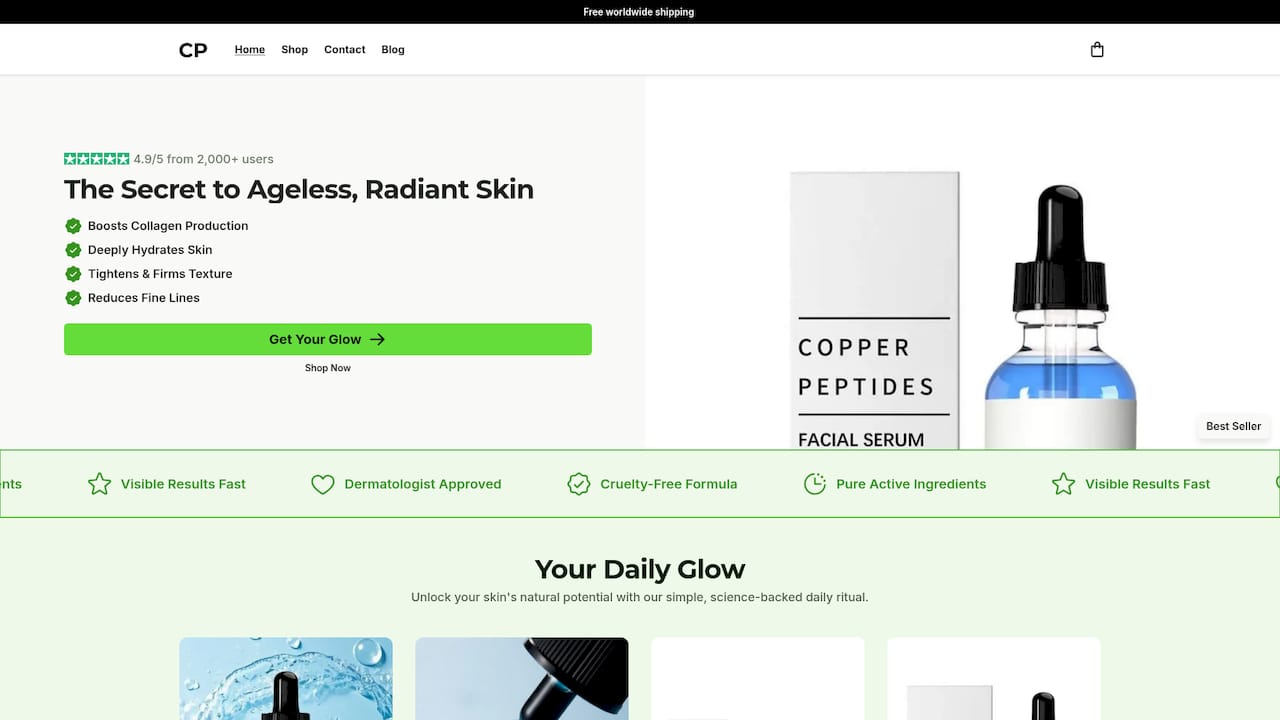
It’s formulated to be gentle enough for sensitive skin, and dermatologists have endorsed its results. In a routine, it slots in as your HA step: apply it to slightly damp skin, then follow with an occlusive if your climate runs dry, exactly the sequencing outlined earlier in this guide. Most people see visible changes within four to six weeks. Check the product page for current availability and start with a patch test on day one.
Further Reading and Primary Sources
- Hyaluronic Acid for Skin: Benefits, How to Use It, and Side Effects — Harvard Health
- Review on Hyaluronic Acid Structure, Properties and Biomedical Applications — PMC
- Effect of Vehicle on the Performance of Active Moisturizing Substances — corneometry and TEWL study
- Hyaluronic Acid — Cleveland Clinic
Sources
- Hyaluronic acid for skin: Benefits, how to use it, and side effects - Harvard Health
- Effect of vehicle on the performance of active moisturizing substances
- Review on hyaluronic acid structure, properties and biomedical applications - PMC
- Hyaluronic acid - Cleveland Clinic