

Yes, a single-ingredient serum can deliver targeted benefits like deeper hydration, a brighter tone, or firmer skin when you match the active to your main concern. The appeal is simplicity: one concentrated ingredient, a clear job, and an easier way to track what works. The practical next step is to name your top skin concern first, then pick the single active built to address it.
TL;DR:
- Introduce one new active at a time, wait at least two weeks before adding another, and patch test for 24 to 48 hours first.
- Apply hyaluronic acid to damp skin, moisturize afterward, and finish morning routines with sunscreen; use retinoids or strong acids on alternating nights.
- Hydration can appear almost immediately; copper peptides are marketed with a 4 to 6 week result window, while retinoids may need 12 weeks or longer.
- Persistent burning, swelling, or peeling that continues beyond a week calls for stopping the active and consulting a dermatologist rather than pushing through.
Table of Contents
- Why single-ingredient serums work well for beginners
- Common single active ingredients and what each one does
- How to choose and use a single-ingredient serum
- What results to expect and how long they take
- How copper peptide serums fit the single-ingredient approach
- The science behind copper peptides and skin rejuvenation
- Copper peptides versus other single-ingredient serums
- Choosing a copper peptide serum: purity, concentration, and formulation
- Getting the most out of a copper peptide serum
- Why starting simple is the smarter long-term strategy
- Copper Peptides Store: a focused peptide option for firming and hydration
- FAQ
- Sources
Why single-ingredient serums work well for beginners
A single-ingredient serum concentrates its formula around one job instead of splitting effort across six or seven actives at low doses. That concentration tends to produce more noticeable, more attributable effects, which matters most when you are new to actives and still learning how your skin responses.
The bigger advantage shows up when something goes wrong. If your skin reacts to a ten-ingredient blend, you are left guessing which component caused it. With one active, the culprit is obvious, and you can simply pause or dilute use rather than overhaul your entire routine.
Single actives also make layering more predictable. You know exactly what you are adding at each step, so you can control order, frequency, and strength without the guesswork of a packed formula.
- A concentrated single active produces more consistent, trackable results than a diluted multi-ingredient blend.
- Isolating one ingredient makes it far easier to identify what caused an irritation or breakout.
- Simple routines are easier to stick with, which matters more for results than any single clever formula.
Once you have a stable routine and understand how your skin tolerates one or two actives, you can start layering a second ingredient that complements rather than competes with the first.
Pro Tip: Introduce one new active at a time and wait at least two weeks before adding another, so you always know what is actually working.
Common single active ingredients and what each one does
Most single-ingredient serums fall into a handful of well-studied categories, each with a different job and timeline.
- Niacinamide calms inflammation, helps regulate oil production, and supports barrier function and tone at typical concentrations of 2% to 5%, with clinical studies reporting improvements in fine lines, pigmentation, and sebum control over several weeks.
- Hyaluronic acid and glycerin are humectants that pull moisture into the skin and deliver a plumping effect almost immediately, especially when applied to damp skin.
- Retinoids and retinol speed up cell turnover and support collagen production, but they work on a longer clock. DermNet NZ notes that visible improvement from topical retinoids may take 12 weeks or longer, and the American Academy of Dermatology recommends starting with the least intense formula and using retinoids at night to limit irritation.
- Vitamin C (ascorbic acid or a gentler derivative) brightens tone and adds antioxidant support, though it is sensitive to light, air, and pH, so storage and formulation quality affect how well it performs.
- Peptides, including copper peptides, support collagen activity and help firm skin texture over time; some formulations, including publisher-reported data for copper peptide serums, point to visible changes within 4 to 6 weeks.
- Squalane and lightweight oils act as emollients, softening and smoothing the skin’s surface and easing discomfort in dry or compromised skin.
- AHA and BHA acids work through chemical exfoliation to smooth texture and unclog pores, but they need caution on sensitive skin and should generally be separated by time from retinoids to avoid compounding irritation.
Niacinamide studies have shown measurable improvements in skin tone, pigmentation, and barrier function within 8 to 12 week clinical trial windows, which gives beginners a realistic benchmark for when to expect visible change.
How to choose and use a single-ingredient serum
Picking the right single active does not require guesswork if you follow a simple sequence.
- Identify your main skin concern first: dehydration, dullness, visible aging, oiliness, or texture.
- Match that concern to one active (hydration points to hyaluronic acid, firming points to peptides, tone and oil control point to niacinamide).
- Check the concentration and formulation; a well-labeled serum states its percentage and the base ingredients supporting it.
- Apply in the right order: cleanse, apply the serum, moisturize, then finish with sunscreen in the morning.
- Patch test on your inner arm for 24 to 48 hours before applying to your face, especially with retinoids or acids.
- Start with two to three uses per week for stronger actives like retinol or AHAs, then build frequency as tolerance improves.
Watch for red flags that go beyond normal adjustment, like persistent burning, swelling, or peeling that does not settle after a week. Those signs call for a pause and a conversation with a dermatologist rather than pushing through.
Keep a few basic layering rules in mind: humectants like hyaluronic acid work best on damp skin, and strong exfoliants or retinoids are usually better used on alternating nights rather than stacked together.
Pro Tip: Apply humectant serums to slightly damp skin right after cleansing. They work by drawing in moisture, so a dry face gives them less to grab onto.
What results to expect and how long they take
Hydrating ingredients like hyaluronic acid and glycerin show effects almost immediately, since they work by drawing water into the skin rather than changing its structure. Niacinamide and peptides, including copper peptide formulations with a reported 4 to 6 week visible result window, sit in a medium timeline tied to barrier and collagen support. Retinoids take the longest, often 12 weeks or more for visible structural change. Tracking weekly photos under the same lighting makes these gradual shifts easier to notice than relying on memory alone.
How copper peptide serums fit the single-ingredient approach
Copper peptide serums belong firmly in the peptide category discussed above, built around one active rather than a crowded formula. In plain terms, copper peptides are thought to support the skin’s natural collagen activity, which is part of why they are positioned for firming and texture improvement rather than immediate surface hydration.
Based on publisher-reported claims, a copper peptide serum formulated with medical-grade hyaluronic acid is described as dermatologist endorsed, suitable for sensitive skin, and associated with visible results within 4 to 6 weeks. That timeline lines up with the medium window covered earlier for peptides and niacinamide, rather than the faster response of a pure humectant or the slower one of retinoids.
- Copper peptides are generally positioned to support collagen activity and firming rather than instant plumping.
- Publisher claims describe dermatologist endorsement and a 4 to 6 week visible result window for a copper peptide formulation.
- A money-back guarantee is one way a copper peptide product addresses buyer uncertainty around a newer single active.
Using a copper peptide serum once daily, usually in the evening after cleansing and before a moisturizer, fits the general layering order already outlined for actives in this category.
The science behind copper peptides and skin rejuvenation
Copper peptides are small protein fragments bound to a copper ion, and they are generally understood to interact with the skin’s connective tissue processes rather than sitting on the surface like a humectant. The working theory in skincare formulation is that copper plays a supporting role in several of the body’s natural repair and collagen-related activities, which is why copper peptides are grouped with other collagen-support ingredients like standard peptides rather than with exfoliants or antioxidants.
Because of this proposed mechanism, copper peptide serums are typically marketed around structural goals: firmness, texture, and the appearance of fine lines, rather than the instant hydration a humectant delivers or the rapid tone correction a brightening agent targets. That distinction matters when you are choosing a single active, since it tells you what kind of change to expect and on what timeline.
It is worth being precise about certainty here: the exact mechanism of topical copper peptides in human skin is still an area of ongoing interest in cosmetic science, and claims about them should be read as a proposed, plausible mechanism rather than a settled, fully proven pathway. That is consistent with how peptides broadly are discussed in dermatology resources, where structural benefits are described as supported by weeks of consistent use rather than an immediate, dramatic shift.
For a beginner comparing single actives, the practical takeaway is that copper peptides occupy the same general category as other peptides: a slower-acting, structure-focused ingredient best judged over a month or more rather than days.
Copper peptides versus other single-ingredient serums
Compared with a humectant like hyaluronic acid, a copper peptide serum trades immediate plumping for a slower, structural type of benefit focused on firmness and texture. Compared with niacinamide, which works broadly on barrier function, oil control, and tone, copper peptides are more narrowly aimed at collagen-related support rather than calming inflammation or regulating sebum.

Against retinoids, which also target collagen and cell turnover, copper peptides are generally considered a gentler option. Retinoids carry a well-documented irritation profile and a longer runway of 12 weeks or more before visible change, while copper peptide formulations are positioned around a shorter, 4 to 6 week visible result window and are described as suitable for sensitive skin in publisher claims.
That combination, a structural focus without the irritation profile associated with retinoids, is the main practical contrast between copper peptides and the other single actives covered in this guide. It does not make copper peptides a replacement for a humectant’s immediate hydration or niacinamide’s broad barrier support. It simply means copper peptides fill a specific niche: firming and texture support for people who want a gentler route to collagen-related benefits than a retinoid offers.
Choosing a copper peptide serum: purity, concentration, and formulation
Not all copper peptide serums are built the same way, and three factors matter most when evaluating one.
Purity comes first. A high-purity copper peptide formulation is less likely to carry impurities that could irritate sensitive skin, which is particularly relevant since copper peptides are often marketed as gentle enough for reactive skin types.
Concentration and supporting ingredients matter next. A copper peptide serum paired with a humectant like medical-grade hyaluronic acid can combine the structural, longer-term benefit of the peptide with the immediate comfort of a humectant, rather than leaving your skin dry while you wait weeks for firming effects to show.
Formulation stability is the third factor. Peptides can degrade with poor packaging or storage, so opaque, airtight containers that limit light and air exposure matter more than they might for a simple humectant. If a serum’s packaging does not protect against light and air, the active ingredient may lose potency before you finish the bottle.
Finally, look for a clear return or satisfaction policy. A money-back guarantee is a practical signal that a seller stands behind a formulation’s claims, which matters more with a less familiar ingredient like copper peptides than with a well-established active like hyaluronic acid.
Getting the most out of a copper peptide serum
A few habits make a noticeable difference in how well a copper peptide serum performs.
Apply it to clean, slightly damp skin, since this helps active ingredients absorb more evenly rather than sitting on a dry surface. Follow with a moisturizer to lock in both the peptide serum and any humectant layered underneath it, and always finish a morning routine with sunscreen, since UV exposure undermines collagen support regardless of what you apply beforehand.
Consistency matters more than intensity with peptides. Daily use, usually once in the evening, tends to produce more reliable results over the 4 to 6 week window than occasional heavier applications.
Storage affects performance directly. Keep a copper peptide serum away from direct sunlight and heat, and make sure the cap is sealed tightly after each use, since repeated air exposure can degrade the active faster than the label’s shelf life suggests. A serum that has changed color or developed an odd smell has likely lost potency and is worth replacing rather than continuing to use.
Why starting simple is the smarter long-term strategy
The temptation with skincare is to chase a ten-step routine before you understand how your own skin reacts to anything. Starting with one active, tracked honestly over a few weeks, teaches you more than any elaborate stack ever will.
Sunscreen and consistency do more heavy lifting than any single serum. For anything beyond mild dryness or dullness, a dermatologist consult is worth the appointment before committing to a longer-term active.
— British
Copper Peptides Store: a focused peptide option for firming and hydration
If firmness and texture are your main concern, our Copper Peptide Anti-Aging Serum keeps things simple: one high-purity active, paired with medical-grade hyaluronic acid, built around the structural benefits covered throughout this guide.
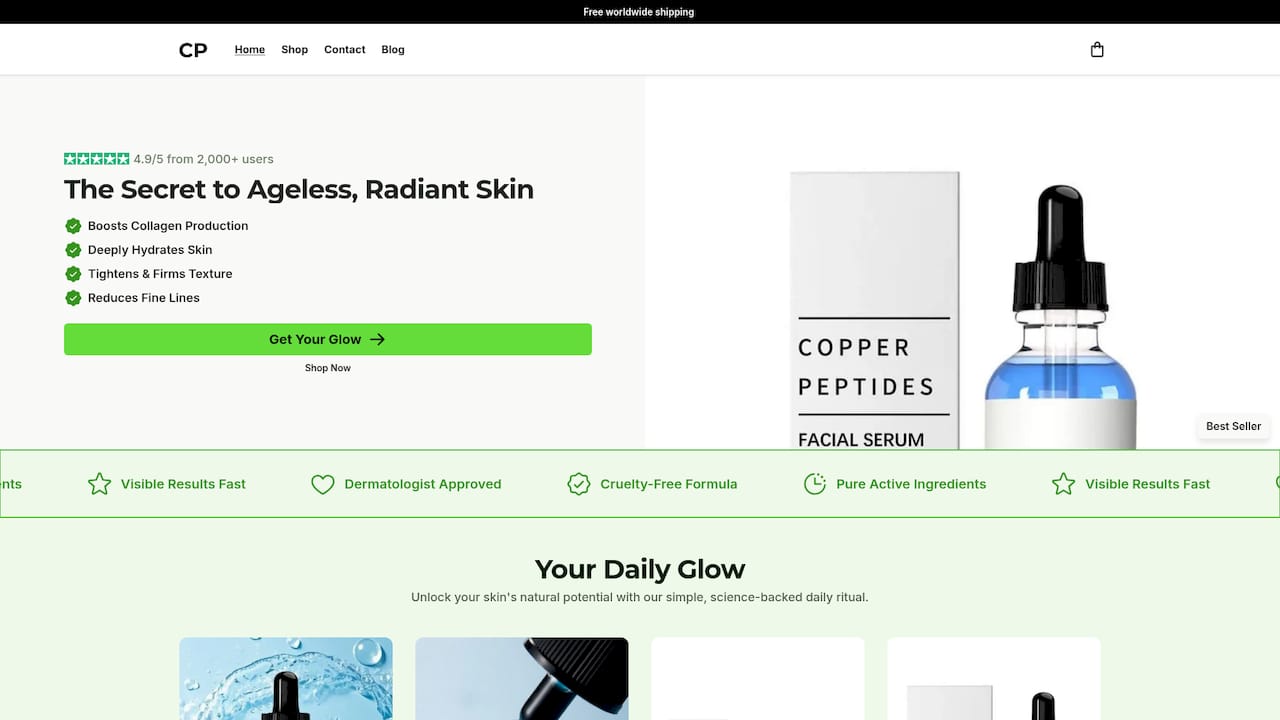
- Formulated as a single-active serum suitable for sensitive skin.
- Claims of visible results within several weeks, in line with typical peptide timelines.
- Supported by a return policy to address buyer satisfaction.
Explore the Copper Peptide Anti-Aging Serum and see whether a single-active, peptide-focused routine fits your skin goals.
FAQ
What are the benefits of using serum on my skin?
Serums deliver a concentrated dose of one or more active ingredients, which can hydrate, brighten tone, calm inflammation, or support collagen depending on the active chosen. A single-ingredient serum makes it easier to match a specific benefit, like hydration or firming, to a specific concern without diluting the effect across multiple ingredients.
How do I get glass skin with serums?
Glass skin relies on consistent hydration, a strong barrier, and even tone rather than any single product. Layering a humectant like hyaluronic acid on damp skin, following with a barrier-supporting active like niacinamide, and finishing with sunscreen daily builds toward that smooth, even look over weeks of consistent use.
Which two serums should not be used together?
Strong exfoliating acids and retinoids generally should not be layered in the same application, since combining them raises the risk of irritation, redness, and peeling. The American Academy of Dermatology recommends introducing retinoids gradually and separating them by time, or by alternating nights, from other active exfoliants.
Is a single-ingredient serum worth it?
A single-ingredient serum is often worth it for beginners because it isolates one benefit and makes it far easier to track what is working and what is causing irritation. It also simplifies layering, since you know exactly what you are adding to your routine at each step.
How long before I see results from a single-ingredient serum?
Timelines vary by ingredient: humectants like hyaluronic acid show effects almost immediately, while niacinamide and peptides typically show change within 4 to 6 weeks. Retinoids take longer, often 12 weeks or more for visible structural improvement.
Sources
- Topical retinoids (vitamin A creams) — DermNet NZ
- Nicotinamide — DermNet NZ
- Retinoid or retinol? — American Academy of Dermatology (AAD)