

Copper peptides may reduce redness for some people with rosacea by supporting barrier repair and reducing inflammation, but they can also irritate reactive skin. Patch testing and a conversation with your dermatologist before adding them to your routine make the difference between a calm result and a flare. The evidence behind this is limited but worth understanding before you buy anything.
TL;DR:
- No published rosacea trial has tested copper peptides for flushing, visible blood vessels, or papules, and existing clinical findings involve formulas with other actives.
- Patch test behind the ear or along the jaw for 48 to 72 hours, then begin every third day without adding other new actives.
- For moderate to severe rosacea with bumps or pustules, prescription treatments such as ivermectin and encapsulated benzoyl peroxide remain primary; peptides provide only supportive care.
- Stop use if burning, stinging, increased flushing, dryness, or tightness appears; swelling, blistering, or a spreading rash requires immediate medical care.
Table of Contents
- What the clinical evidence actually shows
- How copper peptides might help rosacea-prone skin
- Who is likely to get irritated, and the warning signs to watch
- How to introduce copper peptides into a rosacea routine
- What brands claim about copper peptide serums
- What rosacea patients say about trying copper peptides
- When copper peptides fit, and when they don’t
- A gentle copper peptide option for sensitive skin
- FAQ
- Sources
What the clinical evidence actually shows
Most of what we know about copper peptides comes from lab and formulation studies, not rosacea-specific trials. One clinical and ex vivo study on GHK-Cu found that combining the peptide with a mixed-culture ferment extract reduced inflammatory cytokine secretion, protected skin explants from UV damage, and improved measures of barrier function and wrinkling in a human clinical arm. That is encouraging, but the formula tested combined GHK-Cu with other active ingredients, which makes it hard to credit copper peptides alone for the result.
No published trial has tested copper peptides specifically against rosacea symptoms like flushing, visible blood vessels, or papules. What exists instead is mechanistic evidence suggesting plausible benefit, layered on top of guidance from rosacea specialists about what kinds of products tend to help or hurt reactive skin.
The National Rosacea Society’s product guidelines note that Most rosacea patients report burning or stinging from skincare products, and many identify skincare as a potential trigger for flares. That statistic matters more than any single ingredient study: it tells you the skin you’re treating reacts easily, regardless of what you put on it.
Three things to keep in mind before trying copper peptides for rosacea:
- The strongest copper peptide data comes from anti-aging and barrier research, not rosacea trials.
- Combination formulas make it difficult to isolate copper peptides’ independent effect.
- Rosacea skin reacts to texture, pH, and preservatives as often as to the active ingredient itself.
How copper peptides might help rosacea-prone skin
The mechanism behind copper peptides, particularly the tripeptide GHK-Cu, centers on two processes: calming inflammation and supporting the skin barrier. Lab studies on GHK-Cu formulations show reduced secretion of inflammatory cytokines and better resistance to UV-induced damage in skin explants, which lines up with the idea that calmer, better-protected skin flushes less easily.
Separately, barrier protein research on peptides in general (including markers like filaggrin and claudin) suggests some peptides can help skin hold moisture and resist outside irritants more effectively. A stronger barrier means fewer triggers reach the nerve endings and blood vessels that drive rosacea flushing in the first place.
- Reduced inflammatory signaling may lower the baseline irritation that triggers flushing.
- Barrier support could mean less water loss and less sensitivity to environmental triggers.
- Collagen and extracellular matrix support (seen in anti-aging research) is a separate benefit, not evidence of symptom relief.
It’s worth separating what happens in a petri dish from what a patient notices on their face. Mechanistic plausibility is not the same as proven symptom relief.
Pro Tip: Think of copper peptides as a supporting player for barrier health, not a replacement for a rosacea-specific treatment plan.
Who is likely to get irritated, and the warning signs to watch
Rosacea skin has a lower tolerance threshold than average, and the same product that calms one person’s redness can trigger another’s flare. The National Rosacea Society’s guidelines point out that products causing vasomotor instability or neurosensory stimulation (the stinging, burning, tingling sensation many patients already report) should be avoided entirely, regardless of their active ingredient.
Combining copper peptides with other actives raises the risk further. Copper ions can destabilize some formulations, and layering peptides with acids, retinoids, or high-strength vitamin C in the same routine increases the odds of irritation on already-reactive skin.
Watch for these signs that a product isn’t working for you:
- Burning, stinging, or tingling within minutes of application.
- Increased visible flushing or new broken capillaries over days or weeks.
- Dryness, flaking, or a tight feeling that wasn’t there before.
- Any swelling, blistering, or spreading rash, which calls for stopping immediately and seeking medical care.
If you notice any of the first three, stop use and wait for skin to settle before trying again at a lower frequency.
How to introduce copper peptides into a rosacea routine
Going slowly is the single biggest factor in whether a new active helps or hurts reactive skin. Here is a conservative way to test copper peptides without risking a flare.
- Patch test on a small area, like behind the ear or along the jaw, and watch for 48 to 72 hours before applying anywhere else.
- Start with application every third day rather than daily, watching for stinging, redness, or dryness after each use.
- Pair the serum with simple, barrier-supporting ingredients like hyaluronic acid or ceramides, and avoid introducing any other new active in the same week.
- Apply after any prescription rosacea treatment has fully absorbed, never underneath it, to avoid interactions on compromised skin.
- Give the product four to six weeks before judging whether it’s helping, since barrier changes take time to show up as fewer flushing episodes.
Pro Tip: Keep a simple log of what you applied and when flushing happened. Patterns show up faster on paper than from memory.
For more on pacing new actives around sensitive, reactive skin, our guide on starting copper peptides safely with perioral dermatitis walks through a similarly cautious approach.
What brands claim about copper peptide serums
Formulation details matter more for rosacea-prone skin than marketing language does, so it helps to look at what a product actually contains before trusting any claim about results. A single-ingredient copper peptide serum paired with medical-grade hyaluronic acid, for instance, is a simpler formula than most multi-active anti-aging products, which can matter for anyone trying to isolate what their skin reacts to.
Claims about dermatologist endorsement or a four to six week result window are brand statements, not independent clinical findings, and should be weighed as such. A few things worth checking before relying on any copper peptide product for rosacea-prone skin:
- Whether the formula lists copper peptides as the primary active, rather than one ingredient among many.
- Whether the base ingredients (like hyaluronic acid) support hydration without added fragrance or alcohol.
- Whether any claimed timeline for results is described as a brand observation rather than a clinical trial outcome.
- Whether a return or satisfaction policy exists in case your skin doesn’t tolerate the formula.
Verifying these details with your dermatologist before you buy is a reasonable extra step, especially if your rosacea is already being managed with prescription treatment.
What rosacea patients say about trying copper peptides
Reports from rosacea patients who try copper peptide serums tend to split into two groups: those who notice calmer, less reactive skin after several weeks, and those who react badly within days. This split tracks closely with the broader pattern seen across rosacea skincare in general, where the same ingredient soothes one person and stings another.
Patients who report success usually describe a gradual change: less visible flushing after their usual triggers (heat, exercise, spicy food) and a softer, less tight feeling in the skin. Patients who react poorly almost always describe it happening quickly, within the first one to three applications, with burning or stinging as the first sign.

What separates the two groups in most self-reported accounts isn’t the ingredient itself but the approach: patients who diluted their introduction (every third day, paired with a bland moisturizer, no other new actives) report fewer problems than those who added a new serum directly into an existing multi-step routine. This matches the pacing guidance from rosacea specialists more than it reflects anything unique about copper peptides as a category. Individual results vary widely, and no case study substitutes for a personalized assessment from a dermatologist familiar with your skin’s history.
When copper peptides fit, and when they don’t
Copper peptides make the most sense as a supportive step for mild, persistent redness or for skin recovering after a flare, not as a stand-in for medical treatment. For moderate to severe inflammatory rosacea, with visible bumps or pustules, a review of numerous trials covering thousands of adults found that prescription topicals like ivermectin and encapsulated benzoyl peroxide performed best, and those remain the primary treatments for many patients. The National Rosacea Society’s standard management guidance treats supportive skincare as a complement to medical therapy, not a replacement for it. Coordinate any new serum with the dermatologist already managing your treatment plan.
— British
A gentle copper peptide option for sensitive skin
If you’ve read this far and want a straightforward way to try copper peptides without guessing at formulas, our Copper Peptide Anti-Aging Serum keeps things simple: one active ingredient, paired with medical-grade hyaluronic acid, and nothing else to complicate a patch test.
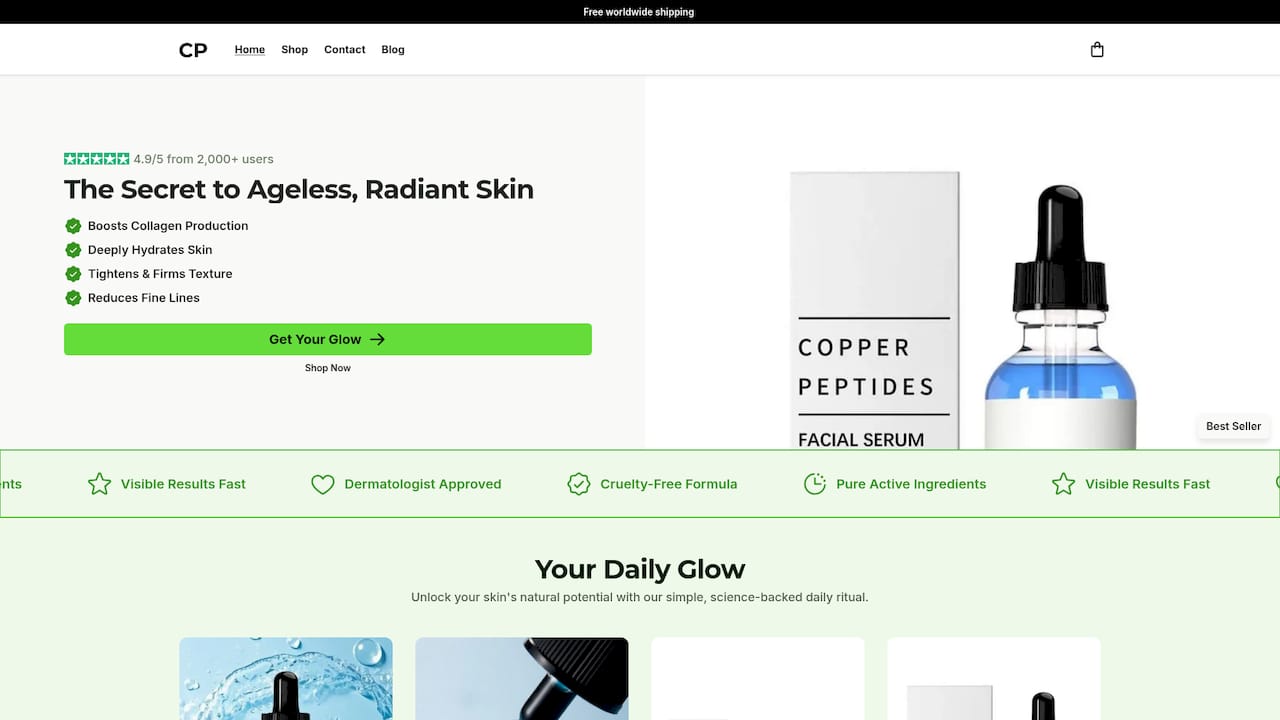
We built it around the same principle this guide has walked through: fewer ingredients means fewer variables when your skin is reactive. The formula is designed to be gentle enough for sensitive skin and may be supported by dermatologists and often comes with satisfaction guarantees to reduce pressure if your skin needs a different approach. Many users report visible changes in four to six weeks, consistent with the gradual response timeline seen in rosacea-prone skin. If you’re curious how copper peptides perform over a longer stretch, our breakdown of 12-week results for dull, barrier-compromised skin walks through what that timeline tends to look like.
This article is general information, not a substitute for advice from a qualified doctor. Consult a qualified healthcare professional about your own circumstances before acting on anything here.
FAQ
Which peptide is best for rosacea?
No single peptide has been proven best for rosacea specifically, since most available evidence comes from anti-aging and barrier studies rather than rosacea trials. GHK-Cu, the copper peptide studied in combination with ferment extracts, shows the most relevant mechanistic data on reducing inflammation and supporting barrier function.
What do Koreans use for rosacea?
Korean skincare approaches to reactive, redness-prone skin generally emphasize minimal, barrier-focused routines with centella asiatica, ceramides, and gentle hydrators rather than any single peptide. The core principle, simplifying your routine and avoiding harsh actives, matches the same patch-test and start-low approach recommended for copper peptides.
Can peptides irritate rosacea?
Yes, peptides can irritate rosacea-prone skin, particularly when layered with other actives or used at high concentrations. The National Rosacea Society notes that most patients report stinging or burning from skincare products in general, so patch testing any new peptide serum is essential.
What do the Chinese use for rosacea?
Approaches to rosacea in Chinese skincare and dermatology commonly combine gentle topical care, sun protection, and professional treatment for persistent redness, following the same barrier-first philosophy seen in most reactive-skin guidance worldwide. There’s no single ingredient unique to this approach that differs from the broader, barrier-focused strategy covered throughout this guide.
How long does it take to see results from copper peptides?
Most reports and brand claims point to a four to six week window before noticing a difference in redness or barrier function. Patience matters here: judging too early, before the skin has had time to adjust, is a common reason people give up on a product that might have helped.
Sources
- National Rosacea Society — Guidelines for approval (Seal of Acceptance)
- Augmented skin beneficial effects of Thermus thermophilus and Bacillus subtilis mixed-culture ferment extract by tripeptide GHK‑Cu - PubMed
- Rosacea treatments: what works — Harvard Health (2026)