

Leaping Bunny generally gives stronger assurance because it requires independent audits, supplier declarations and annual recommitment, while PETA relies mainly on a CEO-signed statement of assurance. PETA still maintains a large, useful database that is handy for quick checks. Below we break down supplier checks, China policy and logo fees so you can decide how much verification you want.
TL;DR:
- Leaping Bunny brands must renew annually; if paperwork is missing after two months, the program removes the brand from its listing until compliance is confirmed.
- For China registration, Leaping Bunny requires an audit before sale and yearly audits afterward; brands agree to recall products rather than allow animal testing.
- PETA’s searchable list included over 6,300 manufacturers in 2025; registration is free, while using its official logo requires an optional fee paid once.
- Check both databases by individual brand, especially within conglomerates, and verify vegan status separately because animal testing status does not establish that products are vegan.
Table of Contents
- How does Leaping Bunny verify a brand is cruelty-free?
- How does PETA’s Ultimate Cruelty-Free list work?
- Leaping Bunny vs PETA: where the programs differ
- What do experts say about audit-based verification?
- How can you use these differences when you shop?
- Our view: choose audits when assurance matters most
- A cruelty-free serum you can order today
- FAQ
- Sources
How does Leaping Bunny verify a brand is cruelty-free?
Leaping Bunny certifies brands against its Corporate Standard of Compassion for Animals. Under the Standard, a company commits not to conduct, commission or be party to animal testing for its finished products, formulations and ingredients. It also has to stay open to independent audits and set a fixed cut-off date, which is how the program guarantees a product is free of “new” animal testing.
Here is what that looks like in practice:
- Supplier monitoring: brands collect declarations from their ingredient suppliers and manufacturers, and those declarations can be checked by an independent auditor.
- China qualification: brands registering products in China must go through the China Qualification Program, which includes a one-time pre-market audit and yearly post-market audits by third-party experts.
- Logo licensing: after approval, a company can license the logo, and fees vary by program and company size.
How does PETA’s Ultimate Cruelty-Free list work?
PETA relaunched Beauty Without Bunnies as PETA’s Ultimate Cruelty-Free List. Its model is built on a company’s own declaration rather than an outside audit. To be listed as animal test-free, a company submits a legally binding Statement of Assurance signed by its CEO and agrees to tell PETA if its policies change.
Key features of the process:
- Paperwork and assurance: per PETA’s partner page, companies submit detailed information about their testing policies and supplier agreements along with the signed statement.
- Cost: registration is free, and licensing the official logo is an optional one-time fee.
- Two designations: PETA’s FAQ describes Animal-Test Free and Animal-Test Free and Vegan, and notes that companies making only products that laws require to be tested on animals are not listed.
- Maintenance: PETA says it works directly with companies worldwide to keep entries accurate.
The trade-off is that PETA does not run routine third-party audits of suppliers and has no formal annual recommitment step like Leaping Bunny’s. That is why practitioners tend to read its list as a more trust-based system.
Leaping Bunny vs PETA: where the programs differ
The gap shows up most clearly when you compare how each program checks its members, not how each one looks.
- Verification method: Leaping Bunny requires independent audits and supplier declarations. PETA relies on a CEO-signed assurance and company-submitted paperwork.
- Supplier checks: Leaping Bunny’s Supplier Monitoring System puts declarations from suppliers at the center of certification. PETA collects information about supplier agreements but does not make audited supplier documentation a standard step.
- Renewal: Leaping Bunny brands recommit every year or lose their listing. PETA asks companies to alert it when policies change, with no equivalent yearly reapproval cadence.
- Scope and parent companies: Major personal care brands owned by large conglomerates can appear differently across lists, so check each brand in the searchable databases.
- China policy: Leaping Bunny runs a multi-stage audit program for brands that register products in China, and brands agree to recall products rather than allow animal testing. PETA’s list excludes companies that only manufacture products required by law to be tested on animals. Check PETA’s listing for how its criteria apply to a particular company.
- Logo use and fees: licensing the logo is optional for both. PETA charges a one-time fee for the logo, while Leaping Bunny’s fees depend on company size and program.
PETA’s database included over 6,300 manufacturers as of 2025, according to PETA. That breadth is a real strength for quick lookups, but size is not the same as audited verification.
What do experts say about audit-based verification?
Practitioner analysis from In Defense of Animals holds that Leaping Bunny’s audit and recommitment model gives stronger assurance of supply-chain compliance than a statement-based listing. Industry observers often call Leaping Bunny the gold standard for shoppers who want rigorous, audited assurance, while PETA’s program is large and accessible but trust-based.
Why does auditing matter? A signed pledge tells you what a company intends. An audit checks whether manufacturers and ingredient suppliers actually behave that way, and the program also includes post-market audits. Leaping Bunny requires annual recommitment, while PETA depends on companies to report policy changes.

You can act on this in three ways: check both searchable databases, look for audit language on a brand’s own pages, and ask brands whether they hold supplier declarations and which cut-off date they use.
Pro Tip: When strict assurance matters, such as when you are buying for a cruelty-free-focused shop or holding firm ethical commitments, prioritize audit-verified certification or a brand’s direct supplier transparency statements.
How can you use these differences when you shop?
Run through this checklist before you buy:
- Look up the brand in both the Leaping Bunny and PETA databases, since lists update frequently.
- Prefer audit-verified certification when you want the highest assurance.
- Ask about supplier declarations and the brand’s fixed cut-off date.
- Look for annual recommitment or audit language on the brand’s site.
- Check how the parent company relationship is handled, because brand-level listings can differ from corporate practices.
PETA’s listing is often enough when you want broad coverage and fast updates, say for a quick everyday check across many brands. Leaping Bunny is the better pick when you want strict third-party verification behind every claim.
Pro Tip: Screenshot a brand’s listed status with the date. If supplier transparency looks unclear, ask for written confirmation before you buy.
Our view: choose audits when assurance matters most
Our recommendation is simple. If you want the highest verification, look for Leaping Bunny, because its audits and annual recommitment give you something a signed statement cannot. PETA’s database remains a valuable tool for broad, quickly updated coverage, and using both together is a smart habit. Certification systems change over time, so check each program’s database and a brand’s supplier statements yourself before purchasing.
— British
A cruelty-free serum you can order today
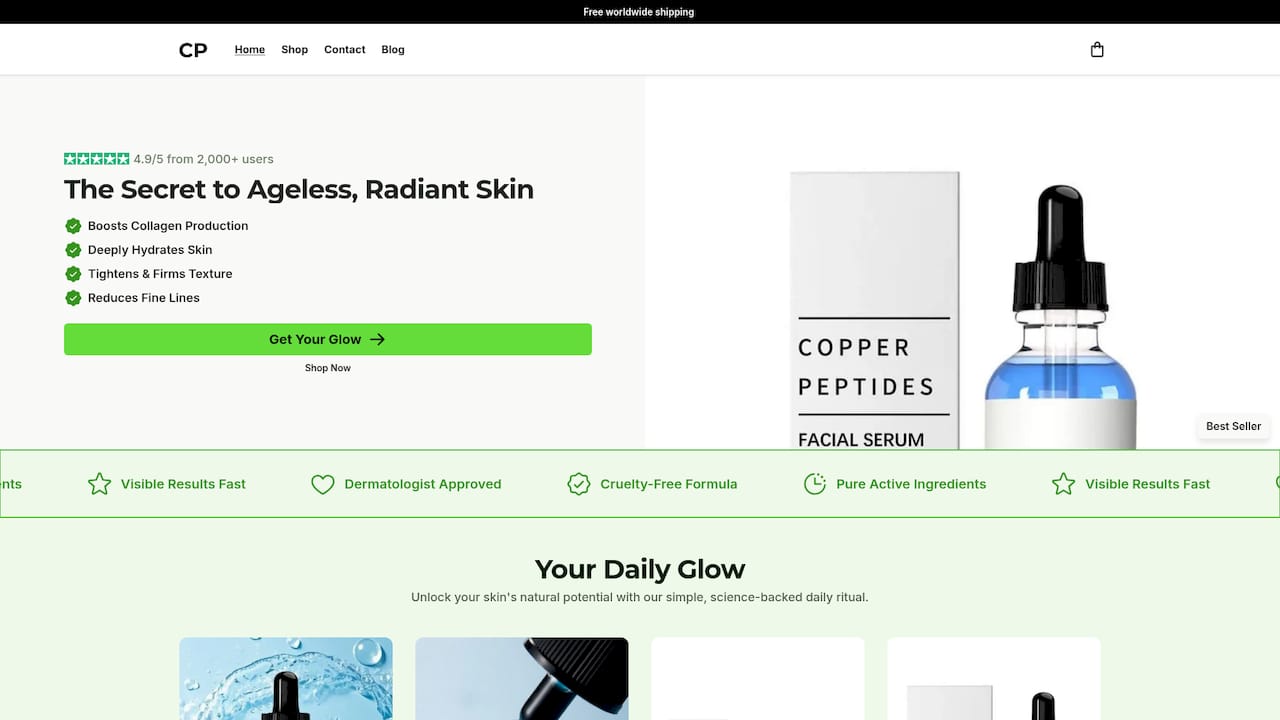
If you want a cruelty-free skincare option right now, we offer our Copper Peptide Anti-Aging Serum, a skincare formula made with copper peptides and hyaluronic acid.
- Check the product page for certification badges and details before you buy.
- Browse the Copper Peptide Anti-Aging Serum in our collection, priced at $20.
FAQ
Is Lakme PETA approved?
Brand listings change, so the only reliable answer comes from checking PETA’s searchable cruelty-free database directly. Look for the brand name and confirm the date of the entry. A brand’s own claims on packaging should always match the live listing.
What companies are Leaping Bunny certified?
Leaping Bunny publishes a searchable list of certified brands that it updates frequently. Search the database by brand name rather than relying on old roundups. Certified brands must recommit every year to stay listed.
Is L’Oreal cruelty-free and vegan?
Cruelty-free status is assessed brand by brand, and big corporate groups can appear differently across lists. Check each brand you care about in both databases, and confirm vegan status separately, since it is a different designation. PETA offers an Animal-Test Free and Vegan listing for companies that qualify.
Is PETA actually cruelty-free?
PETA’s list is meaningful because every listed company signs a legally binding CEO statement of assurance. It is, however, more trust-based than audit-based, since PETA does not run routine third-party supplier audits. Shoppers wanting stricter verification usually add a Leaping Bunny check.